


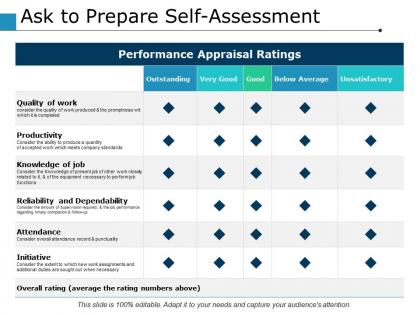
Ask to prepare self assessment ppt powerpoint presentation file infographics




Try Before you Buy Download Free Sample Product
 Impress Your
 Audience
 100%
100% Editable
 Save Hours
 of Time


Give cogent explanations with our Ask To Prepare Self Assessment Ppt Powerpoint Presentation File Infographics. They will get the hang of it.
People who downloaded this PowerPoint presentation also viewed the following :
Ask to prepare self assessment ppt powerpoint presentation file infographics with all 5 slides:
With the right presentations you can reveal a lot of information about your business while educating customers on your services and products. Good presentations make use of Ask To Prepare Self Assessment Ppt Powerpoint Presentation File Infographics that are created by professionals.
FAQs for Ask to prepare self assessment ppt powerpoint
Honestly, self-assessment is like looking in a brutally honest mirror - not always fun, but you'll actually figure out what you need to work on instead of what everyone else thinks you should fix. I do a monthly check-in with myself (sounds weird but works). What went well? What was a disaster? What do I want to get better at? You become way more aware of your actual strengths and weaknesses, which makes goal-setting so much easier. Managers eat this stuff up too because it shows you're not delusional about your abilities and you're actually trying to grow.
Honestly, start with what you're *actually* good at vs what you think you should be - there's always a disconnect there. Focus on three things: your technical stuff, soft skills (communication, problem-solving, whatever), and real results you've gotten. Grab any feedback you've received, formal or not. Rate yourself 1-10 in each area, then - here's the kicker - ask someone you trust to rate you too. That comparison is eye-opening. Oh, and don't skip how fast you learn new things. People underestimate that but it matters way more than they think.
Weekly works best for me, honestly. Daily's way too much and monthly? You'll miss stuff that actually matters. Friday afternoons are perfect - you're already mentally done with the week anyway. Just 15 minutes asking yourself: what worked, what sucked, what changes for next week. That's it. The whole point is catching patterns without making it this massive thing. Like, maybe you notice you always crash on Wednesdays or whatever. Weekly gives you enough data to actually do something about it. Try blocking out those 15 minutes and see what happens.
You can't really assess yourself well without knowing who you are first, you know? Self-awareness lets you spot your actual strengths and weaknesses instead of just the ones you wish you had. It's like - how can you figure out where you're going if you don't know your starting point? When you're aware of yourself, you catch those moments where you're being too harsh or maybe giving yourself too much credit. Honestly, I think most people suck at this part. Try comparing recent feedback to how you see yourself. Do they match up?
Honestly, self-assessment is a game changer for career stuff. Figure out what you actually value and what you're good at first. Otherwise you'll end up chasing jobs that sound cool but make you want to hide under your desk every morning - seen it happen way too many times. Plus it helps you spot the skills you need to work on before they bite you later. I always do this thing where I write down my strengths and what matters to me before making big moves. Sounds cheesy but it works. Try doing a quick skills check and values list before your next decision.
Honestly, I'm a huge fan of the "Start, Stop, Continue" thing - sounds basic but it actually works. 360-degree feedback is solid too, plus those personality tests like StrengthsFinder or Myers-Briggs if you're into that stuff. SWOT analysis helps you see the bigger picture. Here's what I'd do though: rate yourself 1-10 on your main skills, then ask a few people you trust to rate you the same way. The difference between what you think and what they see? That's where the good stuff is. Journaling with specific prompts about wins and challenges works too, but you've gotta actually stick with it. Pick one and block out real time this week.
Honestly, self-assessment is just figuring out what you suck at compared to where you wanna be. I thought I was decent at data viz until I actually compared myself to job postings - yikes. Rate yourself 1-10 on skills that matter for your goals, then be brutally honest about the gaps. Don't sugarcoat it or you're wasting your time. I do this every few months and patterns start jumping out at you. It's kinda depressing at first but super helpful once you get used to it.
Honestly? We're brutal to ourselves - way harsher than we'd ever be to a friend. Plus you get tunnel vision, either fixating on what you suck at or only seeing the good stuff. Oh, and comparing yourself to other people is such a waste of time. Here's what actually works: block out time to really think about it, not just when you're stressed. Get feedback from people you trust because your brain lies to you sometimes. Write specific examples down instead of just going off feelings. I started doing this last year and it's wild how much clearer things get when you can see patterns.
Send them a self-assessment form about a week before you meet. Have them rate themselves on the same stuff you're evaluating - goals, wins, struggles, what they want to work on. Honestly, it makes such a difference when they come prepared with their own thoughts instead of just sitting there while you talk at them. Compare your notes during the actual review and talk through anywhere you see things differently. Creates way better conversations. Oh, and don't be surprised if they're harder on themselves than you'd be - happens more often than you'd think.
Honestly, having specific goals is a game-changer for self-assessment. You get actual benchmarks instead of just wandering around in your own head wondering if you're doing okay. I used to do that all the time - felt busy but got nowhere. With clear targets, you'll know exactly what's working and what isn't. Makes the whole reflection thing way sharper. Break your big goals into smaller pieces you can actually measure. Then when you're doing your next check-in, you've got real stuff to compare against. Trust me, you'll start seeing patterns you missed before.
Honestly, you can't see yourself the way others do. Your brain just fills in gaps and assumes things are fine when maybe they're not. Like, you might think you're being collaborative in meetings but come across as pushy - who knows? Your coworkers notice patterns you don't even realize you have. They'll catch strengths you totally brush off too. Self-assessment is useful but it's only half the story. Getting both perspectives together? That's where the real insights happen. I'd pick a few people you trust and ask them about specific stuff where you felt unsure.
Honestly, apps make self-assessment way less of a pain. I'd start with just tracking one thing you want to get better at - keeps it simple. Digital portfolios are clutch for collecting all your work instead of having random files scattered everywhere (been there!). Some tools have built-in prompts that actually help you think deeper about stuff. Analytics dashboards sound fancy but they're great for spotting patterns you'd totally miss otherwise. You'll get automated reminders to reflect regularly, which... let's be real, we all need that nudge. Goal-setting becomes more measurable too when everything's tracked digitally.
Honestly, self-assessment is everything for leadership growth. You can't fix what you don't know is broken, right? When you actually take time to reflect on how you handled situations or affected your team, you start noticing patterns - both good and bad ones. The best part? Leaders who do this are way more receptive when others give them feedback too. I've seen companies where they push this kind of reflection, and their leadership development is just... better. People know what to focus on instead of randomly guessing. Try doing monthly check-ins with yourself - what worked, what bombed, and figure out the why behind it all.
Honestly, most people get tripped up by two big things - they're scared to face their weak spots, and they've got that annoying voice saying "who am I to judge myself?" Plus we all have confirmation bias going on, only noticing stuff that backs up what we already think about ourselves. It's kinda wild how our brains work against us like that. What helps is setting clear criteria upfront instead of just winging it. Getting feedback from people you trust is huge too - they'll catch your blind spots. Self-assessment doesn't mean you have to be perfect, just real with yourself so you can actually improve.
Honestly, self-assessment is like holding up a mirror to see how your emotions actually play out at work. You start catching patterns you didn't notice before - like getting weirdly defensive when certain people challenge your ideas, or how your bad mood totally derails team meetings. I do this quick check-in at the end of most workdays (when I remember lol) - just asking myself what I felt and why. The brutal honesty part is tough but worth it. You'll begin spotting your triggers and how your reactions affect everyone else. It's basically emotional detective work on yourself.
No Reviews