

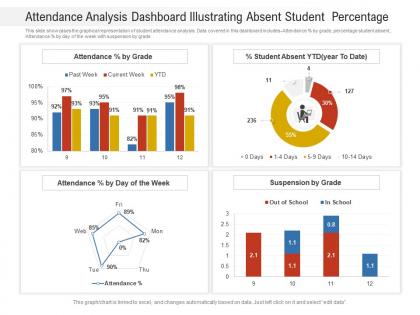
Attendance analysis dashboard illustrating absent student percentage powerpoint template




Try Before you Buy Download Free Sample Product
 Impress Your
 Audience
 100%
100% Editable
 Save Hours
 of Time


Our Attendance Analysis Dashboard Illustrating Absent Student Percentage Powerpoint Template are topically designed to provide an attractive backdrop to any subject. Use them to look like a presentation pro.
People who downloaded this PowerPoint presentation also viewed the following :
Attendance analysis dashboard illustrating absent student percentage powerpoint template with all 2 slides:
Use our Attendance Analysis Dashboard Illustrating Absent Student Percentage Powerpoint Template to effectively help you save your valuable time. They are readymade to fit into any presentation structure.
FAQs for Attendance analysis dashboard illustrating absent student
So you'll want to track the obvious stuff - attendance rates and how often kids are late. But honestly? Chronic absenteeism is where it's at - that's when students miss 10% or more of school days, and it's like the best predictor of who's gonna struggle academically. Look for patterns too. Which days are worst for absences? Are there trends by grade or demographic? Sometimes the data surprises you. Oh, and definitely break things down by subject and student groups - helps you catch problem spots early. I'd start with a basic monthly dashboard covering these metrics. Gives you something solid to work from when you're figuring out where to focus your interventions.
Honestly, once you start using visualization tools for attendance data, you'll never want to go back to spreadsheets. Heat maps instantly show you which departments or days are problem areas – way easier than scanning through endless rows of numbers. You can spot patterns like attendance dropping every Friday or after holidays. The chronic absentees become super obvious too. I'd start simple with a weekly trend dashboard (nothing fancy). You'll probably catch early warning signs you've been missing. Charts make it ridiculously clear when policy changes actually affect behavior, which is kind of satisfying to see.
Okay so basically you'll want some kind of tech system - biometric scanners, apps, card readers, whatever works for your setup. Real-time data collection is huge because then you get automatic reports instead of manually tracking everything (which honestly sucks). The analytics part is where it gets interesting - you can spot patterns like who's always calling out or which days are worst for absences. I swear once you see those insights, going back to spreadsheets feels like using a flip phone. You can even predict staffing gaps ahead of time. Just figure out what metrics you actually care about first before picking anything.
Honestly, tracking attendance is one of the smartest moves you can make. Kids who start skipping class are usually dealing with something bigger - could be academic struggles, personal stuff, or they're just mentally checking out. It's your early warning system, you know? Instead of waiting until their grades crash or they disappear entirely, you catch it when they first start missing days. Then you can actually do something about it - maybe they need tutoring, maybe just someone to ask how they're doing. The trick is jumping on those patterns fast, not letting it slide for weeks.
Main thing is data quality - don't just look at raw attendance without thinking about holidays, weather, or big events that mess with numbers. Remote vs office workers obviously have totally different patterns too. Time frame matters a lot. I've seen people cherry-pick short periods that make their point look good, which is pretty misleading honestly. You want consistent baselines and need to account for seasonal stuff. Different departments will have their own quirks too. Clean your data first before doing anything else. Otherwise you're just building conclusions on garbage.
So here's the thing - attendance data is basically your reality check. Low turnout sessions? Either fix the content or ditch them completely. I've learned people are surprisingly predictable about timing preferences - like morning vs afternoon workshops. Certain topics just pull bigger crowds too, which honestly makes sense once you think about it. Check for seasonal trends over a few months. Then schedule your must-have content when people actually show up. For sessions that keep flopping, try switching up the format before you give up on them entirely.
So for predicting absenteeism, I'd probably start with looking at your historical data first - just basic patterns and trends. Time series analysis is solid for catching seasonal stuff. Then throw in regression models to figure out what actually matters - weather, day of the week, employee age, whatever. Random forests work really well when you've got tons of variables (though honestly they can be overkill sometimes). Don't sleep on simple moving averages either. They're basic but they work. Once you've got your baseline down, start adding external factors that make sense for your workplace.
Yeah, so tracking attendance gets weird when you're dealing with different formats. In-person is easy - they're either there or not. But hybrid? Good luck reconciling who's physically there versus logged in online - I've seen people spend hours trying to make that data make sense. Online attendance is completely different too. Login times, chat participation, turning in assignments - that stuff matters more than just "did they show up." Here's what I'd do: figure out what actual engagement looks like for each format first. Then track those behaviors instead of just counting bodies. Quality over quantity, you know?
Yeah, there's definitely a connection between showing up and doing well in school. Kids who attend regularly get better grades and graduate on time more often. Obviously you can't learn stuff if you're not there, but it goes beyond just missing lessons - you also miss out on participating in class and building relationships with teachers. There's this threshold around 10% absences (like 18 days) where grades really start to tank. Honestly, once you hit that point, it becomes way harder to catch up. So if you're looking at attendance numbers, that's when alarm bells should go off.
Look for patterns - people missing multiple days in short spans or constantly rolling in late. Set alerts for stuff like 3+ absences in two weeks or being late 5+ times monthly. Here's the thing though: don't just count total missed days. Some folks are always a bit flaky but consistent about it, while others suddenly crash hard. That sudden change is what you really need to catch. Set your dashboard to flag both the chronic cases and the dramatic shifts. Then actually reach out before everything goes to hell. Way easier to help someone who's slipping than someone who's already hit rock bottom.
You've gotta be super careful about privacy stuff - anonymize everything you can. Don't let attendance data turn into some weird bias thing either. Like, someone might miss work for totally valid reasons - disabilities, kids, cultural stuff. I've seen companies mess this up badly and face lawsuits honestly. Figure out the "why" before you start judging patterns. Oh and definitely set clear policies upfront about what you're tracking and how you'll use it. People deserve to know what's happening with their data. Short version: protect your employees and don't be sketchy about it.
Pull your last three months of attendance data and see what jumps out. If certain teams are calling out more, that's usually a red flag for burnout or management issues. Check if absences spike around specific days or after big meetings - honestly, people vote with their feet more than you'd think. Look at how work-from-home policies or project deadlines correlate with who shows up. The patterns tell stories you'd otherwise miss. Maybe it's not about dedication at all - could be workload, communication problems, or team drama. Whatever you find, actually do something about it though.
Dude, AI can totally transform how you track attendance. It spots patterns you'd never catch - like predicting who's gonna call out next week based on weather or past behavior. Pretty wild stuff, honestly. You'll ditch those nightmare spreadsheets since everything runs automatically. The coolest part? It flags employees who might become attendance problems before things get messy. My advice though - don't go crazy trying to implement everything. Pick something simple like absence prediction first, then expand from there. Trust me, starting small saves you a ton of headaches later.
Track your attendance patterns for a few weeks - match them up with whatever lesson style you're doing that day. You'll probably notice trends pretty quickly. Like maybe your lecture days have way more empty seats than when you do group work or labs. Once you see the pattern, try switching things up. I've found that students just show up more when they know they'll actually be doing something instead of sitting there listening. It's honestly like having a chat with your data - but here's the thing, you actually have to DO something with what you learn, not just collect numbers and call it a day.
Start with the big stuff upfront - "attendance dropped 15%" hits way harder than burying it on page 3. Dashboards are honestly a lifesaver here because people can actually see what's happening instead of getting lost in endless Excel tabs. Don't forget to throw in context though - maybe it's seasonal or there was some crazy event that month. Break things down by department if it matters to whoever you're presenting to. Here's the thing: executives just want the bottom line while your managers need stuff they can act on tomorrow. Always wrap up with what they should actually do next.
-
Best Representation of topics, really appreciable.
-
The content is very helpful from business point of view.
-
Informative design.
-
Thanks for all your great templates they have saved me lots of time and accelerate my presentations. Great product, keep them up!
-
Enough space for editing and adding your own content.
-
Easily Editable.
-
Innovative and attractive designs.
-
Great product with highly impressive and engaging designs.