

B2b sales playbook several steps involved in b2b sales process




Try Before you Buy Download Free Sample Product
 Impress Your
 Audience
 100%
100% Editable
 Save Hours
 of Time


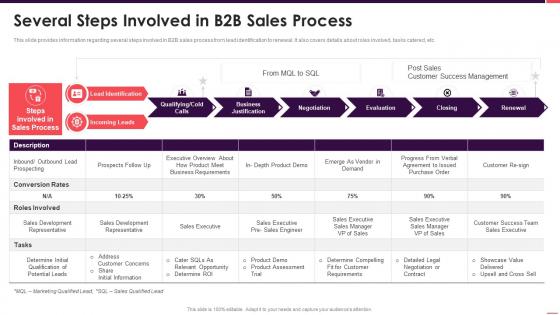
This slide provides information regarding several steps involved in B2B sales process from lead identification to renewal. It also covers details about roles involved, tasks catered, etc.
People who downloaded this PowerPoint presentation also viewed the following :
B2b sales playbook several steps involved in b2b sales process with all 6 slides:
Use our B2b Sales Playbook Several Steps Involved In B2b Sales Process to effectively help you save your valuable time. They are readymade to fit into any presentation structure.





FAQs for B2b sales playbook several steps involved in
So B2B sales basically breaks down into five main steps. First you're finding prospects, then figuring out if they actually need what you're selling. The demo phase comes next - and honestly, this is make-or-break time for most deals. You'll spend time addressing their concerns and pushback after that. Finally, you close it out. Different industries might tweak this a bit, but it's a pretty solid roadmap to follow. Oh, and it helps you track where deals are getting stuck too.
Dude, buyer personas are game-changers for B2B sales. They help you figure out who you're actually targeting instead of just spraying and praying. Use them to find better prospects and write messages that hit their real pain points. Plus you can prep for objections way better. I learned this the hard way – used to waste so much time on calls that went nowhere. Map your best deals against 2-3 personas and you'll start seeing patterns. Which channels work? What demos landed? It's like having a cheat sheet for every conversation.
Honestly, lead generation is what keeps your sales team from twiddling their thumbs all day. You need qualified prospects who actually want what you're selling AND can afford it. Quality beats quantity every single day - I'd rather have 10 solid leads than 100 random contacts who'll ghost you. The trick is targeting decision-makers from the start so you're not pitching to someone's intern. Figure out your ideal customer first (like, really nail down who they are), then build everything around attracting those specific companies. Otherwise you're just throwing darts blindfolded.
BANT framework is your friend here - Budget, Authority, Need, Timeline. Ask straight up about their budget range and who makes decisions. Nobody has time for guessing games. Figure out if they actually have real pain points or just browsing around (you know the type). Talk to someone who can influence the purchase or at least intro you to the right people. Honestly, disqualifying the wrong fits early saves you so much headache later. Create some kind of scoring system so you're not all over the place with how you rank leads.
Honestly, most people just blast automated emails and wonder why leads go cold. What actually works? Send stuff they'll find useful - case studies, industry tips, tools that solve real problems. I segment mine by buying stage because someone just browsing needs different content than someone ready to buy. Email sequences are solid, but throw in personal touches too. Quick LinkedIn check-ins or calls work way better than pure automation. Oh, and track who's engaging so you know when they're heating up. Always have your next move planned when they bite.
Dude, you gotta totally switch up your pitch depending on who's in the room. CFOs? They want cold hard numbers and ROI data - skip the fluff. IT people are the opposite - lead with technical specs or they'll check out immediately. For C-suite folks, stay high-level and talk competitive advantage. Mid-level managers are honestly the trickiest since they care about both strategy AND daily operations. Do your research first though - stalk their LinkedIn, check recent company news, figure out what's keeping them up at night. Then actually customize your whole presentation, not just wing it with different talking points.
Honestly, weekly meetings are a game-changer - have both teams look at lead quality and what's actually making money, not just pretty numbers. Shared dashboards help too since nobody can argue about data when you're all seeing the same thing. Before anything else though, nail down your lead scoring and handoff process. Both sides need to agree on what counts as a "good lead" or you'll just keep fighting about it. Oh, and maybe start small with one campaign together next quarter? Test the waters first since these things can get messy if you jump in too fast.
Dude, you NEED a CRM for B2B sales. Seriously, trying to track complex deals without one is like juggling flaming torches blindfolded. It stores all your prospect info, tracks every call and email, and keeps your pipeline organized so you actually know what's happening. Your whole team stays on the same page too - no more "wait, where are we with that deal?" moments. The automation stuff saves tons of time on follow-ups. I mean, enterprise sales are complicated enough without losing track of who said what when. Just start simple - dump all your contacts in there and go from there.
Long cycles and dealing with a dozen different decision-makers - that's your biggest headache right there. Map out everyone who has a say early on, then build actual relationships with each person. Price pushback? Don't get stuck talking features. Show them the ROI instead. Here's the thing - you've got to stay persistent but not cross into pest territory. That balance is tricky. Set up milestones and stick to your follow-up schedule religiously. Oh, and document everything in your CRM. I can't stress this enough - you'll start seeing patterns that'll help you figure out what actually moves deals forward.
Track your conversion rates between stages - that's huge. Time in each phase and deal velocity matter too. Lead response time and meeting-to-proposal ratios will show you the tactical stuff. Most teams get obsessed with pipeline size but totally ignore quality metrics, which is backwards if you ask me. Focus on leading indicators like discovery call scores or how engaged stakeholders are, not just revenue. Do weekly pipeline reviews where you're actually digging into trends. The whole point is catching bottlenecks early before they tank your deals.
Long sales cycles are brutal - you basically have to flip your whole approach. Forget quick closes, you're now playing the long game for months or years. Your pipeline needs to be way thicker since fewer deals actually convert. I learned this the hard way watching reps burn out on "sure thing" deals that just... never closed. Track your cycle length by deal size so you're not setting yourself up for disappointment. Focus on educating prospects through tons of touchpoints rather than pushing. Oh, and seriously beef up that pipeline because you'll need it.
Honestly, data analytics is a game-changer for sales - no more shooting in the dark. Track which prospects actually buy from you and what messages work at different stages. You'll see where deals get stuck way before it becomes obvious. I learned this the hard way after losing too many "sure thing" deals last year. The numbers tell you which accounts deserve your time and when to circle back. Short sentences work. You can literally predict objections before they happen, which feels like cheating sometimes. Focus on maybe 3-4 metrics at first - don't overwhelm yourself trying to track everything right away.
Honestly, customer feedback is like having a cheat sheet for your sales process. Collect it after demos, proposals, wins, losses - basically everywhere. Lost deals are where you'll find the real gems though. Maybe your pricing pitch is confusing people, or you're missing key decision makers in the room. Could be your follow-up game is just off. I'd set up some simple way to capture this stuff consistently - doesn't have to be fancy. Then actually use it to tweak your scripts and qualifying questions. It's wild how much this can tighten up your whole process.
Honestly, most sales people just vanish after they close a deal - huge mistake. You've gotta stay in touch regularly, but not in an annoying way. Set up quarterly calls just to check how things are going (put it in your calendar or you'll forget). Share cool industry stuff when you see it, introduce them to people on your team who might help. The trick is being genuinely helpful instead of obviously fishing for more business. Quick response time matters too. Oh, and don't only call when there's a problem - that's what everyone does and it feels gross.
Just be straight up with people, honestly. Don't promise stuff your product can't actually do - that always comes back to haunt you. Respect their timeline even when your manager's breathing down your neck about numbers. Be real about pricing upfront and any headaches they might run into during setup. Look, I know it's tempting to oversell when you're behind on quota, but focus on actually fixing their problem instead. The whole "fake it till you make it" thing might work short-term, but building trust? That's what gets you repeat business and referrals down the road.
-
Perfect template with attractive color combination.
-
Unique design & color.