


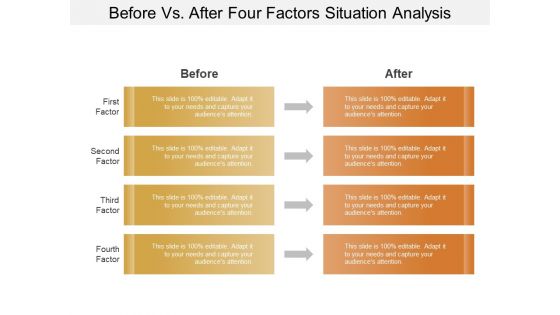
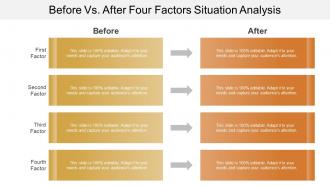
Before vs after four factors situation analysis





Try Before you Buy Download Free Sample Product
 Impress Your
 Audience
 100%
100% Editable
 Save Hours
 of Time


Be gentle with our Before Vs After Four Factors Situation Analysis. Show consideration for their feelings.
People who downloaded this PowerPoint presentation also viewed the following :
Before vs after four factors situation analysis with all 5 slides:
Chains fall away due to our Before Vs After Four Factors Situation Analysis. It ensures crippling conditions disappear.
FAQs for Before vs after four
Look at your current market position first, then scope out the competition and what customers actually want. SWOT framework is clutch here - saves you from overthinking it. You'll also want to check your internal capabilities and any external stuff like regulations or economic weirdness. Financial performance and operational efficiency matter too, obviously. Stakeholder analysis is boring but necessary. Oh, and don't miss emerging threats or opportunities that could mess with your strategy later. Honestly though? Just start with whatever data you've got lying around, then figure out what's missing.
Look, SWOT is just one piece of the puzzle - situation analysis is way bigger. You're looking at market trends, how customers actually behave, what competitors are doing, your internal stuff, money situation, regulations... the works. SWOT only covers those four boxes, which honestly feels pretty narrow when you think about it. I'd start with mapping out the entire landscape first. Get that full picture of what's happening around your business, then you can plug some of those insights into a SWOT if it helps organize things. But don't lead with SWOT - it'll box you in too early.
So here's the thing - market research is basically what keeps you from making terrible business decisions based on gut feelings alone. You need both the numbers (surveys, sales data) and the human side (interviews, focus groups) to actually understand what's happening. Start by figuring out your specific questions first, then pick your research methods. Without it, you're just guessing about customers and competitors. I mean, some entrepreneurs think they can wing it, but that rarely ends well. The research becomes your foundation for everything else you'll decide strategically.
Look, situation analysis is basically your reality check before making any big moves. Think of it like scoping out the scene before jumping in. You're looking at what you're good at, what sucks, plus what opportunities are out there and what might bite you. Companies that skip this step? They usually crash and burn - I've watched it happen so many times. It helps you set goals that aren't completely delusional and figure out where to actually put your money and effort. Oh, and you'll catch problems before they blindside you. Do it regularly, not just when everything's already on fire.
Honestly, data quality is your biggest nightmare. Marketing always hands you some ancient Excel file that's missing half the info you need. Different departments guard their data like it's state secrets, and everything's in totally different formats that won't mesh together. Plus everyone wants results immediately but proper analysis actually takes forever - there's no rushing good insights. External sources cost a fortune and half the time aren't even reliable. Oh and you'll drown in irrelevant data if you're not careful. My take? Figure out your core questions first, then hunt down only the specific data that answers those. Way better than collecting random stuff and praying something useful emerges.
Honestly, data beats guessing every single time. Your CRM and website analytics will show you what's really going on - not just what you think is happening. I love how you can spot patterns you'd never notice otherwise, like when certain customer groups buy more or seasonal stuff you totally missed. Social media insights are pretty solid too. The trick is figuring out which metrics actually matter for your situation first. Then just set up some dashboards so you're tracking consistently. You can slice everything by age, location, behavior - whatever helps you understand different audience segments better.
So basically you're figuring out what makes you different from everyone else in your space. Look for spots where competitors suck but you're killing it - that's gold right there. The whole point is finding stuff that's actually hard to copy, not just surface-level differences. You want advantages that customers genuinely care about, not features that sound cool but nobody asks for. Honestly, most companies think they're unique when they're really not. Focus on things that matter to buyers AND would take your competitors forever to replicate. It's like... strategic homework but way more useful.
Honestly, you can't skip looking at economic trends when you're doing situation analysis - they'll mess with everything. Recession coming? That completely changes how you should position things. Your customers' spending power shifts, your costs go up or down, competitors start acting weird. I'd focus on stuff like inflation, unemployment, consumer confidence - basically anything that hits your specific industry. Oh and build out a few different scenarios so you're not scrambling later. Trust me, mapping how these trends actually affect your business model is way better than getting blindsided when the economy does its thing.
Get everyone involved from day one - like, literally anyone who's gonna be affected by whatever changes you're making. Internal teams, customers, partners, the whole crew. Do interviews, surveys, workshops to hear their actual pain points. Fair warning though, you'll get conflicting opinions and it might feel chaotic, but that's gold. Don't just pump them for info and disappear. Keep updating them on what you found so they can tell you if you're way off track. Regular check-ins are clutch here.
Look, you basically need to track three things: did your analysis actually predict what happened (accuracy), did you catch all the important stuff that mattered (comprehensiveness), and could people actually use your insights to make decisions (actionability). Speed counts too - honestly, nobody wants to wait forever for your analysis. Here's the thing though - measuring this stuff after everything's done is pretty tough. I'd set up checkpoints while you're doing the work. Define what winning looks like from the start, then see if your analysis actually helped you get there.
Honestly, I usually do them every 2-3 months or whenever something major shifts - like scope changes or new stakeholders jumping in. Sprint reviews work great for this since everyone's already there anyway. Fast-moving industries might need monthly check-ins though. My last project in fintech? We were doing them constantly because regulations kept changing. But don't get too rigid about it - just pick a schedule that doesn't annoy your team and stick with it. Oh, and always be ready to throw in an extra one if things go sideways unexpectedly.
Honestly, the worst thing you can do is jump straight into analyzing without figuring out your scope first - you'll just get buried in useless data. I've seen people fall into confirmation bias too, where they only hunt for stuff that backs up what they already believe. Don't lean too hard on old data either. Market changes and what competitors are doing matter way more than you think. Oh, and try not to go too broad OR too narrow with your analysis - both suck in different ways. Balance what you're actually good at against external opportunities and threats. Set clear boundaries from the start and don't let yourself wander off.
Honestly, visuals are a game-changer for situation analysis. People process charts and graphs way faster than walls of text - like, our brains are just wired that way. Nobody wants to stare at endless bullet points anyway. When you map out trends or show cause-and-effect with flowcharts, stakeholders immediately spot the patterns they'd miss otherwise. Plus it keeps everyone awake during your presentation (trust me on this one). Just focus on your biggest data points first. Pick charts that actually back up what you're trying to prove, not random pretty graphics that look nice but say nothing.
Look, people's opinions about your work matter way more than they should - but that's just how things work. If your boss thinks your project is behind schedule, congrats, now it IS behind schedule in all the ways that count. You've got to figure out what each person thinks about your situation right now. Leadership sees problems? That affects your budget and support. Map out who has influence and what they actually believe is happening. Then you can fix any weird misconceptions before they screw you over. It's honestly kind of exhausting but necessary.
Yeah, it's wild how different industries care about completely different stuff. Tech companies are all about user data and what features competitors have. Retail? They're tracking seasonal patterns, how fast inventory moves, foot traffic - that whole thing. Healthcare has to worry about regulations first, then patient results. Manufacturing obsesses over supply chains and production limits. Finance goes deep on risk and market chaos (honestly makes sense given how volatile everything is). You really need to focus on whatever actually drives success in your field instead of using some cookie-cutter approach that doesn't fit.
No Reviews