


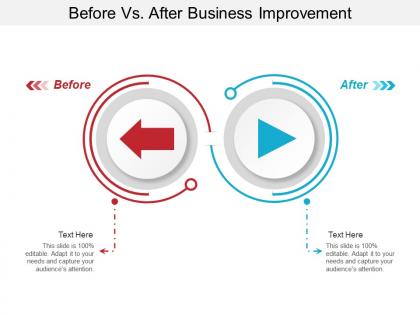
Before vs after business improvement





Try Before you Buy Download Free Sample Product
 Impress Your
 Audience
 100%
100% Editable
 Save Hours
 of Time


When you want to create first impressions that will be lasting impressions you need to create powerful presentations. Well designed and created Before Vs After Business Improvement are sure to get you there.
People who downloaded this PowerPoint presentation also viewed the following :
Before vs after business improvement with all 5 slides:
Our Before Vs After Business Improvement are handy for extending good advice. Be considered a champion for growth.



FAQs for Before vs
Look, leadership buy-in is absolutely everything - if they're not fully committed, you're screwed from day one. Your team needs to actually believe in why you're doing this too, not just hear some BS about "digital transformation." Quick wins help keep people motivated when things inevitably get rocky. Oh, and budget way more time and money than you think - these projects always spiral. Honestly though, the real test is whether your leadership will make hard calls when stuff hits the fan. Most won't. Strong project management obviously matters, but I've seen great PMs fail because executives got cold feet halfway through.
Look, you gotta track both the numbers AND the vibes. Revenue growth, cost savings, customer satisfaction scores - those are your basics. Employee retention too. But honestly? The real tell is stuff like decision speed and whether teams actually work together now instead of just pretending to. Monthly pulse surveys help you catch if people are mentally checking out (which kills everything). Oh, and don't do quarterly reviews - that's way too slow. Set up a simple dashboard with maybe 5 key things and check it monthly. Transformation moves fast so you need fast feedback.
Dude, culture makes or breaks these things every time. When people are cool with change and trying new stuff, transformations actually work. Rigid places though? Total nightmare - they fight everything. I've watched companies completely bomb because nobody thought about the cultural side first. Your team needs to feel safe screwing up while figuring things out. Find your internal cheerleaders early on. They'll spread the good vibes while you're fixing the bigger structural mess. Honestly, skip this step and you're basically guaranteed to fail.
Honestly, the worst mistake is trying to flip everything upside down at once - like, why do companies think that'll work? Communication breakdowns kill these things too. People get pissed when they're left out of planning, then leadership acts shocked when there's pushback. Most executives have zero clue how long change actually takes (spoiler: way longer than they think). You can't measure success without clear metrics, which sounds obvious but... here we are. Culture stuff gets forgotten until it's too late. Start with small pilots instead. Talk to your people constantly. Quick wins help build momentum when everything feels overwhelming.
Tech is hands down your best bet for speeding up any transformation. It'll automate all the boring stuff and give you data that actually means something in real time. Cloud platforms are great because you can grow without dropping crazy money on infrastructure. AI handles the routine crap so your team can think bigger picture. Honestly, analytics tools are where the magic happens - they'll show you what's actually working versus what you think is working. Don't just chase shiny new tools though. Figure out where you're getting stuck first, then find something that fixes that specific problem.
Look, digital transformation is all about tech - like actually changing how you run things with new software, data tools, that whole deal. Traditional transformation is bigger picture stuff. Restructuring teams, shifting company culture, entering new markets. Way less tech-focused. Digital moves fast because honestly, everyone's panicking about falling behind competitors. Traditional takes forever - years of planning meetings that could've been emails, you know? But here's the reality: most companies doing it right now mix both approaches. Start by figuring out what specific problems you're trying to solve, then pick the digital tools that actually make sense for those issues.
Dude, stakeholder engagement will literally make or break this whole thing. During planning, you need heavy communication and buy-in from everyone. Implementation requires constant feedback loops - people hate being left in the dark. Then celebrate wins and keep reinforcing changes during the sustaining phase. I can't tell you how many brilliant strategies I've watched crash because leadership thought people would magically jump on board. Map out your key players now and plan when you'll touch base with them at each stage. Oh, and your engagement approach should shift with each phase but never completely disappear.
So Kotter's 8-Step Process is probably your best bet - most people swear by it for major changes. ADKAR's really underrated though, especially when you're dealing with resistant teams. McKinsey's 7-S thing helps you see how everything connects organizationally. Oh, and Lean Six Sigma if you're just trying to fix processes. Pick one that actually fits what you're doing. I've seen too many companies try mixing frameworks and it just creates chaos. Nobody knows what they're supposed to be following anymore.
Honestly, just draw actual lines connecting your transformation stuff to your business goals - sounds dumb but it works. Set up regular check-ins between your transformation team and strategy folks so nothing goes off the rails. Way too many companies get excited about shiny digital projects that don't actually move the needle on what matters. Your KPIs need to track both transformation progress AND business impact - not just one side. Oh, and do quarterly reviews where you can actually kill projects that aren't working. Don't be afraid to pivot when something's not serving the bigger picture.
Dude, training your people is literally everything when you're doing a big transformation. I've seen so many companies skip this part and then wonder why everything falls apart. You can't just throw new systems at employees and expect magic, right? They need to actually know how to use the stuff. Start figuring out what skills are missing super early - like, before you even roll anything out. Training also shows your team you're not just abandoning them during all the chaos. Honestly, I'd rather have mediocre tech with well-trained people than amazing tools nobody knows how to touch.
Think of it like investing - mix quick wins with long-term bets. Run two tracks: optimize what you've got now for fast results, then separately fund the bigger transformation stuff. Short wins build credibility and honestly, they buy you time for the slower changes. Start with pilots you can scale later (way less risky). The hard part? Protecting those long-term projects when everyone's freaking out about quarterly numbers. Don't overthink it though - just begin somewhere. Oh, and definitely set clear expectations upfront so stakeholders aren't constantly asking "why isn't this working yet?"
Honestly, get your people involved right from day one. Explain why you're making changes - and I mean really explain it, not just some corporate fluff. Training matters way more than most leaders think because nobody likes feeling clueless about their job. I've watched so many companies mess this up by just dropping announcements without asking anyone what they think first. Find those natural influencers on each team who others actually listen to. Oh, and don't forget to celebrate the small stuff along the way! Maybe start with just one department and let the good stories do the talking.
Dude, you NEED customer feedback - like, it should literally be running your whole transformation plan. I've watched companies burn tons of money building "perfect" products that nobody wanted. Pretty painful to see, honestly. Start collecting feedback now if you aren't already. Surveys, quick phone calls, whatever works. Get it early and keep getting it throughout the process, not just when you're done. Even random customer conversations can give you those "oh shit" moments where everything clicks. You think you know what they want, but trust me - you probably don't.
Healthcare, retail, and finance are absolutely getting slammed right now. AI diagnostics and telemedicine turned healthcare upside down, plus all the COVID regulatory mess. Retail's a disaster - everyone's scrambling to fix their e-commerce while supply chains fall apart. It's crazy how overnight customers started expecting Amazon-level everything. Finance folks are losing their minds over fintech disruption and crypto regulations. Oh, and digital banking privacy rules that change weekly. Your clients in these areas? They'll need way more time and money than usual. We're talking complete operational overhauls, not simple system updates.
Honestly, you've got a massive advantage over big companies here. They're drowning in meetings and approvals for months while you can change direction in like two weeks. Skip the huge overhauls - that's where most people mess up. Pick one process, test it out, see what happens. Basic automation tools work just fine; you don't need some expensive consultant telling you what you already know. I'd start super small and just try stuff. The whole "perfect strategy" thing is overrated anyway. Quick experiments beat overthinking every time.
No Reviews