



 0 Comment
 Customer Reviews

In the architecture and building sector, time is valuable — a lot will hinge on permits and inspections and manpower and materials and reputation. And yet, in many organizations, setting up a clear and organized project schedule is often delayed—until the project starts falling behind.
Maybe because who has the time to just sit down and make one? Or most often it’s because they don’t know how to start it.
Everybody suffers when it comes to getting alignment from the stakeholders, sequencing of the tasks, and communication of status, which is simple yet difficult to miss. Throw in deadline shifts, regulatory approvals, and site-specific surprises, and all of a sudden your timeline becomes a game of guess who.
Take a closer look at our blog covering Top 10 Architectural Design Proposal Templates to improve your chances of landing new contracts.
Here comes SlideTeam’s Top 10 Architectural Project Schedule Templates.
Our presentation templates are designed for professionals requiring genuine structure, legitimate timelines and real results. Within the deck you will have slides for site development schedule, construction documentation timeline, project executions timeline, etc. All templates are fully editable, content ready, and downloadable in both PNG and JPG formats.
Check out each of the PPT Templates to know how they can help you build smarter, from blueprint to final walkthrough.
Learn more from our blog on Top 10 Construction Schedule Templates for seeking a balance between efficiency and quality.
Template 1: Architectural Project Schedule Template PPT PowerPoint
This presentation slide provides an overview of the architectural planning schedule . It covers the fundamental topics such as work breakdown structure (WBS), identifying milestones, time management, scheduling and risk management. It walks you through crucial stages, such as identifying stakeholder responsibilities, tracking schedule performance and addressing delays. Further, covers project scheduling software, legal stuff, and learning from failed schedules. A great resource for architects, project managers, and contractors wanting clarity. Download now.
[product_image id=1464502]
Template 2: Architectural Project Scheduling Strategic Advantage for Firms PPT Structure
This PPT Theme covers how to create and maintain pre-construction timeline for architectural projects. It spans from basic principles of project scheduling to cost estimates of delaying- providing some insights into the architectural profession's tools and techniques at a granular level. Then, covers collaboration efforts, risk identification, and how to improve the project efficiency using time management. It offers guidance in relation to larger architectural scheduling norms. Get now.
[product_image id=1465578]
Template 3: Monitoring and Adjusting the Schedule
This PPT Framework tracks the schedule on a project and makes adjustments throughout the project life cycle. It starts by stressing the importance of identifying goals, which makes up the first step in everything that follows. When the goals are well known, teams can allocate resources effectively and establish milestones. This architecture project plan assists you to stay on top of the delays and increase productivity. Get now.

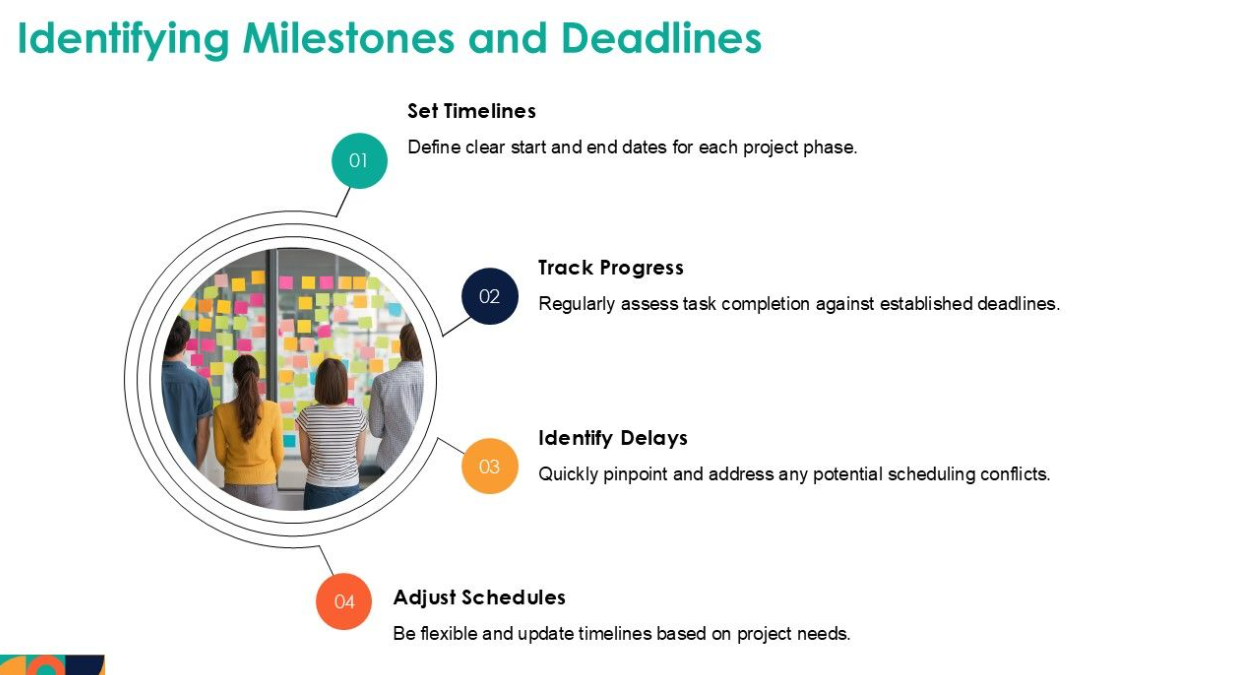
Template 4: Identifying Milestones and Deadlines
This presentation slide provides an understanding of how we analyze milestones and deadlines in a project. It starts from timelines, i.e. when each phase of the project is supposed to be initiated and completed. Then, it stresses the importance of tracking progress against deadlines. This architectural milestone chart helpful to project managers or team lead to use in planning meetings or status updates. Download now.
Template 5: Creating Work Breakdown Structure (WBS)
This architecture work plan begins with listing the tasks, importance of giving, pairing people to a task with a skills match and scheduled solution. The next set milestones to track your progress. Lastly it advises teams to reassess and update the WBS frequently to incorporate any modifications. Great for project planning sessions to create a visual framework for organizing complex work. Download now.

Template 6: Defining Project Scope and Deliverables
This presentation theme talks about the issues faced in the project delivery schedule. It starts with inadequate stakeholder engagement; you have misunderstandings, unmet expectations and confusion on goals. The other revolves around unclear specifications leading to delay in final product, rework, and costs. Finally, the third challenge tackles how a lack of clarity leads to misalignment between team members. It is helpful in project kickoff meetings. Download now.

Template 7: Importance of Scheduling in Architecture
This PPT Template covers architecture workflow schedule covering fewer delays and higher productivity overall. The next is about resources when materials and labor are used well. It also talks about customer satisfaction, where timely delivery establishes trust. Finally, it highlights risk management as a beneficial result of intuitive scheduling, allowing teams to discover issues early. It is best for internal discussion for organizing schedules. Get now.

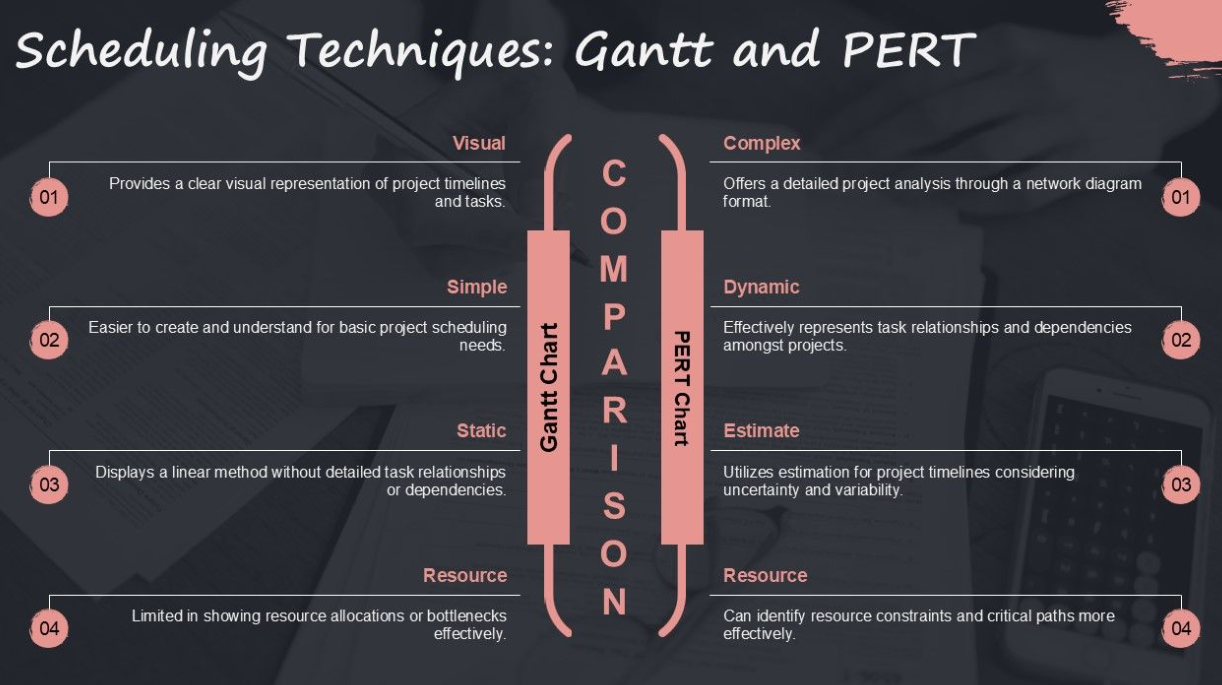
Template 8: Scheduling Techniques: Gantt Charts and PERT Charts
This presentation slide gives a comparative analysis of the two most commonly used project scheduling methods project gantt chart & PERT charts. It highlights their strengths and weaknesses. Gantt Chart is useful for pedestrian timelines and task tracking. Whereas PERT Charts are weak on resource bottlenecks and critical paths. This comparison is useful for project planning or tool selection. Download it now.
Template 9: Core Principles of Project Scheduling
This presentation framework covers core principles of design and build schedules that make up how to schedule for success. It begins with setting priorities that allow teams to identify foremost things. Deadlines are the second for losing momentum. Regularly monitoring progress to make adjustments in real time. Lastly, communication between all stakeholder parties. It forms a powerful foundation for successfully executing projects. Download now.

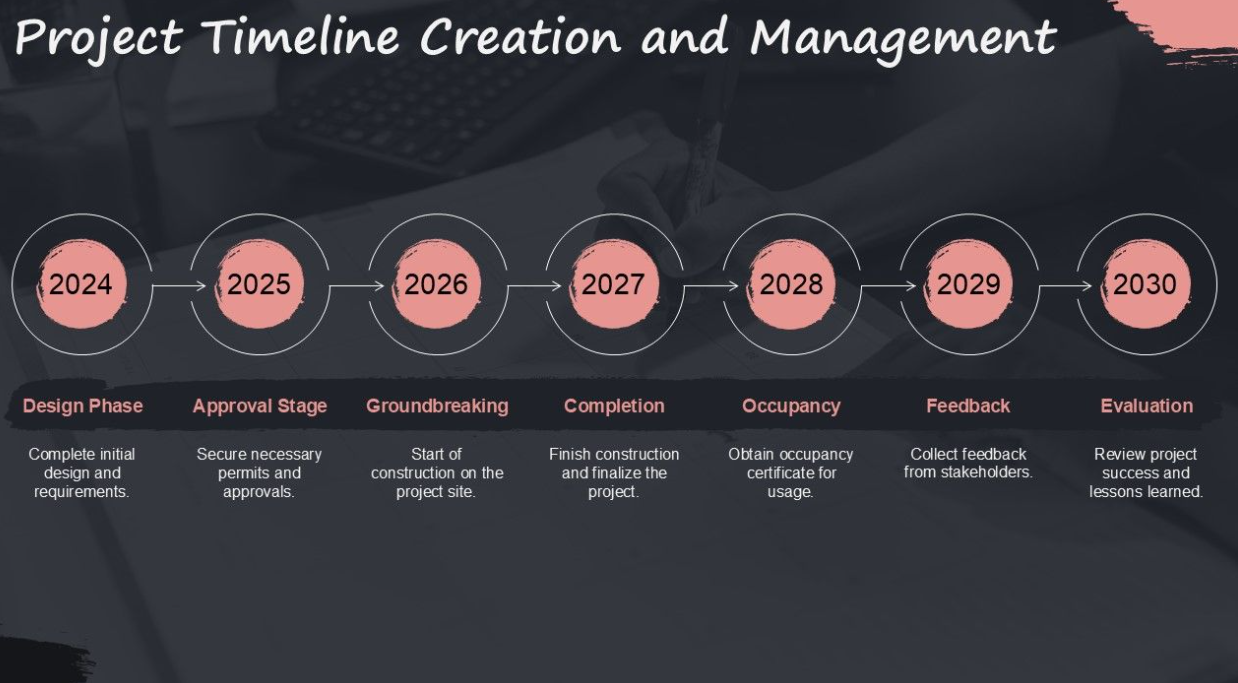
Template 10: Project Timeline Creation and Management
This presentation theme covers the construction project timeline starting with setting requirements and laying groundwork. Next is the approval phase and, once the necessary permits are obtained, the ribbon will be cut in 2026 to begin construction. The last years are dedicated for deep evaluation of what worked and what failed. It helps to relay clear expectations and communicate long-term milestones. Get now.
Great Architecture Begins With A Good Schedule!
Time is the art of architecture. A sound project schedule is not only a logistical requirement but is also the glue that holds successful execution together. Be it homes, commercial, or large-scale infrastructure design, syncing the building design timeline and resources can deliver the project on-time, and budget.
This blog presents the Top 10 Architectural Project Schedule Templates to help architects, project managers, and construction teams stay a step ahead of delays, ensure seamless coordination and work to make blueprints a reality.
Whether it be during pre-design, schematics, construction timeline or post-completion review, every milestone is mapped out with clarity and accountability in these templates. We offer greater value in tracking many different design phase schedule across different entities and are incredibly valuable to stakeholders in architecture firms, real estate developers, contractors and municipal planners.
Eager to set the stage for seamless execution? Download our presentation slides today and let your next project soar!
PS: Uncover our blog on Top 10 Construction Project Timeline Templates to offer a clear road map so that everyone is on the same roadmap and confusion is avoided.
FAQs on Architectural Project Schedule
-
How is each design phase broken down into timeline milestones?
Let’s break down each design phase into clear measurable milestones organized on deliverables and review checkpoints. Typically, the timeline includes:
Conceptual Design: Initial sketches, brainstorming and aligning the client's vision
Schematic Design: Plans, initial views, and stackings culminating in a mockup review.
Design Development (DD): Drawings are further refined with systems integration and material selections
Construction Documentation: This includes your final drawings and specs ready for permit and build.
At the end of each phase, internal reviews and then client presentations take place to ensure alignment before we move forward.
-
How are dependencies between architectural tasks identified and managed?
During project planning with a Gantt chart, or using a dependency matrix, dependencies are mapped. When a sequence of work must be done in one order or another, they can be categorized as sequential. Project management software can help track these relationships in real-time to prevent delays in one task from cascading through the timeline. Teams regularly come together in project planning calendar to iron out dependencies or to raise issues early on before they become bottlenecks.
-
How is client approval time built into the project schedule?
Each major design milestone is followed by a buffer window in the project timeline, and this time is reserved for client review and approval. Examples might follow schematic design delivery that have 3–5 days of time to get thoughts and adjust. These approval windows are clearly called out ahead of time and treated as immovable blocks to prevent schedule compression later in the project. That gives a little time for the client to review and feedback things without disrupting the overall flow of the project.