


Business Strategy For Opening A Coffee Shop Powerpoint Presentation Slides
Planning the stages on an excellent start of a coffee shop requires you to build strategies that ask you to answer a few questions such as how costs will be funded, how much the house cost to set up, how much money you expect to make, etc. A successful coffee shop requires three elements to turn business visitors into regulars selection, quality, and seasonality by keeping the markets most popular products. Check out our efficiently designed Business Strategy for Opening a Coffee Shop template that focuses on giving something that makes you unique and taking advantage of seasonal phenomena. The purpose of this is to serve you knowledge of maintaining a high level of food and service quality and let you achieve maximum customer base in the first 2 yrs. Businesses can showcase their executive summary, challenges, solutions, USPs, financial projections, and more to meet specific customer expectations. Using tables, charts, and infographics, one can even display their start up summary with statistics and team details. The template guides firms to mention the key takeaways that not just help them in presenting service sourcing but, at the same time, ask them to exhibit their location in the world map with proper coffee shop layout and design. Talk to our expert team for all your queries related to business strategy and customize this 100 percent editable template with our research analysts based on specific needs. Book a free demo and download the proposal now.
Planning the stages on an excellent start of a coffee shop requires you to build strategies that ask you to answer a few qu..








-

- Google Slides is a new FREE Presentation software from Google.
- All our content is 100% compatible with Google Slides.
- Just download our designs, and upload them to Google Slides and they will work automatically.
- Amaze your audience with SlideTeam and Google Slides.
-

Want Changes to This PPT Slide? Check out our Presentation Design Services
-

- WideScreen Aspect ratio is becoming a very popular format. When you download this product, the downloaded ZIP will contain this product in both standard and widescreen format.
-

- Some older products that we have may only be in standard format, but they can easily be converted to widescreen.
- To do this, please open the SlideTeam product in Powerpoint, and go to
- Design ( On the top bar) -> Page Setup -> and select "On-screen Show (16:9)” in the drop down for "Slides Sized for".
- The slide or theme will change to widescreen, and all graphics will adjust automatically. You can similarly convert our content to any other desired screen aspect ratio.
Compatible With Google Slides

Get This In WideScreen
You must be logged in to download this presentation.


Do you want to remove this product from your favourites?
PowerPoint presentation slides
Enthrall your audience with this Business Strategy For Opening A Coffee Shop Powerpoint Presentation Slides. Increase your presentation threshold by deploying this well crafted template. It acts as a great communication tool due to its well researched content. It also contains stylized icons, graphics, visuals etc, which make it an immediate attention grabber. Comprising fifty five slides, this complete deck is all you need to get noticed. All the slides and their content can be altered to suit your unique business setting. Not only that, other components and graphics can also be modified to add personal touches to this prefabricated set.

People who downloaded this PowerPoint presentation also viewed the following :
Content of this Powerpoint Presentation
Slide 1: This slide displays the title i.e. 'Business Strategy for Opening a Coffee Shop' and your Company Name.
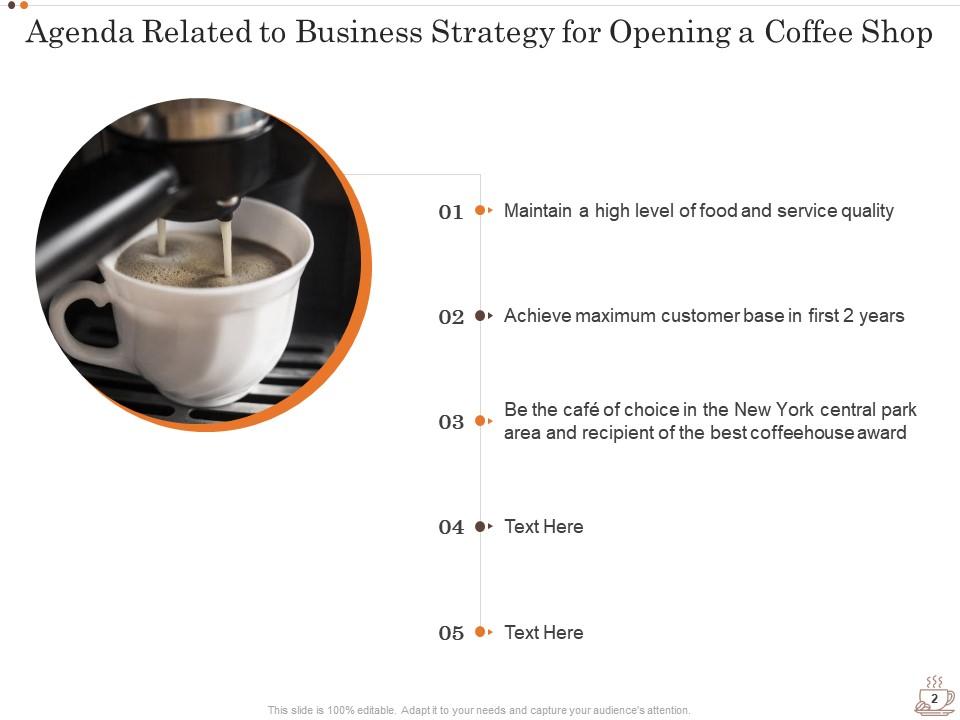
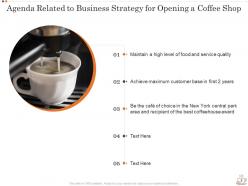
Slide 2: This slide presents the agenda for the project.
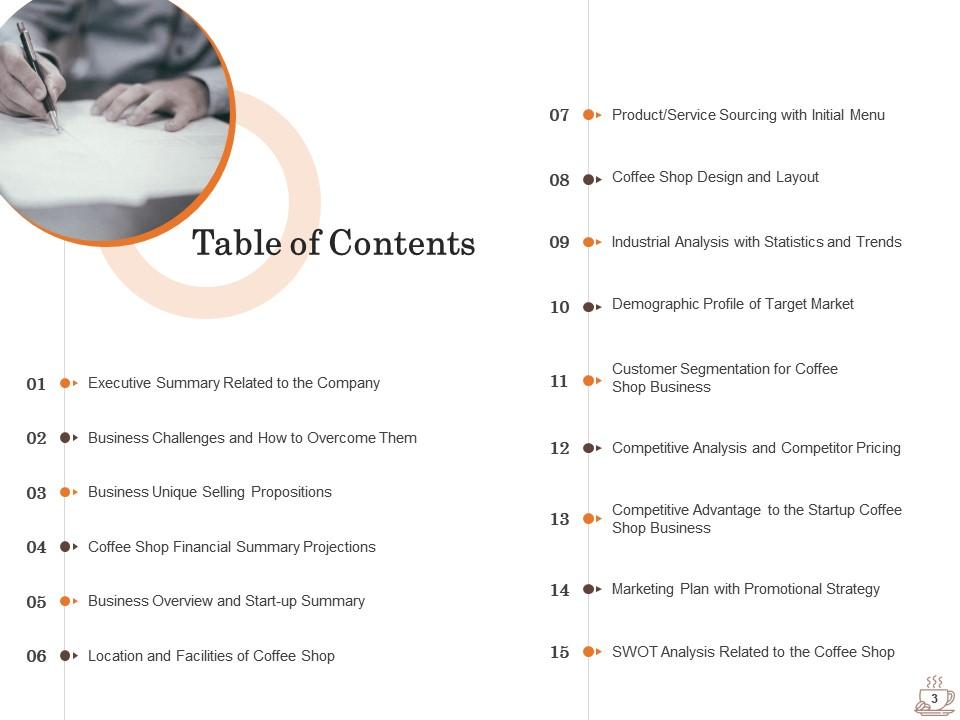
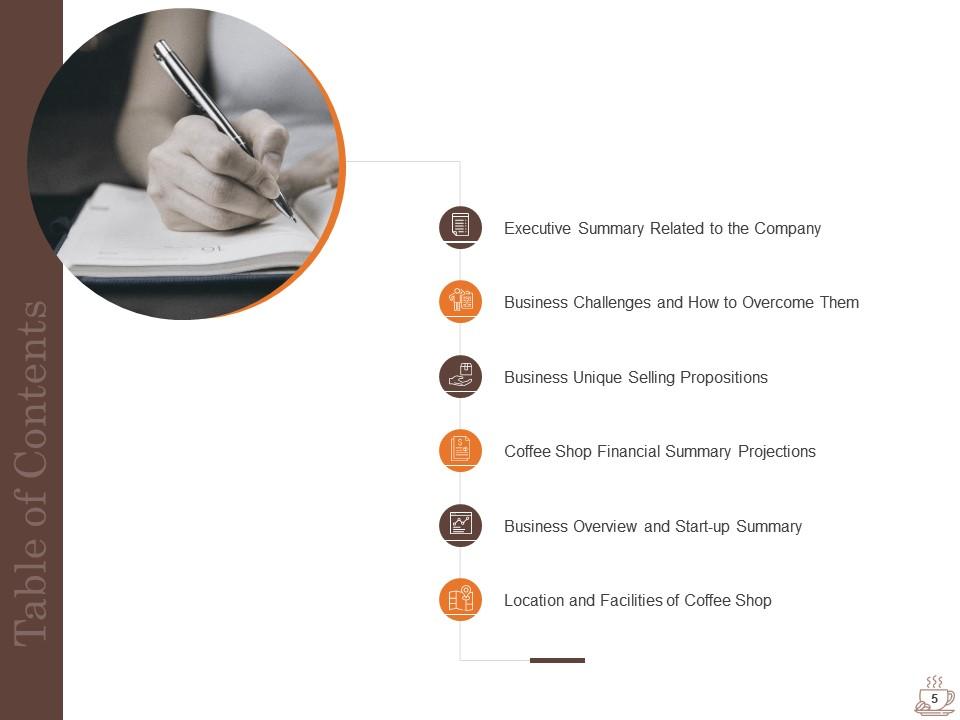
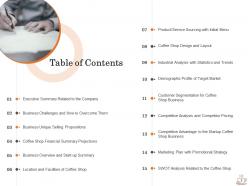
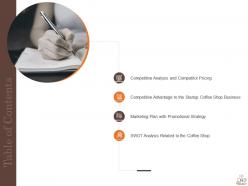
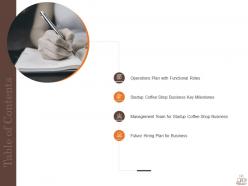
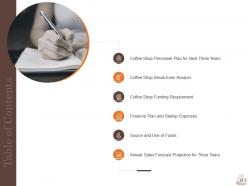
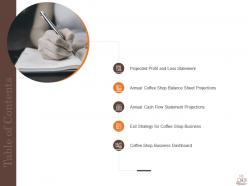
Slide 3: This slide exhibits the table of contents for the project.
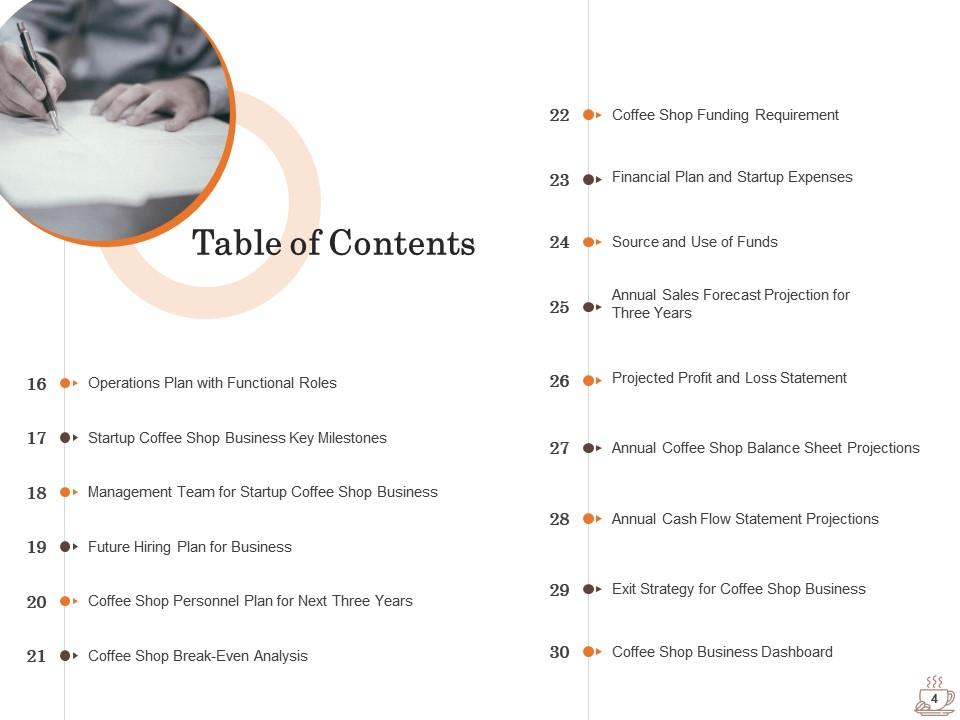
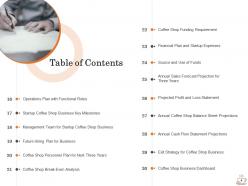
Slide 4: This slide exhibits the table of contents for the project.
Slide 5: This slide showcases the title for executive summary related to company.
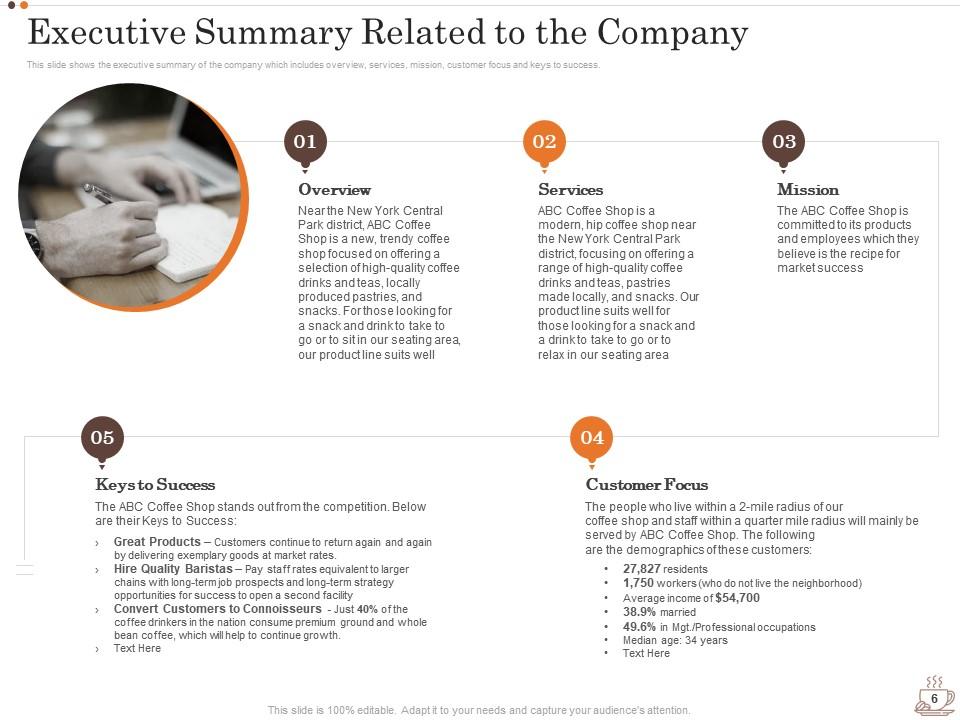
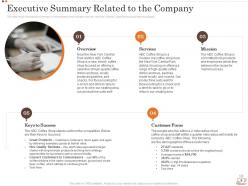
Slide 6: This slide shows the executive summary of the company which includes overview, services, mission, customer focus and keys to success.
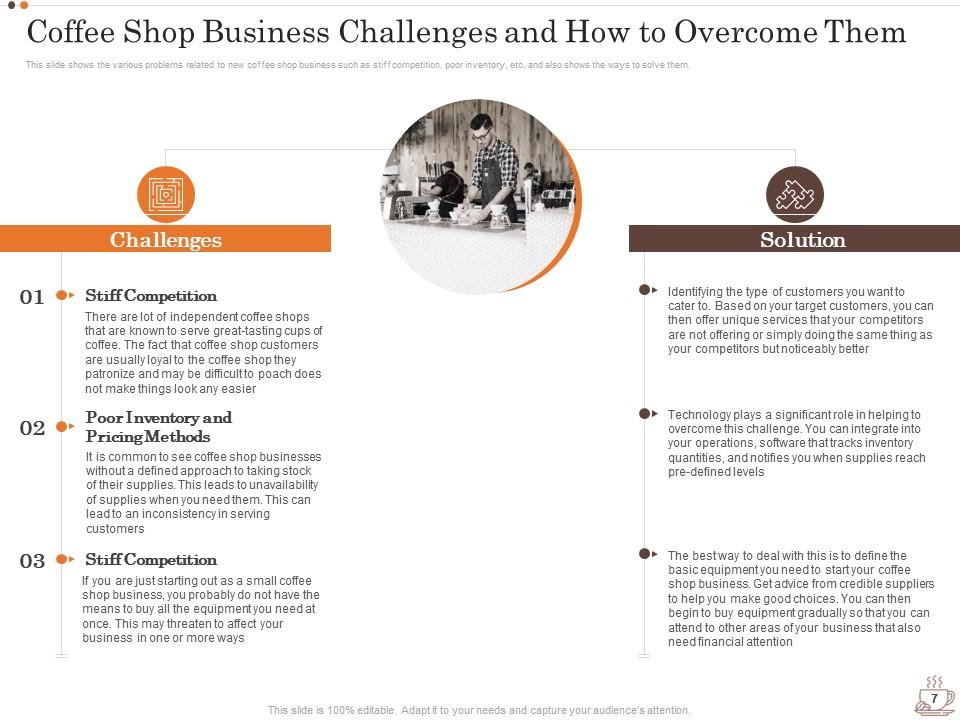
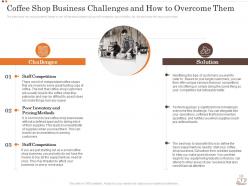
Slide 7: This slide shows the various problems related to new coffee shop business such as stiff competition, poor inventory, etc. and also shows the ways to solve them.
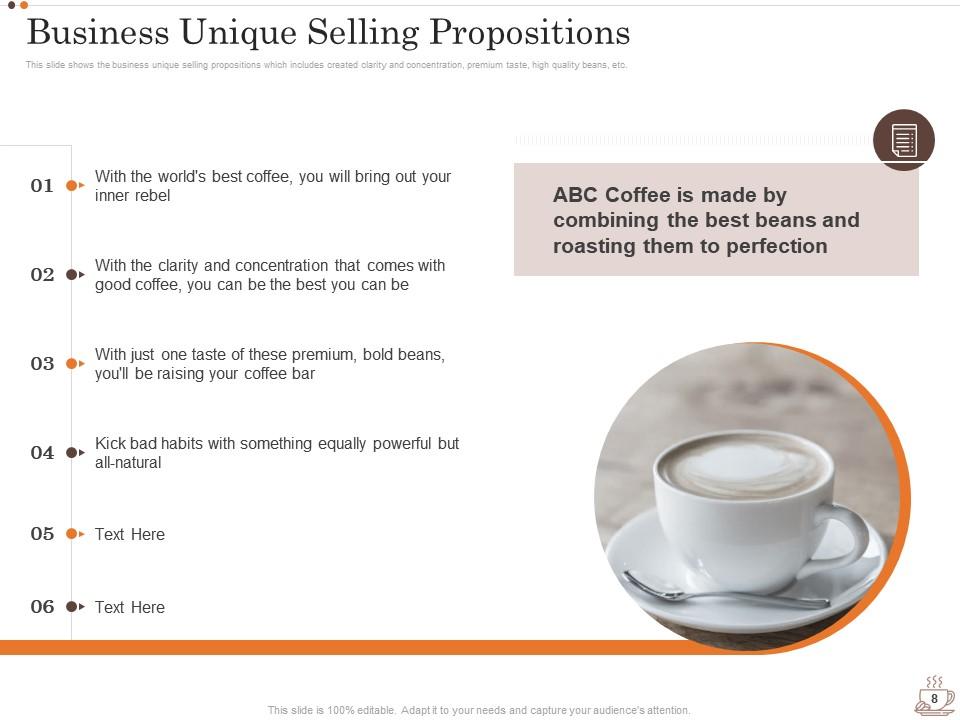
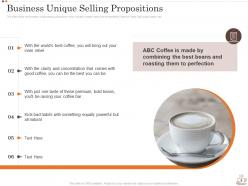
Slide 8: This slide shows the business unique selling propositions which includes created clarity and concentration, premium taste, high quality beans, etc.
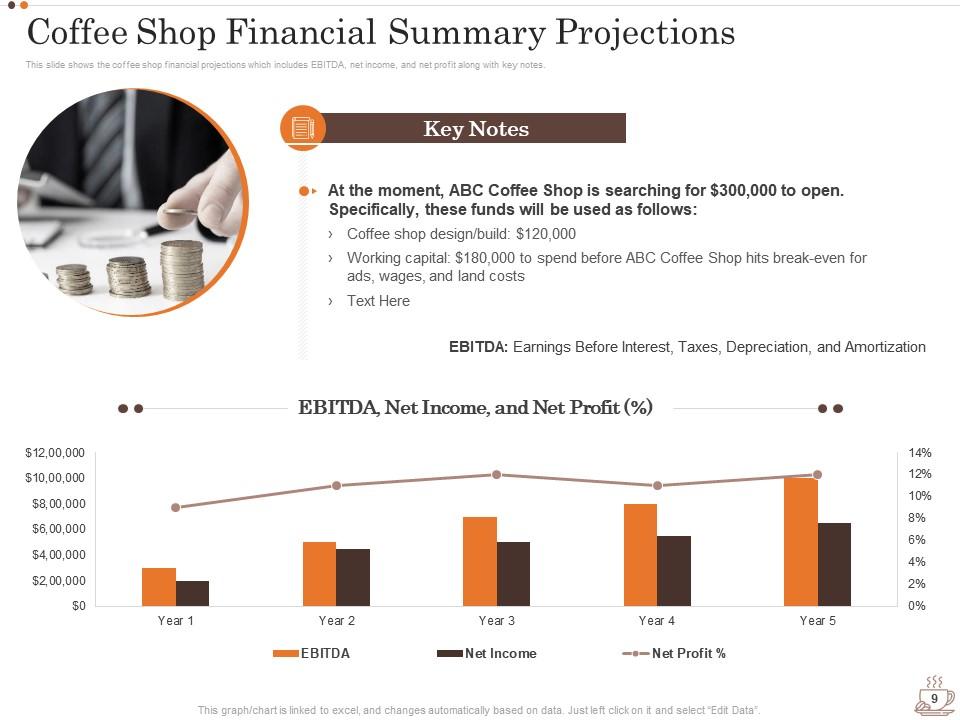
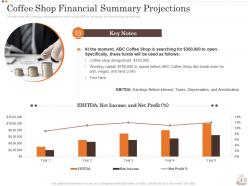
Slide 9: This slide shows the coffee shop financial projections which includes EBITDA, net income, and net profit along with key notes.
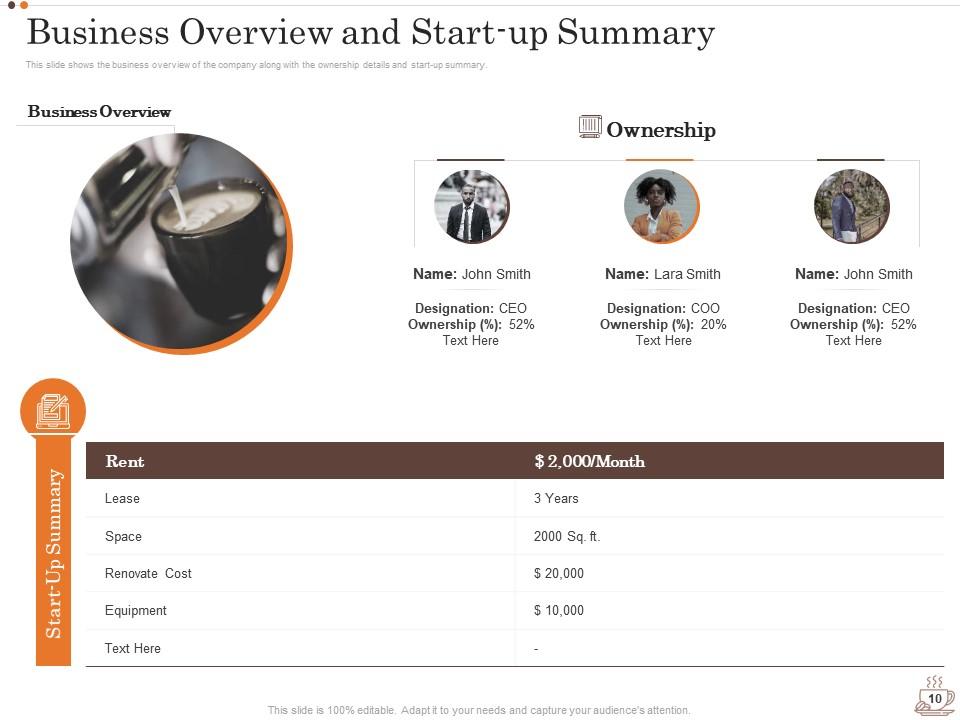
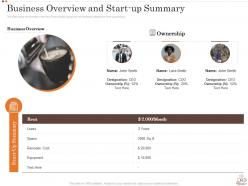
Slide 10: This slide shows the business overview of the company along with the ownership details and start-up summary.
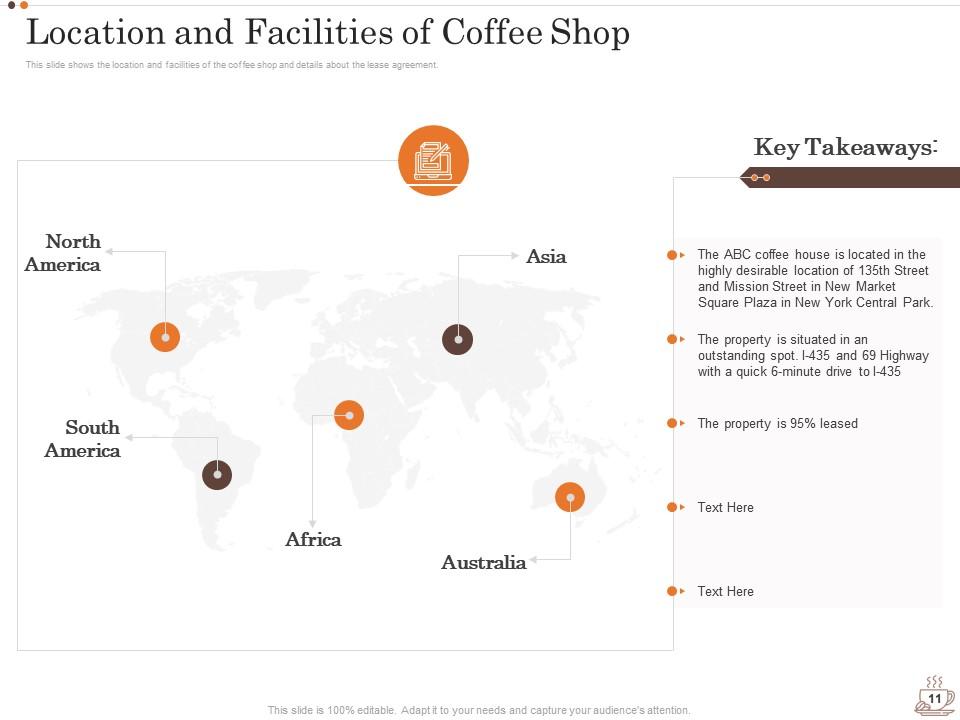
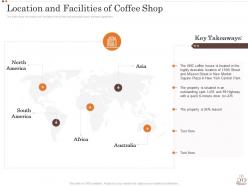
Slide 11: This slide shows the location and facilities of the coffee shop and details about the lease agreement.
Slide 12: This slide displays the title for coffee shop design and layout.
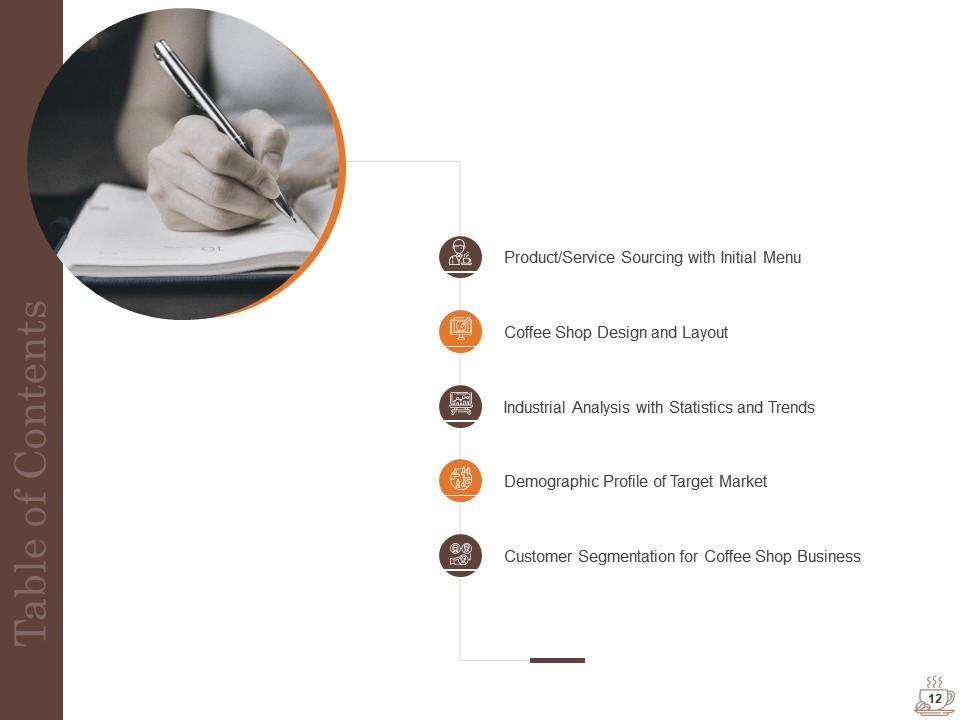
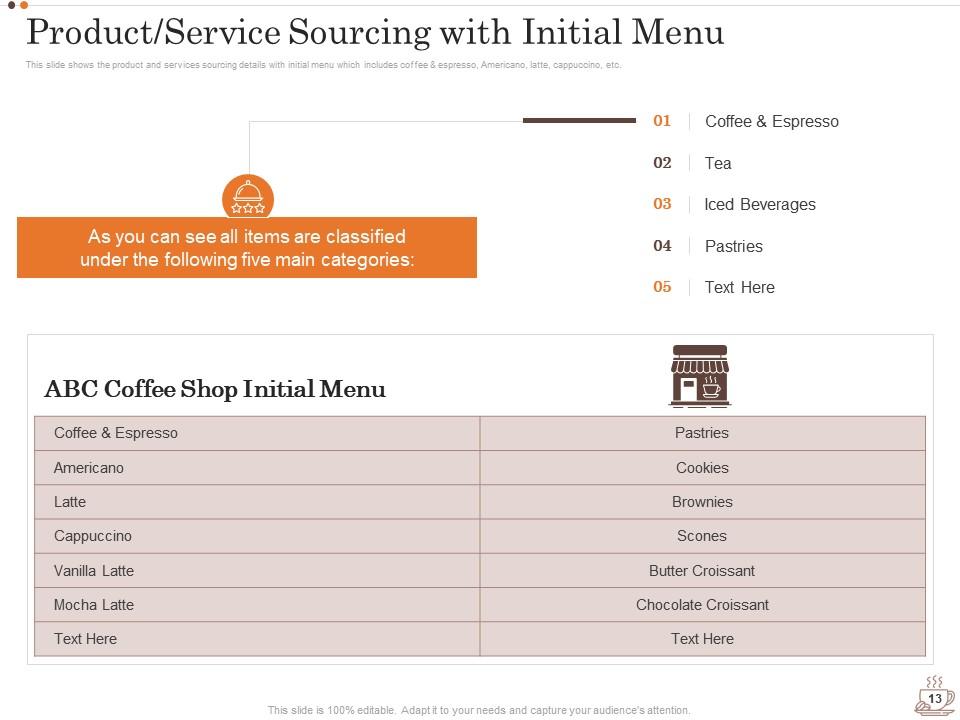
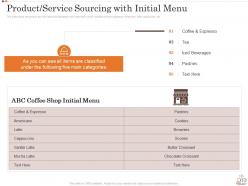
Slide 13: This slide shows the product and services sourcing details with initial menu which includes coffee & espresso, Americano, latte, cappuccino, etc.
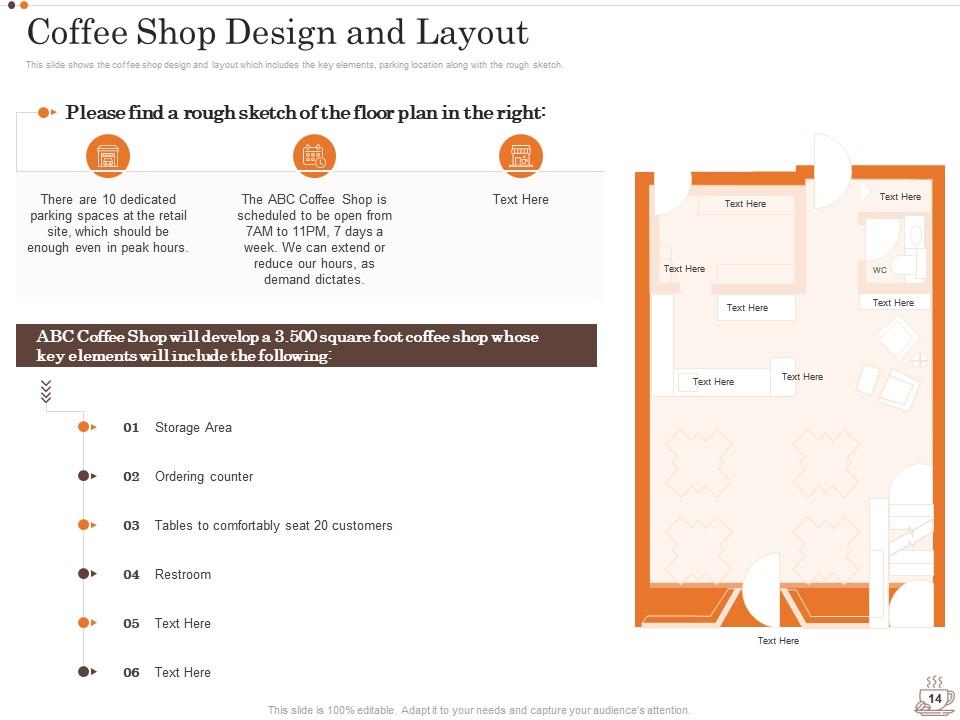
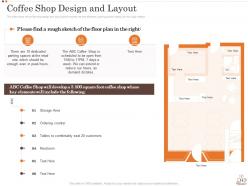
Slide 14: This slide shows the coffee shop design and layout which includes the key elements, parking location along with the rough sketch.
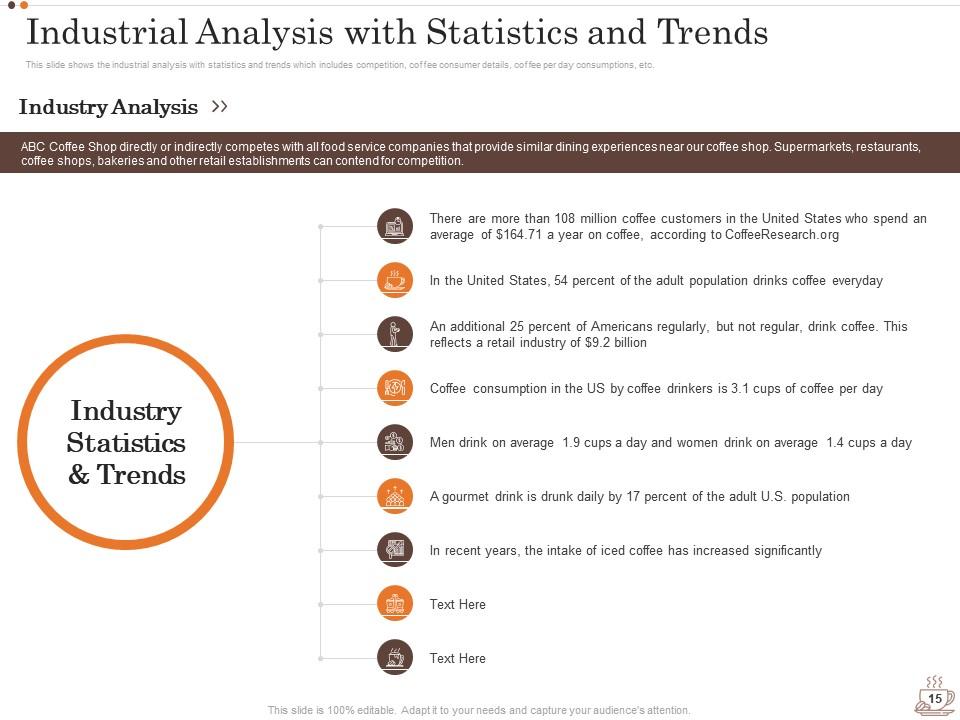
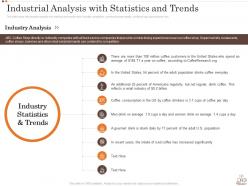
Slide 15: This slide shows the industrial analysis with statistics and trends which includes competition, coffee consumer details, coffee per day consumptions, etc.
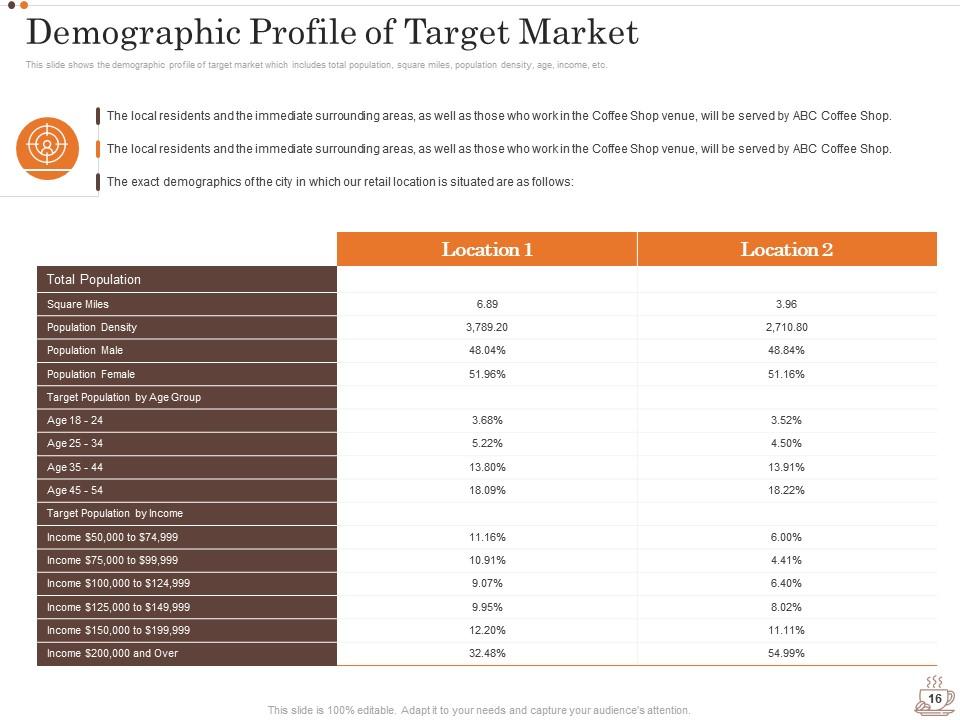
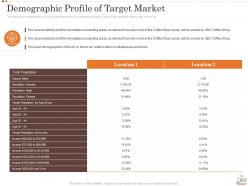
Slide 16: This slide shows the demographic profile of target market which includes total population, square miles, population density, age, income, etc.
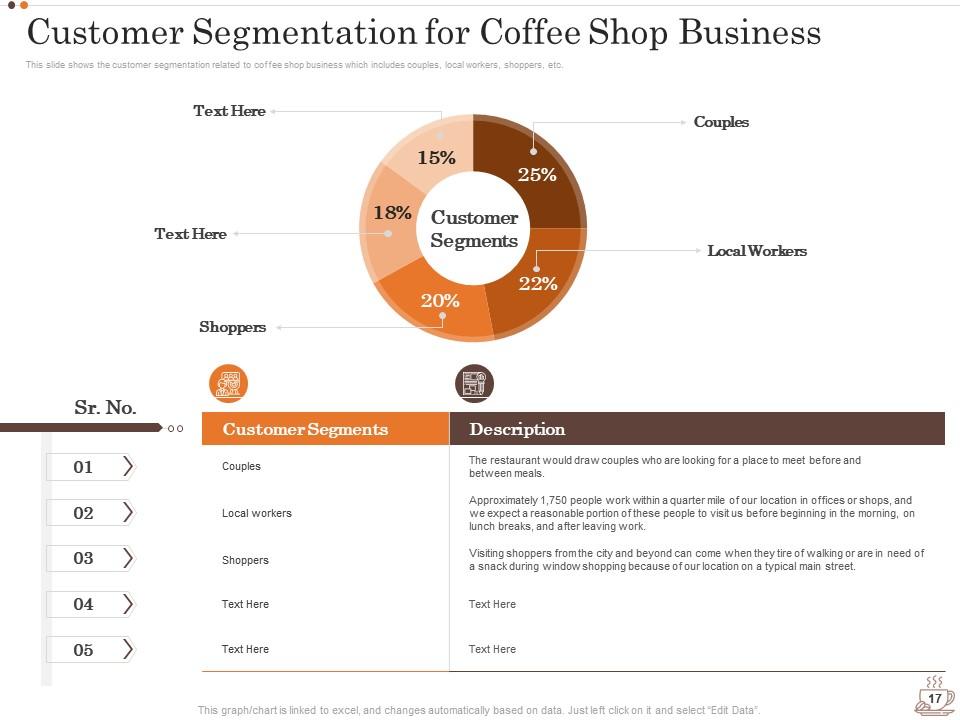
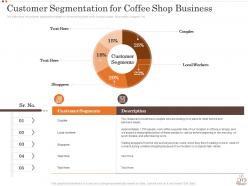
Slide 17: This slide shows the customer segmentation related to coffee shop business which includes couples, local workers, shoppers, etc.
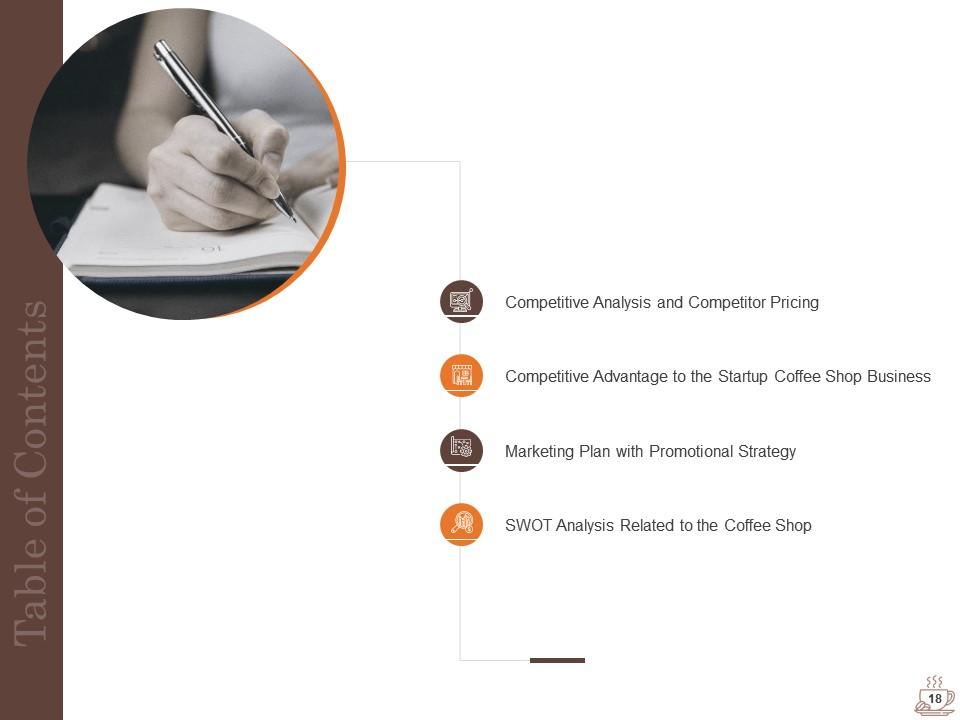
Slide 18: This slide presents the title for competitive analysis and competitor pricing.
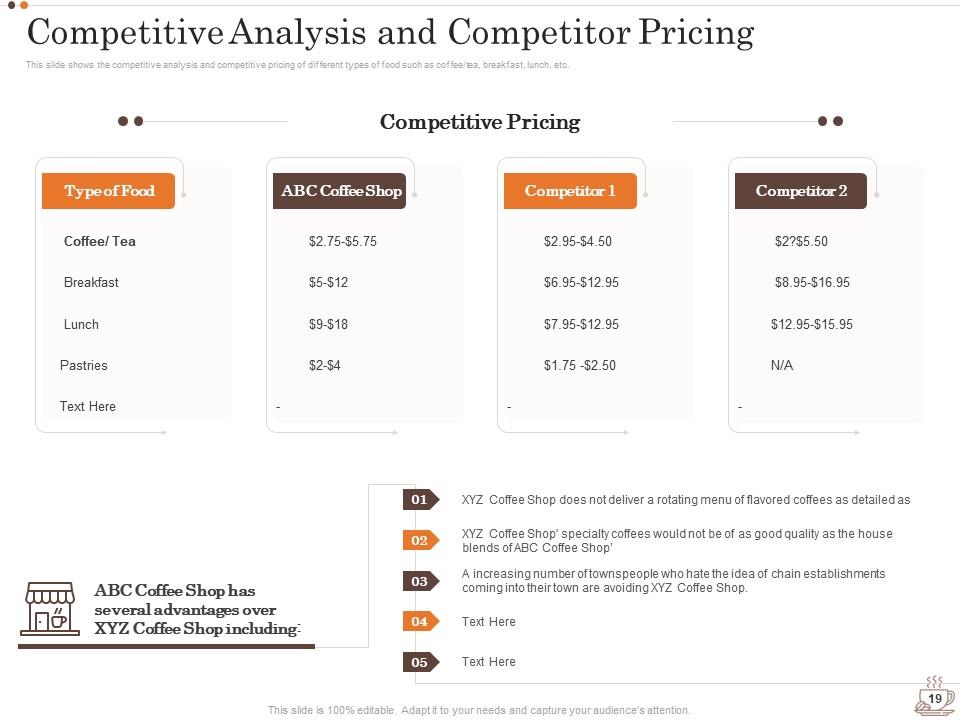
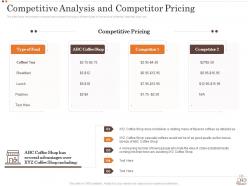
Slide 19: This slide shows the competitive analysis and competitive pricing of different types of food such as coffee/tea, breakfast, lunch, etc.
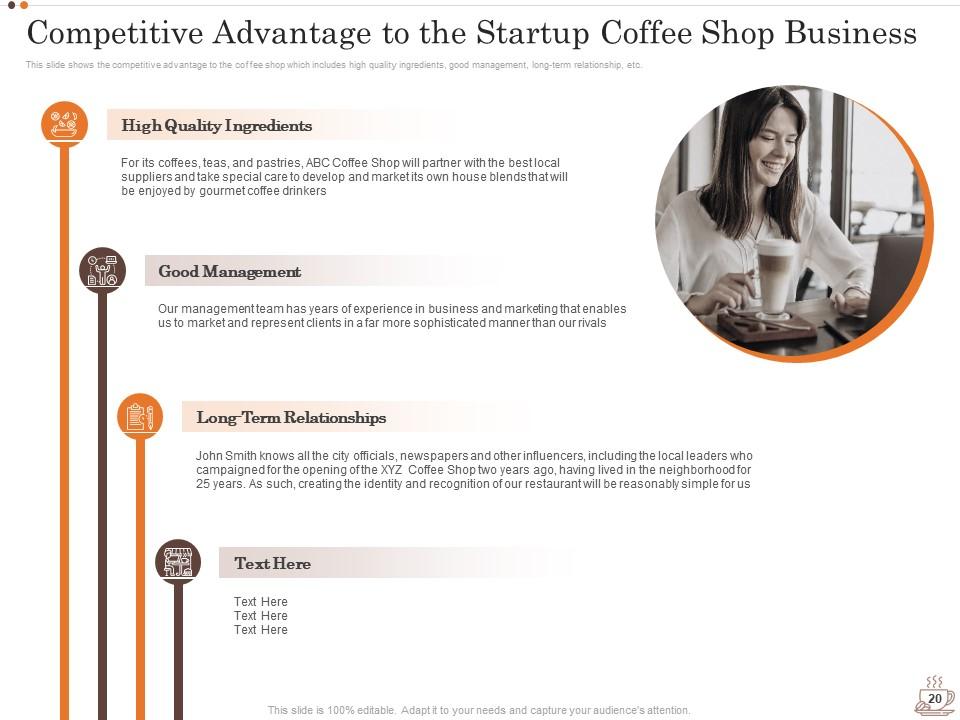
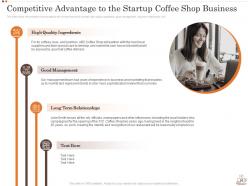
Slide 20: This slide shows the competitive advantage to the coffee shop which includes high quality ingredients, good management, long-term relationship, etc.
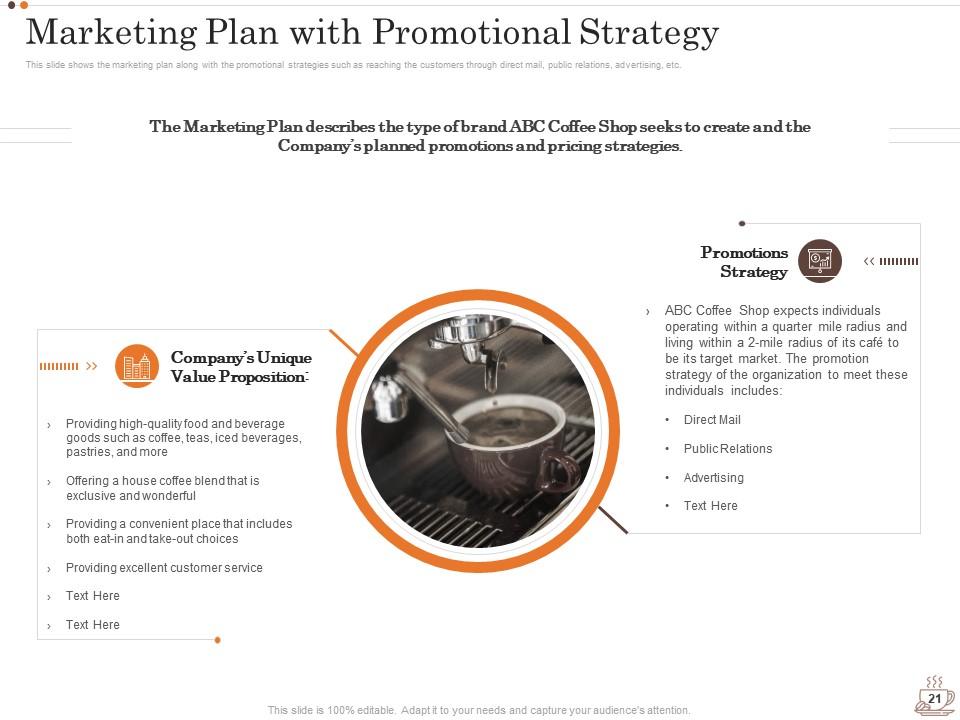
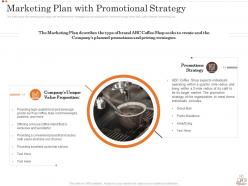
Slide 21: This slide shows the marketing plan along with the promotional strategies such as reaching the customers through direct mail, public relations, advertising, etc.
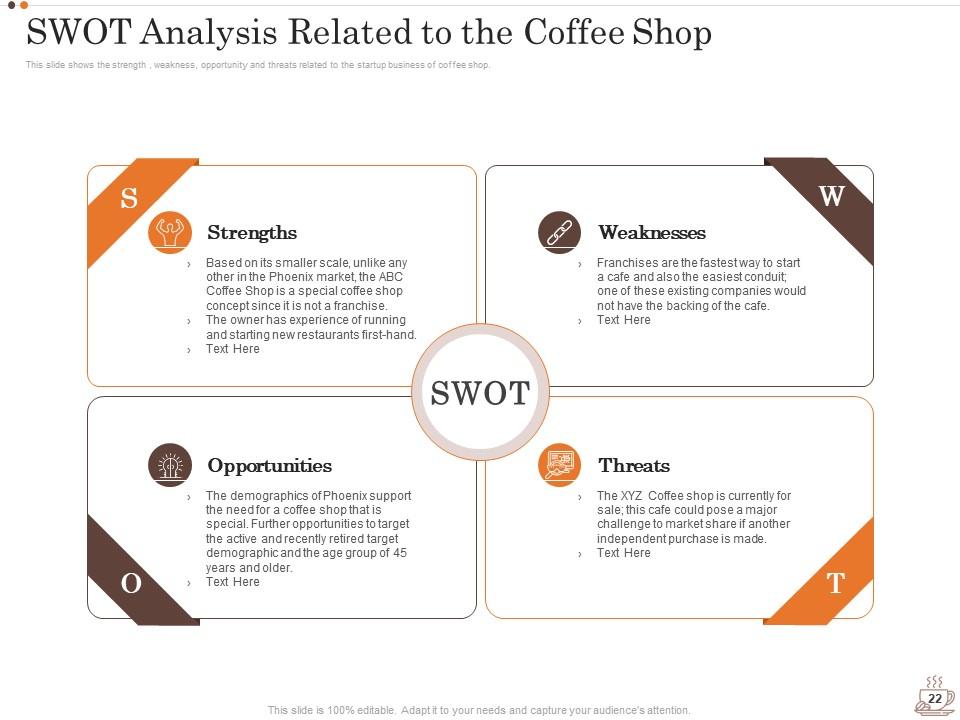
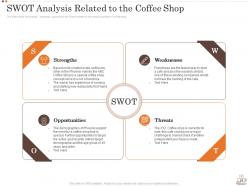
Slide 22: This slide shows the strength , weakness, opportunity and threats related to the startup business of coffee shop.
Slide 23: This slide displays the title for operational plans for functional roles.
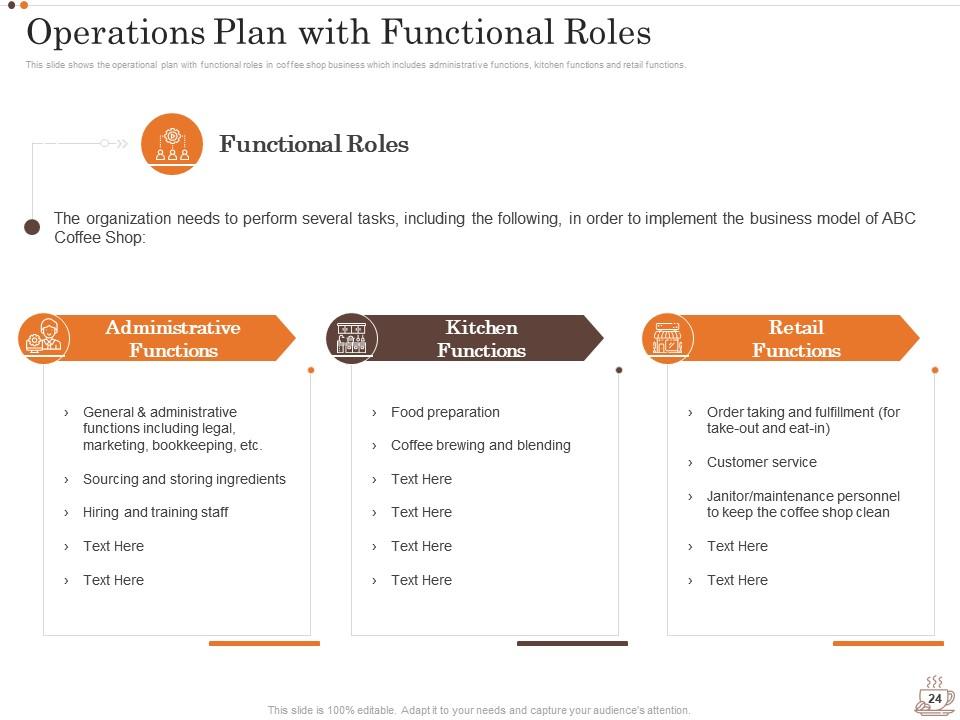
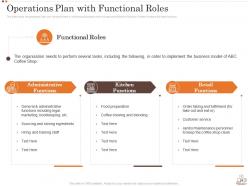
Slide 24: This slide shows the operational plan with functional roles in coffee shop business which includes administrative functions, kitchen functions and retail functions.
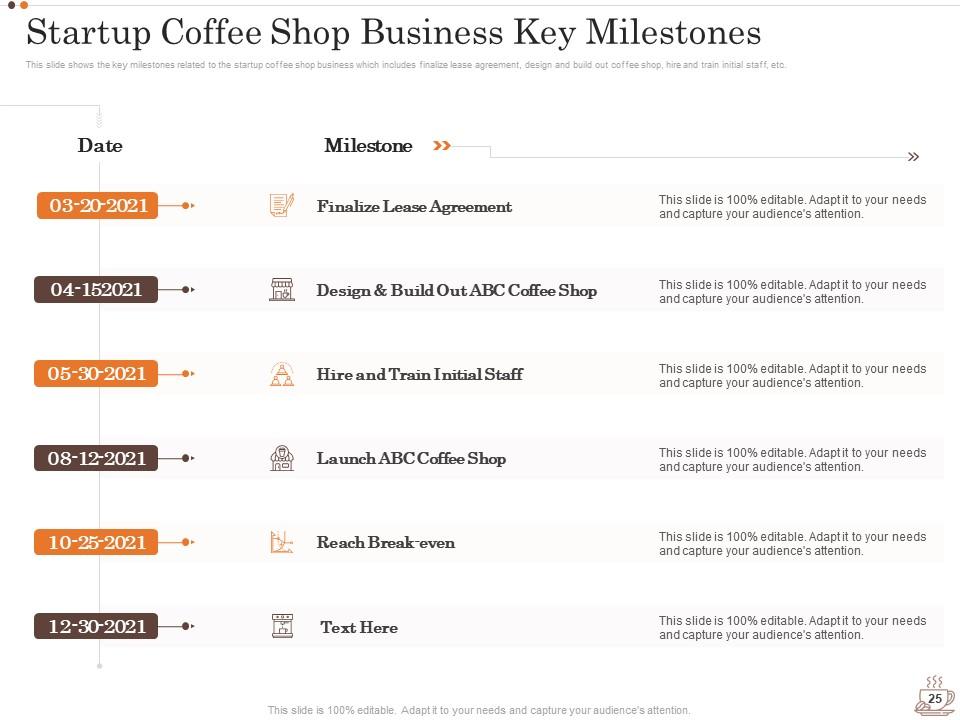
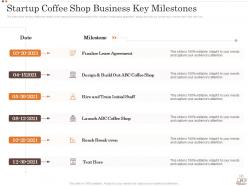
Slide 25: This slide shows the key milestones related to the startup coffee shop business which includes design and build out coffee shop, hire and train initial staff, etc.
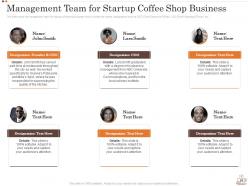
Slide 26: This slide shows the management team for startup coffee shop business which includes the names, designations such as CEO, COO, etc.
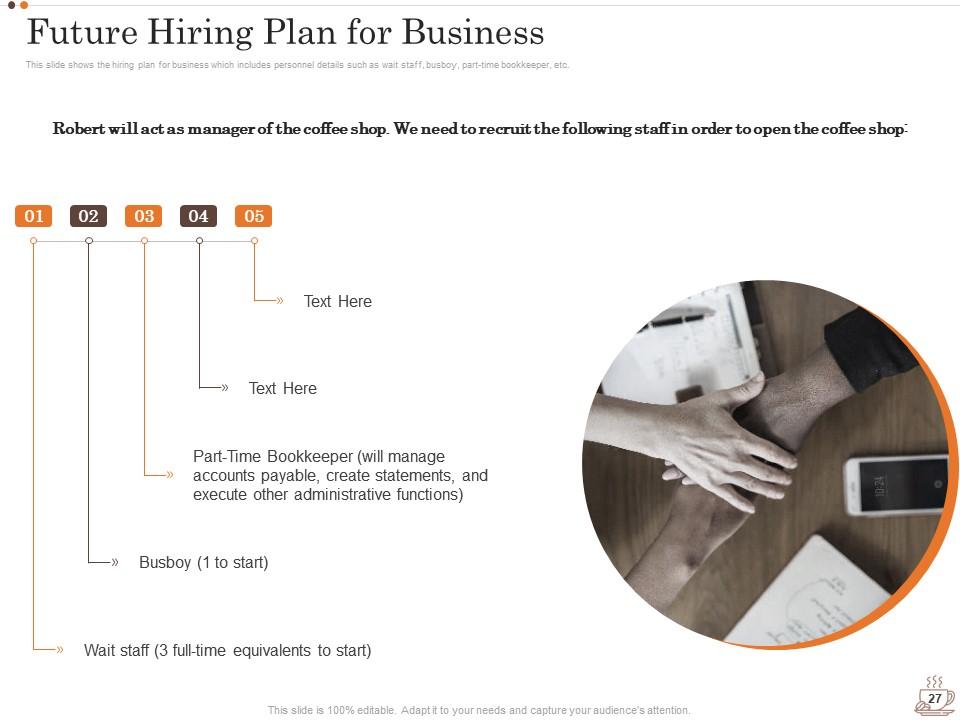
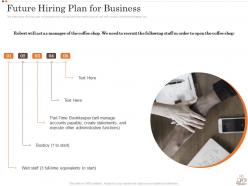
Slide 27: This slide shows the hiring plan for business which includes personnel details such as wait staff, busboy, part-time bookkeeper, etc.
Slide 28: This slide presents the title for coffee shop personnel plan for three years.
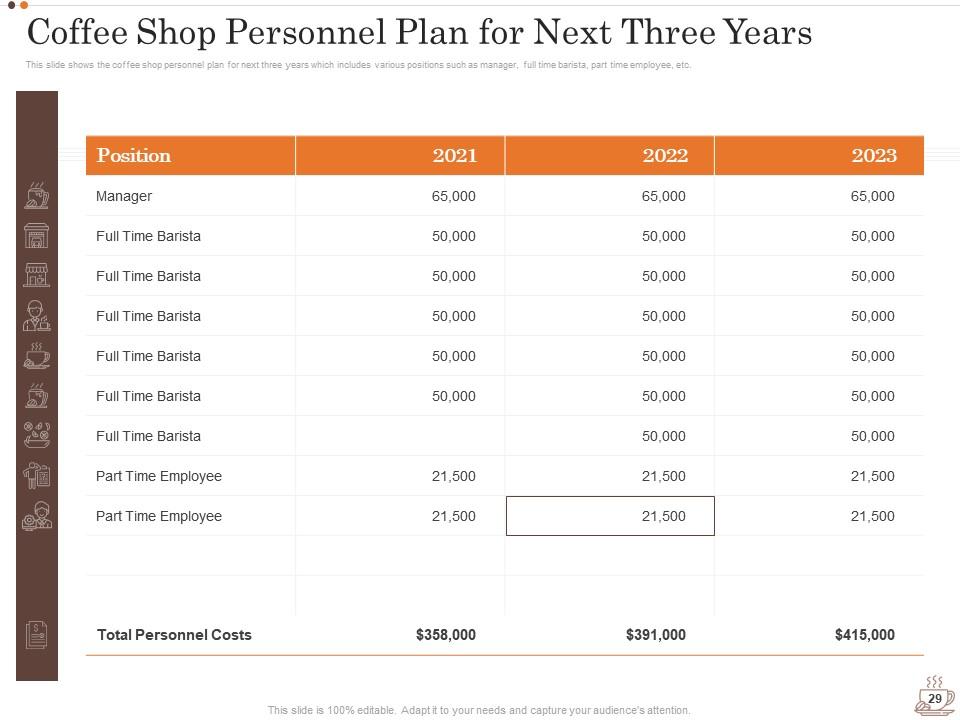
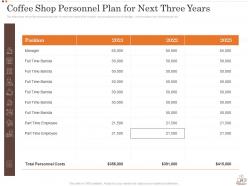
Slide 29: This slide shows the coffee shop personnel plan for next three years which includes various positions such as manager, full time barista, part time employee, etc.
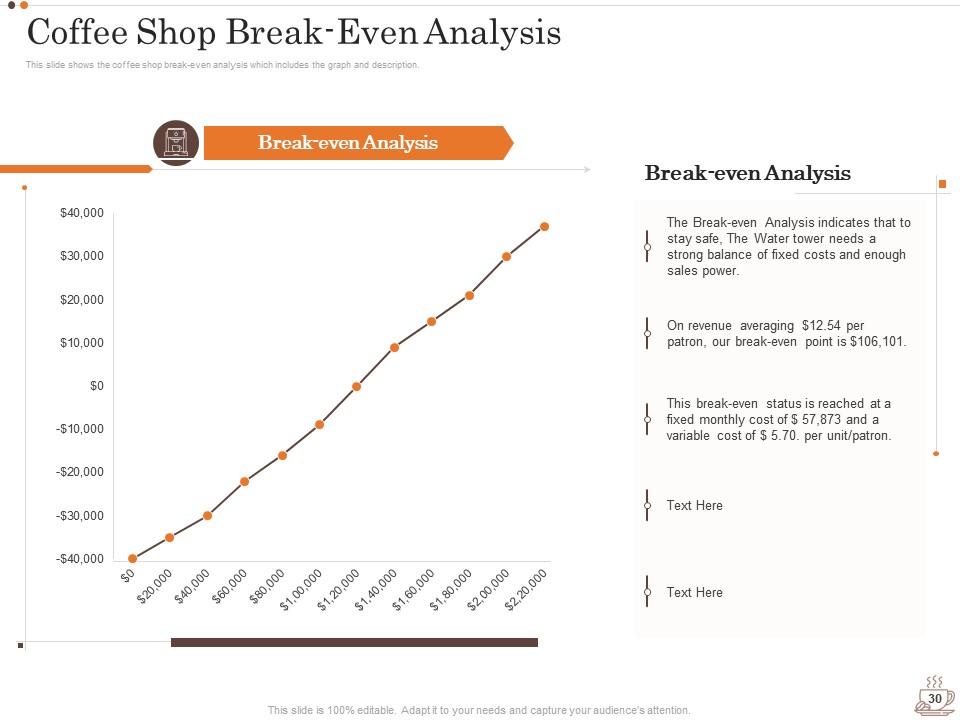
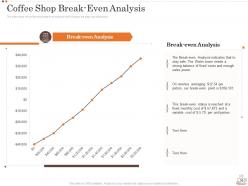
Slide 30: This slide shows the coffee shop break-even analysis which includes the graph and description.
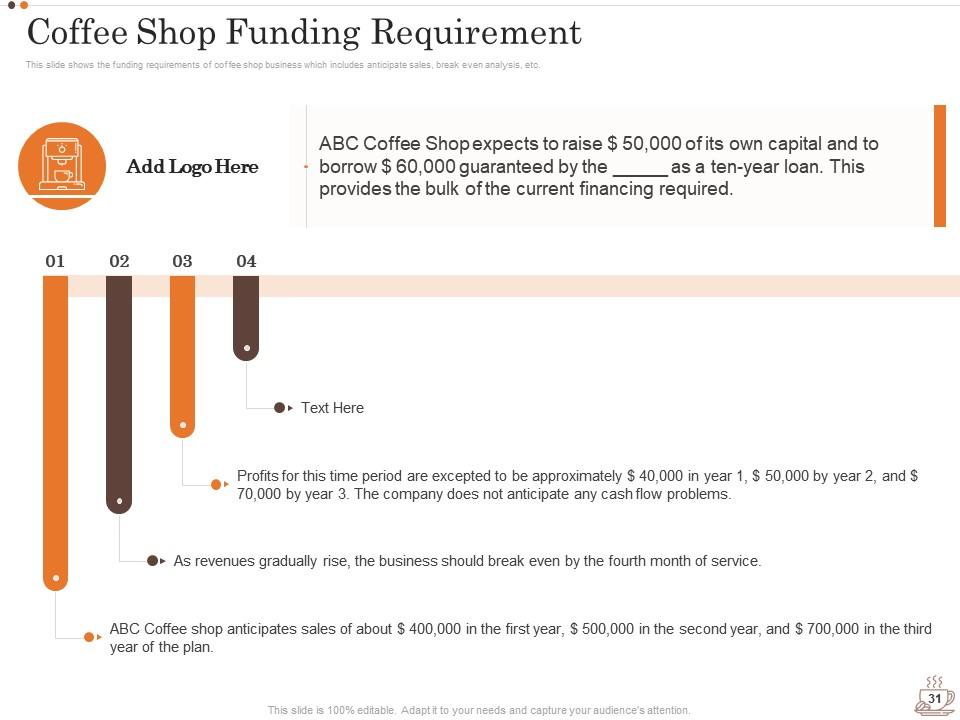
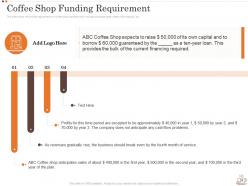
Slide 31: This slide shows the funding requirements of coffee shop business which includes anticipate sales, break even analysis, etc.
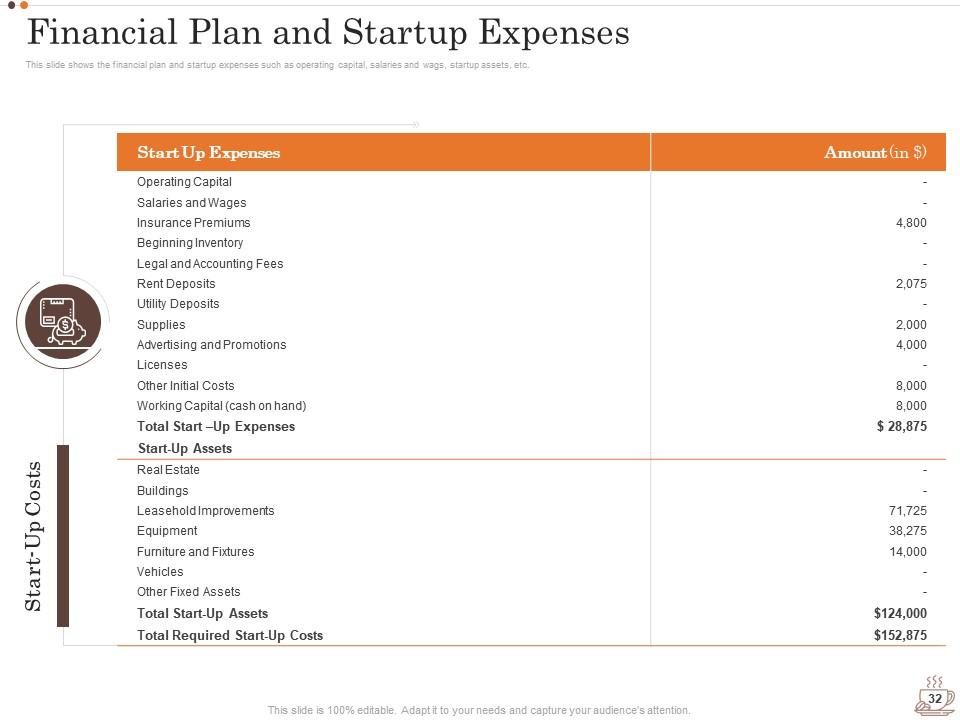
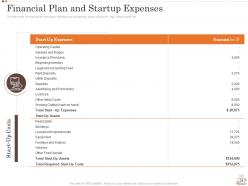
Slide 32: This slide shows the financial plan and startup expenses such as operating capital, salaries and wags, startup assets, etc.
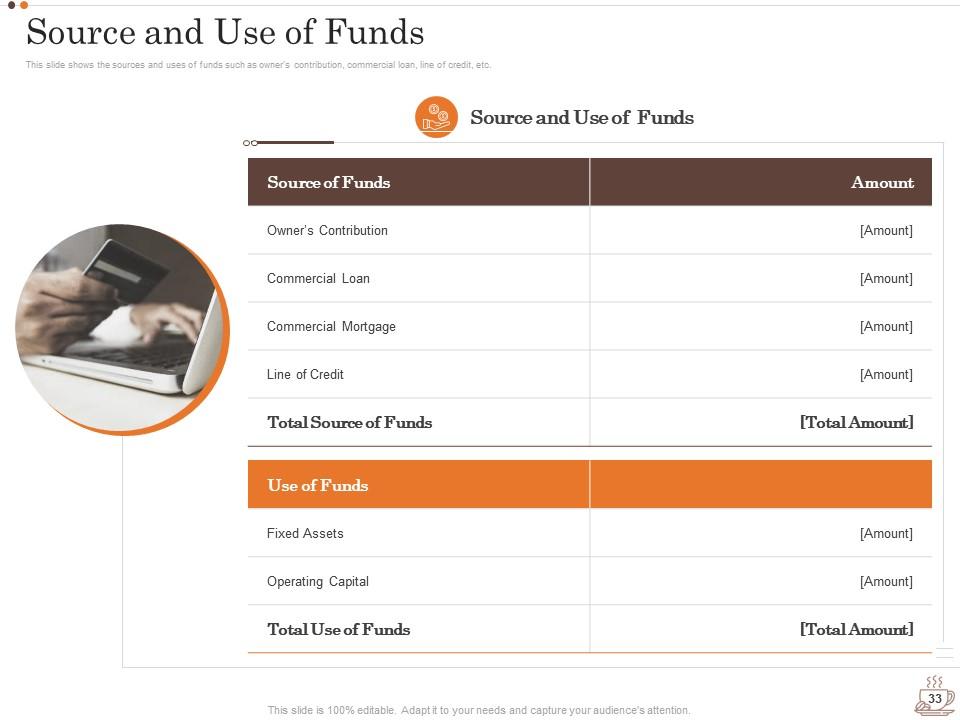
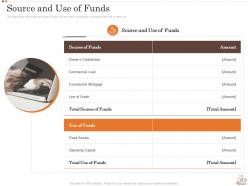
Slide 33: This slide shows the sources and uses of funds such as owner’s contribution, commercial loan, line of credit, etc.
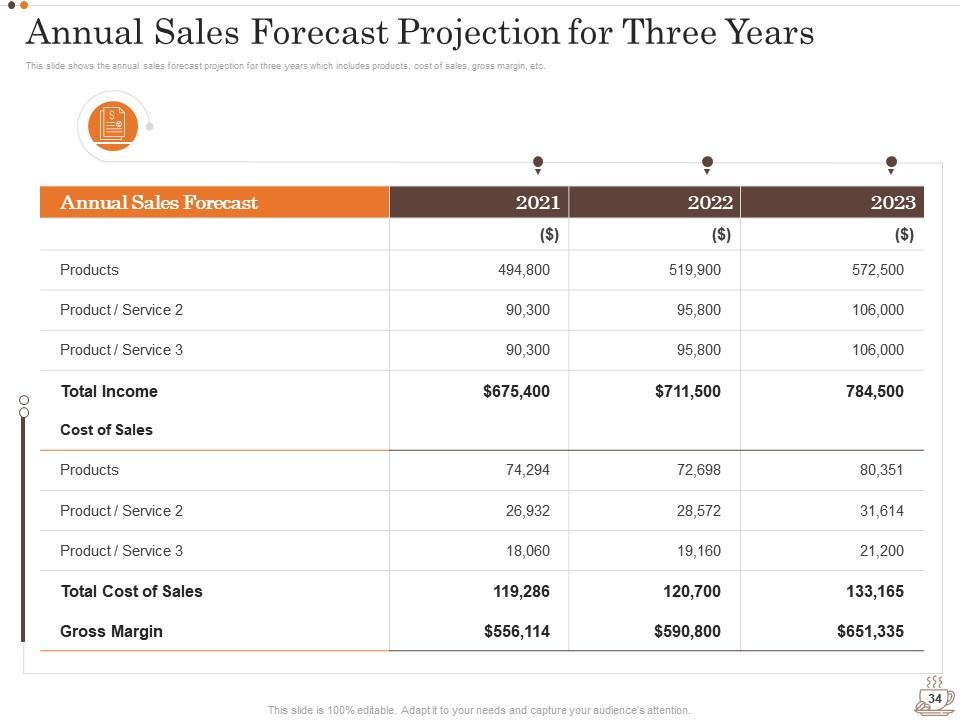
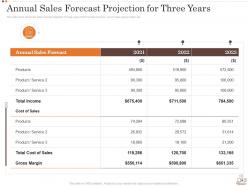
Slide 34: This slide shows the annual sales forecast projection for three years which includes products, cost of sales, gross margin, etc.
Slide 35: This slide exhibits the title for projected profit and loss statement.
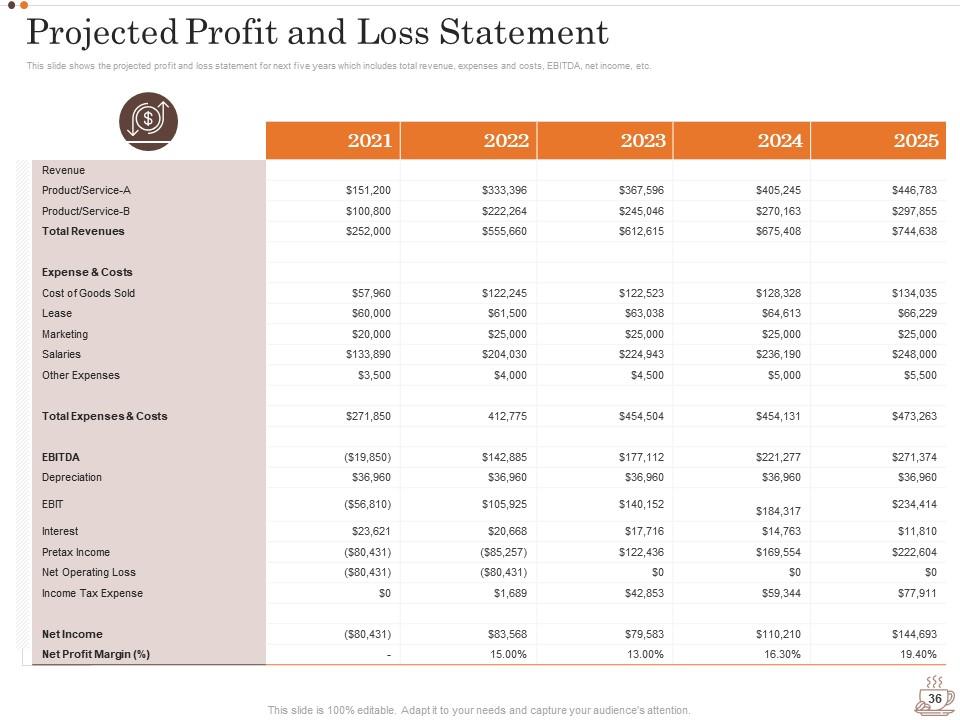
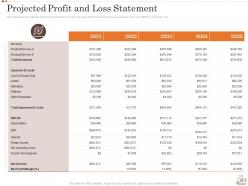
Slide 36: This slide shows the projected profit and loss statement for next five years which includes total revenue, expenses and costs, EBITDA, net income, etc.
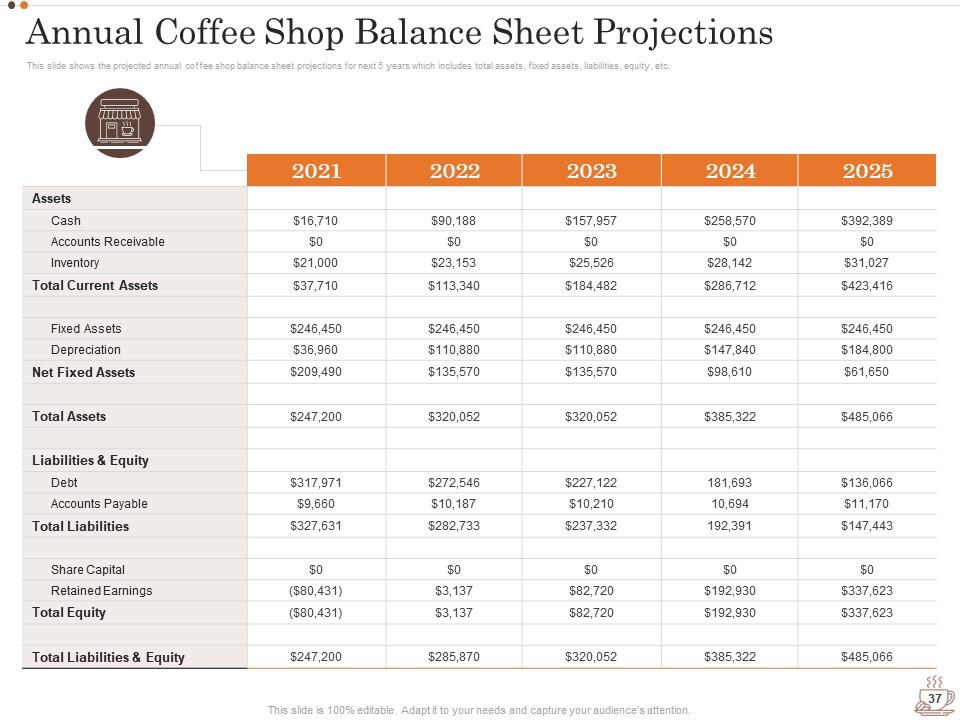
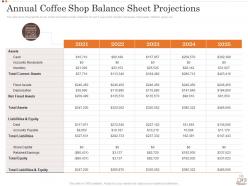
Slide 37: This slide shows the projected annual coffee shop balance sheet projections for next 5 years which includes total assets, fixed assets, liabilities, equity, etc.
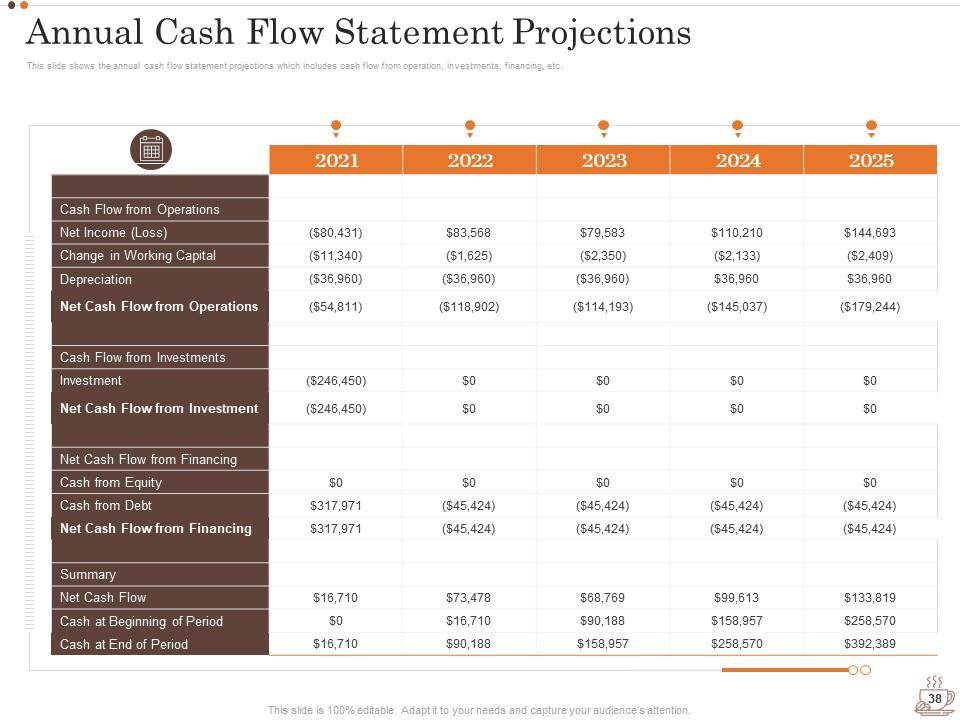
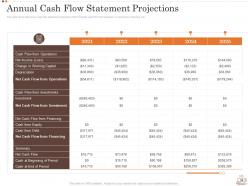
Slide 38: This slide shows the annual cash flow statement projections which includes cash flow from operation, investments, financing, etc.
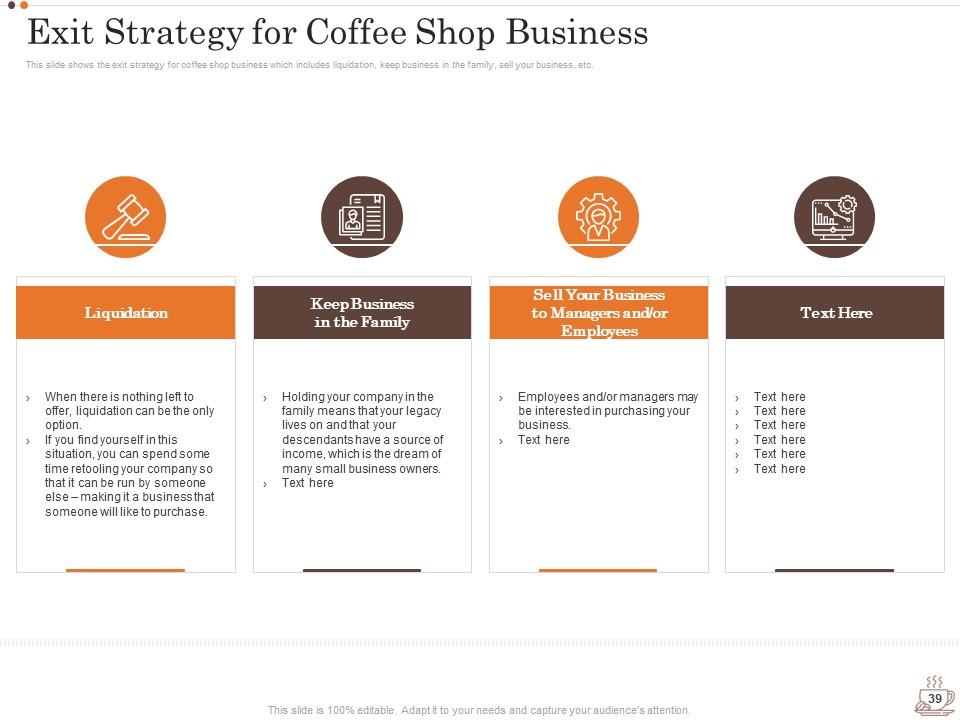
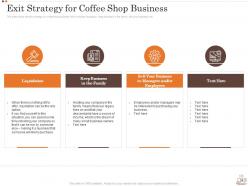
Slide 39: This slide shows the exit strategy for coffee shop business which includes liquidation, keep business in the family, sell your business, etc.
Slide 40: This is the icons slide for the project.
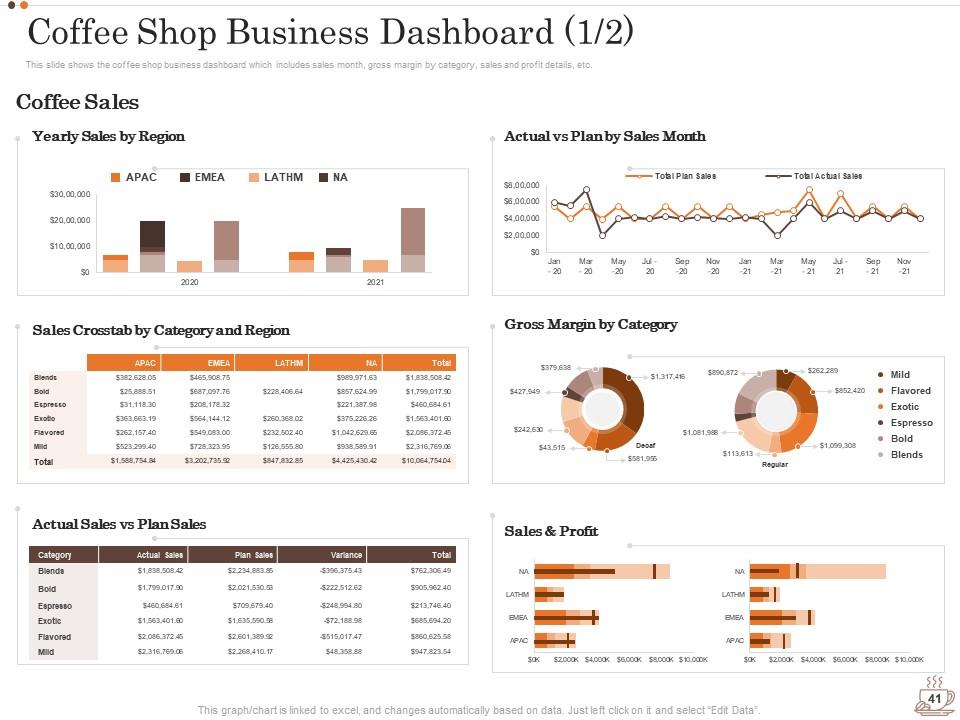
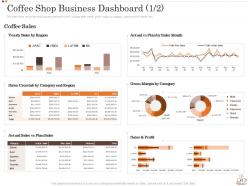
Slide 41: This slide shows the coffee shop business dashboard which includes sales month, gross margin by category, sales and profit details, etc.
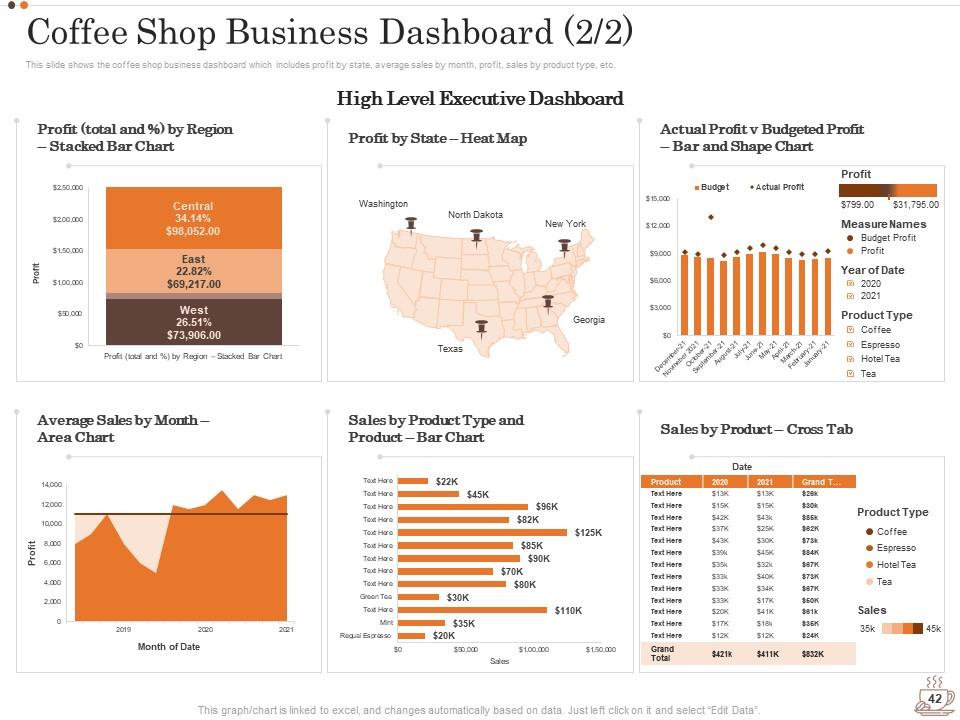
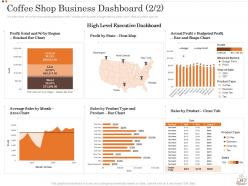
Slide 42: This slide shows the coffee shop business dashboard which includes profit by state, average sales by month, profit, sales by product type, etc.
Slide 43: This slide showcases the title for additional slides.
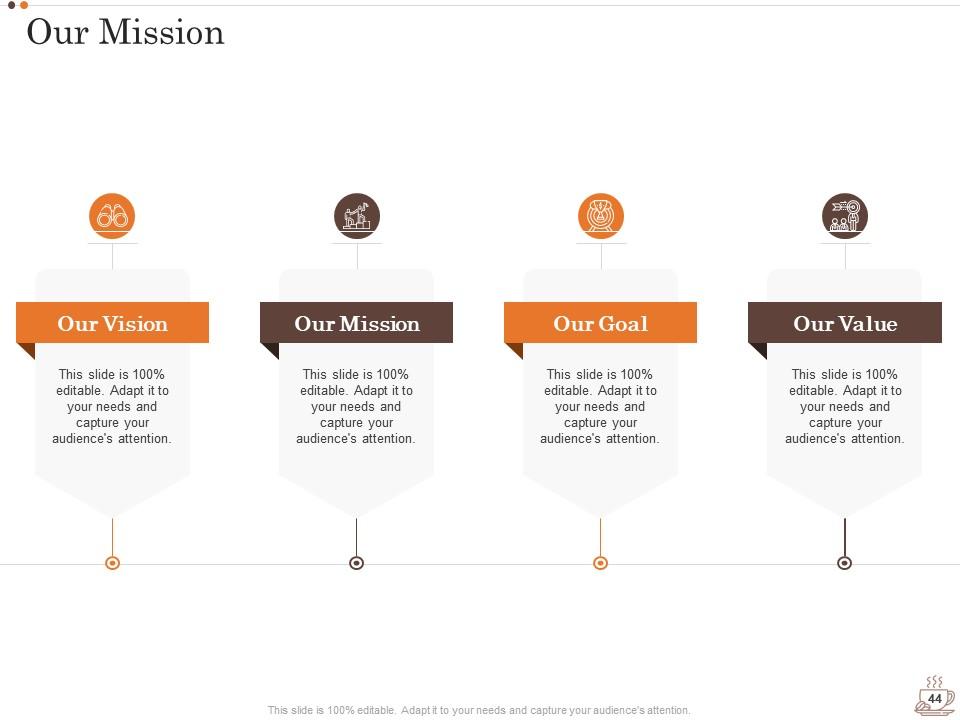
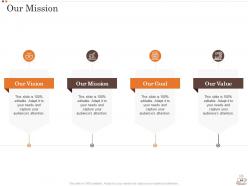
Slide 44: This slide mentions the vision, mission and goals of the company.
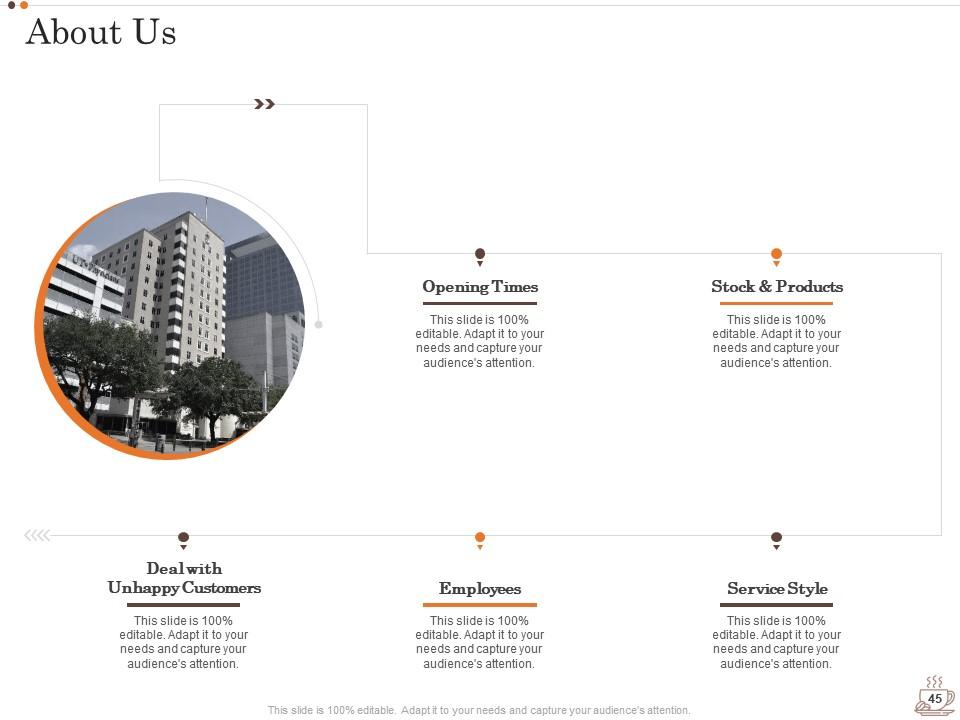
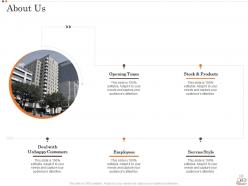
Slide 45: This slide displays about the company, its client's values and target audience.
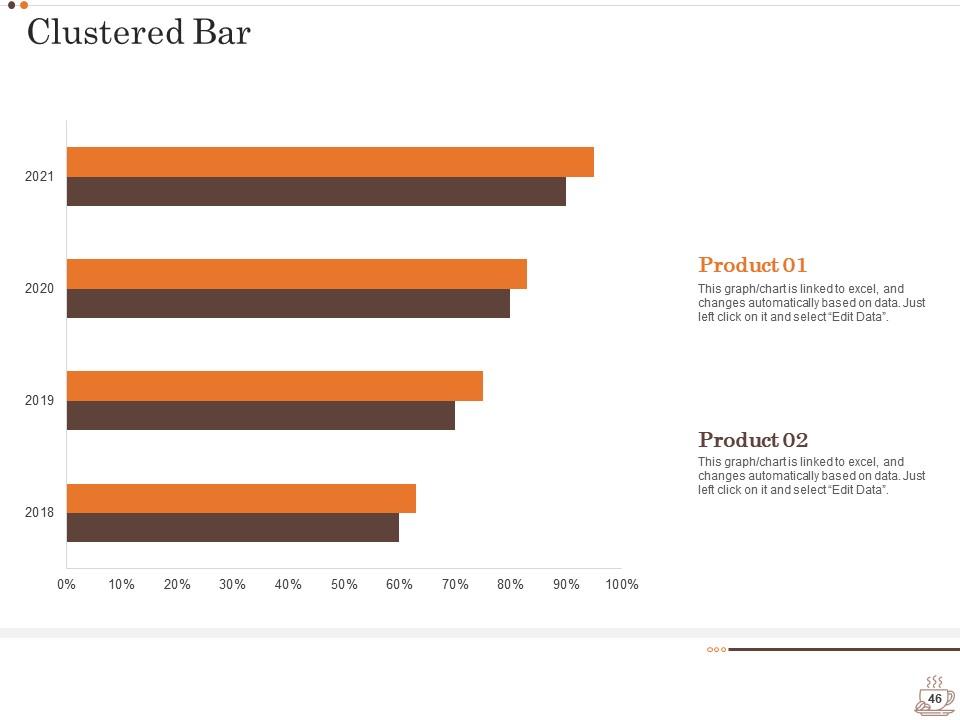
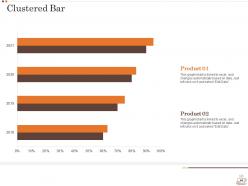
Slide 46: This slide presents the clustered bar charts for different products. The charts are linked to Excel.
Slide 47: This slide exhibits the details of the team members responsible for the project.
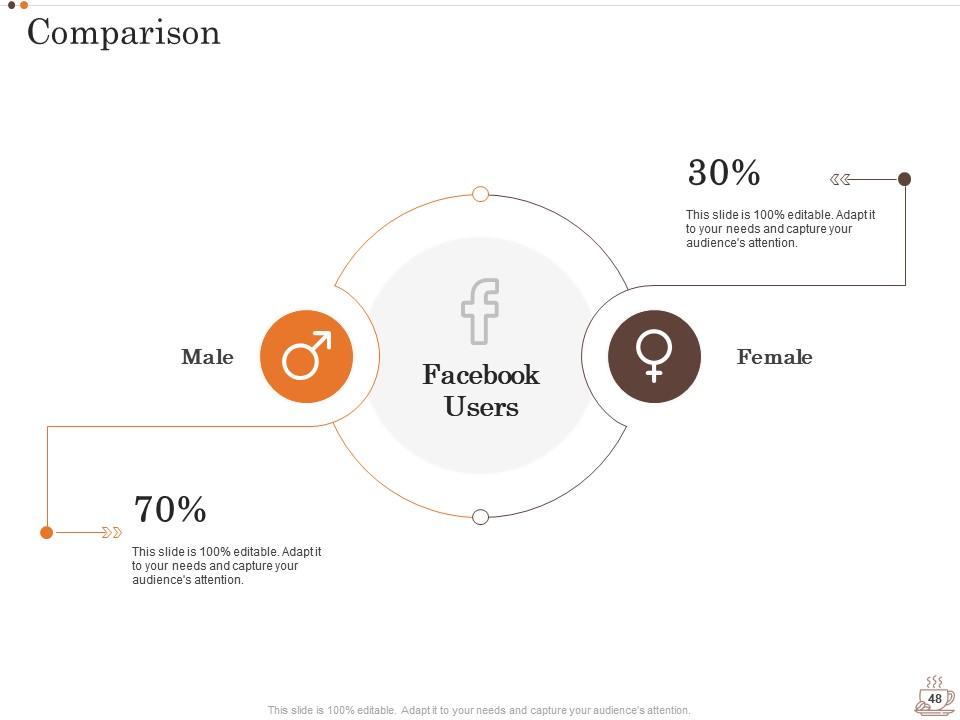
Slide 48: This slide exhibits the comparison of products based on selects.
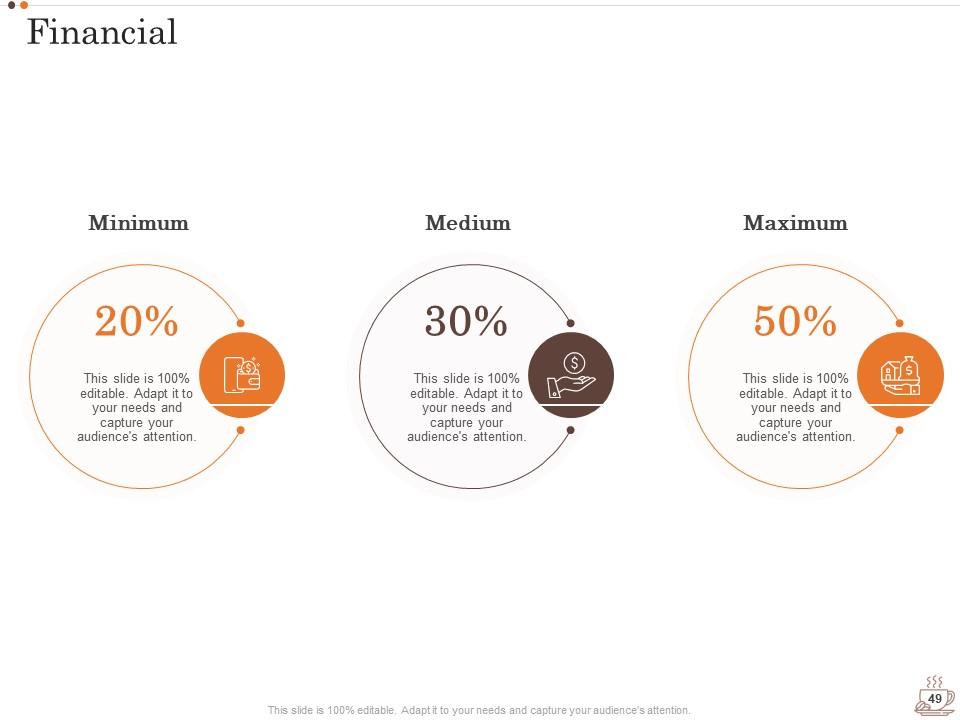
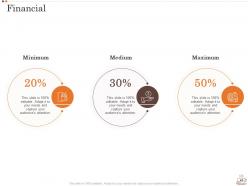
Slide 49: This slide shows the financials of the company.
Slide 50: This slide mentions the venn related to company and project.
Slide 51: This slide displays the mind map of the company.
Slide 52: This slide presents the posts for past feedbacks and experiences of the clients.
Slide 53: This slide exhibits the yearly timeline of the company.
Slide 54: This slide shows the targets of the company.
Slide 55: This is the thank you slide and contains contact details of company including phone no., office address, etc.
Business Strategy For Opening A Coffee Shop Powerpoint Presentation Slides with all 55 slides:
Use our Business Strategy For Opening A Coffee Shop Powerpoint Presentation Slides to effectively help you save your valuable time. They are readymade to fit into any presentation structure.
-
Professional and unique presentations.
-
Excellent template with unique design.
