


Operations Plan With Functional Roles Business Strategy Opening Coffee Shop Ppt Background




Try Before you Buy Download Free Sample Product
 Impress Your
 Audience
 100%
100% Editable
 Save Hours
 of Time


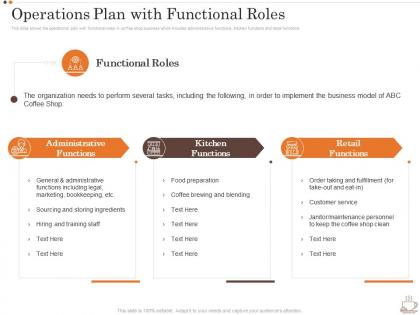
This slide shows the operational plan with functional roles in coffee shop business which includes administrative functions, kitchen functions and retail functions.
People who downloaded this PowerPoint presentation also viewed the following :
Operations Plan With Functional Roles Business Strategy Opening Coffee Shop Ppt Background with all 2 slides:
Use our Operations Plan With Functional Roles Business Strategy Opening Coffee Shop Ppt Background to effectively help you save your valuable time. They are readymade to fit into any presentation structure.
FAQs for Operations Plan With Functional Roles Business Strategy Opening Coffee
So for your ops plan, start with the basics - production workflow, supply chain, who your main vendors are gonna be. Quality control stuff too. Staffing is huge here and honestly most people totally mess this part up. Map out your tech stack and what kind of space you'll need. Track some basic metrics so you're not flying blind. Timeline-wise, focus on realistic milestones for your first year of scaling. I always tell people to stay practical - like what do you actually need in months 1-12, not some pie-in-the-sky version three years out. That's where founders get stuck in planning mode forever.
So an operations plan is way more hands-on than a business plan. Your business plan is all the high-level stuff - market research, financial forecasts, that investor-friendly content. But operations? That's your actual playbook for running things day-to-day. We're talking workflows, staffing schedules, supply chain details, quality control. It's the difference between "here's our vision" and "here's exactly how we'll execute it." Honestly, most people skip this part but it's where the real work happens. I'd start with your main processes and build out from there. Way more tactical.
Look, data analysis is what separates good ops decisions from wild guessing. I've watched too many plans crash because someone went with their gut instead of actual numbers. You want to dig into historical performance, demand patterns, cost breakdowns - that stuff tells you what's really going on vs. what you think is happening. Use it to spot bottlenecks, forecast what you'll need resource-wise, figure out where money's getting wasted. Oh and demand patterns are huge for timing everything right. Bottom line: let the data drive your planning process instead of assumptions. Trust me on this one.
Honestly, you gotta track the obvious stuff first - cost cuts, productivity bumps, quality scores, whether you're hitting deadlines. That's your bread and butter data. But here's the thing - employee feedback and customer satisfaction can actually catch problems way earlier than spreadsheets do. I'd probably do check-ins monthly or quarterly, depends how fast things move at your place. Oh, and this is crucial - get your baseline numbers locked down before you change anything. Otherwise you're basically flying blind trying to figure out if stuff's actually working or not.
Honestly, the worst mistake is over-planning from day one. You'll burn weeks mapping out stuff that'll never actually happen. Timeline estimates? Everyone's way too optimistic - things always take longer than you think. Get the people doing the actual work involved early, don't just plan in your bubble. Oh, and stop obsessing over making it look perfect! A messy document that works beats a gorgeous one that sits unused. Start with your main workflows and what depends on what, then add more as you figure out what actually matters. Much less painful that way.
Quarterly reviews are usually enough for most businesses. But honestly? If you're in a startup or things change fast in your industry, do it monthly. Established companies can probably stretch it to twice a year - though I wouldn't go longer than that. Watch out for big stuff that forces your hand earlier: market crashes, new regulations, company restructuring. That kind of thing throws your whole plan out the window. Oh, and definitely set those calendar reminders now or you'll forget. Keep notes on potential changes between reviews too.
Dude, your supply chain is literally what makes or breaks your whole operations plan. I found this out the awful way when our main supplier just vanished for two weeks - total nightmare! You've got to map out how stuff flows from suppliers to customers and spot where things might get stuck. Diversify your suppliers if you can, figure out realistic lead times, and keep some backup stock for the critical stuff. Honestly, most people skip this part and then wonder why everything falls apart. Start by looking at where you're most vulnerable right now. Without decent supply chain planning, you're basically just crossing your fingers and hoping.
Dude, the tech stuff is seriously changing how operations work. Real-time analytics let you actually predict demand patterns now - it's pretty crazy how accurate forecasting has gotten. AI spots bottlenecks before they mess you up, and automation handles all the boring repetitive stuff so you don't need as much manual work. Here's the thing though - don't try to change everything overnight. Pick your worst headaches first and find tech that fixes those specific problems. Then gradually work it into what you're already doing. Resource allocation gets way more precise when you have good data flowing in. Start small and build from there.
Process mapping is your best starting point - find where things get stuck or doubled up. Automate the boring repetitive stuff (trust me, even tiny automations are game-changers). Make sure procedures are standardized so people aren't constantly figuring things out from scratch. Check if your team's actually working on what matters most. Cross-training is clutch because then you're not screwed when someone's out sick. Honestly, the biggest impact usually comes from just cutting out random steps that nobody remembers why they started doing in the first place.
Start by breaking your big strategic goals into actual concrete activities. Like if you want better customer satisfaction, figure out exactly how you'll cut response times or fix your quality control - not just "we'll do better" which is honestly worthless. Every operational move needs to connect back to a strategic goal somehow. Map out real metrics and timelines too. The quarterly review thing is key because stuff changes and you don't want to be stuck following a plan that's already outdated. Oh, and make sure you're actually allocating resources properly for each initiative.
Start by mapping out all the stuff that could go wrong - supply chain hiccups, equipment breaking down, staffing shortages, you know the drill. Figure out which ones are most likely and would hurt the most. Build actual contingency plans for the big risks, not just documents nobody reads. I've seen too many companies with "emergency plans" gathering dust somewhere. The real trick is weaving this into your regular routine instead of treating it like some annual chore. Monthly check-ins work well for updating your risk list since everything changes so fast these days.
Honestly, just build in regular check-ins throughout your planning process. I'd start with surveys during the initial phase - your frontline people see stuff you completely miss sitting in meetings all day. Quarterly reviews work great for seeing how new processes actually play out. Anonymous suggestion boxes are okay but kinda meh in my experience. The real trick? Actually do something with their feedback and tell them about it. Skip that step and people will bail on giving input super fast. Oh, and focus groups can be gold if you've got the time.
So you'll want to focus on four main things: efficiency (how much you're getting vs what you're putting in), quality stuff like defect rates and customer satisfaction, cost performance - budget variance and cost per unit, and delivery metrics like on-time rates. Honestly, don't try to track everything or you'll go crazy with data overload. Pick maybe 3-5 KPIs that actually matter to your business goals. Employee productivity and resource utilization are solid too. Start simple with a basic dashboard, then add fancier metrics later when you figure out where things are breaking down.
Honestly, market shifts will mess with your whole operation whether you're ready or not. Look at COVID - companies literally had to rebuild their supply chains from scratch in like two weeks. Crazy stuff. When demand changes or new competitors show up, you've got to adjust everything: how much you produce, where you get materials, who's working on what. The smart move? Build some wiggle room into your setup from day one. That way when things inevitably go sideways, you're tweaking the system instead of rebuilding it completely.
Look, sustainability isn't optional in ops anymore. Customers expect it, regulations demand it, and honestly? Smart companies are making bank from it. You've got to build it into everything - where you source materials, which suppliers you pick, how you design processes. The waste reduction alone saves serious money. I'd start by figuring out your current environmental footprint first. Then hit the biggest problem areas hard. It used to be just about doing the right thing, but now it's straight-up competitive advantage. Companies are seeing real cost savings through better efficiency.
-
Nice and innovative design.
-
Great quality product.
-
Colors used are bright and distinctive.