

Estratégia de negócios para abrir uma cafeteria Slides de apresentação em Powerpoint





Try Before you Buy Download Free Sample Product
 Impress Your
Audience
 100%
Editable
 Save Hours
of Time


Planejar as etapas de um excelente início de uma cafeteria exige que você construa estratégias que solicitem que você responda a algumas perguntas, como como os custos serão financiados, quanto custará a casa para definir para cima, quanto dinheiro você espera ganhar, etc. Uma cafeteria de sucesso requer três elementos para transformar visitantes de negócios em clientes regulares seleção, qualidade e sazonalidade, mantendo os produtos mais populares do mercado. Confira nosso modelo de Estratégia de Negócios para Abrir uma Cafeteria, projetado com eficiência, que se concentra em dar algo que o torna único e aproveitar os fenômenos sazonais. O objetivo disso é fornecer a você o conhecimento de manter um alto nível de qualidade de alimentos e serviços e permitir que você atinja a base máxima de clientes nos primeiros 2 anos. As empresas podem mostrar seu resumo executivo, desafios, soluções, USPs, projeções financeiras e muito mais para atender às expectativas específicas dos clientes. Usando tabelas, gráficos e infográficos, pode-se até exibir seu resumo inicial com estatísticas e detalhes da equipe. O modelo orienta as empresas a mencionarem as principais conclusões que não apenas as ajudam a apresentar a terceirização de serviços, mas, ao mesmo tempo, pedem que exibam sua localização no mapa-múndi com o layout e o design adequados da cafeteria. Fale com nossa equipe de especialistas para todas as suas dúvidas relacionadas à estratégia de negócios e personalize este modelo 100% editável com nossos analistas de pesquisa com base em necessidades específicas. Reserve uma demonstração gratuita e faça o download da proposta agora.
People who downloaded this PowerPoint presentation also viewed the following :
Conteúdo desta apresentação em PowerPoint
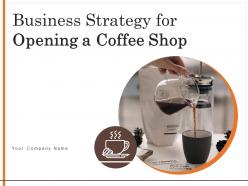
Slide 1 : Este slide mostra o título, ou seja, 'Estratégia de Negócios para Abrir uma Cafeteria' e o nome da sua empresa.
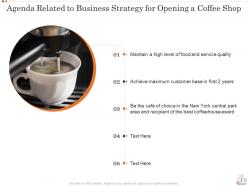
Slide 2 : Este slide apresenta a agenda do projeto.
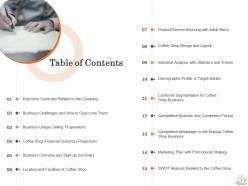
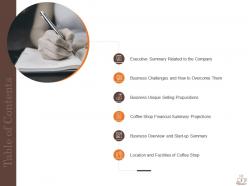
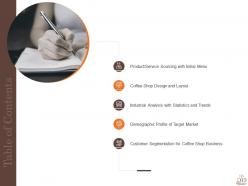
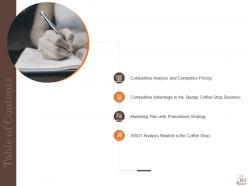
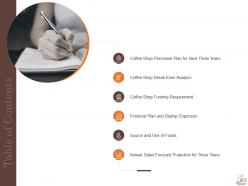
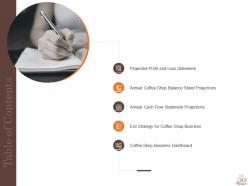
Slide 3 : Este slide apresenta o índice do projeto.
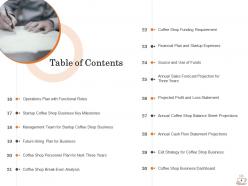
Slide 4 : Este slide apresenta o índice do projeto.
Slide 5 : Este slide mostra o título do resumo executivo relacionado à empresa.
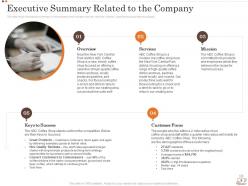
Slide 6 : Este slide mostra o resumo executivo da empresa que inclui visão geral, serviços, missão, foco no cliente e chaves para o sucesso.
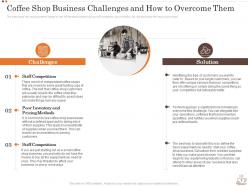
Slide 7 : Este slide mostra os vários problemas relacionados ao novo negócio de cafeterias, como concorrência acirrada, estoque insuficiente, etc., e também mostra as formas de resolvê-los.
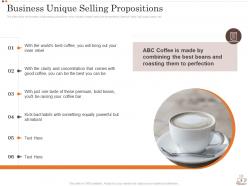
Slide 8 : Este slide mostra as propostas de venda exclusivas do negócio, que incluem clareza e concentração criadas, sabor premium, grãos de alta qualidade, etc.
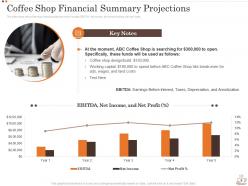
Slide 9 : Este slide mostra as projeções financeiras da cafeteria que incluem EBITDA, lucro líquido e lucro líquido junto com as principais notas.
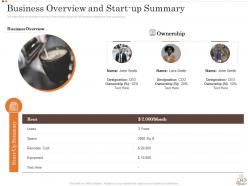
Slide 10 : Este slide mostra a visão geral dos negócios da empresa, juntamente com os detalhes da propriedade e o resumo do start-up.
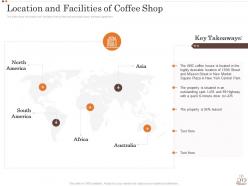
Slide 11 : Este slide mostra a localização e as instalações da cafeteria e detalhes sobre o contrato de locação.
Slide 12 : Este slide mostra o título do design e layout da cafeteria.
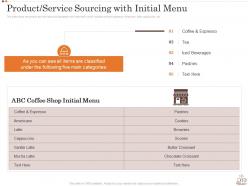
Slide 13 : Este slide mostra os detalhes de fornecimento de produtos e serviços com o menu inicial que inclui café e espresso, Americano, latte, cappuccino, etc.
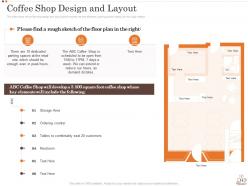
Slide 14 : Este slide mostra o design e o layout da cafeteria, que inclui os principais elementos, o local do estacionamento e o esboço.
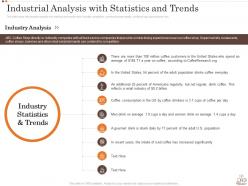
Slide 15 : Este slide mostra a análise industrial com estatísticas e tendências que incluem concorrência, detalhes do consumidor de café, consumo de café por dia, etc.
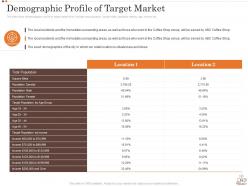
Slide 16 : Este slide mostra o perfil demográfico do mercado-alvo que inclui população total, quilômetros quadrados, densidade populacional, idade, renda, etc.
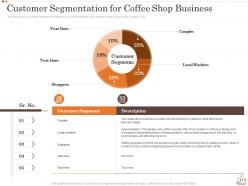
Slide 17 : Este slide mostra a segmentação de clientes relacionada ao negócio de cafeteria que inclui casais, trabalhadores locais, compradores, etc.
Slide 18 : Este slide apresenta o título para análise competitiva e preços de concorrentes.
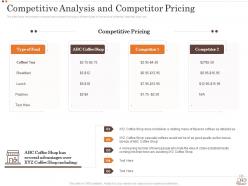
Slide 19 : Este slide mostra a análise competitiva e preços competitivos de diferentes tipos de alimentos, como café/chá, café da manhã, almoço, etc.
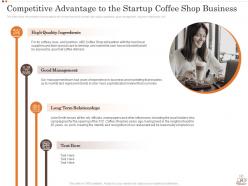
Slide 20 : Este slide mostra a vantagem competitiva da cafeteria que inclui ingredientes de alta qualidade, boa gestão, relacionamento de longo prazo, etc.
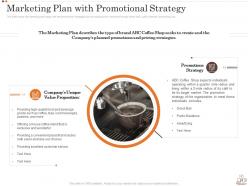
Slide 21 : Este slide mostra o plano de marketing junto com as estratégias promocionais, como atingir os clientes por meio de mala direta, relações públicas, publicidade, etc.
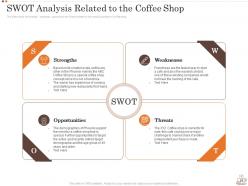
Slide 22 : Este slide mostra os pontos fortes, fracos, oportunidades e ameaças relacionadas ao negócio inicial de cafeteria.
Slide 23 : Este slide mostra o título dos planos operacionais para funções funcionais.
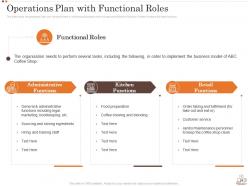
Slide 24 : Este slide mostra o plano operacional com funções funcionais no negócio de cafeteria que inclui funções administrativas, funções de cozinha e funções de varejo.
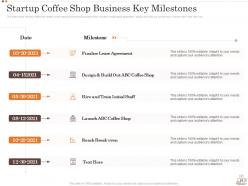
Slide 25 : Este slide mostra os principais marcos relacionados ao negócio inicial de cafeterias, que inclui projetar e construir a cafeteria, contratar e treinar a equipe inicial, etc.
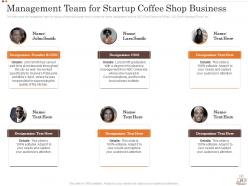
Slide 26 : Este slide mostra a equipe de gerenciamento do negócio de cafeterias de startups, que inclui os nomes, designações como CEO, COO, etc.
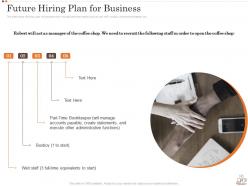
Slide 27 : Este slide mostra o plano de contratação para negócios que inclui detalhes de pessoal como garçons, ajudante de garçom, contador em meio período, etc.
Slide 28 : Este slide apresenta o título do plano de pessoal de cafeteria para três anos.
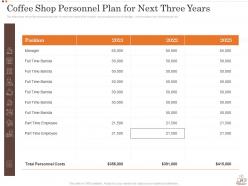
Slide 29 : Este slide mostra o plano de pessoal da cafeteria para os próximos três anos, que inclui vários cargos, como gerente, barista em tempo integral, funcionário em meio período, etc.
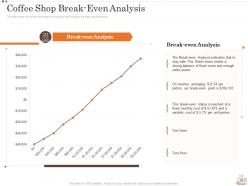
Slide 30 : Este slide mostra a análise do ponto de equilíbrio do café que inclui o gráfico e a descrição.
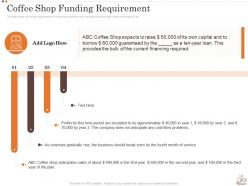
Slide 31 : Este slide mostra as necessidades de financiamento do negócio de cafeteria, que inclui antecipação de vendas, análise de ponto de equilíbrio, etc.
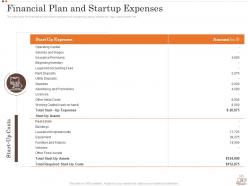
Slide 32 : Este slide mostra o plano financeiro e as despesas da startup, como capital operacional, salários e wags, ativos da startup, etc.
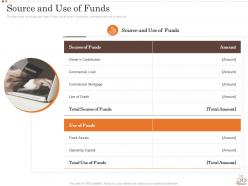
Slide 33 : Este slide mostra as fontes e usos dos fundos, como contribuição do proprietário, empréstimo comercial, linha de crédito, etc.
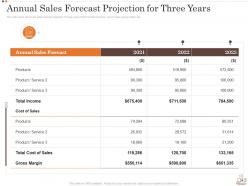
Slide 34 : Este slide mostra a projeção anual de previsão de vendas para três anos que inclui produtos, custo das vendas, margem bruta, etc.
Slide 35 : Este slide mostra o título da demonstração de lucros e perdas projetadas.
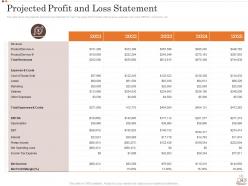
Slide 36 : Este slide mostra a demonstração do resultado projetado para os próximos cinco anos, que inclui receita total, despesas e custos, EBITDA, lucro líquido, etc.
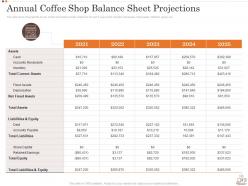
Slide 37 : Este slide mostra as projeções do balanço anual das cafeterias para os próximos 5 anos, incluindo ativos totais, ativos fixos, passivos, patrimônio líquido, etc.
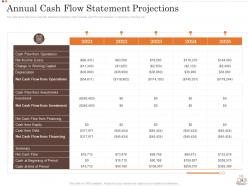
Slide 38 : Este slide mostra as projeções da demonstração do fluxo de caixa anual que inclui fluxo de caixa da operação, investimentos, financiamentos, etc.
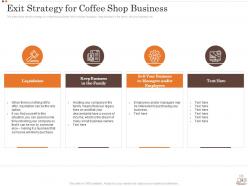
Slide 39 : Este slide mostra a estratégia de saída do negócio de cafeteria que inclui liquidação, manter o negócio na família, vender seu negócio, etc.
Slide 40 : Este é o slide de ícones do projeto.
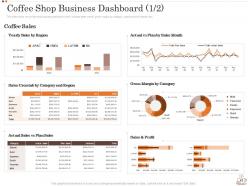
Slide 41 : Este slide mostra o painel de negócios da cafeteria que inclui mês de vendas, margem bruta por categoria, detalhes de vendas e lucros, etc.
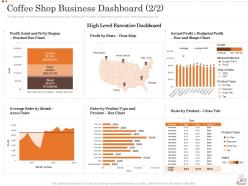
Slide 42 : Este slide mostra o painel de negócios da cafeteria que inclui lucro por estado, vendas médias por mês, lucro, vendas por tipo de produto, etc.
Slide 43 : Este slide mostra o título de slides adicionais.
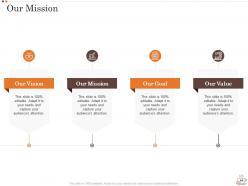
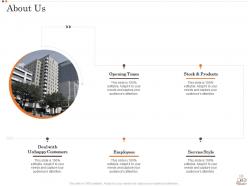
Slide 44 : Este slide menciona a visão, missão e objetivos da empresa.
Slide 45 : Este slide mostra a empresa, os valores de seus clientes e o público-alvo.
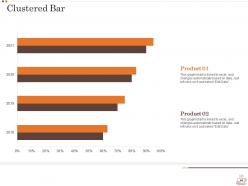
Slide 46 : Este slide apresenta os gráficos de barras agrupados para diferentes produtos. Os gráficos estão vinculados ao Excel.
Slide 47 : Este slide mostra os detalhes dos membros da equipe responsáveis pelo projeto.
Slide 48 : Este slide mostra a comparação de produtos com base em seleções.
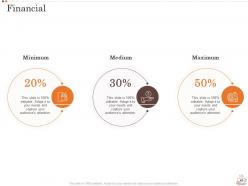
Slide 49 : Este slide mostra as finanças da empresa.
Slide 50 : Este slide menciona os negócios relacionados à empresa e ao projeto.
Slide 51 : Este slide mostra o mapa mental da empresa.
Slide 52 : Este slide apresenta as postagens de feedbacks e experiências anteriores dos clientes.
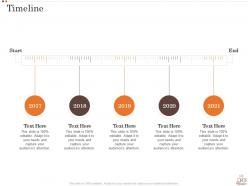
Slide 53 : Este slide mostra a linha do tempo anual da empresa.
Slide 54 : Este slide mostra as metas da empresa.
Slide 55 : Este é o slide de agradecimento e contém detalhes de contato da empresa, incluindo telefone, endereço do escritório, etc.
Estratégia de negócios para abrir uma cafeteria Slides de apresentação em Powerpoint com todos os 55 slides:
Use nossa estratégia de negócios para abrir um slide de apresentação em Powerpoint de cafeteria para ajudá-lo a economizar seu valioso tempo. Eles estão prontos para se encaixar em qualquer estrutura de apresentação.

FAQs for Business Strategy For Opening A Coffee Shop
Okay so you'll need the basics first - vision/mission stuff, market research, and where you stack up against competitors. Honestly, most people totally BS the competitive analysis part, but you gotta be real about what you suck at. Set actual goals with numbers you can track. Resource planning and timelines are huge too. Here's the thing though - you can't just write this once and call it done. Markets change constantly, so build in review periods. I'd start by looking at what you already have in these areas, then figure out which gaps are actually killing your business right now.
Honestly, you've gotta watch what customers actually DO, not just what they tell you they want. I check our feedback every week now because things change ridiculously fast these days. Surveys are great, but also dig into your sales data and see what people are saying on social media. The trick is staying flexible with your plans. When you spot something shifting, you need to be able to pivot quick. I'd probably start by picking your top 3 data sources and just make it a habit to review them monthly. It's way better than guessing what people want and being totally wrong about it.
Look, competitive analysis is basically your sanity check before making any big moves. It shows you what's realistic in your space and where the actual opportunities are hiding. You'll catch gaps others missed, understand what customers expect for pricing/features, and dodge strategies that already bombed. Nobody wants to reinvent the wheel while competitors are building rockets, you know? Plus it helps you nail down what actually makes you different - which honestly, most people struggle with. I'd start simple: pick your top 3-5 competitors and just track their quarterly moves. That alone will save you from so many headaches.
Honestly, agile is a game-changer for business strategy now. Markets move way too fast for those old annual planning sessions - by the time you finish, everything's already different. What I love about it is you're constantly testing stuff out, getting real feedback from customers, and pivoting when things aren't working. Instead of waiting months to course-correct, you can adjust in weeks. Your strategy actually evolves with reality instead of collecting dust on a shelf. Try this: run your next planning session in two-week chunks. You'll be shocked how much more nimble your whole approach becomes.
Honestly, you need both financial and operational stuff to really know what's going on. Revenue growth and profit margins are obvious, but customer acquisition cost and retention rates? Those actually tell you if you're building something that'll last. Don't forget employee engagement either - sounds fluffy but unhappy teams execute poorly, period. Pick maybe 5-7 metrics that match your actual goals instead of tracking random stuff. Monthly dashboard reviews work well for most people, though I personally check mine way too often. Quick course corrections beat waiting until quarterly reviews when everything's already broken.
Honestly, just having a decent product won't cut it anymore - everyone's copying everything so fast these days. You've gotta stack multiple things that are actually hard to replicate. Like proprietary tech, exclusive partnerships, maybe really solid customer relationships that took years to build. Amazon's the perfect example - they didn't just do one thing well, they combined logistics + data + massive scale. Makes it way harder for competitors to match all of that at once. I'd start by looking at what unique stuff you already have that would be a pain for others to recreate. The "stickiness" factor is real.
Honestly, most strategies fail because of communication breakdowns and crazy tight deadlines. Make sure your team actually gets it - not just the fake nodding thing we've all done. Give them realistic time to pull it off too. Resource planning always gets screwed up because everyone thinks they need less than they actually do. Then six months later you're like "wait, what happened?" Set up check-ins from the start and actually measure stuff as you go. Otherwise your brilliant strategy just becomes another forgotten PowerPoint deck collecting digital dust.
Dude, tech is a total game-changer for business strategy. It opens up new ways to make money and helps you understand your customers way better through all that data. You can automate the boring stuff, reach people globally, and actually respond quickly when the market shifts. Companies that skip this stuff? They're basically shooting themselves in the foot. My cousin learned that the hard way with his restaurant. Tech also lets you stand out from competitors and make decisions based on real info instead of just guessing. I'd start by picking one problem you're dealing with right now and see how tech might fix it.
Here's what I'd do: nail down what makes you different first - something competitors can't just copy overnight. Customer retention should be your obsession since getting new customers costs like 5-7x more (which honestly sucks but it's reality). Don't scale just to hit some vanity metrics either. Pick one segment, absolutely crush it there, then expand outward. I'd probably start by figuring out why your best customers actually stay versus the ones who bail. Smart growth beats fast growth every time.
Dude, cultural stuff will absolutely make or break your international thing. Germany's all about being direct and getting to business, but try that in Japan? You'll crash and burn because they want relationships first. Your marketing needs to change completely - not just translation but like, actually understanding what people care about. Pricing too. I learned this the hard way when I saw a company assume their US approach would work everywhere (spoiler: it didn't). Do serious research before jumping in and definitely hire locals who get the culture. They'll save you from looking like an idiot.
Dude, you've gotta get your stakeholders involved or your strategy's dead in the water. Map out who actually matters - customers, employees, investors, the whole crew. Then set up regular check-ins to get their input throughout your planning. People will fight you tooth and nail if you just dump changes on them, but they'll champion stuff they helped create. It's honestly night and day. Think of it like... you want everyone paddling together instead of half the boat going backwards. The insights you'll get are way better too since these people know what actually works in the real world.
Don't treat innovation like some side hobby - build it directly into your main planning. I'd set aside maybe 10-15% of your budget for experimental stuff, knowing half will probably flop. That's fine though, comes with the territory. Cross-functional teams work way better than leaving everything to R&D. Make innovation part of everyone's actual goals with real metrics. Oh, and do quarterly "what crazy thing should we test next" sessions alongside your regular business reviews. Keeps people thinking instead of just going through the motions, you know?
Think of risk management as your strategy's gut check. You're basically figuring out what could screw things up before it actually does - market changes, competitors doing something unexpected, new regulations, whatever. Way better than panicking later when stuff hits the fan. Build your backup plans right into the strategy from day one. Don't just assume everything will magically work out (spoiler: it won't). I'd start by writing down your biggest 5 risks and having a plan B for each. Honestly saves so much stress down the road.
Honestly, most companies I've seen just chase those quarterly numbers without thinking ahead - it's wild. Set up metrics for both timeframes and actually check them regularly. Ask yourself: does this short-term move help us get where we want in 3-5 years? Build wins that are stepping stones, not random detours. Like if you want market leadership eventually, don't trash your product quality just to save money now. Find quick efficiency gains or improve customer experience instead - stuff that builds toward the bigger picture. Oh, and make a simple dashboard tracking both short and long-term stuff so you'll catch yourself drifting.
Honestly, I'd start with SWOT and Porter's Five Forces - they're pretty straightforward and give you the full picture of where you stand. SWOT maps your strengths, weaknesses, opportunities, and threats. Porter's looks at competitive dynamics. The Business Model Canvas is everywhere these days (though sometimes I think it's a bit overhyped). You've also got BCG Matrix for portfolio stuff and Ansoff for growth strategies. Blue Ocean's cool if you want to create totally new market space. But yeah, stick with SWOT and Porter's first - they'll tell you everything you need to know about your competitive position without getting too complicated.
-
Professional and unique presentations.
-
Excellent template with unique design.