


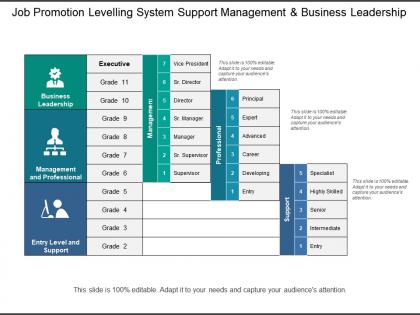
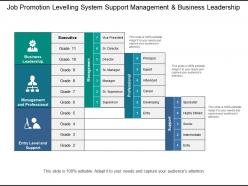
Job promotion levelling system support management and business leadership




Try Before you Buy Download Free Sample Product
 Impress Your
 Audience
 100%
100% Editable
 Save Hours
 of Time


Put an end to all lingering doubts. Create certainty with our Job Promotion Levelling System Support Management And Business Leadership.
People who downloaded this PowerPoint presentation also viewed the following :
Job promotion levelling system support management and business leadership with all 5 slides:
Assuage inflamed emotions with our Job Promotion Levelling System Support Management And Business Leadership. Bring down the degree of ire.

FAQs for Job promotion levelling system support management
Honestly, it usually comes down to your performance reviews and how long you've been in your current role. Skills for the next level matter too, obviously. Leadership potential is big - plus how you get along with teammates. Oh, and there actually has to be an opening, which seems obvious but isn't always. Some companies are super rigid about the whole "you need X years" thing, which is annoying. Taking on extra stuff without being asked helps a lot though. Having your boss in your corner is probably the biggest factor. I'd just ask your manager straight up what their promotion criteria looks like - might surprise you what they say.
Focus on measurable stuff that actually connects to the promotion they want. Don't just review their current job - look at leadership behaviors, strategic thinking, that kind of thing. Most reviews are garbage because they only look backward instead of forward, which helps nobody. Document examples throughout the year, not just what you remember from last month. Oh, and be super clear about what "promotion-ready" means so they can work toward it. People can't hit targets they can't see. The whole process should feel like you're building a case for why they deserve the next level up.
Honestly? You can't just throw people into bigger roles without prepping them first - it's a disaster waiting to happen. Good companies map out what skills folks need for the next level up, then actually help them get there. Think of it like... okay bad example incoming... but it's like trying to jump to the second floor without stairs. Your team needs to know what training to focus on now for jobs they want down the road. I've seen too many places skip this step and wonder why their promotions fail. Start figuring out what your people need to learn today.
Post everything upfront - job requirements, how decisions work, timelines, all of it. People hate feeling like promotions are some mysterious process (and honestly, who can blame them?). When someone gets promoted, document the reasoning and give real feedback to whoever didn't make it. The consistency part is huge - same evaluation for everyone, no exceptions. I'd start by looking at what you're doing now and figuring out where you can be more transparent. Teams literally implode over this stuff if it feels unfair.
Honestly, start by pulling your promotion data from the past couple years - that's gonna show you the real story. Break it down by department and demographics to catch any weird patterns or bias. Time-to-promotion should be pretty consistent too, otherwise something's off. Check if your top performers are actually getting promoted at decent rates (you definitely don't want to lose those people). Employee surveys are super telling here - people will straight up tell you if they think the process sucks. Also track whether newly promoted folks are sticking around, because high turnover after promotions is a red flag.
Look, diversity in promotions isn't just nice to have anymore - it's essential. You'll want diverse panels reviewing candidates and crystal clear criteria that focus on actual performance, not vague "culture fit" stuff (which honestly can be pretty biased). Regular data audits help too. Companies ignoring this? They're basically asking for lawsuits and losing good people. Oh, and make sure your criteria are transparent and applied consistently - saves everyone headaches down the road while building a way stronger team.
Honestly, most companies just wing it with promotions and it shows. They'll post these super vague requirements that nobody can actually interpret. Then bias kicks in hard - suddenly Jim gets promoted because he plays golf with the boss every weekend, you know? The worst part is when managers have zero clue how to give useful feedback during the year. So people get blindsided during annual reviews like "oh btw you're not getting promoted." Document your criteria from day one and teach your managers to actually talk to people about their careers regularly. Makes such a difference.
Oh dude, you should definitely look into automating that stuff. Most platforms can handle candidate screening and track performance automatically - way better than juggling a million spreadsheets. AI will actually spot employees ready for promotion based on their data, which is pretty cool. It also catches bias you might miss. Honestly the time savings alone make it worth it. Just make sure whatever you pick plays nice with your current HR setup, otherwise you'll be creating more headaches instead of solving them. Trust me on that one.
Your company culture is like a filter for how people see promotions. When things are transparent and based on merit, employees trust the process. But if there's favoritism or murky criteria? People get cynical real quick and assume it's all office politics. I've watched this happen - it gets ugly. Some cultures make people afraid to even apply because they think certain roles are "saved" for the inner circle or whatever. Here's the thing: if your promotion messaging doesn't match what actually happens, you're screwed. That disconnect kills trust faster than anything.
Honestly, just write everything down first - verbal stuff gets messy later. Be super clear about what actually gets people promoted. Not the vague "leadership potential" BS, but real skills and metrics that matter. Regular team meetings help too. Walk through concrete examples of what "exceeds expectations" looks like vs just doing the bare minimum. People need to know it's not about being the office favorite or hanging around forever. Show them the actual roadmap for advancement - specific behaviors, measurable impact, real growth. Most managers are terrible at this, but you don't have to be.
Okay so first thing - set up clear criteria for each role level that everyone can see ahead of time. No more "gut feeling" promotions or whoever's buddies with the manager getting ahead. Use committees instead of one person deciding, and try blind resume reviews if you can swing it. Document the whole process so you can actually track what's happening. Bias training works but make it interactive - nobody needs another death-by-PowerPoint session. Oh and transparency is huge here. When people know exactly how the system works, there's way less room for bias to creep in. Honestly it's wild how many companies still wing this stuff.
Honestly, go internal first if you can. Your team will actually respect you for it - nothing kills morale faster than watching some outsider waltz into the role everyone thought Sarah deserved. People who've been there already get how things work, so there's less ramp-up time. Fresh perspectives are cool and all, but I've seen too many external hires crash and burn because they don't understand the culture. Obviously if nobody internal is ready, then yeah, look outside. But seriously, promote from within when possible - your people notice that stuff.
Dude, get a mentor if you can. Someone who's actually climbed the ladder can show you what skills matter and how to handle office politics - that stuff's half the battle honestly. They'll spot things you're missing and put in a good word when promotions open up. Plus they know what leadership really wants vs what they say they want, if you know what I mean. I've watched good people get passed over just because they were flying blind. Just make sure it's someone who'll actually meet with you regularly, not just some checkbox thing HR set up.
Oh definitely, peer feedback matters way more than people think. Most companies do those 360 reviews now where your coworkers basically rate how you are to work with. Managers use it to see if you're actually collaborative or just good at kissing up to them lol. Honestly, some places make it super formal which can feel weird and political. But here's the thing - if everyone consistently says you're great to work with, that shows you're leadership material. It's not just about being good at your job anymore. You need people in your corner who'd vouch for you. So yeah, don't be fake but definitely stay on good terms with your team.
Yeah, remote workers get screwed over by that whole "out of sight, out of mind" thing. You're missing all those random hallway chats where actual decisions happen - which is honestly pretty ridiculous but whatever. No face time with leadership means fewer mentorship chances too. Your performance reviews might not even show everything you're doing, and good luck getting those high-visibility projects that actually matter for promotions. I'd definitely push for regular check-ins with your boss and make sure you're constantly updating them on your wins. Don't assume they know what you're accomplishing.
-
Great designs, really helpful.
-
Wonderful templates design to use in business meetings.