


94844090 style cluster stacked 4 piece powerpoint presentation diagram infographic slide




Try Before you Buy Download Free Sample Product
 Impress Your
 Audience
 100%
100% Editable
 Save Hours
 of Time


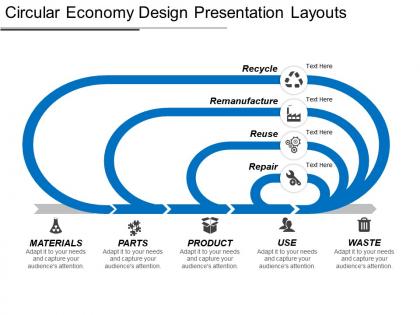
Circular economy design presentation layouts is a thoroughly editable slide on the revolutionary subject also known as the industrial economy. This circular business model PowerPoint presentation layout is an extremely beneficial slide for every economist, researcher, or subject matter expert, who wish to represent your ideas regarding the circular economy in a better way. If you work as a government professional or is involved in simply conducting research on the circular economy subject, then you can make use of this readily available closed loop PPT slide graphic to illustrate your work. Even professionals belonging to any financial sector, research work, or a non-profit organization that is related to or is affected by economic factors can use this highly comprehensive presentation in their own way. As environmentalists or philanthropists, the slide helps you reflect the revolutionary idea in an impressive way. Explain every phase of the circular economy and compare it with other economies by the aid of this slide. Also, you can make use of this industrial economy for productivity and sustainability PPT presentation model to Lay a significant focus on waste and recycling process. Get folks aware of acts of heroism with our Circular Economy Design Presentation Layouts. Highlight heroic and inspiring deeds.
94844090 style cluster stacked 4 piece powerpoint presentation diagram infographic slide with all 5 slides:
Our Circular Economy Design Presentation Layouts enhance clarity. The focus of your thoughts will get better.
FAQs for 94844090 style cluster stacked 4 piece powerpoint presentation
Okay so circular design is basically "don't waste stuff, keep materials cycling, and help nature heal itself" - you're making closed loops instead of that old take-make-trash approach. Most designers think resources are endless and ignore what happens after. But circular thinking? You're planning the whole lifecycle from the start. Durability, fixing things, getting materials back later - it's all connected. Honestly, it's like flipping a switch in your brain. Waste isn't just "how things work" anymore, it's literally bad design. Next time you're reviewing something, just ask "okay but where does this go when it dies?" I swear that one question changes your entire perspective on everything.
Design for multiple lives right from the start - durability, easy repairs, modular pieces. Map out where your materials go and find waste that could feed other processes. Honestly, the biggest mistake is leaving sustainability for last instead of getting your whole team involved early. Choose materials you can actually separate and recycle later. Maybe try a service model where you keep ownership? Oh, and definitely test this stuff on one product first - scaling too fast gets messy. The modularity thing is huge because it lets people swap parts instead of ditching everything.
Material choice is honestly make-or-break for circular design. Go for stuff that's renewable, recyclable, or biodegradable. Skip anything toxic since it screws up recycling streams. I see so many products marketed as "circular" that totally fail here - they look sustainable but use materials that literally can't be processed when you're done with them. Don't just think about how it looks and works. Map out what actually happens to your materials after people toss them. That's where you'll spot the real opportunities. Also, this step will save you headaches later when you're trying to figure out disposal partnerships.
Honestly, digital tracking is a total game-changer for circular design. You can follow materials through their whole lifecycle instead of just guessing what happens. IoT sensors show you actual usage patterns - like how products really wear out, not how you think they do. AI helps optimize material flows and predict when stuff needs fixing. 3D printing's pretty cool too since you can make things on-demand with recycled materials. The tracking part though? That's where you'll see exactly where your designs create waste. Maybe start simple - just map one product from start to finish with basic tracking software.
Check out Patagonia's repair stuff and IKEA's buyback program - those are pretty solid examples. Interface actually beat their own carbon goals which is rare tbh. Philips does this cool thing where they keep ownership of lighting systems and just sell the service. Oh and Unilever's refillable packaging is smart too. The crazy part? These companies aren't just doing it to look good - they're actually saving money and customers love it. I'd pick whichever company is most like your industry and steal their playbook.
So basically circular design flips the whole "buy it, toss it" mentality on its head. You're designing stuff that people can actually repair and reuse - maybe it's a service instead of something they own forever. Companies do take-back programs too. The lifecycle gets way longer because you're thinking about multiple uses from day one, not just waiting for it to hit the trash. Smart design makes it super easy for people to participate in this stuff. Otherwise they'll just go back to old habits because, let's be honest, convenience wins every time. It really does work when companies commit to it though.
Track material flow first - your circularity rate and waste diversion numbers. Those tell the real story. Business metrics matter too though: savings from using less virgin materials, revenue from circular services, avoided disposal costs. Water and energy efficiency are huge if you're manufacturing anything. Honestly, don't overthink the measurement piece early on - I've seen people get paralyzed by that. Pick maybe 3-4 metrics that actually match what you're trying to do. You can always add more tracking later once you've got momentum going.
Working across different industries is honestly where the coolest breakthroughs happen. You'll get way more creative when a fashion brand teams up with a tech startup - suddenly textile waste becomes 3D printing material. Pretty neat stuff. Each sector brings something different to the table: manufacturers get production, retailers know what customers actually want, and waste companies see the whole lifecycle. I'd start by mapping out which industries already connect to your supply chain, then just reach out. Most people are down to brainstorm shared problems - you'd be surprised how willing they are to collaborate.
Honestly, the biggest pain is that most products weren't built thinking about what happens after you're done with them. It's like trying to untangle those headphones from your pocket - everything's glued together permanently and materials can't be separated easily. Cost is brutal too since circular materials usually hit your budget harder upfront. Supply chains are still stuck in that old take-make-toss mentality, which doesn't help. Material compatibility becomes a nightmare fast. But here's what I'd do first - map out where your materials are actually going right now. That'll show you the low-hanging fruit and save you from overthinking the harder stuff.
So circular economy design is about keeping stuff in use way longer instead of that whole make-buy-trash cycle we're used to. You build things to be fixable or recyclable right from day one. Honestly, it's just common sense - plan for what happens when people are done with your product instead of making it someone else's problem later. The whole approach saves money over time and cuts down on waste big time. Plus consumers actually want this stuff now. My advice? Start every project by asking yourself "where does this thing go when it breaks or gets old?" Game changer.
Skip the abstract stuff - nobody cares about theory. Show them real numbers from companies like Interface or Patagonia who actually saved money. For regular people, hands-on demos work way better than boring presentations. Repair cafes are huge right now, or those apps that track your impact. Honestly, before/after posts on social kill it every time. Meet people where they're already hanging out and talk like a normal human. Start with small pilot stuff in your area first. Then just copy whatever actually works - not what sounds impressive in meetings.
You've gotta build the business case right into your design from the start. Make stuff that's durable, fixable, and modular - people will actually pay more for that. Get finance involved early to figure out take-back programs or leasing instead of just selling once. The trickiest part? Getting everyone to stop thinking "sell more units" and start thinking "squeeze every bit of value from each product." Oh, and find which materials you can recover for decent money first. That's honestly where I'd start. Build your whole circular thing around those high-value materials and the math suddenly works way better.
Honestly, government policy is what makes circular economy stuff actually happen at scale. Without regulations forcing extended producer responsibility and waste targets, companies just stick with their profitable linear models - why change, right? Tax breaks and grants suddenly make circular design worth it financially. I've seen whole industries pivot to reusable materials once real policy kicks in. Otherwise it's just pilot projects that go nowhere. Watch your sector's upcoming regs though. They'll probably shape your design choices faster than you expect.
Honestly, just start by looking at what you're already throwing away - there's probably money sitting in your dumpster. Check where your materials go and you'll spot some obvious fixes pretty fast. Production scraps? Turn them into something new. Maybe team up with other local businesses to share resources (way easier than it sounds). The cool thing about being small is you can actually move quickly on this stuff. Big companies take forever to change anything. Pick one area first - don't try to fix everything at once, you'll go crazy. Map out where your materials flow and figure out how they could loop back instead of becoming waste. That's basically your game plan right there.
Honestly, circular economy stuff can really help your finances. Material costs drop when you reuse and recycle inputs. Waste disposal fees shrink too. Here's the cool part - that "trash" you're paying to dump? Sometimes you can actually sell it as byproducts to other companies. Customers are way more loyal to sustainable brands these days, which is nice. Plus you're protecting yourself against future resource shortages and stricter regulations (which are definitely coming). My advice? Start by looking at what you're currently throwing away - that's usually where the easy wins are hiding.
-
Really like the color and design of the presentation.
-
It saves your time and decrease your efforts in half.