

Capability maturity model





Try Before you Buy Download Free Sample Product
 Impress Your
Audience
 100%
Editable
 Save Hours
of Time


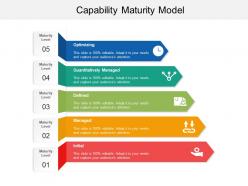
Creating a professional presentation on the capability maturity model is not a simple task. You need a lot of free time, amazing graphics, and designing skills to craft an impressive PPT. So, to help you out, we have come up with this predesigned capability maturity model PowerPoint template designed by a team of presentation and PowerPoint experts. We aim to outline a PPT template that helps our customer to explain eh concept of the presentation and help them to achieve the business end goals. Our PPT designers have used creative ribbons to design this attention-grabbing capability maturity framework presentation template. To make each step attractive and self-decretive, an icon of a clock, networking, documentation, upload and download, and a hand with gear have been used. Our motive is to provide you with the professional template designs that help you in expressing the concept of the PPT presentation. Use this CMM PPT template slide to describe the idea of business maturity model, software development, and information technology management. Get them to believe you are a go-getter with our Capability Maturity Model. They help demonstrate a 'can do' attitude.
People who downloaded this PowerPoint presentation also viewed the following :
Capability maturity model with all 5 slides:
Get all departments functioning efficiently with our Capability Maturity Model. They enable effective administration.


FAQs for
So CMM breaks down into five levels that show how messy or polished your dev process is. Level 1 is pure chaos - you're just putting out fires constantly. Then Level 2 gives you some basic project management so things become repeatable. At Level 3, you've got standard processes that work across different projects. Level 4 is where you start getting nerdy with statistical quality control and measurements. Level 5 means you're constantly tweaking things based on actual data. Honestly, most teams I've seen never make it past Level 3. Just figure out where you're at first, then tackle one level at a time instead of trying to skip ahead.
So CMM is like having a step-by-step plan instead of just winging it. There are five levels that take you from total chaos to actually having your shit together. You document basic stuff first, then add metrics and standards as you go. The whole point is not overwhelming yourself - I've seen way too many teams try to implement everything at once and just burn out. It tells you exactly what to focus on next rather than guessing. Most places skip ahead to fancy practices and can't figure out why nothing works. Trust the process, start simple, and you'll actually see real improvements stick.
So CMM is basically a roadmap for getting your dev processes less messy. First, figure out where you're at - still putting out fires constantly or actually have some structure? There are five levels you work through, starting with basic project management stuff. Then you add standardized processes, start tracking metrics, all that good stuff. Don't try to fix everything at once though, that's a recipe for burnout. Pick one area and focus there. I'd start by writing down what you actually do now (might surprise you) and find your biggest headaches first.
So CMM was just for software development originally. Pretty limited scope, honestly. CMMI came later and basically took everything good from CMM but expanded it way beyond just software - now it covers systems engineering, services, all kinds of stuff. The main thing is CMMI gives you frameworks for your whole organization instead of one narrow area. Plus it's got way better guidance for actually improving your processes. CMM is dead anyway, so if you're thinking about implementing something, definitely go with CMMI. It's like CMM grew up and got serious about helping entire companies, not just the dev team.
Start with a formal CMM appraisal - you can do a full assessment or just a lighter self-eval against those five maturity levels. Certified appraisers usually come in and interview your teams, check out processes, look at work products. They'll figure out where you actually are vs where you think you are (and trust me, there's always a gap). The appraisers score you on key process areas for each level - from Initial, which is basically chaos, all the way up to Optimizing. Honestly though, I'd do an informal internal assessment first. Get your baseline before dropping money on the full formal thing.
So documentation is basically how you prove your processes aren't just made up on the spot - it gets super important as you climb those CMM levels. Level 2 means you've gotta document stuff like requirements management and project planning. Then Level 3? Yeah, even more docs because now you're standardizing everything company-wide (I swear it feels like death by paperwork sometimes). But honestly, without it you can't show that things work consistently or train new people properly. My advice - tackle your most critical processes first, then work outward from there.
Honestly, change resistance is brutal - nobody wants to document stuff they've been doing casually for years. Management buy-in is tricky too since CMM sounds like extra paperwork at first. Your team will probably grumble about the bureaucracy initially. Resources are always tight because you're training people and doing assessments while still hitting project deadlines. Oh, and timeline expectations are usually way off - this takes years, not like 6 months or whatever. I'd suggest starting with just one department first. Get some wins there before you try rolling it out everywhere else.
So CMM is basically your step-by-step guide for getting your project management house in order. First thing you do is figure out where you're at on the maturity scale. Then work your way up level by level - documenting processes, measuring how things are going, and making improvements as you go. Don't try to skip ahead though, that's where most companies mess up. I've seen teams get way too ambitious and it just backfires. Start small by writing down what you're currently doing and spotting the obvious problems. Then fix those using CMM's framework. It's actually not that complicated once you get into it.
So basically, higher CMM levels mean way more predictable results and fewer headaches. Your projects stop being these chaotic disasters where you're constantly putting out fires. Think of it like following a solid recipe instead of just winging it every time - you actually know what you'll get. Costs go down, quality goes up. Honestly, the best part is delivering stuff on time and on budget becomes normal instead of some miracle. Oh, and don't try to jump levels all at once. Pick one process area and nail that first.
So CMM basically gives you a playbook for catching problems before they wreck your project. Higher maturity levels mean you've got solid, repeatable ways to spot and handle risks early. Think of it like having those rumble strips on the highway - they wake you up before you veer off course. You get better at predicting issues because you're tracking real data from past projects instead of just winging it. Plus the checkpoints built into the framework catch stuff you might miss otherwise. I'd start by writing down whatever risk management you're already doing, then figure out how to make it consistent across your whole team.
Yeah totally, CMM works with agile but you gotta tweak how you think about it. Don't get bogged down in heavy docs and rigid stuff - instead, map those maturity levels to what you're already doing. How consistent are your retros? Code reviews happening regularly? CI pipeline solid? I've seen teams get way too formal about it tbh. Just figure out where your current agile practices fall on that maturity scale first. Then pick a few specific things to improve bit by bit. Treat CMM more like a guide for making your agile processes better, not some whole new system to follow.
Honestly, CMM works in pretty much any industry - manufacturing, healthcare, finance, you name it. The whole point is looking at your repeatable processes and figuring out how to make them better. I've actually seen people use it for HR stuff and even restaurant operations (which sounds boring but whatever). First thing you gotta do is map out one important process in your work. Then be real about where it sits on the CMM scale - most places think they're more organized than they actually are. Once you know your starting point, you can work on getting more consistent. It's basically just being honest about your current mess and improving from there.
Yeah, you can't skip training if you want to move up CMM levels - it's literally impossible. Level 1 teams just wing it with whatever skills people have. But Level 2? You need actual systematic training programs that track progress. Most companies honestly get stuck at Level 3 because that's where you need organization-wide standards. Levels 4 and 5 are even trickier - they require advanced analytical skills that don't just magically appear. My advice? Map out what skills each level needs first, then build training programs around those specific capabilities. The higher you go, the more complex it gets.
So for tracking CMM progress, I'd start with the basics - defect density, how well you're following processes, cycle times, and cost per defect. Customer satisfaction scores help too. Here's the thing though: what you measure totally depends on your maturity level. Level 2 teams should focus on project tracking stuff, while Level 4 is more about statistical control (which honestly sounds way scarier than it is). Don't go crazy with metrics - pick maybe 3 or 4 max. Start simple if you're at lower levels, then add the fancy measurements later. Otherwise you'll just drown in spreadsheets.
Honestly? Start with just one process area - jumping straight to Level 3 is a recipe for disaster. You'll need solid executive support since this takes forever to show results and your team will probably hate it at first. Document what you're actually doing now before changing anything. Then train everyone properly on the new stuff. Track metrics that actually matter so you know if it's working. Oh, and don't follow CMM like it's the Bible - adapt it to your company. I've seen too many places fail because they tried the cookie-cutter approach. It's frustrating but worth it.
No Reviews