

Case competition expansion of a leading brand in pharmaceutical company complete deck




Try Before you Buy Download Free Sample Product
 Impress Your
 Audience
 100%
100% Editable
 Save Hours
 of Time


Present an informative demonstration with our case competition expansion of a leading brand in pharmaceutical company complete PowerPoint deck. This context rivalry PPT layout briefs you about the company’s current issues, strategic principles, product development strategies, SWOT analysis, and much more. Not only does it provide you with the insight about the feasible solutions to all the possible issues, this existing contesting PowerPoint design also assists you in the decision making process. Presenting the strategic principles, this present-day conflict PPT bundle additionally involves- patient care, employee welfare, community betterment, and stakeholder benefit. This ongoing strife can be fruitful for your company as it shows the competitive analysis with other competitors based on various parameters such as- revenue, drug effectivement, treatment type, and many more. By making it a part of your day-to-day working, you will also get clear information about the decision to be taken by the organization in the near future. Accumulate it immediately in order to win the presentation game.
People who downloaded this PowerPoint presentation also viewed the following :
Content of this Powerpoint Presentation
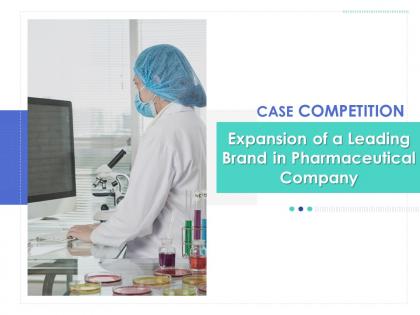
Slide 1: This slide introduces Case Competition. State Your Company Name and begin.
Slide 2: This slide shows Table of Content for the presentation.
Slide 3: This slide presents Table of Content for the presentation.
Slide 4: This slide shows Table of Content describing-SW Care Pharmaceutical Company Overview, Current Issue, Strategic Principles, etc.
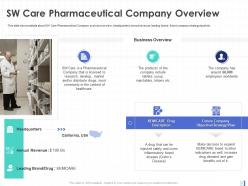
Slide 5: This slide displays details about SW Care Pharmaceutical Company such as overview, headquarters, annual revenue, etc.
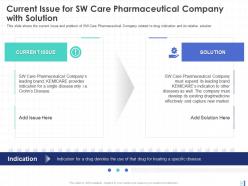
Slide 6: This slide represents the current issue and problem of SW Care Pharmaceutical Company related to drug indication and its relative solution
Slide 7: This slide shows the strategic principles and decision-making process for expansion of KEMICARE Brand.
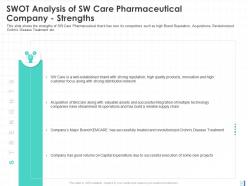
Slide 8: This slide presents the strengths of SW Care Pharmaceutical that it has over its competitors such as high Brand Reputation, Acquisitions, Revolutionized Crohn's Disease Treatment etc.
Slide 9: This slide shows the weaknesses of SW Care Pharmaceutical Company that it must overcome such as limited drug indication, inefficient financial planning, etc.
Slide 10: This slide displays SWOT Analysis of SW Care Pharmaceutical Company - Opportunity.
Slide 11: This slide represents some threats that may affect the company in future course of time and shrink its profit margins.
Slide 12: This slide shows Table of Content for the presentation.
Slide 13: This slide presents the product development strategy of SW Care Pharmaceutical Company.
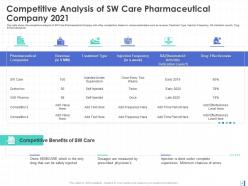
Slide 14: This slide shows Competitive Analysis of SW Care Pharmaceutical Company.
Slide 15: This slide displays Table of Content for the presentation.
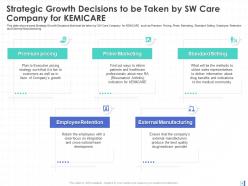
Slide 16: This slide represents some Strategic Growth Decisions that must be taken by SW Care Company for KEMICARE such as Premium Pricing, Prime Marketing, Standard Selling, Employee Retention, etc.
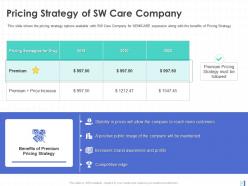
Slide 17: This slide shows the pricing strategy options available with SW Care Company for KEMICARE expansion along with the benefits of Pricing Strategy.
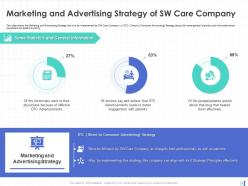
Slide 18: This slide presents the Marketing and Advertising Strategy that is to be implemented by SW Care Company.
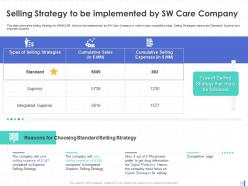
Slide 19: This slide shows the Selling Strategy for KEMICARE that is to be implemented by SW Care Company in order to gain competitive edge.
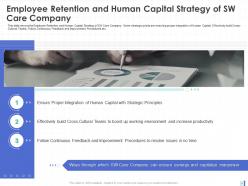
Slide 20: This slide displays Employee Retention and Human Capital Strategy of SW Care Company.
Slide 21: This slide represents the Manufacturing Strategy of SW Care Company to Safeguard Quality.
Slide 22: This slide shows the long-term financial focus and company goals of SW Care Company such as making sound profit, maintaining balance between values and principles, etc.
Slide 23: This slide presents Sensitivity Analysis of SW Care Company for Selling and Manufacturing Strategies.
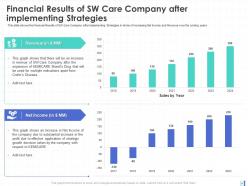
Slide 24: This slide shows the Financial Results of SW Care Company after implementing Strategies in terms of increasing Net Income and Revenue over the coming years.
Slide 25: This slide displays Table of Content for the presentation.
Slide 26: This slide represents the Potential Risks and Mitigation Strategies of SW Care Company associated with Business Decisions.
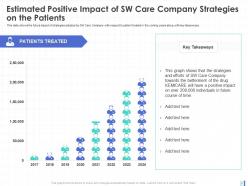
Slide 27: This slide shows Estimated Positive Impact of SW Care Company Strategies on the Patients.
Slide 28: This slide presents Strategic and Action Timeline of SW Care Company.
Slide 29: This slide shows Table of Content for the presentation.
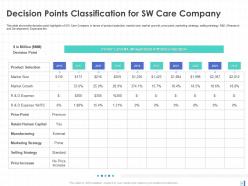
Slide 30: This slide displays Decision Points Classification for SW Care Company.
Slide 31: This slide shows the Financial Highlights of SW Care Company such as net trade sales, gross profit, net income, etc.
Slide 32: This slide shows Case Competition on Expansion of a Leading Brand in Pharmaceutical Company Icons.
Slide 33: This slide is titled as Additional Slides for moving forward.
Slide 34: This is Our Mission slide with related imagery and text.
Slide 35: This is Our Team slide with names and designation.
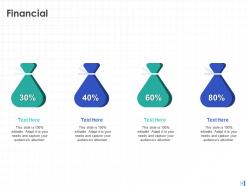
Slide 36: This is a Financial slide. Show your finance related stuff here.
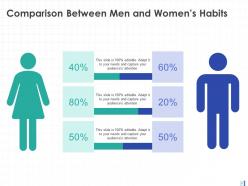
Slide 37: This is a Comparison slide to state comparison between commodities, entities etc.
Slide 38: This slide shows Post It Notes. Post your important notes here.
Slide 39: This slide presents Stacked Area-Clustered Column chart.
Slide 40: This slide displays Roadmap with additional textboxes.
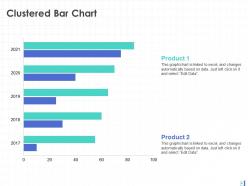
Slide 41: This slide shows Clustered Bar Chart with two products comparison.
Slide 42: This is Our Target slide. State your targets here.
Slide 43: This slide shows Puzzle with related icons and text.
Slide 44: This slide displays Venn diagram with text boxes.
Slide 45: This is a Thank You slide with address, contact numbers and email address.
Case competition expansion of a leading brand in pharmaceutical company complete deck with all 45 slides:
Use our Case Competition Expansion Of A Leading Brand In Pharmaceutical Company Complete Deck to effectively help you save your valuable time. They are readymade to fit into any presentation structure.





















FAQs for Case competition expansion of a leading brand in pharmaceutical
Key factors driving pharmaceutical expansion in emerging markets include rising healthcare spending, growing middle-class populations, increasing disease prevalence, regulatory improvements, and untapped patient populations. These market dynamics enable companies to diversify revenue streams, access cost-effective manufacturing, and establish early competitive positioning, with many pharmaceutical firms finding that strategic entry delivers sustainable growth and reduced dependency on saturated developed markets.
Regulatory challenges in established markets typically involve navigating mature, complex frameworks with stringent approval processes, while new markets often present evolving regulations, limited infrastructure, and varying safety standards. Established markets like the US and Europe require extensive clinical trials and documentation, whereas emerging markets may offer faster approvals but present uncertainties around intellectual property protection, with many pharmaceutical companies finding that strategic regulatory planning enables successful expansion while minimizing compliance risks.
Strategic partnerships facilitate pharmaceutical expansion by providing market access, regulatory expertise, distribution networks, shared R&D costs, and local market knowledge. Through strategic alliances, pharmaceutical companies accelerate entry into new markets, navigate complex regulatory environments, and leverage established infrastructure, with many organizations finding that partnerships reduce expansion risks while delivering faster market penetration and enhanced competitive positioning.
Companies effectively assess international market demand through comprehensive market research, regulatory environment analysis, competitive landscape evaluation, and healthcare infrastructure assessment. By examining factors like population demographics, disease prevalence, pricing sensitivity, and distribution channels, pharmaceutical companies can identify viable expansion opportunities while mitigating risks, ultimately enabling strategic market entry decisions that drive sustainable growth.
Best practices for managing pharmaceutical supply chain logistics during expansion include establishing robust cold chain management, implementing real-time tracking systems, ensuring regulatory compliance across jurisdictions, diversifying supplier networks, and maintaining quality control protocols. These strategies enable companies to scale operations while minimizing disruptions, reducing costs, and ensuring product integrity, with many pharmaceutical organizations finding that strategic supply chain investments ultimately deliver competitive advantages and faster market penetration.
Pharmaceutical firms should approach foreign market entry through comprehensive regulatory analysis, strategic partnerships with local distributors, competitive landscape assessment, and cultural adaptation of marketing strategies. Through joint ventures with established healthcare networks, companies like Pfizer and Novartis streamline regulatory approvals, minimize compliance risks, and accelerate market penetration, while building local relationships that ultimately deliver sustainable competitive advantage and faster patient access.
Local competition and market saturation significantly influence pharmaceutical expansion timing, resource allocation, and entry strategies by determining pricing pressures, regulatory pathways, and partnership opportunities. Companies often pivot to underserved therapeutic areas or emerging markets when facing saturated regions, with many finding that strategic combinations with local players or innovative delivery methods can overcome competitive challenges while delivering sustainable market penetration.
Digital transformation enhances pharmaceutical expansion strategies by streamlining regulatory compliance, accelerating drug development timelines, and enabling data-driven market entry decisions across global markets. Through AI-powered analytics and cloud-based systems, companies optimize clinical trials, automate manufacturing processes, and deliver personalized patient experiences, ultimately reducing costs while accelerating international growth and competitive positioning.
Companies should track market share growth, revenue per new market, customer acquisition costs, regulatory approval timelines, and return on investment across different regions. These metrics enable pharmaceutical organizations to assess penetration effectiveness, operational efficiency, and strategic positioning, with many finding that combining financial indicators with regulatory milestones delivers comprehensive insights into expansion success and competitive advantage.
Pharmaceutical firms ensure global regulatory compliance through comprehensive regulatory intelligence systems, dedicated regional compliance teams, standardized documentation processes, and strategic partnerships with local regulatory experts. These approaches streamline market entry by anticipating regulatory changes, maintaining consistent quality standards, and accelerating approval timelines, with many multinational pharmaceutical companies finding that proactive compliance frameworks ultimately deliver competitive advantages and faster global product launches.
Pharmaceutical M&A risks include regulatory approval challenges, cultural integration difficulties, patent cliff vulnerabilities, overvaluation concerns, and R&D pipeline disruptions. While these transactions can deliver competitive advantages and market access, companies often find that thorough due diligence, strategic cultural alignment, and diversified product portfolios help mitigate potential setbacks and ensure successful integration.
Companies leverage market intelligence to inform expansion plans by analyzing competitor positioning, regulatory landscapes, pricing dynamics, patient demographics, and therapeutic gaps across target markets. Through comprehensive data analysis, pharmaceutical organizations can identify high-potential regions, optimize resource allocation, and minimize market entry risks, ultimately delivering strategic competitive advantages and accelerated growth in increasingly complex global healthcare environments.
Innovation and R&D serve as the foundation for pharmaceutical expansion by developing breakthrough therapies, enhancing existing treatments, and ensuring regulatory compliance across diverse markets. These capabilities enable companies to differentiate their portfolios, accelerate market entry through strategic partnerships, and ultimately deliver competitive advantages, with many pharmaceutical organizations finding that robust R&D investment directly correlates with successful international growth.
Cultural understanding significantly influences pharmaceutical marketing strategies by informing messaging approaches, communication channels, healthcare provider relationships, regulatory compliance methods, and patient engagement tactics. Companies entering markets like Southeast Asia or Latin America must adapt their strategies to local health beliefs, prescribing practices, and regulatory frameworks, ultimately ensuring better market penetration and therapeutic outcomes.
Pharmaceutical companies expanding globally must consider patient access equity, fair pricing across different economic regions, cultural sensitivity in clinical trials, and transparent communication about drug benefits and risks. These ethical frameworks enhance long-term sustainability by building trust with regulators, healthcare providers, and patients, while many companies finding that prioritizing ethics ultimately strengthens market acceptance and competitive positioning.
-
Visually stunning presentation, love the content.
-
The content is very helpful from business point of view.
-
Designs have enough space to add content.
-
Great product with highly impressive and engaging designs.
-
Great quality product.
-
Use of different colors is good. It's simple and attractive.
-
Excellent Designs.
-
Content of slide is easy to understand and edit.
-
Professional and unique presentations.
-
Great experience, I would definitely use your services further.
-
Page:
- You're currently reading page 1
- Page 2
-
