


Pharmaceutical marketing product launch planning ppt powerpoint presentation background




Try Before you Buy Download Free Sample Product
 Impress Your
 Audience
 100%
100% Editable
 Save Hours
 of Time


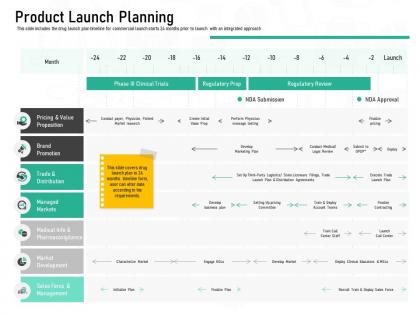
This slide includes the drug launch plan timeline for commercial launch starts 24 months prior to launch with an integrated approach.
People who downloaded this PowerPoint presentation also viewed the following :
Pharmaceutical marketing product launch planning ppt powerpoint presentation background with all 2 slides:
Use our Pharmaceutical Marketing Product Launch Planning Ppt Powerpoint Presentation Background to effectively help you save your valuable time. They are readymade to fit into any presentation structure.
FAQs for Pharmaceutical marketing product launch planning ppt
So basically you've got four main phases to think about. First is all the pre-launch stuff - getting your regulatory approvals sorted and nailing down pricing. Then you prep the market by building buzz with doctors and insurance companies. Launch day is pure chaos tbh - you're juggling sales teams, getting distribution running, and coordinating marketing all at once. It's honestly like trying to organize a wedding while blindfolded. After that comes the real test though - watching how the market actually responds and tweaking everything based on what the data shows you. Pro tip: pad your timelines because Murphy's law is very real in pharma.
Honestly, market research is what makes or breaks your launch strategy. It shows you exactly who to go after and what messaging actually works with doctors and patients. Like, you'll find out if physicians care more about efficacy data or safety stuff - or maybe cost is the real issue holding everything back. I've seen too many launches tank because teams just went with their gut instead of real data. Plus it helps you spot competitive gaps and figure out if the market opportunity is actually as big as you think. Build your whole go-to-market around those insights, not assumptions.
Honestly, regulatory approval is gonna be your biggest headache - everything revolves around that timeline. You literally can't sell without FDA sign-off, and they usually take 6-12 months minimum. Sometimes way longer if they want more data. The worst part? Once you submit, you're just waiting around hoping they don't find issues. I'd build your whole launch plan around when you think approval will hit. Have manufacturing and marketing ready to go the second you get that letter. Also smart to prep a few different timeline scenarios since these things never go exactly as planned.
Start with your trial data - see which patients actually responded well. Then dig into real-world numbers to find disease prevalence and where current treatments are failing. Who's your target doc? Oncologists, PCPs, specialists? Marketing always pushes for casting a wide net, but honestly that's usually a mistake. Better to nail your highest-value segments first. Oh, and definitely run this stuff by some KOLs and patient groups before you commit - they'll catch blind spots you missed. Get the patient journey mapped early so you're not playing catch-up later.
Medical conferences are still king, honestly. Plus journal ads and sales reps doing face-to-face visits with doctors. Digital's picking up steam though - LinkedIn targeting works surprisingly well, and medical site placements too. Pharma's just way more regulated than normal B2B stuff, which is annoying but whatever. Put most of your budget toward the in-person stuff since doctors still trust clinical data presentations and personal recs over everything else. I'd map out which conferences your target docs actually show up to first - that's where you'll see real results. The ROI difference is pretty huge.
Look, competitive analysis is how you figure out where your drug actually stands against everything else out there. Map out the other treatments - their pricing, market share, messaging, all that jazz. Yeah it's a pain but totally worth doing. You'll spot gaps you can jump on and avoid fights you can't win. Plus it helps craft positioning that actually clicks with doctors. Oh and definitely make a competitor matrix comparing efficacy, safety, cost, convenience - sounds boring but you'll see your advantages pop right out. Trust me on this one.
Track your commercial stuff first - market share, prescription volume, revenue vs what you forecasted. Patient adherence is huge too because what's the point if people don't actually take it? Also watch formulary coverage and prior auth rates. Safety-wise, keep monitoring adverse events and real-world effectiveness. Honestly, the biggest mistake I see is not setting up dashboards early enough. You don't want to be three months in wondering if you're even hitting your targets. Oh, and persistence metrics matter just as much as adherence - there's a difference.
Dude, physician engagement literally makes or breaks everything. Without doctors on board, your launch is dead in the water - doesn't matter how good your data looks. I've watched teams crash and burn because they obsessed over FDA approval but totally ignored getting doctors comfortable with prescribing. Start building those relationships super early though. Advisory boards, KOL partnerships, peer programs - whatever gets them familiar with your product. Honestly, the regulatory stuff feels more straightforward than convincing a busy doctor to change their prescribing habits. Your whole goal is just getting them confident enough to write that first script.
So MSLs are definitely your go-to for getting face time with the big name docs. Webinars and CME stuff work great for casting a wider net. Honestly though, peer-to-peer education is where it's at - other physicians presenting your data hits different than having your reps do it. Digital portals and targeted emails help keep you top of mind between meetings. Oh and create some practical tools they can actually use, like clinical decision aids or patient handouts. Makes their job easier while showing off what your product can do.
Honestly, you need to get patients involved way before launch day. Set up advisory boards during development - their feedback on messaging is gold. Disease awareness campaigns work really well, especially for stuff that's underdiagnosed. Build digital support programs that go live with your product launch. Apps, educational content, peer communities - the whole deal. Map out every touchpoint in the patient journey and create engagement for each stage. Patients should feel supported throughout, not just at the pharmacy counter. It's about making them feel heard from start to finish, which sounds cheesy but actually drives results.
Dude, the big ones are basically not doing enough market research and timing your regulatory stuff wrong. I've watched so many teams crash because they didn't actually get how doctors prescribe things - like, they just assumed instead of asking. Supply chain screwups will destroy you too, and don't even get me started on pricing yourself out of the game. Oh, and when your medical, commercial, and regulatory people aren't talking to each other? Total disaster. Honestly though, if you do the groundwork early and actually test your assumptions before going live, you'll avoid most of this mess.
Social media can definitely work for pharma, but man, the restrictions are wild compared to other industries. Focus on disease awareness campaigns instead of pushing specific products - way safer that route. Patient advocacy partnerships are gold, and creating stuff that doctors can actually share helps tons. LinkedIn's perfect for reaching physicians, Facebook and Twitter work better for general patient education. Oh and seriously, run EVERYTHING by compliance first. The FDA will come down hard on social media violations - I've seen companies get hammered for seemingly innocent posts. Disease education over product promotion is your safest play here.
Dude, your supply chain can make or break everything. Start building those relationships like 12-18 months out - I'm talking manufacturers, distributors, the whole network. Demand forecasting is huge because you don't want to be that company with empty shelves when doctors are ready to prescribe. Lead times will bite you if you're not careful, and regulatory holds at facilities happen more than you'd think. Oh, and definitely have backup plans for when things go sideways (they will). I've watched solid products totally flop because they rushed this part. Global launches? Even trickier.
Dude, seriously - call those payers way sooner than feels necessary. Like 12-18 months before launch. I know it seems crazy early, but trust me on this. Don't just dump your data package on them either (big mistake I've seen companies make). Have actual conversations about what evidence they want and their coverage rules. Real-world outcomes are what they actually care about, not just your fancy trial data. Oh, and try setting up some pilot programs if you can swing it - makes the whole approval process way less painful later. The key is showing clear value, not overwhelming them with info.
Here's what I'd focus on - find the specific problem your drug tackles better than what's already out there. Clinical differentiation is everything. Skip the boring mechanism stuff (honestly, docs glaze over with that). Instead, show them real outcomes they actually care about. Faster recovery? Fewer nasty side effects? That's your gold. Oh, and definitely run your pitch by some key opinion leaders first. I've seen too many companies waste months because they didn't test their message early. You'll save yourself major headaches down the road.
-
Enough space for editing and adding your own content.
-
Very unique and reliable designs.
-
Use of icon with content is very relateable, informative and appealing.
-
Easy to edit slides with easy to understand instructions.
-
Nice and innovative design.