Pharmaceutical product lifecycle pharmaceutical development new medicine ppt icon

Rating:
100%
Pharmaceutical product lifecycle pharmaceutical development new medicine ppt icon
Slide 1 of 2

or

Favourites Favourites

Try Before you Buy Download Free Sample Product

Audience Impress Your
Audience
Editable 100%
Editable
Time Save Hours
of Time
The Biggest Sale is ending soon in
0
0
:
0
0
:
0
0
Rating:
100%
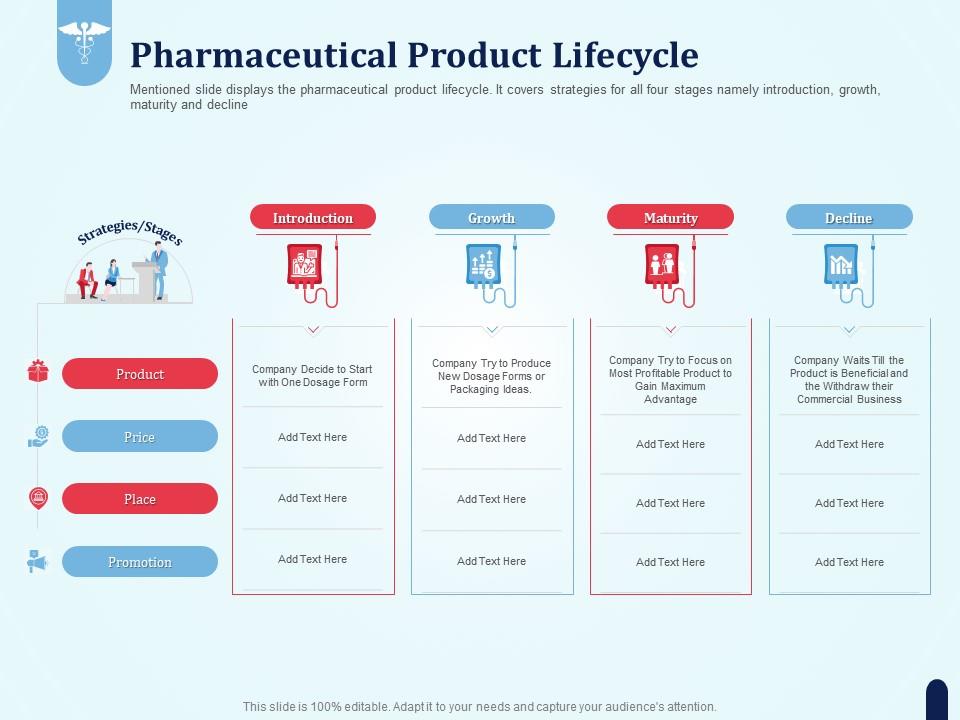
Mentioned slide displays the pharmaceutical product lifecycle. It covers strategies for all four stages namely introduction, growth, maturity and decline. Increase audience engagement and knowledge by dispensing information using Pharmaceutical Product Lifecycle Pharmaceutical Development New Medicine Ppt Icon. This template helps you present information on four stages. You can also present information on Commercial, Growth, Product, Price using this PPT design. This layout is completely editable so personaize it now to meet your audiences expectations.

FAQs for Pharmaceutical product lifecycle pharmaceutical development new

So there are basically five stages in pharma development. First is discovery - researchers find compounds and test them for like 10-15 years (crazy long, right?). Clinical trials come next with three phases, and honestly this is where most drugs die. Then regulatory approval where the FDA goes through all your data. After that you can actually sell the thing, which is commercialization. Oh and there's post-market surveillance too - they keep watching how it works in real patients. My advice? Figure out what stage you're in early because the timelines and requirements are totally different for each one. It'll save you headaches later.

Look, drug discovery is where you find and validate your target compounds - it's literally the foundation for everything else. Quality work here makes your life so much easier later when you hit preclinical testing and trials. I always think of it like construction - mess up the foundation and you're screwed downstream. Good discovery with solid biomarkers? Way fewer nasty surprises in Phase II. Honestly, most people rush this part, but you've got to nail your target validation and lead optimization upfront. Trust me, the extra time pays off big when regulators start asking questions.

Clinical trials are basically how pharma companies prove their drugs actually work before hitting shelves. There are three main phases testing safety and effectiveness - honestly, this is where most drugs either succeed or completely tank. The data from these trials is what regulators like the FDA need to green-light everything. Without decent results, you're dead in the water with regulatory approval. My friend works in this space and always says the trial design has to be bulletproof from the start, or you'll just waste years and tons of money.

Yeah, regulatory stuff can totally mess up your timeline at any point. The FDA might push back during preclinicals, or you'll get stuck waiting forever for clinical trial approval. Post-market surveillance is another headache - they can force label changes or pull your drug entirely. Here's the thing that really sucks: delays snowball. A 6-month Phase II delay turns into years of lost patent revenue. Honestly, I've seen companies treat regulatory as an afterthought until filing time, which is backwards. You need that strategy baked in from the start, not scrambling later.

Okay so three big things: pricing strategy, market access, and lifecycle management. Your value prop needs to be bulletproof before launch - payers want to see real clinical and economic benefits, not just hype. Start building relationships with key opinion leaders like yesterday, seriously. Then work systematically through formulary positions and reimbursement stuff (ugh, such a pain but necessary). Oh and don't sleep on lifecycle extensions - new indications, combo therapies, different delivery methods. The biggest thing though? Getting your commercial and medical affairs teams on the same page from day one with messaging and strategy.

Honestly, market access can totally tank even amazing drugs if you mess it up. Payers hold all the cards here - no coverage means no sales, period. Start planning this stuff during Phase II because they'll want solid health economic data before they'll budge on reimbursement. Building relationships with payers early is clutch. You can't just show up with clinical trial results and expect them to care. They want proof your drug actually delivers value in the real world, not just in some perfect study environment. It's honestly wild how many good therapies die at this stage.

Ugh, patent cliffs are the worst. Generic competitors swoop in and cut your prices by like 80-90% - it's honestly devastating to watch. You gotta start planning way ahead though. Think new formulations, combo products, maybe pediatric studies to squeeze out more patent time. Some companies do okay with authorized generics or pivoting to branded generics, but honestly the margins suck. Oh and don't wait until you're two years out to figure this stuff out - build your post-patent game plan right into development from the start. My old boss learned that lesson the hard way.

So pharma companies basically reinvent their drugs as they age. They'll reformulate for new uses, switch delivery methods - like going from shots to pills. Patent cliffs are absolutely devastating though, generics just swarm in. Companies also try combination therapies or pediatric versions to stay relevant. Oh, and some drugs end up over-the-counter eventually. The trick is planning this stuff way ahead of time, not waiting until your drug's already tanking. Smart companies watch their pipeline early and start thinking about these pivots before they desperately need them.

Post-marketing surveillance is huge because clinical trials only show you so much. Once millions of people start taking your drug, that's when the real surprises happen - rare side effects, weird interactions, stuff you'd never catch in controlled studies. You'll need solid systems to track reports from doctors and patients. Honestly, some of the most important safety signals come from random case reports that seem insignificant at first. Quick response protocols are key when serious events pop up. Sometimes you even stumble across new uses for the drug, which is a nice bonus.

Honestly, don't just sit around waiting for your patents to expire - that's business suicide. Start planning like 3-5 years early with line extensions or new formulations. Patent cliffs are brutal if you're caught off guard. Try finding new uses for existing drugs, or do pediatric studies since those buy you extra patent time. Combination products work too. Oh, and switching patients to extended-release versions before generics hit? That's pretty smart. The whole point is keeping revenue flowing even when cheap knockoffs flood the market. Takes serious advance planning though.

Three things you gotta nail: plan your manufacturing scale-up super early, get your data systems locked down tight, and talk to regulators often. Don't be like those companies I've watched panic when their tiny lab process completely falls apart at commercial scale - start your CMC strategy during preclinicals. Keep detailed batch records from the beginning. Set up solid change control procedures. Oh, and those scientific advice meetings with agencies? Use them. Trust me, preventing surprises beats scrambling to fix expensive problems later when you're trying to launch.

Dude, pharma's getting completely flipped by tech right now. AI is slashing drug discovery from like 10+ years down to maybe 2-3 in some cases - which honestly blows my mind. Digital trials are speeding up clinical phases big time, and personalized medicine is changing how everything gets developed. Oh, and digital therapeutics are basically creating whole new treatment types. The real kicker? All those old timeline and cost models you're probably using are gonna be useless soon. You'll need to build these tech efficiencies into your pipeline planning or you'll be way off.

Honestly, pharma companies create a mess at pretty much every step. You've got carbon emissions from manufacturing, crazy water usage (seriously, these facilities guzzle water like nothing else), plus all that single-use packaging patients throw away. Don't even get me started on drugs ending up in wastewater systems. The smart move? Run lifecycle assessments while you're still developing stuff. Way easier than trying to fix everything later. I'd start by figuring out where you're doing the most damage environmentally - that'll show you what to tackle first.

Dude, generic competition is absolutely ruthless. You're looking at losing like 80-90% of your market share in the first year after your patent expires - it's wild how fast it happens. Generics come in swinging with prices 20-40% lower than yours, and honestly it just keeps getting worse from there. The whole lifecycle gets totally compressed. That's why smart companies start planning their exit strategy years ahead - new formulations, combo products, expanding into different uses. Whatever you do, don't wait until generics are already eating your lunch to figure out what's next.

Honestly, digital marketing is clutch for pharma products throughout their whole journey. Pre-launch, you're building awareness. During launch, targeted campaigns help educate doctors and get adoption going. Post-launch is where things get interesting though - you can use real-world data to push for label expansions and directly engage patients (depending on regulations) to boost adherence. Social listening is huge for pharmacovigilance too, which people don't always think about. Map out your lifecycle stage first. Then pick the digital tools that actually make sense for where you're at. Don't just throw everything at the wall.

Ratings and Reviews

100% of 100
Review Form
Write a review
Most Relevant Reviews
  1. 100%

    by Dario Freeman

    Easily Understandable slides.
  2. 100%

    by Clair Gray

    Great product with highly impressive and engaging designs.
  3. 100%

    by Dino Grant

    Use of different colors is good. It's simple and attractive.

3 Item(s)

per page: