


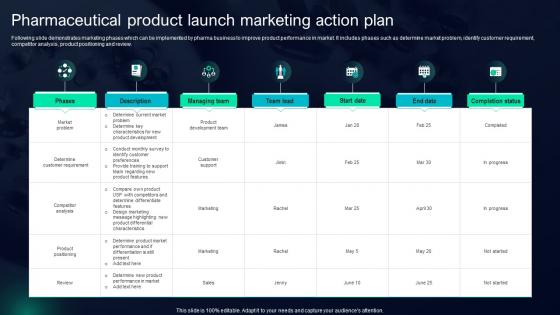
Pharmaceutical Product Launch Marketing Action Plan




Try Before you Buy Download Free Sample Product
 Impress Your
 Audience
 100%
100% Editable
 Save Hours
 of Time


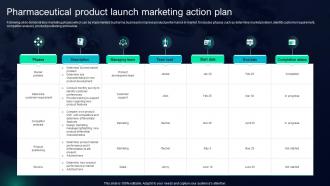
Following slide demonstrates marketing phases which can be implemented by pharma business to improve product performance in market. It includes phases such as determine market problem, identify customer requirement, competitor analysis, product positioning and review.
People who downloaded this PowerPoint presentation also viewed the following :
Pharmaceutical Product Launch Marketing Action Plan with all 6 slides:
Use our Pharmaceutical Product Launch Marketing Action Plan to effectively help you save your valuable time. They are readymade to fit into any presentation structure.





FAQs for Pharmaceutical Product Launch
Oh man, FDA promotional guidelines are brutal - they'll come for you hard if you mess up off-label claims. That's where most companies totally blow it. Different countries have completely different rules too, which is honestly such a pain. Digital marketing made everything worse since the old regulations don't even cover social media stuff. Sometimes I swear they change the rules just to mess with us! But seriously, get your regulatory people involved from the start of campaign planning. Don't treat them like the fun police you call at the end.
So pharma's whole approach has flipped because of digital stuff. Instead of sending reps everywhere, they're doing targeted online campaigns and personalizing everything with data. Telehealth blew up too - COVID really pushed that forward. Companies can track what doctors actually engage with in real-time now, which is pretty cool. Social media and online education platforms are where it's at. Honestly, most physicians just prefer getting info digitally these days rather than sitting through another sales pitch. Marketing teams are finally catching up to how people actually want to consume information.
Doctors, nurses, and pharmacists are your main targets in pharma marketing since they're the ones writing prescriptions. You'll connect with them through educational events, trials, and promo stuff to build relationships and share product info. Don't just pitch at them though - that's where a lot of companies mess up. These people give you gold feedback on how drugs actually work, side effects, real patient experiences. That intel shapes your whole strategy. My advice? Focus on genuine partnerships instead of just pushing sales. Once they trust you, they become your biggest advocates. Oh, and pharmacists are often overlooked but they're surprisingly influential with patients.
FDA compliance is huge - everything gets reviewed before posting, which is honestly a pain but necessary. Don't promote products directly. Instead, share educational stuff about diseases and research your company's doing. Social moves fast but pharma... doesn't. Super frustrating! Patient advocacy partnerships work well though. Always include risk info with any benefits you mention - that "fair balance" thing is non-negotiable. Get a solid social media policy everyone actually understands. Oh, and agencies that specialize in pharma social are worth their weight in gold since they know all the regulatory weirdness.
Honestly, the FDA doesn't mess around with cherry-picked data or overhyped benefits - they'll shut you down fast. You've gotta be straight about risks vs benefits and make sure you're not targeting the wrong people. Don't create messaging that makes patients self-diagnose or pressure their doctors (that's a nightmare scenario). I know leadership's probably pushing for aggressive numbers, but patient safety comes first, period. Oh, and definitely loop in legal and medical affairs from day one. When you're unsure, go conservative with claims. Better to undersell than deal with regulatory headaches later.
Patient advocacy groups are gold for expanding reach, but honestly they've gotten pickier after some pharma companies burned bridges with shady deals. These groups have way more credibility with patients than we ever will. Perfect for educational stuff, awareness campaigns, clinical trial recruitment - the usual suspects. Thing is, you can't just waltz in pitching your product anymore. They're smart and they see right through that. Build real relationships first - actually listen to what they care about before you even mention collaboration. Trust me, authenticity beats aggressive sales tactics every time. Start there and you'll be fine.
Track prescription lift and how engaged your docs are - that's the bread and butter. Script volume changes in your territories matter most, but don't sleep on digital stuff like email opens and call acceptance rates. ROI's honestly a pain in pharma since everything takes forever, so brand awareness surveys help fill the gaps. Share of voice against competitors is huge too - I've seen it track almost perfectly with market share. Start with HCP engagement metrics first, then add prescription data later. Oh, and make sure you're not drowning in too many dashboards.
So basically, you want to hit each doctor with stuff they actually care about instead of blasting everyone with the same generic message. Send diabetes data to endocrinologists, heart stuff to cardiologists - you know, match the content to what they're dealing with daily. The engagement boost is honestly pretty wild when you get it right. Open rates jump, conversations get more meaningful, and your ROI improves because you're not wasting their time. Oh, and start simple - just segment by specialty first. That one change alone will make a huge difference in your campaign numbers.
Pharma companies are finally ditching those boring one-way ads for actual conversations with patients. They're building communities where people share real experiences instead of just pushing product info. Social listening is massive right now - companies are figuring out what patients actually want to discuss rather than guessing. Personalized content is way more sophisticated too, not those generic "ask your doctor" commercials that used to be everywhere (thank god). Patients want to feel heard in their treatment journey, not just marketed to. Also look into patient advisory boards - that co-creation stuff is pretty interesting.
Honestly, pharma marketing gets crazy complicated once you go global. Each country has its own regulations and reimbursement mess to deal with. What crushes it in Germany? Probably won't even work in Brazil - different cultures, different attitudes about healthcare. You'll need to completely rethink your messaging and channels for each market. Plus the approval processes are all over the place, and don't get me started on pricing pressures. My advice? Build campaigns that can flex and adapt locally while keeping your brand consistent. It's like solving a puzzle where every piece is a different shape.
Honestly, one safety scare can wipe out years of reputation building in a heartbeat. People never forget when it comes to health stuff - I mean, look how long some companies have been dealing with fallout from past issues. Social media makes everything worse too because bad news spreads crazy fast. You've got consumers researching everything online and already suspicious of pharma companies. Regulators scrutinize every claim you make. It's this constant balancing act where you can't seem too sales-y or people think you only care about money. Best bet? Just be transparent and let your results do the talking.
Honestly, analytics changed everything for pharma marketing. Instead of just blasting everyone with the same message, you can actually see which doctors are prescribing what and when they're most likely to switch. Look at your CRM data first - your top prescribers will show you patterns you didn't even know existed. Track your sales reps too, see what's actually working territory by territory. The whole spray-and-pray thing is dead (finally). You'll be able to measure ROI way better and figure out which channels aren't just burning money. It's basically the difference between throwing darts blindfolded versus actually aiming.
So basically drug companies can advertise prescription meds straight to us instead of just targeting doctors. Pretty weird when you think about it. Patients end up going to their doctor like "hey I saw this ad, can I get that pill?" Sometimes that's actually helpful for awareness, but other times people are basically trying to self-diagnose from a 30-second commercial. The FDA has all these rules about what claims they can make, and honestly those guidelines change pretty frequently. Oh and here's something crazy - some companies spend more on marketing than actual research and development. If you're dealing with this stuff professionally, just stay on top of those regulatory updates because they shift around a lot.
Honestly, ditch the boring clinical data approach. Real patient stories are where it's at - show how someone got back to coaching little league or whatever after treatment. Yeah, you still gotta follow compliance rules, but that doesn't mean putting people to sleep! Case studies and testimonials work great. Healthcare providers connect with that stuff way more than charts and graphs. The whole point is making them actually feel something while keeping it truthful. Oh, and start hoarding patient stories now if you aren't already - they're literally worth their weight in gold for marketing.
Honestly, everything's going digital-first now. Companies are using AI to target doctors based on their prescribing habits, plus there's way more interactive stuff - like AR apps that show how drugs actually work in the body (pretty cool actually). Video calls with doctors took off during COVID and never really went back. Turns out they love the flexibility vs. in-person meetings. Patient journey mapping is huge too - finding ways to connect beyond just the typical sales pitch. My take? You've got to try omnichannel approaches soon. The old-school rep model doesn't work as well with younger doctors.
-
No second thoughts when I’m looking for excellent templates. SlideTeam is definitely my go-to website for well-designed slides.
-
Great product with effective design. Helped a lot in our corporate presentations. Easy to edit and stunning visuals.