


Launch Plan For Pharmaceutical Product Marketing




Try Before you Buy Download Free Sample Product
 Impress Your
 Audience
 100%
100% Editable
 Save Hours
 of Time


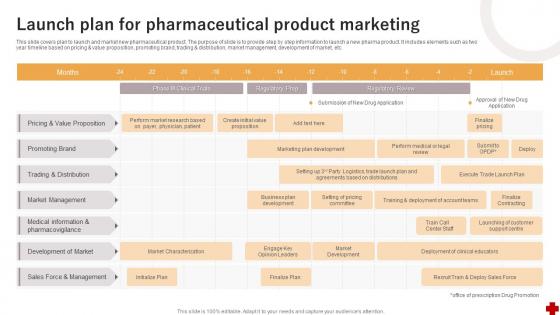
This slide covers plan to launch and market new pharmaceutical product. The purpose of slide is to provide step by step information to launch a new pharma product. It includes elements such as two year timeline based on pricing and value proposition, promoting brand, trading and distribution, market management, development of market, etc.
People who downloaded this PowerPoint presentation also viewed the following :
Launch Plan For Pharmaceutical Product Marketing with all 6 slides:
Use our Launch Plan For Pharmaceutical Product Marketing to effectively help you save your valuable time. They are readymade to fit into any presentation structure.





FAQs for Launch Plan For
Honestly, start with your market opportunity and timing - that's what gets executives excited. Target audience personas are huge too, plus you need a solid competitive analysis. Your go-to-market strategy should cover specific channels, not just vague ideas. Don't skip the boring stuff like budget breakdowns and success metrics - they always ask about those anyway. Timeline with milestones, team roles, pricing strategy if it's a product launch. Oh, and prep some backup slides on competitor details because someone will definitely drill down on that. Charts and mockups make everything way more digestible than walls of text.
Break down your audience into specific segments with real data behind them. Demographics and psychographics are your starting point, then dig into their actual pain points and behaviors. Make them feel like real people, not spreadsheet rows. I always throw in a "day in the life" slide - executives eat that stuff up, honestly. Show how your product actually fits their routines and decision-making. Don't forget to size each segment and explain your priorities. Wrap up with clear messaging for each group so everyone knows how to talk to these people.
Honestly, I'd break it into three main areas: getting users, keeping them engaged, and actually making money. Sign-ups and website traffic show if people can find you. Then see how they're actually using your stuff - are they sticking around? Activating? Using your key features? Don't get caught up in vanity metrics like I did at first - focus on the revenue side. What's your trial-to-paid conversion looking like? How much does it cost to get each customer? I'm obsessed with daily dashboards now because you need to spot problems fast. Revenue numbers don't lie, even when everything else looks good.
First thing - figure out what absolutely has to happen before other stuff can start. Map it out visually if that helps (I'm terrible at keeping it all in my head). Customer-facing things and anything that'll block other teams? Do those first. Then tackle your internal prep work. Oh, and definitely pad your timeline because something always goes wrong - maybe the designer gets sick or approvals take forever. Give each task a clear owner so no one's like "wait, I thought YOU were handling that." Regular check-ins are clutch. Work backwards from your launch date with just the must-haves.
Here's what's worked for me - tell a story with your launch. Show the messy "before" state, then reveal how everything changes after. Real numbers hit way harder than vague promises, and actual customer quotes are gold. I'm obsessed with the hero's journey thing lately - sounds cheesy but it actually works for product stuff too. Build some drama around timing and competition, then swoop in with your solution. Ditch the bullet points for visuals that move the story forward. Each section should end with a little "but wait, there's more" moment. Oh, and make your stakeholders the heroes, not your product. They'll eat that up.
Dude, visuals are everything for launch presentations. Charts show your timeline instantly - way better than bullet points. Infographics work great for breaking down market data or user personas too. I can't tell you how many boring, text-heavy decks I've sat through where everyone's checking their phones. Consistent colors and icons create this visual story that actually guides people through your strategy. But here's the thing - your visuals need to support what you're saying, not just look pretty. Figure out your 3-4 main points first, then build the visual stuff around those. Makes such a difference.
Dude, competitor analysis is like doing recon before you jump in. Map out what they're nailing and where they're totally missing the mark - honestly, most companies have some glaring blind spots if you look close enough. This intel shapes everything: your pricing, how you position yourself, even when to announce so you don't get steamrolled by their big product drop. You'll catch partnership opportunities too, or at least avoid their obvious mistakes. Start by listing their wins and fails, then craft your launch around the gaps you find. It's your best shot at not face-planting right out the gate.
Honestly, just pick a few key moments in your timeline to actually stop and listen to people. After beta, soft launch, whatever - set up surveys or testing sessions then. Here's the thing though: everyone collects feedback but nobody schedules time to actually do something with it (learned this the hard way). Make it super easy for people to tell you stuff - simple forms work fine. Monitor social media if you want. But here's what really matters: decide beforehand what feedback is worth changing your plans for versus what's just interesting noise. Don't try to act on everything.
Honestly, don't dump every little detail on your slides - stick to the big stuff like milestones and timelines. You'll get grilled about risks no matter what, so have those contingency plans ready. Make your deadlines realistic too (I've watched so many teams set themselves up for failure with crazy launch dates). Oh, and definitely spell out who's responsible for what - nothing worse than confused team members pointing fingers later. Practice beforehand and prep some backup slides. Trust me, the follow-up questions always come.
Honestly, just get everyone in a room first and hash out the timeline together. Each team needs to spell out what they actually need - like how long marketing wants for campaigns, when engineering can realistically finish testing, all that stuff. I made this mistake once where design was still changing things while the devs thought everything was locked down (total disaster). Set up some kind of shared doc that shows how everything connects. Those weekly check-ins between teams are a lifesaver too. The whole point is making sure people can see what's blocking what instead of everyone just crossing their fingers and hoping it'll work out somehow.
Start with your launch date and work backwards - that's the only way this doesn't turn into chaos. Map out your phases: pre-launch stuff like marketing prep and final testing, then soft launch, then full rollout. Honestly, the buffer time thing is non-negotiable because I've literally never seen a launch go perfectly smooth. Dependencies are huge too - like when does marketing actually need those final assets from product? When's sales training happening? Make it visual so everyone can see how their delays screw over the next person. Sounds harsh but it works.
Okay so basically you gotta tailor everything to match each channel's vibe. Retail partners want flashy displays and training stuff for their staff. Online marketplaces? Focus on killer product listings and good digital assets. Direct-to-consumer is honestly the sweet spot since you control everything, but you'll need way more educational content. B2B folks care about technical specs and solid case studies - they're all business. Consumer channels are totally different though, they want pretty lifestyle shots and reviews from real people. Just figure out what each audience actually gives a damn about first, then work backwards from there.
Data beats gut feelings every time. Start with your numbers vs targets, then tell the story of what happened. I structure mine: results up front, wins to repeat, what bombed and why, plus next steps. Don't just throw charts at people - actually explain what it means for next time. Honestly, the best reviews I've done spend as much time on failures as wins because that's where you learn stuff that matters. Wrap up with 2-3 specific changes you'll make so it feels actionable, not just another "lessons learned" meeting that goes nowhere.
Honestly, just start by listing out everything that could totally screw you over - late deadlines, going over budget, tech breaking, competitors doing something sneaky. Then figure out your backup plan for each thing and make someone responsible for it. I learned this the hard way, but always pad your timeline and money because something WILL go wrong. Murphy's law isn't kidding around. Check in on these risks regularly so you're not scrambling later. Way better to have a plan ready than to panic when stuff hits the fan. Document it all so everyone knows what to do.
Oh totally! Look at Apple - they hype iPhones for months then make them super limited so everyone's camping outside stores. Slack went the opposite route, staying in "beta forever" with invite requests that made people desperate to get in. Tesla basically treats every car launch like it's the Oscars now lol. My favorite is still Dropbox though - they literally just made a demo video that blew up before they even had a working product. For your thing, just figure out what clicks with your people. Some respond to exclusivity, others need social proof, or they just want a good story. What's your audience like?
-
I want to express my gratitude to SlideTeam’s presentation design services team for helping me create the best presentation of my life!
-
Incredibly beautiful designs that will help you get noticed! These eye-catching templates are perfect for corporate presentations that can be altered to fit any occasion or taste.