


Comparison Chart For Competitive Brand Analysis




Try Before you Buy Download Free Sample Product
 Impress Your
 Audience
 100%
100% Editable
 Save Hours
 of Time


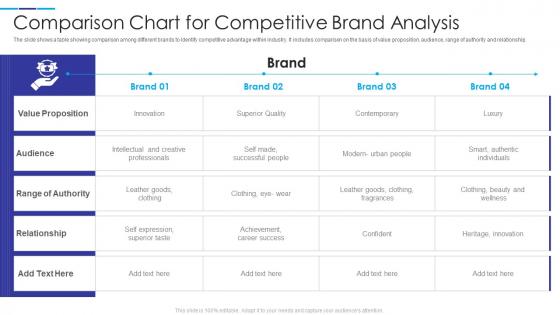
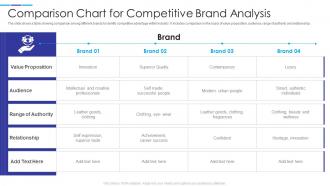
The slide shows a table showing comparison among different brands to identify competitive advantage within industry. It includes comparison on the basis of value proposition, audience, range of authority and relationship.
People who downloaded this PowerPoint presentation also viewed the following :
Comparison Chart For Competitive Brand Analysis with all 6 slides:
Use our Comparison Chart For Competitive Brand Analysis to effectively help you save your valuable time. They are readymade to fit into any presentation structure.





FAQs for Comparison Chart For
Honestly, the brands that crush it have figured out three things. First, they know exactly what they're about - no wishy-washy messaging. Then they're consistent everywhere you encounter them. But here's what really matters: emotional connection. Look at Apple - you don't just buy their stuff, you *feel* something, you know? Most companies just copy what competitors do instead of building real relationships. I'd map out every single place customers interact with your brand (even the boring stuff like email receipts) and see if it actually backs up what you say you're about. That gap between promise and reality? That's where you'll find your answer.
Brand values are basically emotional shortcuts. When yours match what your customers care about, boom - you've got sticky loyalty that translates to repeat sales. People literally pay premium prices for brands that reflect their identity. Sustainability, innovation, social justice - whatever resonates with them. The psychological connection is honestly crazy powerful. They're not just buying your product anymore; they're buying into who they want to be. My advice? Figure out what you actually stand for (not just what sounds good in a meeting) and be authentic about it everywhere.
Dude, social media is wild for brands now. One bad review goes viral and you're screwed - I've seen companies tank overnight from Twitter drama. But honestly? The good stuff spreads fast too when you actually engage with people authentically. You gotta watch what people are saying about you 24/7 though. Google Alerts are clutch for this. Also get some social listening tools so you're not blindsided. Quick responses are everything. Oh, and user-generated content is gold if you can get customers posting about you organically.
Look, storytelling is what makes people actually remember your brand instead of forgetting it two seconds later. You're giving them emotions to latch onto, not just boring product specs. Nike's the perfect example - they don't really sell shoes, they sell that whole "push your limits" vibe. But here's the thing: your stories can't be total BS. They need to match what customers actually experience with your brand, or people will see right through it. I'd start by figuring out how your brand actually changes people's lives, then build stories around that transformation. Way more powerful than just listing features.
So here's the thing - market research shows you where your brand actually lives in people's heads vs where you think it does. Half the time your assumptions are totally off (learned this the hard way at my last job). You'll catch gaps between what you're trying to say and what customers are hearing. Plus you get to peek at what competitors are nailing. Simple surveys or focus groups work great for testing current perceptions before you change anything major. The real win? Finding ways to stand out that actually matter to your audience, not just your team.
Look, it's really about three main things: visual consistency, clear messaging, and making people actually *feel* something about your brand. Your logo, colors, fonts - all that stuff needs to match across your website, social media, packaging, whatever. You also need a voice that doesn't sound like boring corporate BS (seriously, we're all tired of that). But here's the thing - the real magic happens when customers connect emotionally. People literally tattoo Nike swooshes on themselves, right? That's wild but it shows how deep brand loyalty can go. I'd start by looking at what you've got now and figuring out where the gaps are.
Dude, culture completely changes how people see your brand. Local values, religion, communication styles - all that stuff matters way more than you'd think. Like collectivist cultures? They want community vibes. Individualistic ones care about personal wins. But it goes deeper than that tbh. Even your colors and imagery need tweaking for different markets. I learned this the hard way watching brands totally bomb because they didn't do their homework. Don't just look at basic demographics either - dig into the actual cultural research before you launch anywhere new.
So first thing - grab a spreadsheet and audit everything. Your website, socials, any marketing stuff you've got floating around. I use spreadsheets because honestly my brain turns to mush trying to remember it all. Check if your messaging and visuals actually match up everywhere. Then ask people what they think! Survey customers, your team, whoever. You'll probably find some weird gaps between what you think your brand is vs. how people see it. Those gaps? That's your to-do list right there. Oh and peek at what competitors are doing too - might spark some ideas for standing out.
So AR try-ons and voice shopping are pretty much everywhere now. Customers want that instant, personalized stuff across all platforms - no patience for slow responses anymore. VR is making things way more engaging than those boring traditional ads (thank god). IoT devices are giving brands crazy detailed data about what people actually do, not just what they say they do. Here's the thing though - don't just grab every new tech because it's trendy. Pick what actually fixes problems for YOUR people. I'd start small, see what clicks, then go bigger. AI chatbots work great for some brands but feel weird for others, you know?
Honestly, just focus on the big four: brand awareness (both aided and unaided), perception scores, loyalty rates, and price premium tolerance. NPS too since leadership always wants that number. Track brand consideration rates - that's the real test of whether people would actually pick you over competitors. Quarterly measurements work best, just stick with the same method each time or you'll be chasing random fluctuations. Oh and set up some kind of monthly dashboard so you're not scrambling when someone inevitably asks "how's the brand performing?" in meetings.
Dude, just make it super simple for people to post about your stuff. Create a catchy hashtag and maybe do some fun contests - customers eat that up. When someone shares something cool, repost it and give them credit. People go crazy when brands feature their content! Here's the thing though - user posts feel way more real than anything your marketing team puts out. I swear, some of the best brand content is just regular people showing off products they actually bought. Oh, and definitely comment back when people tag you. Makes a huge difference. Start small - just find good customer photos and share them. Trust builds fast when real people are vouching for you instead of just your own ads.
Speed matters, but don't throw your brand values out the window. First thing - check if your messaging still makes sense or if it sounds weird now. Then figure out what products you can shift focus to. Be honest with people about what you're changing. Nobody likes being kept in the dark. The companies that nail this stuff? They're usually flexible already. But if that's not you, pick ONE thing to pivot instead of scrambling everywhere at once. Oh, and actually listen to what customers want right now - then do more of that.
Look, when customers see the same vibe from your brand everywhere - your website, social media, even how you answer emails - they start trusting you more. That trust turns into sales, honestly. People buy from brands they recognize and feel good about. Consistent brands can even charge more because they seem legit and established. Your marketing gets way more efficient too since every post or ad reinforces the same message. I'd start by checking where your brand feels off across different platforms, then write down some basic rules your team can follow. Nothing crazy complicated though.
Your customers get attached when they feel like your brand actually understands them - like it reflects who they are. Trust is massive too. Once someone feels burned, they're done with you. People also just stick with what they know works (honestly, we're all creatures of habit). Social proof helps a ton - seeing others rave about your brand makes newcomers feel way safer about choosing you. Here's what actually works: tell stories that connect emotionally instead of just listing what your product does. Keep delivering good experiences consistently. That's how you build real attachment.
Honestly, you gotta stay glued to what your audience is actually saying - not what you think they want. Set up feedback loops everywhere: social listening, surveys, random customer chats. I've watched so many companies crash because they missed obvious signals their customers were sending. Make your messaging modular though, so when you need to pivot (and you will), your brand doesn't look schizophrenic. Test stuff constantly and ditch what's not working fast. Oh, and start by comparing your current messages to what customers are literally telling you they need right now. That gap will probably surprise you.
-
Thrilled to see several customizable templates catering various verticals and industries.
-
I joined SlideTeam last month and there’s no doubt that I tend to find our bond only strengthening over time. Best place to find world-class themes, templates, and icons.