


Change Release And Deploy Management Process Flow




Try Before you Buy Download Free Sample Product
 Impress Your
 Audience
 100%
100% Editable
 Save Hours
 of Time


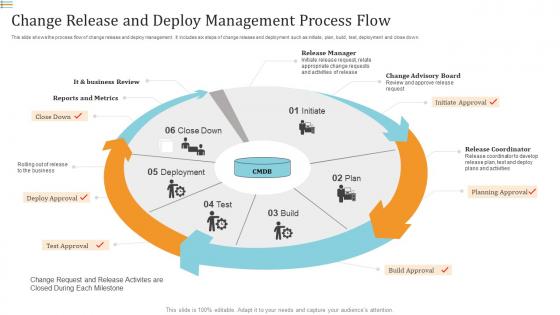
This slide shows the process flow of change release and deploy management. It includes six steps of change release and deployment such as initiate, plan, build, test, deployment and close down.
People who downloaded this PowerPoint presentation also viewed the following :
Change Release And Deploy Management Process Flow with all 6 slides:
Use our Change Release And Deploy Management Process Flow to effectively help you save your valuable time. They are readymade to fit into any presentation structure.





FAQs for Change Release And Deploy
Honestly, most change fails because leaders just assume people will roll with it - huge mistake. You've gotta explain the "why" first, then get people involved in figuring out the "how." Find your early supporters who are naturally excited about new stuff and let them help sell it to the skeptics. Communication can't just be a one-time email either. Timing is weirdly crucial too - don't drop major changes right before holidays or busy seasons. Oh, and celebrate the small wins! People need to feel like progress is actually happening, not just more work getting piled on.
Track the obvious stuff first - productivity, retention rates, project timelines. But honestly? The real insights come from just paying attention to what people actually say. Are they bitching about the changes constantly or seems like they're genuinely on board? Set up check-ins at 30, 60, 90 days because problems always snowball if you ignore them. Employee surveys help, but I'd trust casual conversations more - that's where you hear what's really happening. Numbers don't lie, but they definitely don't tell the whole story either.
Honestly, communication can totally make or break this stuff. People get weird when they don't know what's happening - like, nobody wants to be blindsided at work, you know? So be upfront about why you're making changes and what's actually in it for them. Don't just send one massive email and call it done though. Keep talking throughout the whole thing. Oh, and make sure they can actually respond back to you - let them ask questions or complain if they need to. Trust me, if people feel heard they'll fight you way less on whatever you're trying to change.
Honestly, most change efforts crash because people are terrified of what's coming next - totally normal reaction. Leadership either doesn't explain the "why" properly or just phones it in without real commitment. Plus you'll get pushback from middle managers who feel stuck in the middle (which, fair enough, they kind of are). Resources and training? Often an afterthought. Here's what actually works though - get everyone involved in planning it, not just announcing it. Over-communicate like crazy about why this matters. And yeah, make sure your leadership team is actually on board first, not just pretending to be.
Honestly, you've gotta be the example here - show them why changes are happening and that you're figuring it out too. When they try new stuff, celebrate it even if it's messy. I've found that regular check-ins catch pushback before it gets ugly. Make it safe to mess up by admitting change sucks sometimes. But here's the key thing - don't just announce what's changing and expect compliance. Let your team help decide HOW to make it happen. People hate feeling powerless, so give them control over the process even when the outcome isn't negotiable.
Honestly, just talk to people constantly - but actually listen back. Get employees involved in planning instead of just dumping news on them. Town halls work great for real Q&As. Set up feedback systems that aren't those pointless suggestion boxes (you know what I mean). Share what's happening and why, even the rough stuff. Find a few enthusiastic people in each team who can help sell the changes to everyone else. Oh, and start collecting feedback super early - trust me, it'll prevent so many problems down the road. Two-way conversation is everything here.
Don't wait until the end to ask for feedback - weave it throughout everything. Pulse surveys work great, but honestly one-on-ones catch stuff you'll miss otherwise. Anonymous channels are clutch because people won't sugarcoat things when they're not worried about politics. Here's the thing though: you absolutely have to act on what you hear or people get cynical real quick. I'd even start gathering input before announcing anything to test your messaging. Too many leaders only talk to their usual suspects and wonder why things go sideways. Short bursts of feedback beat long surveys every time.
Honestly, communication is everything here. People absolutely hate being blindsided, so be upfront about why this is happening and what's in it for them. Get your key players involved in the actual planning - they'll become your biggest cheerleaders instead of fighting you. Try running some pilot programs first if possible. Small wins are gold during transitions. Oh, and create space for people to complain and ask questions without feeling judged. I can't stress this enough - regular check-ins will save you from problems exploding later. When people feel heard, they're way more likely to get on board.
So Kotter's 8-Step works amazing for huge company-wide changes - think culture overhauls or major restructuring. ADKAR's your go-to when you need individuals to actually adopt new processes since it walks them through Awareness, Desire, Knowledge, Ability, and Reinforcement step by step. Here's the thing though - I've watched too many teams waste weeks debating which framework to use instead of just picking one and running with it. Match it to what you're dealing with: big strategic shift? Kotter. Getting people comfortable with new systems? ADKAR. Then stick with your choice.
Honestly, it all comes down to how your company's set up. Flat organizations? They move fast because there's less red tape - info just zips between teams. Hierarchical places are different though. Sure, they're more controlled and systematic, but man, the bottlenecks can be brutal when everyone's waiting around for approvals. Here's the thing - you've got to work with whatever structure you have, not fight it. If you're dealing with lots of layers, just build in extra time for getting everyone on board at each level. Don't try to force a square peg into a round hole, you know?
Honestly, tech makes change management so much less painful. You'll get way better visibility into what's actually happening with project management tools tracking everything. Communication platforms keep people on the same page - no more "wait, what are we doing again?" Analytics help you catch pushback before it becomes a real problem. Digital training is a game changer too since people can go at their own speed instead of zoning out in those soul-crushing company-wide meetings. Just don't go crazy picking tools that don't play nice with what you already have. That creates more headaches. Pick one solid platform first, then expand.
So here's the thing - you can't just rely on that initial excitement wearing off (which it will). Build in some feedback loops so you catch people slipping back into old habits. Celebrate the small wins along the way! Leaders need to visibly support this stuff or it dies fast. Document everything and update job descriptions - make it feel normal, not like some special initiative. Tie it to performance reviews too. Oh and start tracking a few basic metrics now so you'll actually know if people are sticking with it. The goal is making the change just... how things work around here.
Honestly, EQ and resilience are game-changers when it comes to handling change. You'll get way better buy-in if you can actually read how people are feeling about whatever's shifting. Trust me on this one - folks with high emotional intelligence just communicate change better because they address concerns without being tone-deaf about it. Resilience kicks in when stuff goes wrong (and it always does). Instead of falling apart, you adapt your approach. The key is genuinely listening to your team's worries first. Show them you actually understand what they're going through, not just brushing off their concerns.
Think of stakeholder analysis as figuring out who actually matters for your project. Map out everyone who'll be impacted - then sort them by how much power they have. Some will love your idea, others will hate it, and plenty won't care either way. Honestly, I've watched solid projects crash because someone missed one cranky executive who could kill everything. Focus your energy on the high-influence people first. Build your support team early and tailor how you talk to each group. It's basically politics, but for work stuff.
Yeah, so basically you've gotta match your approach to whatever industry you're in. Healthcare moves super slow because, well, people could die if you mess up - they need crazy safety checks and gradual rollouts. Tech companies? Total opposite. They'll push changes fast and fix problems later. Manufacturing gets tricky with unions and equipment training (honestly, those meetings can drag forever). Startups might just send a Slack message and call it good. Financial services will drown you in compliance paperwork and risk assessments. Really comes down to figuring out your industry's speed and how much risk they'll actually tolerate. Look at what worked for similar companies first.
-
Colors used are bright and distinctive.
-
Illustrative design with editable content. Exceptional value for money. Highly pleased with the product.