


Client onboarding process stages with estimated time techniques reduce customer onboarding time




Try Before you Buy Download Free Sample Product
 Impress Your
 Audience
 100%
100% Editable
 Save Hours
 of Time


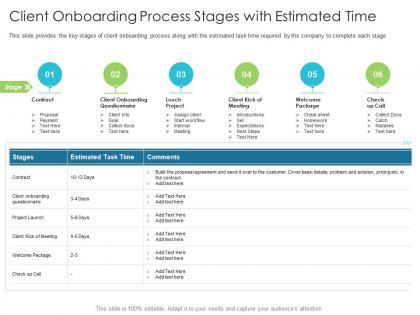
This slide provides the key stages of client onboarding process along with the estimated task time required by the company to complete each stage.
People who downloaded this PowerPoint presentation also viewed the following :
Client onboarding process stages with estimated time techniques reduce customer onboarding time with all 2 slides:
Use our Client Onboarding Process Stages With Estimated Time Techniques Reduce Customer Onboarding Time to effectively help you save your valuable time. They are readymade to fit into any presentation structure.

FAQs for Client onboarding process stages with estimated time techniques reduce
So basically you've got four main phases: pre-boarding (contracts, paperwork stuff), then orientation where you introduce everyone, training so they actually know how to work with you, and check-ins throughout their first 90 days. Most companies totally bomb that last part though - they think they're done after the first week. Wrong! You need regular touchpoints to catch confusion before it becomes a problem. The whole point is making them feel supported without drowning them in information. I'd start by looking at your current setup and figuring out where people usually get lost or frustrated.
So I'd start by mapping out where things get stuck in your current process - that's usually where automation helps most. Client portals are great for collecting documents without the back-and-forth emails. E-signature tools obviously speed up contracts, and you can set up automated welcome emails that trigger right after someone signs. Honestly, CRM integration saved my butt so many times because everything stays in one place. Chatbots can field the basic "what's next" questions, which is surprisingly helpful. Oh, and giving clients access to project management tools so they can see progress? Game changer. Don't try to automate everything at once though - pick your biggest pain points first.
Honestly, communication makes or breaks everything with onboarding. Tell clients what to expect right off the bat, then actually follow through with updates. Quick responses when they ask questions? Game changer. I've watched so many deals implode just because nobody bothered sending progress emails - it's wild how often this happens. Being proactive beats waiting for clients to hunt you down every time. Even basic stuff like "hey, we got your info" confirmations build trust. Oh, and your communication style? That's literally setting the vibe for your entire working relationship.
Track both hard numbers and the fuzzy stuff - completion rates for each step, time until clients actually see value, plus 30/60-day churn rates. Client satisfaction surveys matter way more than people think though. Also monitor how much hand-holding each new client needs their first month (trust me on this one). Short sentences work. Dashboard these monthly so you can catch patterns early. The soft metrics like "did they actually enjoy it" vs just surviving the process? That's gold. Oh and retention numbers don't lie - they'll show you real quick if something's broken.
Honestly, the worst mistake is info-dumping everything on clients right away. Pick one person to be their main contact - nobody wants to get passed around like a hot potato. Never assume they know the basics, even if it seems obvious. I've watched so many onboardings crash because we skipped the fundamentals. Communication blackouts are deadly too. If they don't hear from you for days, they'll panic. Start with easy wins to build confidence, then tackle the bigger stuff. Oh, and spell out your timelines upfront so there's no confusion later.
Honestly, just split your clients into different buckets - maybe by company size or how complex their needs are. Simple clients get a streamlined "quick start" path. Bigger enterprise folks? They'll want the full white-glove treatment. I've watched companies royally screw this up by forcing everyone through identical marathon processes (so painful to watch). Grab an intake form early to understand what they actually want. Then switch up your check-in schedule and materials based on that info. Maybe start with your top 3 client types and build separate flows? Way easier than trying to boil the ocean.
So I'd definitely go with a CRM like HubSpot or Salesforce first - that's your backbone for tracking everything. Then grab a project management tool (Asana's pretty solid, or Monday.com). Slack handles communication way better than endless email chains, trust me on that one. DocuSign is a total lifesaver for getting contracts signed fast. Oh, and Zapier's great if you want to automate stuff between platforms - though honestly, sometimes I forget it exists until I need it. Don't go crazy picking like 10 different tools though. Map out what you're actually doing now, then find 2-3 that play nice together.
Honestly, quarterly reviews are the bare minimum - but don't just stick to that schedule religiously. Major service changes? Update your onboarding stuff right away. Get your product team to actually tell you when they're rolling out updates that'll confuse new clients. Otherwise you're explaining processes that don't even exist anymore (been there, it sucks). Oh, and keep a running list of changes as they happen. Trust me on this one. Quarterly overhauls where you're trying to remember what changed in February are the worst.
Honestly, remote onboarding is way harder - you can't just walk over when someone looks confused. Send stuff ahead of time and use video calls for the important conversations. Create checklists they can actually reference later instead of hoping they remember everything. In-person is obviously easier for reading the room and building rapport, but remote forces you to spell out expectations clearly (which maybe we should do anyway?). Either way, circle back within 48 hours after your first meeting. Keeps things moving and you'll catch any confusion before it snowballs.
Build feedback right into your onboarding - surveys after big milestones, quick check-ins during calls, exit interviews when people bail. Most teams totally slack on this but honestly, the data's incredible. I'd automate requests at day 3, week 2, and month 1. Then actually look at responses monthly to catch patterns. Here's the thing though - you've got to close the loop. When clients suggest stuff, make those changes and tell future clients you listened. Oh, and start simple with just one survey question. Don't overcomplicate it from the jump.
Honestly, onboarding is everything for keeping clients around. Those first 30-60 days? They're make or break. Get it right and people stick with you way longer because they actually see results fast. Mess it up and you'll lose customers even if your product rocks - which sucks because it's totally avoidable. I've seen studies saying good onboarding bumps retention by like 30-50%. The trick is giving them quick wins instead of drowning them in info. Oh and communicate clearly during those first few weeks. People just want to feel like they're winning early on.
Role-play everything. Seriously, have your team practice those actual client convos they'll be having. Walk through onboarding from the client's side - all the annoying questions and hiccups that come up. When people get the "why" behind each step instead of just following a boring checklist, that's when things start clicking. Oh, and definitely have someone experienced sit in on new hires' first real calls. You want them ready for those moments when clients get confused or stressed out. Weekly practice sessions work great. Confidence builds pretty fast once they've done it a bunch of times.
Okay so first thing - get some welcome packet templates you can tweak for different types of clients. Digital forms that feed straight into your CRM are a game changer, seriously. I'd also make checklists for all the boring stuff like document collection and account setup. Oh and if you work with diverse clients, definitely prep some templates in different languages ahead of time. Project timeline templates are clutch too since you can just adjust complexity. Honestly the biggest thing is having this stuff ready before you're drowning in new clients - learned that the hard way!
Honestly, onboarding is huge for client relationships. You mess up those first few weeks and you're basically fighting an uphill battle the whole time. Think of it like a first date - awkward start means you're apologizing forever. Good onboarding cuts down confusion and sets realistic expectations right away. Clients feel way more confident about choosing you. Plus you'll see fewer angry support emails later (trust me on this one). The smoother those first 30-60 days go, the better your satisfaction scores will be. It's all connected - happy start leads to happy clients who actually stick around.
Get the critical stuff to them upfront - docs, setup tasks, all that boring paperwork before they even start. Trust me, templates will save your sanity once you build them out. Interactive checklists work great because people love checking boxes off (weird but true). Short check-ins beat those exhausting 2-hour sessions every time. Map out what you're doing now first though. You'll spot where you're bleeding time. The real trick? Figure out what actually needs YOU versus what they can handle solo. Automate everything else and watch your weeks get easier.
-
Easy to edit slides with easy to understand instructions.