


Clothing And Fashion Industry Organizational Structure For A Clothing Business BP SS




Try Before you Buy Download Free Sample Product
 Impress Your
 Audience
 100%
100% Editable
 Save Hours
 of Time


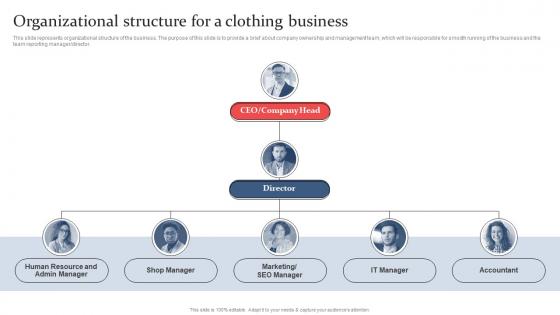
This slide represents organizational structure of the business. The purpose of this slide is to provide a brief about company ownership and management team, which will be responsible for smooth running of the business and the team reporting manager or director.
People who downloaded this PowerPoint presentation also viewed the following :
Clothing And Fashion Industry Organizational Structure For A Clothing Business BP SS with all 9 slides:
Use our Clothing And Fashion Industry Organizational Structure For A Clothing Business BP SS to effectively help you save your valuable time. They are readymade to fit into any presentation structure.








FAQs for Clothing And Fashion Industry Organizational Structure For A Clothing
So the clothing world is split into three main parts. At the top you've got luxury/haute couture - designer stuff for rich people who want exclusivity. Mid-market is where most of us shop - Gap, Zara, that kind of thing. Decent quality but won't destroy your wallet. Then there's fast fashion targeting people who just want cheap clothes, honestly don't blame them sometimes. Each segment works totally differently - supply chains, marketing, production schedules, everything. Figure out which category a brand fits into first and you'll understand their whole business approach way better.
So globalization basically scattered clothing production all over the world. Design happens in NYC, cotton comes from India, manufacturing in Vietnam, then final touches in Mexico - it's honestly pretty crazy when you think about it. Your basic t-shirt probably visits like five countries before hitting stores. Companies love this because they can hunt down the cheapest labor and materials everywhere. But man, the logistics get insane. One delay in Bangladesh can mess up your whole timeline. If you're dealing with this stuff, definitely map out every single step. You'll catch problems way earlier and probably save money too.
Dude, the whole fashion industry is getting flipped upside down by sustainability right now. Fast fashion companies are panicking and trying to go circular, while these new eco-focused brands are actually stealing their customers. Supply chains are totally changing - recycled stuff, local manufacturing, even rental instead of buying. Gen Z won't shop anywhere that's not sustainable, so brands either adapt or die. Honestly thought this would take way longer to happen, but here we are. If you're thinking about jumping into fashion, you've gotta build sustainability in from the start or you're screwed.
So fast fashion is absolutely wrecking traditional retail right now. Brands like Shein drop new stuff weekly instead of seasonal collections, which has department stores constantly scrambling to keep up. The pricing is insane too - how do you compete with an $8 dress? Even if yours is way better quality. Customers expect constant newness now, not just spring/fall drops. Your traditional retailers need to lean into what they actually do well: better fit, quality that lasts, and real customer service. Fast fashion can't touch that stuff, honestly.
So the game-changers right now are 3D design software, automated cutting, and AI forecasting. Companies can prototype digitally instead of making physical samples - saves weeks honestly. Body scanning for custom fits is getting pretty crazy too. Automated cutting drops fabric waste by 15-20%, which is huge. AI predicts what'll actually sell so brands aren't drowning in leftover inventory. Oh, and definitely ask your suppliers what tech they're using. That'll tell you real quick if they're keeping up or falling behind.
Honestly, merchandising is just chasing whatever customers want. Brands watch people go crazy for sustainable stuff or demand more inclusive sizing, then they scramble to adjust everything. Social media makes it wild - like one random TikTok blows up and suddenly companies are redesigning their whole fall collection. Shein's actually genius at this, they're basically watching what sells and copying it in real time. If you're doing merchandising work, you've gotta be glued to your analytics and whatever's trending online. Otherwise you'll miss the wave completely.
So most clothing companies hit the obvious stuff - retail stores, their own websites, selling wholesale to other stores. E-commerce is huge obviously. But honestly, the pop-up and social media thing is where it gets interesting now. Like everyone's trying to crack Instagram shopping and TikTok commerce. Department stores still matter but they're definitely not what they used to be. Brands really want you shopping directly from them now - better control over everything. If you're thinking about this for work or whatever, just look at how each brand splits online vs physical stores. That balance pretty much tells you their entire game plan.
Dude, e-commerce is totally flipping fashion on its head. Brands like Warby Parker just said "screw department stores" and started selling straight to customers online. Fast fashion got even crazier too - companies can literally test designs and see what people click on in real time. The personalization stuff is wild now with AI telling you what to buy and virtual try-on tools. Honestly, if you're not building a strong online presence in fashion, you're basically toast. Your competitors who get digital marketing will crush you.
Honestly, the shelf space thing is brutal - you're fighting giants with insane marketing budgets. Production costs kill you too since you can't get those bulk discounts. Retailers don't want to risk shelf space on unknowns when they know Coca-Cola will sell. Building trust is probably the hardest part though. People grab what they recognize, you know? My cousin tried launching an energy drink and learned this the hard way. Don't try to go head-to-head immediately. Find your weird little niche first, then expand from there.
Tariffs mess with everything - companies literally scramble to find new factories when import costs spike. It's wild how fast brands will ditch a supplier over trade policy changes. Most companies now spread production across different countries instead of relying on just one place. Makes sense, honestly. You're seeing way more nearshoring too, where they move manufacturing closer to avoid all the trade drama. Some of my friends in the industry say it's exhausting keeping up with policy shifts. But yeah, definitely watch trade news because it'll hit your sourcing costs and delivery times hard.
So clothing companies basically pick their lane and stick to it. Zara's whole thing is speed - they'll have runway trends in stores within weeks, which is honestly pretty crazy when you think about it. Nike just owns the athletic market through killer marketing and all those endorsements. Some brands focus on their supply chains, finding the cheapest manufacturing or going fully vertical. Then you've got the premium players who compete on quality materials and craftsmanship. Others just go for rock-bottom prices. Most successful ones don't try to be everything to everyone - they just get really good at one strategy. When you're looking at competitors, figure out which approach they've committed to.
Dude, social media totally changed the game with brand loyalty. Customers aren't stuck with one clothing brand anymore - they're finding new stuff constantly through Instagram and TikTok. Honestly, someone can discover a cooler alternative to your brand in like 30 seconds of scrolling (which is kind of insane when you think about it). Yeah, loyalty's weaker now, but the engagement potential is crazy good. Brands killing it with user-generated content and authentic responses are actually connecting better than old-school ads ever did. Oh, and micro-influencers work way better than big ones usually. Create shareable moments instead of just selling stuff.
Honestly, demographic diversity changes everything about how you approach product lines and sizing. You can't just design for one body type anymore - customers come from different ethnicities, ages, and cultural backgrounds with totally different fit needs. The whole "one size fits most" thing is dead (thank god). So now you need way bigger size ranges, diverse models, and designs that actually make sense for different groups. My advice? Figure out who your main demographics are first, then create specific product lines for each one. Way better than trying to please everyone with the same stuff - that never works anyway.
Brands are getting way more involved with their suppliers now - like actually doing audits and demanding transparency reports instead of just placing orders and crossing their fingers. The whole "cheapest option wins" thing is finally dying out, thank god. Companies are building real partnerships where they'll invest in upgrading supplier facilities and training. It's more expensive upfront but makes sense long-term. Oh and if you're dealing with suppliers, definitely start documenting everything now. Transparency requirements keep getting tighter so you'll want that paper trail ready.
Dude, influencers are basically the new billboards for clothing brands. Most companies dump crazy money into partnerships because these people have followers who actually listen to them - way more than regular ads. One post from the right person can sell out an entire collection, it's honestly insane. Traditional advertising is pretty much dead for fashion. Brands used to push products at us, now they get trusted voices to recommend stuff naturally. Oh and here's a pro tip - if you want to figure out who a brand is targeting, just look at their partnerships. That tells you everything you need to know about their whole strategy.
-
My presentations were a bit amateur before I found SlideTeam’s designs. I’ve been able to find slides for nearly every topic I’ve had to present. Thanks, Slideteam!
-
“One of the best experiences with SlideTeam for my presentation.Everything on time, communication is efficient and price is reasonable. All good in one place.”