

Cloud service models it comparison between iaas paas and saas models




Try Before you Buy Download Free Sample Product
 Impress Your
 Audience
 100%
100% Editable
 Save Hours
 of Time


This slide depicts the considerations for implementing infrastructure as a service, including determining storage needs, negotiating contracts, understanding IT teams capacity, tracking data, and using data.
People who downloaded this PowerPoint presentation also viewed the following :
Cloud service models it comparison between iaas paas and saas models with all 9 slides:
Use our Cloud Service Models It Comparison Between Iaas Paas And Saas Models to effectively help you save your valuable time. They are readymade to fit into any presentation structure.








FAQs for Cloud service models it comparison between iaas paas
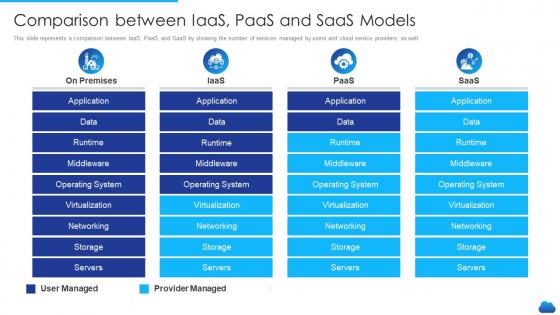
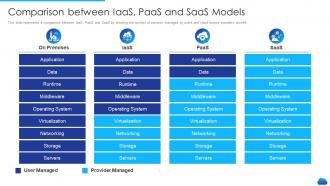
So IaaS is like renting virtual machines - AWS EC2 and stuff where you handle the OS and everything above it. PaaS gives you the platform without server headaches (Heroku, Google App Engine). SaaS is just the finished app like Gmail. Think of it as renting land vs. furnished apartment vs. hotel room. More management means less control but way less stress for your team. Honestly, I'd go PaaS if you're just trying to ship something fast - unless you need specific server configs or whatever.
Look, subscriptions are great because you don't have to drop a massive payment upfront for licenses and all that infrastructure stuff. Makes budgeting so much simpler when it's just predictable monthly costs instead. Need more users? Add them. Downsizing? Drop some seats. The vendor deals with updates and maintenance too, which honestly saves you a headache. Only thing is - and I learned this the hard way - you should track what you're actually using for a few months. Otherwise you might be paying for way more than you need.
IaaS is great when your infrastructure needs bounce around or you don't want massive upfront costs. Perfect for startups and seasonal businesses since scaling happens instantly. No more dealing with hardware headaches or servers crashing at 3am - honestly, that alone is worth it. Companies without deep IT teams love it too. Need global reach fast? IaaS has you covered. Oh, and testing new markets becomes way less risky when you're not locked into physical hardware. Start by looking at your most unpredictable workloads first.
PaaS basically means your cloud provider handles the infrastructure security stuff - which is honestly pretty solid since they've got way better security teams than most of us. But yeah, you lose control over things like server patches and low-level firewall configs. Your security focus shifts to the app layer instead - API vulnerabilities, secure coding, that kind of thing. Plus managing who on your team has access to what (that's where things usually go sideways anyway). The provider gives you enterprise-grade security and compliance certs, so it's not a bad trade-off if you're not a security expert.
So scalability just means you can grow or shrink your resources without buying actual hardware. IaaS gives you direct control - you spin up more VMs or add storage yourself, like with AWS. PaaS is way more hands-off though. Traffic spikes? The platform automatically handles it for you. Honestly, it's pretty slick how it works behind the scenes. You only pay for what you use instead of having servers collecting dust. Way better than the old setup where you'd buy hardware that sits idle constantly. Start small, then grow as needed.
SLAs are basically your contract with the cloud provider - they spell out uptime guarantees, performance standards, and what support you'll actually get. When stuff breaks (and it will), this is your backup plan. Different services have different focuses though. Infrastructure deals might cover server availability, while software agreements talk about app performance and data backup. Honestly, the response time clauses are usually where they get you. Read those compensation terms super carefully before signing anything, because that's literally your only ammunition when you need to call them out for screwing up.
Look, hybrid clouds are basically about picking the right tool for each job. Run your sensitive stuff on private infrastructure where you control everything. Use public platforms for quick app builds - way faster deployment cycles. SaaS handles the boring collaboration tools so you don't have to think about it. Honestly, the mix-and-match approach beats getting stuck with one vendor's entire ecosystem (trust me on that one). Just figure out what each workload actually needs first. Map out your current setup, then see which combo gives you better performance without breaking the bank.
You're definitely already using SaaS without thinking about it! Google Workspace, Office 365, Salesforce for sales stuff. QuickBooks handles accounting. Healthcare has patient management systems, retail does inventory tracking - honestly, name an industry and they've got some SaaS tool running things. HR loves Workday for payroll and hiring. The whole point is getting fancy software without dealing with servers or updates yourself (thank god). My advice? Look at whatever boring tasks eat up your day. There's probably an app for that. I sound like an old iPhone commercial, but it's true.
Oh man, vendor lock-in is such a pain to deal with later. PaaS is honestly the worst for this - you get so tied into their specific tools that switching becomes a total headache. IaaS is way better for moving around if you need to. SaaS falls somewhere between the two, but don't even get me started on trying to export your data from some platforms. I'd definitely look at their migration policies before signing anything. Also check if they're using weird proprietary stuff that'll basically trap you there forever.
Dude, PaaS is a game changer - it handles all the server nonsense so your devs can actually write code instead of wrestling with infrastructure. Scaling happens automatically, backups are built-in, and you can spin up test environments crazy fast. My last team saved probably 30% of their time not dealing with security patches and maintenance stuff. The trade-off is you're kinda locked into their ecosystem, but honestly? If you're spending more time on DevOps than building actual features, it's totally worth it. Way faster to ship things.
So basically, IaaS dumps most compliance stuff on you since you're running everything on their hardware. PaaS splits it down the middle - they handle the platform security, you deal with your app and data stuff. SaaS is honestly a lifesaver because the vendor does like 90% of the work, though you still gotta make sure your data usage follows whatever regulations you're stuck with. Oh, and definitely check their compliance certs match your industry before you sign anything. Trust me on that one. The shared responsibility thing is key to understand upfront.
Honestly, focus on three big things: cost, control, and compliance. Don't just look at monthly fees - factor in data transfer costs, training your team, and potential vendor lock-in (which can bite you later). How much control are you cool with giving up? That's where most teams I know get stuck. Security and regulatory stuff has to align too, obviously. Oh, and assess if your team's actually ready for this shift. Start small though - map what you're currently running and pick the easiest workloads to migrate first. Way less stressful that way.
So IaaS charges for the basic stuff - server time, storage, bandwidth. You're literally paying by the hour for virtual machines. PaaS costs more since you get development tools plus all that underlying infrastructure. SaaS? Usually just flat monthly fees per user. Honestly, IaaS gives you way more control over spending, but you'll be managing everything yourself. SaaS is super predictable cost-wise but you can't tweak much. I'd figure out what you actually want to handle vs. what you're cool paying someone else to deal with first.
Okay so basically, it depends on which cloud model you pick. IaaS means you're doing all the heavy lifting - VM backups, setting up failover, all that fun stuff. PaaS is way better since they handle the infrastructure side, but you still gotta worry about your apps and data. Honestly, SaaS is where it's at for disaster recovery. They take care of most everything, though you should probably still back up your own data and have some kind of plan for getting users back online. The more they manage for you, the less you have to stress about when things go sideways.
So it really depends on which cloud model you're using. IaaS gives you tons of control - AWS CloudWatch, Azure Monitor, or something like Datadog for your VMs and storage. PaaS usually has decent built-in dashboards (some are actually pretty nice), but you can't customize as much. With SaaS you're basically stuck with whatever the vendor gives you, which honestly can be frustrating. I'd say start with the free native tools first. They're good enough for most stuff. Then if you need fancier monitoring later, you can always add more specialized tools on top.
-
Design layout is very impressive.
-
Best way of representation of the topic.
-
Easily Understandable slides.
-
Design layout is very impressive.
-
It saves your time and decrease your efforts in half.