


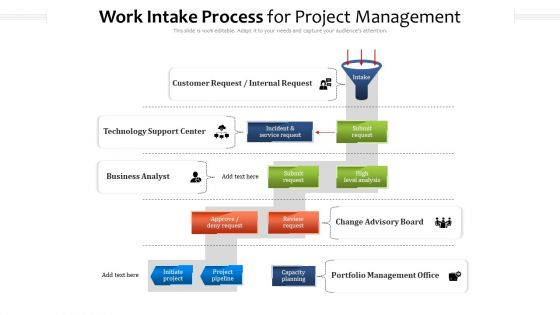
Work intake process for project management





Try Before you Buy Download Free Sample Product
 Impress Your
 Audience
 100%
100% Editable
 Save Hours
 of Time


Our Work Intake Process For Project Management are topically designed to provide an attractive backdrop to any subject. Use them to look like a presentation pro.
People who downloaded this PowerPoint presentation also viewed the following :
Work intake process for project management with all 2 slides:
Use our Work Intake Process For Project Management to effectively help you save your valuable time. They are readymade to fit into any presentation structure.
FAQs for Work intake process
Honestly, you just need three basics. First, a decent request form that grabs all the important stuff upfront. Second - and this is huge - actual criteria for what gets priority, because otherwise literally everything becomes "urgent" somehow. Third, someone needs to own the whole thing and actually route stuff properly. I've watched so many teams where requests just vanish because nobody's watching the door. Oh, and definitely tell people when their work might actually start - radio silence drives everyone crazy. Keep it dead simple though. If your intake system is harder than the actual work, people will just skip it entirely.
Honestly, get everyone aligned before you even touch the actual work - that's where projects usually crash and burn. Do a stakeholder meeting first where you map out what "winning" looks like for each person. Ask the real questions: what problem are we actually solving? What does finished mean to YOU specifically? Document all of it in a project charter that everyone has to sign off on. I know it sounds boring but trust me, when scope creep hits (and it will), you'll have something solid to wave around and say "remember when we all agreed on this?"
Honestly, the best thing tech does is handle all that annoying busy work. You know how intake usually means endless email chains and messy spreadsheets? Intake platforms just route everything automatically to whoever needs to deal with it. Real-time tracking is pretty sweet too - you actually know what's in your queue. Digital forms are a game changer since people fill out everything upfront instead of you having to chase them down later. Just don't get sucked into buying some overcomplicated system with bells and whistles you'll ignore. Find something that plays nice with whatever you're already using.
First thing - figure out what bandwidth your team actually has vs what these projects need. I always score new requests on strategic fit and whether we can realistically pull it off. A simple matrix works great for this, makes it way easier to show leadership the trade-offs. Honestly, the hardest part is not overcommitting when everyone's pushing their "urgent" project. Build a standard intake form that captures value and resource needs upfront. That way you've got real data to back up why you're saying no to stuff that doesn't matter as much.
Track cycle time first - how long requests sit before work starts. Also check how often you're going back for clarification because wow, that's annoying for everyone. Quick stakeholder satisfaction surveys help too. Capacity utilization shows if your team's drowning or has bandwidth. Oh, and rejection rates - track why stuff gets shot down. I'd honestly just pick 3 of these that fit your situation best. Monthly reviews work great for spotting patterns. Don't overthink it though - better to track fewer things consistently than everything poorly.
Dude, visual stuff is a game changer for work intake. Flowcharts and mockups kill all that "wait, what do you actually want?" confusion that wastes everyone's time. I've literally watched projects blow up because people had completely different ideas about the same thing. Sketches help you catch those disconnects early instead of three weeks later when it's a mess. Even rough wireframes or diagrams get everyone aligned way faster. Honestly, half the time I think people don't even know what they want until they see it drawn out. Try bringing some basic visuals to your next meeting - the requirements suddenly make so much more sense.
Don't overcomplicate the intake - nobody wants to fill out some massive form for a basic request. Honestly, I've seen teams lose half their people right there. Figure out who owns what first, or you'll have five people arguing over the same task. Skip prioritization at your own risk. Without it, Karen's newsletter update somehow becomes more urgent than the server crash (we've all been there). Train people properly - even brilliant systems flop when nobody knows how to actually use them. Start basic, see what sticks, then build from there.
Oh totally, use that project feedback as your screening tool! Look back at what went well versus the total trainwrecks. I bet you'll spot patterns - like maybe certain client types always pull the scope-creep move halfway through, or anything without solid deadlines turns into chaos. We've all had those "quick" tasks that somehow eat your entire month, ugh. Good projects usually have clear communication and realistic timelines. Actually, I started being way pickier after one particularly brutal project last year. Use those winning patterns as your new baseline for saying yes to stuff.
Honestly, the biggest thing is getting everyone on the same page about what you actually need upfront. Marketing, sales, and product should agree on intake criteria so requests aren't garbage when they come in. Different teams catch different problems early too - saves you from those endless email chains asking for clarification. Set up shared intake channels so nothing gets lost between departments. But here's what really works: pick one person from each team to be the intake lead, then have them do a quick 15-minute sync every week. Sounds boring but it's a game changer. Way less stuff falls through the cracks.
Honestly, standardized intake forms are a game changer. You'll get all the important stuff upfront instead of playing email tag for missing details. Everything's in the same spots so you can quickly spot deadlines, scope, priority level - all that good stuff. No more mystery projects that make absolutely no sense at first (we've all been there, right?). Your team stops wasting time on weird requests. Plus you can group similar work together and actually see patterns. Just set up some templates with the must-have fields and boom - way smoother process.
Honestly, you need a triage system or you'll go crazy. I make this super basic matrix - urgent vs not urgent, high impact vs low impact. Sounds nerdy but it actually works. Tell everyone upfront how you prioritize stuff and your timelines, otherwise they'll bug you constantly asking "where are we on this?" Regular check-ins are clutch too - like weekly meetings where you can shuffle things around before everything becomes a dumpster fire. Trust me, getting ahead of it beats playing catch-up every single time.
Honestly, I'd say every 6-8 weeks if things are moving fast at your place. Quarterly is the bare minimum but you'll miss stuff waiting that long. Your bottlenecks and team priorities shift way more than you realize - like, what worked in January might be totally broken by March. Watch for patterns: what keeps getting stuck? Which requests always come back messy? Don't overthink it though. Just grab your team for 30 minutes and ask what's driving them nuts. Those quick retrospectives usually catch the obvious fixes that somehow everyone just... lives with? Super worth doing.
Your company culture basically controls how well intake works. Those "never say no" places? You'll drown in garbage requests. But super strict cultures scare people off from asking for stuff they actually need. Honestly, hierarchy screws things up too - junior people know what's broken but won't speak up if only executives feel safe making requests. How your team communicates day-to-day makes a huge difference. Watch how people actually use the process now (not how they're supposed to). Then tweak things to fit what already works instead of fighting it.
Customer feedback is your best friend for fixing intake criteria. Listen to what people are actually complaining about - that should totally drive what you prioritize or dump. I've watched teams bomb because they ignored this stuff and focused on random internal priorities instead. Short bursts of complaints about the same thing? Fast-track those fixes. When users keep asking for specific features, bump those up your list. The gap between what you think matters and what actually bugs customers can be huge. Just review the sentiment regularly and tweak your scoring system based on what you're hearing.
Honestly, I'd start with basic categories and priority levels that everyone uses, but let each team tweak how they actually handle stuff day-to-day. Maybe set up a form for the formal requests and keep Slack for the "hey can you look at this real quick" type things. Don't make people fill out a novel when something's genuinely on fire though - that's just annoying. The main thing is capturing consistent info while teams can still work however makes sense for them. Oh, and definitely see what's actually broken before you add more rules on top.
-
The Designed Graphic are very professional and classic.
-
Design layout is very impressive.
-
Great quality product.
-
Excellent work done on template design and graphics.
-
Great product with effective design. Helped a lot in our corporate presentations. Easy to edit and stunning visuals.