


Work Intake Procedure Flow Chart




Try Before you Buy Download Free Sample Product
 Impress Your
 Audience
 100%
100% Editable
 Save Hours
 of Time


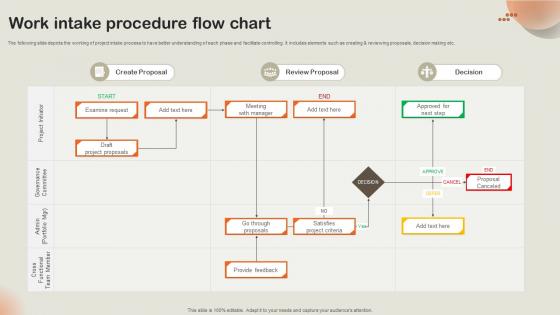
The following slide depicts the working of project intake process to have better understanding of each phase and facilitate controlling. It includes elements such as creating and reviewing proposals, decision making etc.
People who downloaded this PowerPoint presentation also viewed the following :
Work Intake Procedure Flow Chart with all 6 slides:
Use our Work Intake Procedure Flow Chart to effectively help you save your valuable time. They are readymade to fit into any presentation structure.





FAQs for Work Intake
So you start by having people submit requests through whatever system you've set up. Screen them first - toss duplicates and half-baked submissions. Figure out how much work it'll actually take and where it fits priority-wise. Then comes the fun part: getting stakeholders to actually approve stuff (good luck with that). Once approved, you assign resources and schedule it out. Hand everything off to your delivery teams with solid requirements. Oh, and seriously - create a decent intake form upfront. Trust me, it'll save you from playing twenty questions later when someone "forgot" to mention they need this integrated with three other systems.
Look, think of it like being your team's bouncer - you control what gets in and when. No more random Slack messages or people ambushing you in the hallway with "quick favors." Everything goes through one spot first. Set up a simple form or something where requests have to land. Then you can actually see what's urgent vs what can wait. Honestly, the difference is huge - way less scrambling around putting out fires. Your planning gets so much better when you're not constantly reacting to whatever just got thrown at you. Even something basic works if people actually use it.
Oh man, you're gonna deal with vague requirements constantly - drives me crazy. Plus everyone thinks their thing is urgent and half the stakeholders will just skip your process entirely. They'll walk right up to devs like "hey can you just quickly..." Start with intake forms that make people actually explain what they want and why it matters. Figure out where requests are sneaking in now and block those holes. Your process needs to be simpler than whatever shortcuts people are taking, otherwise they'll keep doing it. Set up some kind of scoring system so you're not constantly arguing about priorities.
Honestly, just start with intake forms that auto-route stuff based on priority - saves so much "who handles this?" drama. Set up approval workflows too so nothing gets buried in someone's inbox for weeks. The routing thing alone will save you hours, trust me. Chatbots are actually decent now for basic requests (though they still sound kinda robotic sometimes). Oh, and definitely integrate with whatever project management tools you're already using so requests flow straight into actual work. But here's the thing - map out where you're currently stuck first, then find tech that fixes those specific problems instead of just making your messy process digital.
Track your completion times and approval cycles first - that's the bread and butter stuff. Request volume trends matter too, but honestly, rejection rates tell the real story about where things go sideways. Get feedback from people actually submitting requests because they'll call out problems you can't see. Monitor your backlog size and capacity so you know if you're underwater. Oh, and watch for patterns in why stuff gets bounced back. Set up something simple that shows this weekly - doesn't need to be fancy, just functional.
Honestly, good stakeholder communication can make or break your whole intake process. Talk upfront about priorities and timelines - otherwise you'll deal with the nightmare of everyone thinking their stuff is "urgent." I learned this the hard way lol. Weekly check-ins work great for catching scope creep before it spirals. Be super transparent about what you can actually handle and why you make certain decisions. Maybe set up a dashboard or something so people stop constantly asking for updates? The goal is keeping everyone in the loop without them blowing up your inbox every day.
Honestly, start with a scoring system - strategic fit, budget needs, ROI potential, how urgent it actually is. Makes everything way less political when you can point to actual numbers instead of just gut feelings. Get stakeholders to rank stuff during those intake meetings, and be upfront about why some projects don't make it (saves you from the "but why not mine?" conversations later). Document what you're already working on first though - that's your reality check for new requests. I learned this the hard way when we kept saying yes to everything and burned out the whole team.
Honestly, ditch the email chains and get a proper intake tool. Monday.com and Asana are both solid choices for request management. If you're already using Atlassian stuff, Jira Service Management works but it's kinda overkill sometimes. ServiceNow is powerful too but might be more than you need. Here's the thing though - even a good Slack channel with forms can work wonders if you set it up right. First, figure out what info you actually need from people making requests. Then pick whatever tool makes collecting that stuff painless. The routing part comes after. Don't overthink it.
Think of criteria as your sanity-saver. You'll dodge those "wait, why are we doing this project again?" moments that happen way too often. Having solid standards around budget and timeline means your team can evaluate stuff consistently instead of just winging it each time. Document everything somewhere people can actually find it - not buried in some random folder. Then stick to the criteria when requests flood in. Otherwise you're just back to the usual project mayhem. Oh, and it prevents those super awkward conversations where you have to explain questionable decisions to leadership later.
Honestly, you gotta go full digital with your intake stuff. No more hallway chats since, well, there's no hallway anymore lol. Set up shared forms or project boards so people can submit requests properly. Templates are your friend here - tell people exactly what info you need upfront. Everything needs timestamps now because you can't just walk over and ask "hey, what's the status on that thing?" Remote work kills so much context, so be crazy explicit about deadlines and priorities. I'd start by looking at your current process and figuring out what parts need you to be there in person, then build workarounds.
Start with shadowing - let them watch the intake process for about a week before diving in. Build a quick checklist with your tools, priority system, and who to escalate to. Role-playing is awkward but honestly works great for different request types. They need to know your key stakeholders and how you bucket requests. I'd do weekly check-ins their first month to spot any issues. Oh, and definitely assign them someone for quick questions - being stuck sucks when you're new. The categorization part trips people up most, so spend extra time there.
Look, when you've got a decent intake process, you actually know what's coming down the pipeline. That's huge when everything suddenly changes - which happens basically every other week, right? Instead of panicking over urgent stuff, you can look at your workload and make smart calls about priorities. Quick decisions become way easier when you can see bottlenecks forming. Plus you'll finally have backup when you need to push back on random requests that don't fit your goals. Just don't overthink it though - keep the system simple or people won't bother using it.
Oh man, this stuff gets tricky fast! Your team members probably communicate totally differently - some are super direct while others hint around things. I've watched entire projects get derailed because someone thought a "soft deadline" meant flexible when it actually meant urgent. Different backgrounds change how people read feedback and handle collaboration too. What works? Set up intake processes that let people communicate their way, but make the key details crystal clear. Also leave room for questions - like, actually encourage them so nobody's guessing what you meant.
Build feedback checkpoints straight into your intake process - monthly reviews are a game changer. Track stuff like completion times, scope changes, satisfaction scores. Post-project reviews work great, plus quick team pulse checks. Honestly, most teams I know just wing it and then act shocked when the same problems keep happening lol. Start with one simple feedback method first - maybe stakeholder surveys? Then add more as you get comfortable. The trick is making it automatic, not something you only remember when everything's on fire.
Okay so you definitely need the basics - project description, timeline, budget, and who's involved. Don't forget contact info for the person making the request because trust me, you'll need to bug them with questions later. I always throw in a priority level section too since everything can't be "urgent." Success criteria and deliverables are clutch for avoiding scope creep (which will happen anyway lol). Dependencies matter if there's other stuff that needs to happen first. Honestly just start simple and add fields as you figure out what you're missing.
-
The visual appeal of the templates is just unparalleled! I was so worried about the design of my presentation but SlideTeam made it all so easy.
-
I joined SlideTeam last month and there’s no doubt that I tend to find our bond only strengthening over time. Best place to find world-class themes, templates, and icons.