


Communication Levels During M And A Integration Guide Of Business Merger And Acquisition Plan Strategy SS V




Try Before you Buy Download Free Sample Product
 Impress Your
 Audience
 100%
100% Editable
 Save Hours
 of Time


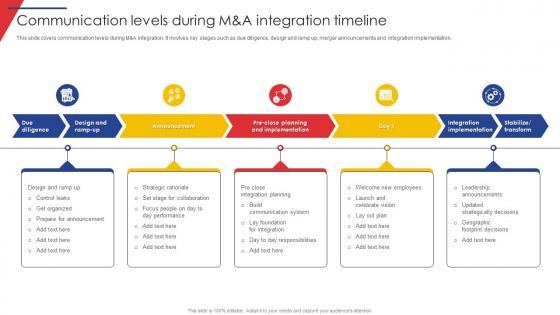
This slide covers communication levels during MAndA integration. It involves key stages such as due diligence, design and ramp up, merger announcements and integration implementation.
People who downloaded this PowerPoint presentation also viewed the following :
Communication Levels During M And A Integration Guide Of Business Merger And Acquisition Plan Strategy SS V with all 9 slides:
Use our Communication Levels During M And A Integration Guide Of Business Merger And Acquisition Plan Strategy SS V to effectively help you save your valuable time. They are readymade to fit into any presentation structure.








FAQs for Communication Levels During M And A Integration Guide Of Business Merger And Acquisition Plan
Honestly, the rumor mill is your biggest enemy during mergers - people lose their minds when they don't know what's happening. You've got executives pushing their grand vision while everyone else is just worried about getting fired, so those messages crash into each other constantly. Information overload becomes a real thing too. Different company cultures means their communication styles probably don't mesh at all. What works? Set up regular updates from day one and actually stick to the schedule, even if there's nothing major to share. People will make up horror stories to fill silence, so don't give them the chance.
First thing - figure out how each company actually talks to each other. Are they super formal with endless email chains, or more of a Slack-and-quick-calls vibe? Don't try forcing one style on everyone (learned that the hard way). Mix the best parts instead. Set up some regular touchpoints that work for both cultures - maybe weekly all-hands or team check-ins. Honestly, your secret weapon is finding people from each side who can basically translate when messages get lost. They'll catch the weird miscommunications before they blow up into bigger problems.
Look, your leaders literally make or break this whole thing. They've got to be out there constantly - visible, honest about what's working and what isn't. Can't tell you how many times I've watched deals crash because the C-suite just disappeared or kept spouting meaningless corporate nonsense. Nobody buys that garbage anymore. Leaders need to actually show up for town halls, answer the hard questions, and genuinely listen when people push back. Oh, and here's the thing - information has to flow UP too, not just down. Your executives should be having real conversations, not just broadcasting from their ivory tower.
Dude, transparency is everything during M&As. When leadership goes dark for weeks, people literally start updating their LinkedIn profiles. I've watched entire teams mentally check out because nobody told them what was happening. You can't share every detail obviously - legal stuff gets messy - but just giving regular updates helps so much. Even something basic like "hey, we're still figuring out X, should know more by next Friday" keeps everyone from spiraling. People can handle uncertainty way better when they're not completely in the dark. Give them something real to hold onto and they won't bail during the chaos.
So basically, start with a master doc that has all your key messages, then tweak them for different groups - employees get different details than customers, obviously. Get your communication leads meeting weekly (trust me, without this you'll have marketing saying one thing while HR says another). Templates are your friend here - have pre-written stuff ready for each audience. Oh, and make sure there's an approval process for anything that goes off-script. Weekly check-ins help catch problems before they spiral. The whole point is having everyone pull from the same playbook instead of winging it.
Honestly, you'll want to flip your communication strategy completely. Internal teams need the real deal - frequent updates about timeline shifts, who's getting shuffled around, all the messy integration stuff. They're already stressed, so being upfront keeps them from spiraling. But externally? Total opposite. Customers and vendors get the polished version - just hit the highlights about benefits and stability. Save the org chart chaos for internal meetings lol. The trick is setting up two separate tracks right away. Overcommunicate internally, even when it's awkward. Externally, stick to major milestones only.
Honestly, just pick a few core tools and stick with them. Slack or Teams work well for quick daily stuff between teams. Set up regular town halls too - people need those bigger picture updates. Video calls are huge though, like you really can't build trust without actually seeing faces, you know? Oh and definitely do some kind of newsletter or portal where people can hunt down info themselves. The main thing is being super consistent about where different types of info live. Otherwise everyone's constantly asking "wait, where do I find this again?" Pick your setup early and communicate the hell out of it.
Honestly, feedback needs to be baked in from the start or you're screwed. Do pulse surveys, town halls, suggestion boxes - the whole nine yards. Multiple ways for people to speak up since everyone's different about that stuff. Here's the thing though - most leadership just talks AT people instead of actually listening, which is why so many mergers crash and burn. Get those weekly reports straight to your steering committee, not buried somewhere in HR hell. And here's what really matters: you've got to visibly respond to what you hear. Even if you can't fix everything, just acknowledging their concerns goes a long way. Close that loop by telling people what you're actually doing about their feedback.
Honestly, speed is everything here - the longer you wait, the worse the rumors get. Talk to affected people directly first, then send broader updates. Skip the corporate BS and be brutally specific about what's changing and when. I'd do face-to-face manager conversations first, then follow up in writing with actual timelines. Don't forget the reporting chain stuff either - people panic when they don't know who they answer to anymore. Oh, and schedule follow-ups because trust me, they'll think of a million questions after you leave the room.
You've gotta flood people with info before rumors even start. Weekly emails, regular all-hands meetings - the whole thing. Get your managers talking to their teams immediately when questions come up. Honestly, gossip spreads fastest when people don't know what's actually happening, so don't give it that chance. Set up anonymous Q&A channels on Slack or whatever you use. Oh, and when you do catch misinformation floating around? Shut it down fast instead of hoping it'll just disappear. Being ahead of the rumors beats chasing them down later.
Dude, talk to your people MORE during M&A stuff. Seriously, it's like the
-
What a stunning collection of customizable templates! Really a time-saver..
-
Happy to incorporate such stunning templates in my presentation. Made my presentation look professional and engaging.