


Roadmap Of Merger And Acquisition Integration Planning




Try Before you Buy Download Free Sample Product
 Impress Your
 Audience
 100%
100% Editable
 Save Hours
 of Time


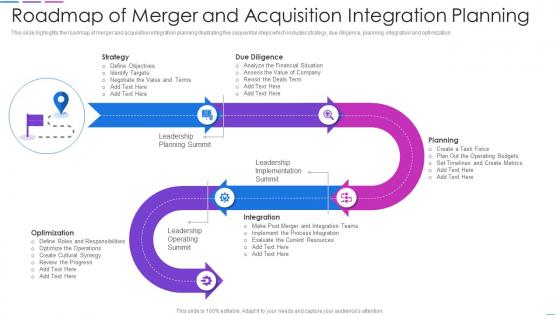
This slide highlights the roadmap of merger and acquisition integration planning illustrating five sequential steps which includes strategy, due diligence, planning, integration and optimization.
People who downloaded this PowerPoint presentation also viewed the following :
Roadmap Of Merger And Acquisition Integration Planning with all 6 slides:
Use our Roadmap Of Merger And Acquisition Integration Planning to effectively help you save your valuable time. They are readymade to fit into any presentation structure.





FAQs for Roadmap Of Merger And
Oh man, M&As are brutal. Cultural clashes between teams will drive you insane - everyone thinks their way is better. Tech integration is a total mess too, trying to merge systems that weren't built to talk to each other. Your best people? They'll start looking for exits the second rumors begin. Can't really blame them honestly. You've got duplicate everything - processes, policies, reporting structures. Performance usually tanks while you're figuring it out. Communication gets weird fast when nobody knows who reports to who anymore. Start talking to people early and transparently. Also figure out your must-keep employees like, yesterday.
Dude, cultural mismatches will absolutely destroy M&A deals if you ignore them. I've watched companies with solid financials completely implode because nobody thought about how different their work styles were. Employees get lost when values don't align, then they bail. The frustrating part? This is totally preventable. Do your cultural homework during due diligence, not months later when people are already updating their resumes. Figure out the biggest gaps first - like how each side communicates or makes decisions. Then build your integration plan around those specific issues.
Oh man, you've gotta talk to people constantly during M&A stuff. Like, way more than feels normal. Everyone's panicking about losing their jobs or having to deal with some nightmare new culture. I watched one acquisition totally implode because nobody told the teams what was going on - they just made up their own horror stories. Hold those all-hands meetings religiously. Set up ways for people to ask questions without feeling stupid. Even if you're still figuring things out, just say that! People respect honesty over getting ignored completely. Trust me on this one.
Honestly? Talk to people way more than you think you need to. Be upfront about timelines and role changes - don't let them imagine the worst. Those cheesy team-building things are useless, but actual collaborative projects work. I'd run quick surveys to catch problems early before good people quit. Here's the thing most execs miss: just admit this whole process is stressful and messy. Don't pretend it's all sunshine. Let employees have real input on the new culture you're building together.
Okay so first thing - map out both companies' processes side by side. You'll find weird overlaps and random gaps everywhere. Customer-facing stuff should be your priority since that's where the money is, then work backwards from there. Fair warning: people will fight you on this because "that's how we've always done things" (eye roll). Push for actual data on what works better. Get mixed teams from both companies to redesign everything together - way less pushback that way. Oh and don't try fixing everything at once. Pick one process to test first. Also explain WHY you're changing things and give clear deadlines, otherwise people just panic.
Start with a full tech audit of both companies - seriously, there are always way more system connections hiding than you'd expect. Map everything out first: systems, data flows, all the messy dependencies. Customer-facing stuff should be your top priority since that directly hits revenue. Don't rush it though - plan for 12-18 months and break it into phases. Your IT teams need to stay in constant contact or things get weird fast. Have rollback plans ready for each phase because something always breaks. Oh, and tackle internal operations after you've got the customer side stable.
Track the obvious stuff first - revenue, cost savings, EBITDA, customer retention. But honestly? Most deals crash on the operational side. Watch employee turnover like a hawk, especially your star people. System integration timelines matter more than you'd think. Run culture surveys (sounds cheesy but they work) and track how you're hitting milestones. Customer satisfaction will tank before anything else if things go sideways. Set up weekly reviews - I learned the hard way that monthly check-ins are useless when everything's moving fast. Oh, and dashboard everything so you're not hunting for numbers.
Honestly, rushing the timeline is probably the biggest mistake I see. Communication always goes to shit too - like, people just assume everyone's on the same page when they're definitely not. Cultural differences will bite you in the ass if you don't tackle them upfront. I've watched deals completely implode because nobody bothered figuring out how two totally different company vibes would actually work together. Oh, and your IT systems? They're gonna hate each other way more than you expect. Plan for double the integration nightmares. Get a real communication strategy going from the start and don't cheap out on change management resources.
Dude, stakeholder management will literally save your ass during an integration. Employees are panicking about getting fired, customers think everything's gonna change, investors are scrutinizing every decision. Oh and don't forget regulatory people watching like hawks. You can't just send the same boring email to everyone - that's a recipe for disaster. Each group needs different info and different messaging. The companies that figure this out early? Their integrations go so much smoother. Week one, map out who matters and build specific communication plans for each. Trust me on this one.
You've got to talk to your best people ASAP about where they fit in the new company. Losing key talent is honestly your biggest nightmare here - I've seen it tank otherwise solid deals. Get them involved in planning the merger so they don't feel like they're being pushed out. Retention bonuses help, but the real magic happens in those one-on-one conversations during your first month. Ask what they're worried about and actually listen. Don't mess with the culture stuff they love most. Short version: make them feel wanted, not disposable.
First thing - audit both companies' positioning, audiences, and messaging to see what overlaps and what doesn't. Decide quickly if you're keeping both brands, merging, or killing one off. That choice drives everything else. Map your combined customer base for cross-sell opportunities. Here's what I've learned from messy integrations: move fast on big strategy stuff, but take your time with the tactical pieces like websites and sales materials. Oh, and set up joint marketing teams right away with real decision-making power. Nobody wants approval hell slowing everything down.
Dude, contract assignments are massive - customer deals, supplier stuff, employee contracts don't just magically transfer. Employment law gets messy with layoffs and benefit changes, plus every state has different rules. If you're in a regulated industry, compliance issues will bite you. IP transfers and data privacy are critical too - GDPR fines are brutal. Honestly, the biggest mistake is waiting too long to loop in legal. Get them involved from day one, not when you've already promised things that might be impossible. Trust me on this one.
So horizontal vs vertical mergers are totally different beasts. Horizontal ones are all about cutting out duplicate stuff - like you'll have two sales teams doing the same thing, which gets weird fast. Basically you're picking and choosing what to keep from each company. Vertical mergers though? You're connecting different pieces of the supply chain instead. Way less redundancy, more about making sure everything flows smoothly between the stages you now own. I'd start by figuring out where the companies already touch each other - that's where you'll see the biggest wins from integration.
Honestly, start with Asana or Monday.com - there's gonna be way more chaos than you expect. IMO framework is solid for the structure stuff. Oh, and don't forget the cultural side! That's where things get messy fast. You'll need some kind of playbook for managing people through all the changes. Set up your PMO first - that's your foundation. Then add synergy tracking tools so you actually know if you're hitting those financial goals everyone's obsessing over. Build out the rest as priorities get clearer. Trust me on the project management tool though, that's non-negotiable.
You gotta nail down your long-term vision first - like, what do you actually want this thing to look like in 5 years? Then tackle the easy wins that don't mess with that bigger picture. Start with boring operational stuff - combining systems, cutting redundant roles, whatever saves money fast. But here's the thing: every quick decision needs to pass the "does this screw us later" test. I've seen companies create these weird hybrid monsters that work okay short-term but can't adapt down the road. Map your integration steps against where you're headed strategically. Honestly, it's kind of like renovating while you live in the house - messy but doable if you plan right.
-
The quality of the templates is as fine as it could get. It was a purchase well made!
-
Based on my personal experience, I would recommend other people to subscribe to SlideTeam. No one can be disappointed here!