


First 100 Days In Acquisition Integration Plan




Try Before you Buy Download Free Sample Product
 Impress Your
 Audience
 100%
100% Editable
 Save Hours
 of Time


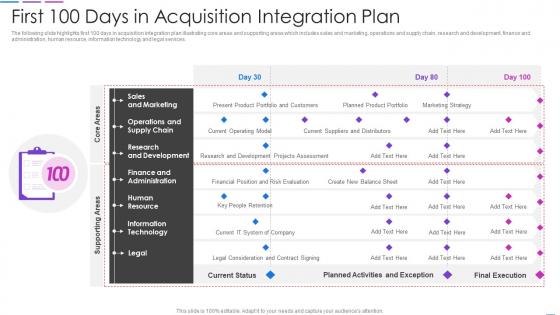
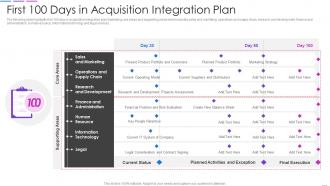
The following slide highlights first 100 days in acquisition integration plan illustrating core areas and supporting areas which includes sales and marketing, operations and supply chain, research and development, finance and administration, human resource, information technology and legal services.
People who downloaded this PowerPoint presentation also viewed the following :
First 100 Days In Acquisition Integration Plan with all 6 slides:
Use our First 100 Days In Acquisition Integration Plan to effectively help you save your valuable time. They are readymade to fit into any presentation structure.





FAQs for First 100 Days In
Honestly, you need to start planning this before the deal even closes - that's where most people screw up. Map out your integration strategy and spot the big risks early. Day one is just about covering basics: communications, keeping critical systems running. The first 100 days? That's when you tackle the heavy stuff - operational changes, getting cultures to mesh (which is harder than it sounds). Long-term phase is about actually delivering those synergies you sold everyone on. Oh, and build your integration team now. Don't wait.
Dude, cultural fit will absolutely destroy your deal if you ignore it. I've seen acquisitions where everyone focused on the numbers, then watched half the talent walk out because the cultures were toxic together. It's wild how much productivity drops when teams are basically fighting each other instead of working together. The flip side though? When cultures actually click, decisions happen faster and people genuinely want the thing to succeed. Don't wait until after you've signed - do a real cultural deep-dive during due diligence. Figure out where the biggest clashes will be and have a plan ready from day one.
First thing - do a full audit of both systems to see what overlaps and what's missing. Don't try the "rip the band-aid off" thing, trust me on that one. Phased integration is way less painful even though it feels slower. Focus on the critical stuff first: payroll, customer data, core ops. Those can't break. Run parallel systems during transitions so you have backup if things go sideways. Your teams need to talk constantly about dependencies and timing - miscommunication kills these projects. Oh, and start planning data migration super early. That part's always a nightmare and takes forever, even when you think you've planned enough time.
Oh man, integration time is wild - your role's gonna stretch in weird ways you don't expect. Teams are merging so you might suddenly manage people from the other company, or your responsibilities could balloon while they figure out who's redundant. Decision-making usually gets way more centralized at first (which is honestly annoying but makes sense). You'll be doing tons more cross-team stuff too. The uncertainty part is rough - half the time nobody knows what's happening. Just roll with the role changes and talk to your team constantly about what's shifting. Over-communicate everything, trust me.
You'll want to watch the big money stuff first - revenue gains, cost cuts, and whether customers are actually sticking around. Employee retention matters too, especially your star players. System integration milestones and those cultural surveys (ugh, I know) are pretty telling indicators. Honestly, time-to-value is make-or-break since slow integrations just hemorrhage money. Cross-selling opportunities and process standardization give you early wins to celebrate. Set these up from day one and check them weekly - quarterly reviews are useless when things move fast. Don't track more than 5-7 metrics or you'll ignore half of them anyway.
Dude, you've gotta communicate like crazy during this whole mess. Send updates constantly - even boring "nothing new to report" ones because silence freaks people out way more than actual bad news. Set up ways for people to complain or ask questions without getting in trouble, then actually listen to them. I've watched so many mergers where the bosses just disappear for months and everyone's losing their minds. Keep doing team happy hours or whatever you normally do. Yeah, uncertainty blows but at least be honest about it. Oh, and make sure your managers aren't totally clueless when people start panicking.
Honestly? Communication can make or break the whole thing. People are already freaking out about job security and changes, so you've got to overcommunicate everything. I mean everything - timelines, role changes, what's happening next week. Rumors spread crazy fast during acquisitions. Don't just have leadership send emails down either. Set up ways for people to actually give feedback and ask questions. Oh, and start planning your messaging before the deal even closes. Trust me on this - assign specific people to handle different communication streams or it'll be chaos.
Dude, map out all the regulatory stuff first - figure out which agencies you're dealing with and what approvals you need before announcing anything. Loop in legal and compliance right away, not later when things get messy. This regulatory crap honestly makes or breaks your timeline if you screw it up. Always build in extra time because reviews drag on forever. Set up a separate team just for regulatory issues with actual owners and deadlines. Oh, and stay transparent with the regulators throughout - they hate surprises way more than honest updates about delays or complications.
Start with auditing what you've actually got - acquisitions always have more random SKUs than you think. Map the overlaps and gaps between your stuff and theirs. Don't try doing everything at once though, that's a nightmare. Focus on the high-revenue products first and where customers overlap. Both teams need to stay involved since they know their products way better than you do. I'd avoid killing anything too fast until you see who actually depends on it. Set up phases so you get some wins early but don't mess with what's already working.
Talk to them constantly - seriously, silence is the kiss of death here. Customers automatically think "acquisition = everything's about to suck" so you've gotta flip that script fast. Tell them what's changing, what isn't, and why they'll actually benefit. Your support team needs talking points ASAP so they're not fumbling around when people call freaking out. Honestly, I've seen companies go quiet for weeks while sorting internal stuff and it's a disaster every time. Set up regular check-ins, even if it's just "nothing new this week, but we'll update you Friday."
Honestly, most people mess this up by going way too fast and barely talking to either team. Don't change everything at once - that's a recipe for disaster. People hate sudden shifts anyway. Also, figure out who's actually in charge of what during the whole mess, because confusion there kills everything. The cultural stuff matters just as much as the tech integration, maybe more? Like how do these teams actually collaborate when nobody's watching. I'd start small - get some quick wins first so people trust each other. Then you can tackle the really gnarly problems once everyone's not freaking out about the merger.
You're gonna need scenario modeling - best case, worst case, realistic case. Your current forecasts definitely don't factor in integration costs or how long systems actually take to sync up (spoiler: always longer than you think). Cash flow should be your main focus since that's what keeps you alive during the chaos. Build in buffer time for when stuff breaks. I learned this the hard way on a project last year. Track everything weekly, not monthly - things move too fast otherwise. Start conservative with your assumptions and adjust as you hit milestones.
Honestly, due diligence can make or break the whole thing. You're basically hunting for all the nasty surprises before they bite you - cultural mismatches, wonky tech systems, regulatory headaches, talent flight risks. Skip this step and you'll get burned. I watched one company completely ignore the people side of things... total train wreck. Poor DD means surprise costs, blown timelines, and your best people heading for the exits. Don't just look at the numbers either. Dig into operations, their actual systems, and especially the human dynamics - that's where deals usually fall apart.
Get your legal and HR people involved immediately - they need to map out labor law differences between locations. This gets complicated super quick if you're not careful. Review employment contracts, benefits, union stuff, and how terminations work at both companies. WARN Act notifications matter too if layoffs are coming. Honestly, I'd create a compliance checklist right away and assign someone to own each piece. Otherwise things get lost when everything's moving fast during integration. Trust me, the chaos will make you forget important details.
Honestly, start with Monday.com or Asana for project management - you'll go crazy trying to coordinate without something like that. For moving data around, Talend and Informatica are solid choices (way better than trying to do it manually). Slack or Teams will help with communication since people from different companies always end up in weird silos at first. Oh, and for financials you'll probably need Workday or Oracle Cloud eventually. My advice? Pick maybe 2-3 tools max. I've seen companies try to implement like 8 different platforms at once and it's a disaster. Get your project management sorted first, then add other stuff based on what's actually breaking.
-
Awesomely designed templates, Easy to understand.
-
The information is visually stunning and easy to understand, making it perfect for any business person. So I would highly recommend you purchase this PPT design now!