


Competitor Analysis Based On Market Share Nestle Strategic Management Report Strategy SS




Try Before you Buy Download Free Sample Product
 Impress Your
 Audience
 100%
100% Editable
 Save Hours
 of Time


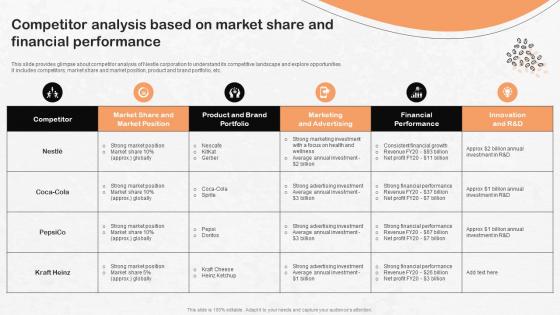
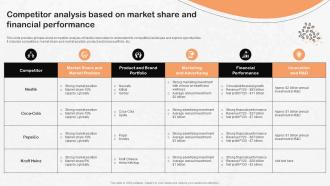
This slide provides glimpse about competitor analysis of Nestle corporation to understand its competitive landscape and explore opportunities. It includes competitors, market share and market position, product and brand portfolio, etc.
People who downloaded this PowerPoint presentation also viewed the following :
Competitor Analysis Based On Market Share Nestle Strategic Management Report Strategy SS with all 6 slides:
Use our Competitor Analysis Based On Market Share Nestle Strategic Management Report Strategy SS to effectively help you save your valuable time. They are readymade to fit into any presentation structure.





FAQs for Competitor Analysis Based On Market Share Nestle Strategic Management
Honestly, I'd start with their pricing and template quality - that's where the money is. Customer reviews are amazing for this stuff, people will straight up tell you what sucks about the competition. Check their download numbers if you can find them, plus how often they're dropping new products. Social media engagement gives you a feel for their reach, though the good tracking tools cost a fortune. Don't try to stalk everyone though - pick 3-4 main competitors and actually watch them consistently. Oh, and set up Google Alerts for their brand names so you catch their big moves without having to constantly check.
Check out their websites and social media first - that's where they put their best foot forward. Pricing pages are honestly where you'll find the juiciest stuff about what they think matters most. Grab screenshots of their ads too if you see them floating around. Customer reviews are clutch because people will straight up say what actually convinced them to buy versus the company's marketing fluff. I'd make a quick spreadsheet tracking each competitor's main selling points. You'll spot patterns pretty fast once you see it all laid out. Oh, and don't forget their "why choose us" sections - those are goldmines.
So I've been digging through what competitors are doing lately. Everyone's obsessed with minimalist stuff now - tons of white space, bold sans-serif fonts, and these crazy vibrant gradients everywhere. Dark mode is basically mandatory at this point (honestly kinda overdone if you ask me). They're all doing asymmetrical layouts with little micro-animations when you click things. Color-wise it's either super minimal black/white or really punchy high-contrast combos. You should probably check your current templates against this stuff and maybe test some gradient treatments next campaign.
Look, competitor pricing basically draws your boundaries. Can't ignore what other template sellers charge or you'll either scare people away or undercharge like crazy. I check their prices monthly - regular rates, sales, bundles, all of it. It's weirdly like chess sometimes lol. But don't feel like you have to match exactly. Better quality or unique features? Charge more. New to the game? Price competitively to get noticed. The key is finding where you fit without just copying everyone else. Monitor what they're doing and adjust from there.
So I've been watching what these template companies do on social – it's pretty smart actually. Instagram and TikTok are where they drop design tutorials. They repost customer presentations as user content, plus they're always running polls about color schemes and stuff. LinkedIn's their go-to for business tips and case studies. Live Q&As seem to crush it for engagement, though I bet that takes forever to prep for. Oh, and they customize previews for each platform's format – makes sense when you think about it. Definitely peek at Canva and Slides Carnival's Instagram stories for ideas.
Honestly, stalking your competitors' reviews is one of the smartest things you can do. Hit up Google, Yelp, App Store - basically anywhere customers complain. Social media too, obviously. For B2B stuff, check G2 or Capterra since that's where people actually leave detailed feedback. Focus on the complaints first - that's free market research right there. But don't ignore the praise either, because it shows what features users genuinely care about (vs what companies think they want). If you're tracking tons of competitors, tools like Mention can automate the whole thing. Otherwise you'll go insane doing it manually. Set up monthly check-ins to spot patterns and share the good stuff with your product team.
Honestly? It's all over the place. The big companies have decent 24/7 support - you know, chat and phone with okay response times. Newer startups are either killing it (since they're trying so hard to compete) or completely swamped and slow as hell. Everyone's doing the basic ticket system, but some have actually built pretty solid self-help sections and forums. What really matters though is how fast they respond initially and whether they fix your problem or just pass you around departments. You should definitely test their support yourself - like, actually reach out with random questions and see how they handle it.
Start with SEMrush or Ahrefs to see what template keywords they're ranking for. I'm obsessed with this stuff honestly - it's crazy how much you can learn from their page structure and search volumes. Content gaps are huge too. What template topics are they totally missing? That's where you swoop in. Check their backlinks to see who's linking to template pages - sometimes you find the weirdest connections. Oh, and set up monitoring so you catch new campaigns right away. Their strategy shifts can happen fast and you don't want to miss it.
Everyone's pushing the same stuff - ease of use, cost savings, and speed. Landing pages are drowning in "intuitive interface" and "simple setup" because nobody wants another headache tool. ROI claims are huge too, like "cut costs by 40%" everywhere you look. Security gets thrown in for B2B crowds. What I'd do? Check out 5-10 competitor pages and literally count how often each benefit shows up - sounds boring but you'll catch the patterns fast. Then you can figure out what angle everyone's missing. Integration stuff comes up a ton too, forgot to mention that earlier.
Most companies break their templates into specific industries - real estate, SaaS, restaurants, whatever. Some get crazy specific too, like just for yoga studios or divorce lawyers (which honestly seems smart). Design style matters a lot - minimalist vs flashy, beginner-friendly vs developer-focused. Pricing's another angle. Here's what I'd do: pick 3-4 big competitors and study how they organize everything. Look for holes where they're missing something obvious. That's your opening to create templates that actually fill a gap instead of just adding to the pile.
Yeah, tons of them are doing partnerships now to bulk up their template game. Canva's teaming up with nonprofits, Figma's working with design agencies - that kind of stuff. Stock photo partnerships are huge too, like with Unsplash or Shutterstock. Oh, and influencer collabs where creators make exclusive templates? Super common now. Honestly makes sense since they get instant content without doing all the work themselves. I'd check out who your competitors are partnering with - might show you some gaps you could jump on first.
So I've been watching this stuff for a while - most competitors drop new templates every 2-4 weeks. Canva's crazy though, they're pushing updates almost weekly. They're pretty clever about timing everything around holidays and trending stuff, or filling gaps they notice. Honestly, the seasonal timing thing works better than just cranking out tons of designs. They always bundle releases with social campaigns too, which makes sense. Here's what I'd do: track their patterns for like 2-3 months, then launch your stuff when they're quiet. Way smarter than just throwing things out randomly.
Most competitors are on Etsy, Creative Market, and their own sites. Etsy's great for organic reach - people actually browse there for design stuff. Creative Market targets professional designers who'll pay more. Some use Gumroad too, and weirdly I've seen templates on Amazon now? Makes sense for wider reach though. Your platform choice totally shapes your audience. Casual users hit Etsy, pros go to Creative Market. Own website means you keep all profits but gotta handle marketing yourself. I'd test a few platforms first to see what works, then focus on whatever performs best for your style.
Honestly, studying how your competitors use UGC for templates is super valuable. Check out their engagement rates and see what types of customer content they're showcasing. I always look at their hashtag strategies too - tells you a lot about what works. The really interesting stuff is spotting where they're totally missing opportunities. Pay attention to whether they feature beginner or advanced users, and how they handle giving credit. But here's the thing - the templates that keep getting shared organically? That's your goldmine right there. Shows you exactly what people actually want to create with, not just what sounds good on paper.
Yeah, so basically everyone's going nuts with email campaigns right now. Weekly newsletters with new designs, seasonal stuff, bundle deals - the usual. They're getting smarter about segmentation too, like sending startup templates to one group and corporate decks to another. Abandoned cart emails are huge when people browse but bail. Some of these subject lines are honestly pretty cringe, but I guess they convert. Oh, and here's what I'd do - sign up for your top competitors' lists with burner emails. You'll start seeing their patterns real quick, then just... borrow what works.
-
Thrilled to see several customizable templates catering various verticals and industries.
-
Really like the color and design of the presentation.