


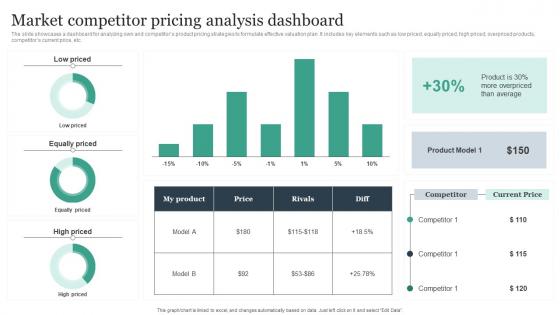
Market Competitor Pricing Analysis Dashboard




Try Before you Buy Download Free Sample Product
 Impress Your
 Audience
 100%
100% Editable
 Save Hours
 of Time


The slide showcases a dashboard for analyzing own and competitors product pricing strategies to formulate effective valuation plan. It includes key elements such as low priced, equally priced, high priced, overpriced products, competitors current price, etc.
People who downloaded this PowerPoint presentation also viewed the following :
Market Competitor Pricing Analysis Dashboard with all 7 slides:
Use our Market Competitor Pricing Analysis Dashboard to effectively help you save your valuable time. They are readymade to fit into any presentation structure.





FAQs for Market Competitor
Honestly, pricing is such a pain but here's what works. First figure out your break-even - materials, labor, all that boring stuff plus whatever profit you want. Then see what people will actually pay and check out your competition. I probably spend way too much time stalking competitor prices but whatever, it matters. Don't be that person charging $200 when everyone else is at $50 unless you're going for luxury. Test a few different prices with small groups first. Oh and those weird pricing tricks like $99 instead of $100? They actually work for some reason.
Check out what your competitors are charging - their pricing tiers, discounts, the whole deal. Sometimes they're doing dumb stuff you can totally exploit! Figure out if they're chasing volume or fat margins, then decide if you want to match them, beat them, or just do your own thing. I'd track maybe 3-5 main competitors each month (nothing crazy). Look for gaps where you can either undercut or justify charging more. The real trick is understanding their strategy first - then you can position yourself however makes sense for your business.
Dude, pricing is totally about what customers *think* it's worth, not what your spreadsheet says. I've watched companies nail all the math but still bomb because people felt ripped off. Your brand, the competition, perceived quality - it all messes with their heads. Here's the thing though: customers have to feel good about spending their money, even if the deal is objectively fair. Like, the psychology trumps logic every time. Always test your prices with actual people first. Otherwise you're just guessing and hoping they'll bite.
Price elasticity is basically your guide to finding that sweet spot between sales volume and revenue. Necessities have low elasticity, so you can bump prices without losing tons of customers. But high elasticity products? Yeah, you've gotta be super careful there - even tiny price hikes can absolutely wreck your volume. Here's the thing though - most people just guess instead of actually measuring it properly. Test small price changes on different customer segments first. See how they react, then use that data to price for maximum total revenue instead of obsessing over per-unit margins.
Start with price elasticity - how much do customers freak out when you raise prices? Then track your usual suspects: revenue per unit, conversion rates, average order value. Customer acquisition cost vs lifetime value matters since pricing hits both sides of that equation. Honestly, I've seen too many people obsess over total sales volume when profit margins tell the real story. Market share gives you the bigger picture beyond your own bubble. Pull data from your last price change and compare before/after periods. That'll show you what actually moved instead of just guessing.
Honestly, data analytics is a game changer for pricing strategy. You can monitor what competitors are charging in real-time and spot patterns in customer demand. Track when they're testing new prices or adjusting for seasons. The really useful part? You'll see how price changes actually affect buying behavior, not just what customers claim they'd do. I'd start with automated monitoring for your top 5 competitors - way easier than doing it manually. Then combine that external data with your own sales numbers. You'll catch pricing opportunities before everyone else jumps on them.
Yeah, psychological pricing totally works - it's wild how our brains fall for it. That $9.99 vs $10 thing? People actually see it as way cheaper even though it's literally one cent. I know it sounds dumb but the research backs it up. Charm pricing (stuff ending in 9) can boost sales like 30-60% in some cases. Same deal with bundles - we get distracted by the "total value" instead of breaking down individual costs. Honestly feels too obvious to be effective, but here we are. I'd try it on your regular products first, maybe skip the premium stuff initially. Then just track if conversions actually improve.
Pricing is such a mind game with customers - they instantly judge your quality based on what you charge. Too cheap? You look sketchy. Too expensive? You've lost them already. Your price basically tells people if you're Target or Nordstrom, which totally changes who you're up against. Honestly, tweaking prices can shift your brand image faster than any ad campaign ever will. I'd check where you sit compared to competitors first. Then figure out if that's actually where you want to be positioned. It's way trickier than people think.
So there's a few ways to handle this. Price skimming is solid for premium customers - you start high then drop prices over time. For budget-conscious segments, try penetration pricing (basically the reverse). My personal favorite though? Value-based pricing. You charge what each group actually thinks it's worth rather than just throwing numbers at the wall. Oh, and don't sleep on psychological tricks like $9.99 vs $10 - sounds dumb but it works. Really dig into what each segment cares about first. Then match your pricing to those priorities and you'll be golden.
Definitely do surveys asking about price sensitivity and what people would pay at different points. But here's the thing - people totally lie on pricing surveys, so don't just rely on those. Check your support tickets and social media for complaints about cost. Post-purchase surveys work way better since customers just spent money and will be brutally honest about value. Sales call recordings are gold too if you have them. The trick is getting feedback from like 3-4 different places so you can see patterns. Oh, and start tracking this now before you need it - makes everything easier later.
Honestly, the biggest headache is gonna be customers getting pissed when they see prices jumping around - nobody likes feeling screwed over. Competitors will probably start price wars too, matching your low prices but undercutting when you go high. The whole thing requires crazy good data and algorithms, which is where most companies mess up tbh. Your team's gonna be constantly tweaking stuff. Profit margins can actually get worse if you don't nail the strategy. Oh, and implementation is way trickier than it sounds on paper. I'd test it small first - pick a few products and see how people react before going all in.
Look at your sales from the last couple years and you'll spot clear patterns. Demand goes up and down pretty predictably - like how hotels charge crazy amounts in summer or stores dump winter stuff cheap in spring. Jack up your prices when everyone wants what you're selling, then drop them when things get slow to keep sales moving. Honestly, most businesses miss this opportunity because they set prices once and forget about it. Map out when your busy and dead periods happen. Then build that into your pricing so you're making bank during peak times but staying competitive when things are quiet.
Honestly, there's so much you can automate now it's crazy. Start with competitor monitoring - web scraping tools can track their prices 24/7. Machine learning algorithms will crunch all that data plus your sales patterns to suggest better price points. Dynamic pricing tools are game-changers too, they'll auto-adjust based on inventory and demand. You can pull competitor data through APIs continuously (I probably spend way too much time nerding out over pricing data). Analytics platforms like Tableau create dashboards that update themselves. Don't try everything at once though - pick one area and build from there.
Dude, your customers will literally leave if they can't find clear pricing upfront. Nobody wants to fill out forms or talk to sales just to see basic costs anymore - it's honestly annoying. Hidden pricing makes people suspicious, while being transparent actually speeds up your whole sales process. I'd check how many clicks it takes someone to find your prices right now. Two clicks max, or you're probably losing people to competitors who just put their pricing out there. Trust me, the data backs this up - transparency wins every time.
Dude, you seriously can't ignore market differences when pricing internationally. Each region has totally different purchasing power and competition - what flies in the US might crash and burn in Southeast Asia. Currency swings will wreck your margins if you're not watching them. Distribution costs? They're all over the place depending on where you're selling. Honestly, I learned this the hard way with a project last year. Research local price sensitivity first and check what competitors are charging in each market. Cultural attitudes toward pricing matter way more than most people think. Start there before you set anything in stone.
-
It’s really cool, and you can find pretty much everything you could need for your work or school.
-
Innovative and creative templates with high-quality designs. Helped me with my presentation as the slides were easy to edit.