

Price Optimization Dashboard Snapshot Pricing Data Analytics Techniques





Try Before you Buy Download Free Sample Product
 Impress Your
Audience
 100%
Editable
 Save Hours
of Time


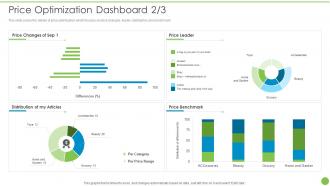
This slide covers the details of price optimization which focuses on price changes, leader, distribution, and benchmark.
People who downloaded this PowerPoint presentation also viewed the following :
Price Optimization Dashboard Snapshot Pricing Data Analytics Techniques with all 7 slides:
Use our Price Optimization Dashboard Snapshot Pricing Data Analytics Techniques to effectively help you save your valuable time. They are readymade to fit into any presentation structure.






FAQs for Price Optimization Dashboard Snapshot Pricing
Honestly, start with a pilot on just a few products - don't go crazy right away. Data's everything here: customer segments, what competitors are charging, how demand shifts with price changes. Your brand positioning matters too because pricing basically screams "this is how premium we are" to customers. I'd probably focus on the tech stack and training your team early since that stuff takes forever to get right. Market testing in one region first is smart - you can catch the weird issues before rolling out everywhere. Once you've got proof it's actually making money, then scale up. Way less risky that way.
Honestly, data analytics is a game changer for pricing - way better than just winging it or doing the basic cost-plus thing everyone defaults to. You can dig into how your customers actually behave, see what competitors are doing, and figure out when people will pay more vs when they'll bail. The demand elasticity stuff is super helpful too. I'd start by just looking at your current prices against your sales numbers - you'll probably find some obvious opportunities right away. It's wild how much you can learn about price sensitivity once you start tracking the right metrics. Makes you wonder why more people don't do this honestly.
So customer segmentation is huge for pricing - you literally can't optimize prices without knowing who you're dealing with. Your premium customers won't care about a 20% bump, but budget shoppers will disappear instantly. Makes total sense when you think about it. Different groups have wildly different price sensitivity and buying habits. Instead of some generic pricing that sucks for everyone, you can actually target each segment properly. I'd start by digging through your customer data to spot the patterns - who responds how to price changes, that kind of thing. Way more effective than guessing.
Your competitors basically set the playing field for what customers expect to pay. I'm always checking their sites (probably more than I should tbh) because their prices become the benchmark everyone judges you against. Price monitoring tools are clutch here - you need that data feeding into your decisions. Whether you go premium, match them, or undercut depends on positioning, but you can't just wing it without knowing where they sit. Your unique features might justify charging more, but customers will still compare. Short answer: their moves directly impact your pricing strategy, so stay on top of it.
A/B testing is probably your best bet - just show different prices to customer segments and track what converts. I'd start small with that since it's super straightforward. Price elasticity testing works well too, where you gradually bump prices up or down to see how people react. If you're feeling ambitious, conjoint analysis lets customers pick between different product/price combos so you understand what they actually value. Van Westendorp surveys are decent for finding acceptable price ranges, though honestly they can be a bit dry. The A/B tests will give you the clearest data on what drives revenue without overthinking it.
So price elasticity is basically how much your customers freak out when you change prices. High elasticity means even small price bumps kill demand - those products need tiny, careful adjustments. Low elasticity gives you way more wiggle room to boost margins. Necessities and unique stuff usually fall here. I learned this the hard way tbh, sounds boring in theory but becomes clutch once you start actually testing. You gotta measure it across different customer groups and products, then use that data to set smart boundaries for your pricing tests. Game changer.
So for real-time pricing stuff, I'd start with Prisync - it's pretty straightforward for tracking what competitors are doing. Intelligence Node does similar things. Dynamic Yield and Optimizely are solid if you want to actually test different prices live. Amazon sellers swear by RepricerExpress since it just handles everything automatically. The whole setup process is kinda a pain initially, not gonna lie. But once you get it running, the data's actually useful. PROS and Pricefx are the fancy enterprise options - though they'll cost you. I'd honestly just pick one of the simpler ones first and see what kind of insights you're getting before going crazy with it.
Dude, psychological pricing is huge for conversion rates. That $9.99 vs $10 thing? It actually works because our brains are weird like that. Show an expensive option first, then your real price looks totally reasonable. Bundles are money too - people think they're saving even when they spend more. Honestly, I've seen some wild results just from switching prices around. You should definitely test this stuff with your audience though. Short bursts, long sentences that actually flow naturally when you read them. What works for one company might flop for yours.
Honestly, the biggest mistake is just copying competitors without thinking about what makes you different. Cost-plus pricing is a trap too - it's lazy math that ignores what customers actually value. Don't change prices constantly either, people notice and get annoyed. Testing is huge though, start small with A/B tests before you do anything drastic. Oh and psychological stuff matters more than you'd think - like ending prices in 9 or using high anchor prices. The real trick is looking at lifetime value, not just individual transactions. Otherwise you might boost one product's sales but tank everything else.
Oh man, seasonal pricing is everything! Look at how crazy airline prices get during holidays - that's pure demand manipulation. You'll want to dig into your past sales data first to spot the patterns. When do people actually buy your stuff? Plan those price bumps at least 3 months out, trust me on this. High demand = higher prices, obviously. But here's what most people miss - strategic discounts during slow periods can actually boost volume enough to offset the lower margins. Set up some automated rules so you're not scrambling last minute. My buddy learned this the hard way during Black Friday madness last year.
So dynamic pricing is adjusting prices in real-time based on demand, competition, inventory - all that stuff. You know how Uber does surge pricing? Same concept, but it can work for tons of products. First thing - figure out which items can handle frequent changes without annoying customers. Nobody wants to see their cart price jumping around constantly, that's just frustrating. Set some boundaries so you're not going crazy with price swings. You'll need decent data feeds and automated rules, obviously. I'd test it on small segments first instead of going all-in. Once you see what actually moves the needle, then scale up. Just watch how competitors react - sometimes they get weird about pricing wars.
Track your revenue per customer and profit margins first - that's the obvious stuff. But conversion rates are equally important since you need to know if people are bouncing because of price. Customer lifetime value is tricky though, sometimes higher prices actually improve it if you're attracting better customers. I'd honestly set up something to monitor market share too, your competitors will probably react. Oh and don't forget acquisition costs - those can get weird when you change pricing. Monthly tracking works best so you can catch problems early. Short-term revenue bumps don't mean much if you're losing customers long-term.
Honestly, pricing is tricky because it totally shapes how people see your brand. Set it too low and customers think your stuff is cheap or sketchy. But price too high without backing it up? You'll just look greedy and people will bail fast. The trick is matching your price to what customers actually get from your product. Consistent pricing builds trust - but if you're constantly changing prices or making things confusing, that trust disappears pretty quick. Instead of just competing on price, focus on explaining why your product's worth what you're charging. That's what actually works.
So these automated pricing tools are pretty sweet - they watch competitor prices 24/7 and adjust yours automatically. No more sitting there updating spreadsheets like it's 2005. They crunch way more data than you ever could and spot trends instantly. Changes happen across all your sales channels at once too. Honestly, the real-time adjustments alone make them worth it. I'd focus on your products that change prices most often first - that's where you'll see the biggest impact. Way better than doing price checks manually every day.
Honestly, you can't build a decent pricing model without knowing how your customers actually behave first. Price sensitivity varies so much between different groups - some people will pay whatever, others bolt at the first increase. I learned this the hard way when we assumed our customers would react one way and they did the complete opposite. Survey your existing customers about what they're willing to pay before you dive into the fancy modeling stuff. Also look at psychological triggers like how they perceive value. Short surveys work better than long ones, btw.
-
Best Representation of topics, really appreciable.
-
I came across many PowerPoint presentations with excellent creatives and I believe they would be beneficial to my work.