Managing account dashboard managing strategic accounts through sales and marketing

Rating:
80%
Managing account dashboard managing strategic accounts through sales and marketing
Slide 1 of 7
Favourites Favourites

Try Before you Buy Download Free Sample Product

Audience Impress Your
Audience
Editable 100%
Editable
Time Save Hours
of Time
The Biggest Sale is ending soon in
0
0
:
0
0
:
0
0
Rating:
80%
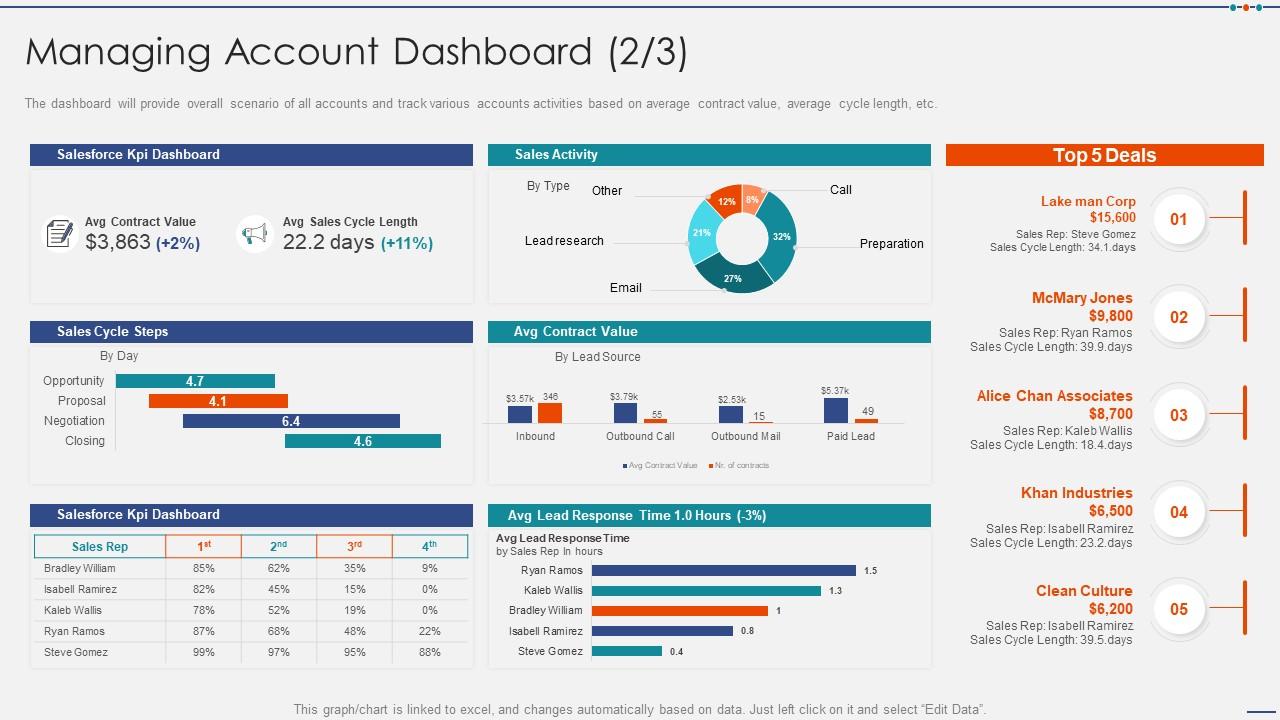
The dashboard will provide overall scenario of all accounts and track various accounts activities based on average contract value, average cycle length, etc. Deliver an outstanding presentation on the topic using this Managing Account Dashboard Managing Strategic Accounts Through Sales And Marketing. Dispense information and present a thorough explanation of Managing Account Dashboard using the slides given. This template can be altered and personalized to fit your needs. It is also available for immediate download. So grab it now.

People who downloaded this PowerPoint presentation also viewed the following :

FAQs for Managing account dashboard managing strategic accounts through

So you'll need account planning and dedicated SAM resources - that's the foundation. Executive sponsorship matters too, plus regular business reviews with your key accounts. Map out all the stakeholder relationships (gets messy with big enterprise clients but totally worth it). Pick your top 10-15 accounts with the best growth potential first. Build everything around those. Track more than just revenue though - account penetration, customer satisfaction, pipeline health. Oh and make sure each account has a clear value prop that actually makes sense for them specifically.

Focus on accounts that hit the trifecta - big revenue potential, room to grow, and they actually fit what you're trying to build. Check their market clout and how complex their needs are. Sometimes it's pure gut instinct about which ones could turn into real partnerships (honestly the best client relationships I've seen started that way). Pull their spending data and see how fast they make decisions. Rank your top 20% across these factors, then get realistic about where you can become their go-to person instead of just another supplier. Executive time-suck factor matters too - some clients drain you dry.

Look, relationships are everything in account management - seriously can't stress this enough. Your biggest accounts? One screwup and you're toast. You need people at different levels, not just that one contact you always talk to. Don't just pitch them constantly either. Actually listen to what's stressing them out at work, what their personal goals are. I learned this the hard way honestly. Schedule regular check-ins where you're not selling anything - just catching up. Trust me, when problems come up (and they will), those connections will save you.

Honestly, analytics transforms your SAM program from just winging it to actually knowing what's happening. You'll spot churn risks early and find expansion opportunities hiding in plain sight. The real magic? Discovering which touchpoints actually move the needle vs ones that just make you feel busy. Plus executives eat up those dashboards when you need to justify your budget - learned that the hard way. My advice: start with 2-3 metrics that actually matter to your accounts. Get that data clean first, then expand. Trust me, trying to track everything from day one is a recipe for burnout.

Track revenue stuff like account growth, deal sizes, renewals - the usual suspects. But don't sleep on relationship metrics either. Stakeholder engagement, how much face time you're getting with executives, NPS scores. That balance between quick wins and long-term health? Yeah, that's where most people mess up. Build a dashboard showing both the money side and relationship strength. Review it quarterly with your teams so you can catch problems before they blow up. Oh and customer satisfaction ratings - those'll save your butt when renewal time comes around.

Here's the thing - you gotta figure out where your company goals actually overlap with what your key accounts want. Have real conversations with their executives to understand their strategy and pain points. Most account managers just throw features at people, which is useless honestly. Instead, connect the dots between your initiatives (new products, expansion plans, whatever) and their actual problems. Build joint business plans together that show how you're both gonna win. Oh and definitely do quarterly check-ins so nobody goes off track. It's basically like... find where you can help them succeed while hitting your own targets.

Honestly? Resource allocation is gonna be your biggest headache, plus getting leadership actually on board. Sales teams get super territorial about "their" accounts - can't blame them with how commission structures work. Meanwhile marketing feels totally sidelined from the relationship stuff. Define roles and comp models right away though. Seriously, that fixes most of the internal drama. You'll need decent CRM tools too since these programs are basically useless without good data. Oh, and don't go crazy trying to overhaul everything at once. Pick maybe 2-3 pilot accounts, get some wins under your belt first. Way easier to scale after that.

Dude, CRM systems are total game-changers for managing big accounts. All your account data lives in one place, so you can track every interaction and spot buying patterns. The whole team can see relationship history too, which is huge. Pipeline forecasting gets way easier, plus you'll catch upsell opportunities that would've slipped by. Automation is where it really shines though - set alerts for contract renewals or when contacts switch jobs. One thing: your entire team has to actually use it consistently. Otherwise you're just paying for fancy software filled with crap data, and nobody wants that headache.

Stop using your cookie-cutter pitch deck first - nobody wants that. Instead, dig into their actual problems and talk to different people there, not just one contact. Figure out what's really bugging them day-to-day. Then show them specific numbers about how you'd fix *their* mess, not some generic case study. Honestly, most companies do this backwards and wonder why deals stall. You want them thinking "holy shit, these people actually get our situation." It takes more work upfront but works way better. Interview their decision-makers this week.

Look, your biggest accounts are way too complicated for one team to handle. Sales can't do it alone - you need product people, customer success, engineering, sometimes even legal all talking to each other. I've watched so many deals crash because everyone stayed in their own lane and nobody caught the red flags. Short version: when teams actually share what they know, you solve problems faster and become the vendor they can't live without. Honestly, just start with weekly calls for your top 3 accounts and see what happens.

Honestly, the ROI is really good once you get going. Customer lifetime value jumps way up, and you get that predictable revenue stream which is nice for planning. Your big accounts stop being just transactional buyers - they become actual partners who stick around and send referrals your way. Retention rates usually pay for the whole thing within like 12-18 months, sometimes faster if you're lucky. I'd pick your top 10-15 accounts first (revenue potential obviously) and figure out what a real partnership looks like for each one. Some will be easier wins than others.

Here's what's worked for me - set up quarterly reviews with your big accounts to actually capture their feedback systematically. Don't just wait for random complaints to roll in. Most teams screw this up by treating strategic input like regular support tickets, which is honestly pretty dumb. Get specific product owners assigned to champion these accounts internally. Document everything they tell you - pain points, feature requests, where their business is heading. The real trick? Show them their feedback actually moves the needle on your development timeline. Otherwise they'll stop bothering to give you real insights.

Honestly, set up some real collaboration spaces first - like actual innovation labs where both teams can mess around with ideas. Regular "what if" sessions work great too. I'd definitely push for dedicated budget for pilot projects (that's where most of these things fall apart). Make it feel like you're both investing in something together, not like you're trying to sell them stuff. Track some shared innovation metrics so everyone's accountable. Oh, and start small - pick one annoying problem you can tackle together as proof it actually works, then build from there.

Start by figuring out which accounts actually matter most - revenue, growth potential, all that stuff. Then assign your best people accordingly. Honestly, trying to give everyone VIP treatment is just gonna burn out your team and make everything mediocre. Create some standard processes so quality stays consistent, but customize based on priority levels. Cross-team meetings help catch conflicts before they blow up. Oh, and definitely audit how you're splitting workload right now - I bet you'll find teams stretched way too thin in some areas.

Honestly, training can make or break your SAM program. Most people think great account managers just have natural talent, but that's BS - they're built through solid training. Your team needs the technical stuff (data analysis, CRM tools) plus relationship skills and strategic thinking. Industry knowledge is huge too since you're dealing with their business problems daily. Don't do some basic onboarding and call it good. Figure out where your team's weak first, then set up quarterly training sessions. I've seen too many companies skip this step and wonder why their accounts aren't growing. Make it ongoing or you'll lose momentum fast.

Ratings and Reviews

80% of 100
Write a review
Most Relevant Reviews
  1. 80%

    by Denver Fox

    Qualitative and comprehensive slides.
  2. 80%

    by Cortez Graham

    Informative presentations that are easily editable.

2 Item(s)

per page: