


Complaint handling framework powerpoint presentation slides




Try Before you Buy Download Free Sample Product
 Impress Your
 Audience
 100%
100% Editable
 Save Hours
 of Time


Our Complaint Handling Framework Powerpoint Presentation Slides are topically designed to provide an attractive backdrop to any subject. Use them to look like a presentation pro.
People who downloaded this PowerPoint presentation also viewed the following :
Content of this Powerpoint Presentation
Slide 1: This slide displays title i.e. 'Complaint Handling Framework' and your Company Name.
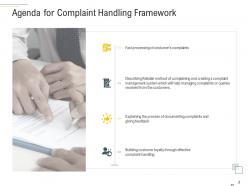
Slide 2: This slide presents agenda.
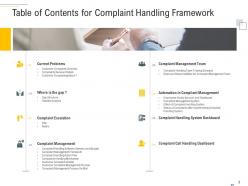
Slide 3: This slide exhibits table of contents.
Slide 4: This slide shows title for four topics that are to be covered in the template.
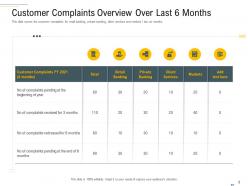
Slide 5: This slide covers the customer complaints for retail banking, private banking, client services and markets over last six months.
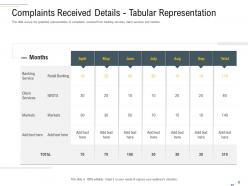
Slide 6: This slide covers the graphical representation of complaints received from banking services, client services and markets.
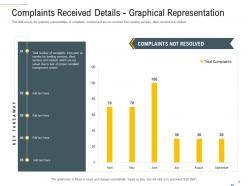
Slide 7: This slide covers the graphical representation of complaints received and are not resolved from banking services, client services and markets.
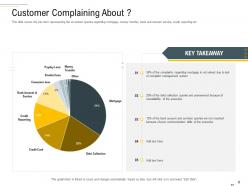
Slide 8: This slide covers the pie chart representing the un-solved queries regarding mortgage, money transfer, bank and account service, credit reporting etc.
Slide 9: This slide depicts title for next two topics to be covered in the template.
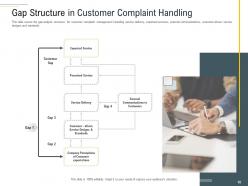
Slide 10: This slide covers the gap analysis structure for customer complaint management including service delivery, expected services, etc.
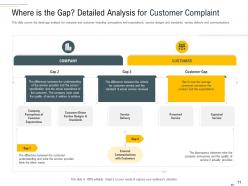
Slide 11: This slide covers the detail gap analysis for company and customer including perceptions and expectations, service designs, etc.
Slide 12: This slide exhibits title for next two topics to be covered in the template.
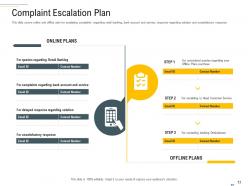
Slide 13: This slide covers online and offline plan for escalating complaints regarding retail banking, bank account and service, etc.
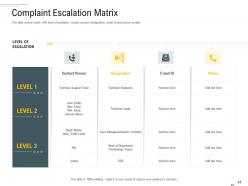
Slide 14: This slide covers matrix with level of escalation contact person, designation, email Id and phone number.
Slide 15: This slide highlights title for next seven topics to be covered in the template.
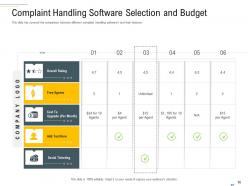
Slide 16: This slide has covered the comparison between different complaint handling software’s and their features.
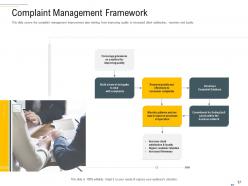
Slide 17: This slide covers the complaint management improvement plan starting from improving quality to increased client satisfaction, etc.
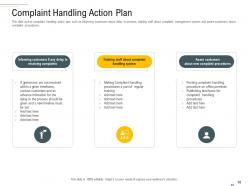
Slide 18: This slide covers complaint handling action plan such as informing customers about delay in process, training staff, etc.
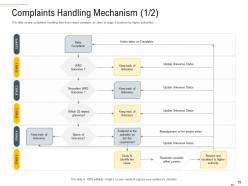
Slide 19: This slide covers complaints handling flow from raised complaint by client to stage 5 resolved by higher authorities.
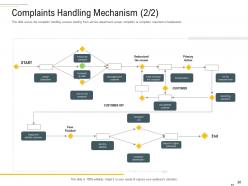
Slide 20: This slide covers the complaint handling process starting from service department accept complaint to complaint reported to headquarter.
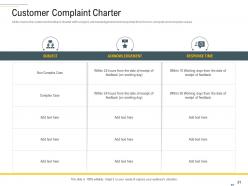
Slide 21: This slide covers the customer feedback charter with subject, acknowledgement and response time for non-complex and complex cases.
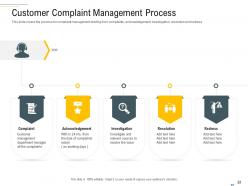
Slide 22: This slide covers the process for complaint management starting from complaints, acknowledgement, investigation, resolution and redress.
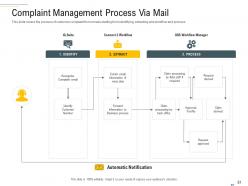
Slide 23: This slide covers the process of customer complaint from emails starting from identifying, extracting and workflow end process.
Slide 24: This slide illustrates title for next two topics to be covered in the template.
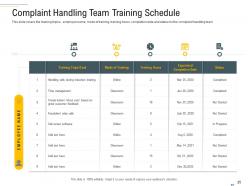
Slide 25: This slide covers the training topics , employee name, mode of training, training hours, completion date, etc.
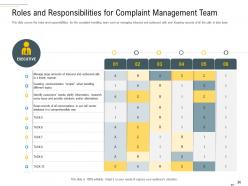
Slide 26: This slide covers the roles and responsibilities for the complaint handling team such as managing inbound and outbound calls.
Slide 27: This slide displays title for next four topics to be covered.
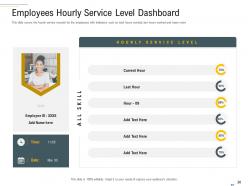
Slide 28: This slide covers the hourly service records for the employees with indicators such as total hours worked, last hours worked, etc.
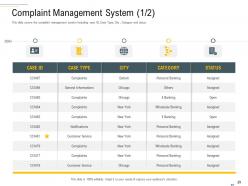
Slide 29: This slide covers the complaint management system including case ID, Case Type, City , Category and status.
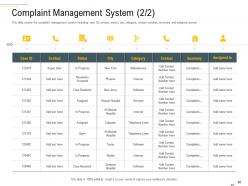
Slide 30: This slide covers the complaint management system including case ID, contact, status, city, category, contact number, etc.
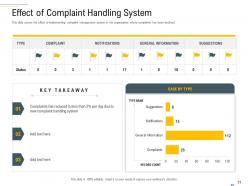
Slide 31: This slide covers the effect of implementing complaint management system in the organization where complaints has been declined.
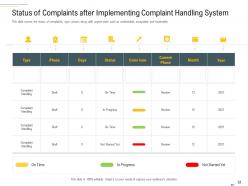
Slide 32: This slide covers the status of complaints, type, phase, along with urgent state such as undesirable, acceptable and intolerable.
Slide 33: This slide presents title for next topic to be covered in the template.
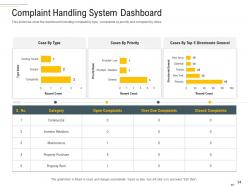
Slide 34: This slide has cover the dashboard including complaint by type, complaints by priority and complaint by cities.
Slide 35: This slide exhibits title for next topic to be covered.
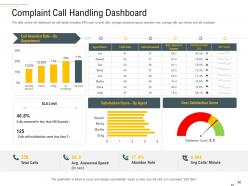
Slide 36: This slide covers the dashboard for call details including KPIs such as total calls, average answered speed, abandon rate, etc.
Slide 37: This is the icons slide.
Slide 38: This slide presents title for additional slides.
Slide 39: This slide shows details of team members like name, designation, etc.
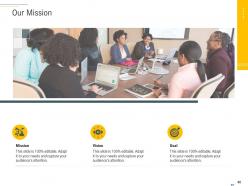
Slide 40: This slide presents your company's vision, mission and goals.
Slide 41: This slide shows about your company, target audience and its client's values.
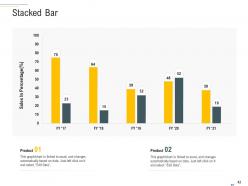
Slide 42: This slide exhibits yearly sales stacked bar charts for different products. The charts are linked to Excel.
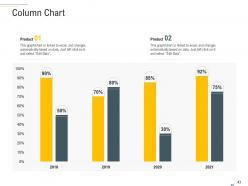
Slide 43: This slide displays yearly column charts for different products. The charts are linked to Excel.
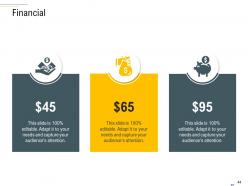
Slide 44: This slide showcases financials.
Slide 45: This slide exhibits yearly timeline.
Slide 46: This slide depicts posts for past experiences of clients.
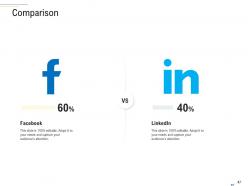
Slide 47: This slide highlights comparison of products based on selects.
Slide 48: This is thank you slide & contains contact details of company like office address, phone no., etc.
Complaint handling framework powerpoint presentation slides with all 48 slides:
Use our Complaint Handling Framework Powerpoint Presentation Slides to effectively help you save your valuable time. They are readymade to fit into any presentation structure.


FAQs for Complaint handling framework
You'll want five things that actually matter. Multiple ways for people to contact you - phone, email, whatever works. A system to track everything (seriously, future you will be grateful when someone asks about a case from six months ago). Set clear timelines for responses and know when to escalate stuff up the chain. Document your investigations properly - this isn't optional. Oh, and always circle back with people who complained, plus learn from what went wrong. Honestly though? Map out what you're doing now first. I bet you'll spot some pretty obvious holes you didn't even realize were there.
Honestly, you've gotta get your processes locked down with proper documentation and training. Map out your current workflow first - see where things go sideways. Then create step-by-step guides covering everything from the initial complaint to resolution, with clear timeframes and when to escalate. Same templates for everyone, same categories, same decision-making criteria. I've watched teams just improvise their way through cases and it's a nightmare! Training sessions keep people on track. Oh, and audit some cases now and then to spot inconsistencies before they become habits. Having it all written down eliminates the guesswork completely.
Dude, get yourself a decent complaint management system - it'll change everything. AI bots knock out the basic questions so your team isn't drowning in "how do I reset my password" tickets all day. The real magic happens with the tracking though. CRM systems stop customers from having to explain their whole saga every single time they call (seriously, nothing pisses people off more). Analytics help you catch problems early before they spiral. Oh, and those real-time dashboards? Game changer for spotting trends. Just make sure whatever platform you pick plays nice with your current tools. You'll probably cut your response times by like 50%.
Honestly, I'd hit three main things: listening skills, de-escalation, and your actual complaint process. Role-playing with real scenarios works so much better than boring training manuals - seriously, night and day difference. Make sure everyone knows when to grab a manager and how to escalate properly. Train them to acknowledge the customer's anger first, then pivot to solutions instead of getting all defensive. Oh, and give them actual power to fix common problems themselves - nothing's worse than "let me transfer you again." People forget this training fast, so you'll need regular refresher sessions to keep it sharp.
Track response times and how fast you resolve stuff - that's the obvious part. But here's the thing, those numbers don't matter if people are still pissed off afterward. Customer satisfaction scores tell you way more about what's actually working. I'd also watch complaint volume trends and whether your team feels confident handling issues. Like, are the same problems popping up over and over? Start with maybe 3-4 metrics max - measuring everything just gets messy. The goal is your staff feeling equipped and customers feeling heard.
Honestly, the best thing you can do is actually listen to what people are telling you - not just the formal complaints, but all the random stuff they mention on social media or in passing. I'd start checking feedback weekly and look for the same issues coming up over and over. Maybe it's slow response times or your team isn't communicating clearly. Sometimes the casual "soft complaints" are way more telling than the official ones. Once you spot your top 3 recurring problems, you can actually fix the processes or retrain people before things blow up. It's like catching problems early instead of playing defense all the time.
Honestly, most companies treat complaints like they're annoying interruptions instead of free feedback. That's mistake number one. Then they don't have clear rules for who handles what - so complaints get bounced around or just... disappear. Super frustrating. The worst part though? Nobody follows up afterward. You think you fixed it, but the customer is still pissed off. I'd set up something simple to track everything - even tiny complaints. Oh, and always circle back to make sure they're actually happy with how you handled it.
So there's this thing called the service recovery paradox - sounds fancy but it's basically when fixing someone's complaint actually makes them MORE loyal than if nothing went wrong. Wild, right? People want to see how you handle things when stuff hits the fan. If you're quick about it, genuinely helpful, and throw in something extra, they're like "damn, these guys actually get it." Your team should honestly get excited about complaints because that's where you can really shine. It's way better than those fake-perfect experiences nobody believes anyway.
Honestly, just give people options - let them complain however they want (online, phone, chat). Hand out reference numbers right away so they can actually track what's happening. I always think the worst part is being left in the dark, you know? Send updates even when there's nothing new to report. "Still looking into it" beats radio silence every time. Make sure they know they can escalate if needed. Different solutions might work better for different people. Really though, if you treat them like they're helping you solve something instead of just being a pain, it changes everything.
Honestly, just watch for three big red flags: how bad it is, how complicated, and what damage it could do. Your team can probably handle the usual stuff - wrong orders, late deliveries, whatever. But if there's safety issues, legal problems, or someone's absolutely losing their mind and threatening bad reviews everywhere? That goes upstairs fast. Multiple angry customers usually means something's broken in your system too. Oh, and definitely set clear rules so your people aren't guessing when to punt it to management - saves everyone the headache later.
Yeah, you definitely need to document everything - trust me on this one. I learned the hard way that you'll completely forget what happened within like a week. Write down the complaint AND how you fixed it. That way your team can handle similar stuff consistently later. The paper trail also covers you legally and shows auditors you're actually doing your job. Here's the thing though - the real benefit is spotting bigger problems early. When you see the same issue popping up repeatedly, that's your cue to fix whatever's causing it. Just grab a basic template and make it routine from the start.
Look, people just want to know what's going on with their complaint - it's really that simple. Keep them in the loop about timelines and progress updates. Being upfront shows you're not trying to hide anything or sweep their issue under the rug. The worst thing? Leaving someone hanging with zero communication. That's when they get really pissed off. Even if you can't fix their problem the way they want, explaining your reasoning honestly goes a long way. Oh, and make sure your whole team actually follows through on this - not just during the initial call but throughout the entire process.
Honestly, I'd start with ISO 10002 - it's like the gold standard for complaint handling and covers everything from when someone first complains all the way through follow-up. Pretty comprehensive stuff. Then you can add LEAN methodology on top to cut out any weird bottlenecks in your process. There's also the LAST method (Listen, Apologize, Solve, Thank) which works great for training your front-line people. Oh, and the Service Recovery Paradox model exists too, but that one's more academic than useful in real life. ISO 10002 first though - that's your foundation.
Oh man, this stuff can get messy fast. Some cultures hate direct confrontation, so you'll get complaints through weird channels or super vague hints instead of straight talk. Meanwhile others expect formal acknowledgment ASAP or they think you're blowing them off. Time's tricky too - pushing for quick responses might seem rude depending on where someone's from. I learned this the hard way on a project last year, actually. Your complaint team really needs training on different communication styles, and honestly? Build some wiggle room into your standard process so you can switch approaches based on who you're dealing with.
Dude, mishandling complaints can seriously bite you in the ass. Regulators in financial services will slap you with massive fines or even pull your license - they're ruthless about this stuff. Customers can sue if they think you screwed up their complaint or missed deadlines. Your company might also violate industry standards or mess up partner contracts. Honestly, I learned this the hard way at my last job. Document absolutely everything and stick to your procedures religiously. That paperwork trail becomes your lifeline when lawyers start circling.
-
Top Quality presentations that are easily editable.
-
Understandable and informative presentation.
-
I discovered this website through a google search, the services matched my needs perfectly and the pricing was very reasonable. I was thrilled with the product and the customer service. I will definitely use their slides again for my presentations and recommend them to other colleagues.
-
Great designs, Easily Editable.
-
Great experience, I would definitely use your services further.
-
Nice and innovative design.
-
Excellent work done on template design and graphics.
-
Great product with highly impressive and engaging designs.
-
Thanks for all your great templates they have saved me lots of time and accelerate my presentations. Great product, keep them up!
-
Editable templates with innovative design and color combination.