

Grievance management powerpoint presentation slides




Try Before you Buy Download Free Sample Product
 Impress Your
 Audience
 100%
100% Editable
 Save Hours
 of Time


Our Grievance Management Powerpoint Presentation Slides are topically designed to provide an attractive backdrop to any subject. Use them to look like a presentation pro.
People who downloaded this PowerPoint presentation also viewed the following :
Content of this Powerpoint Presentation
Grievance, the literal meaning of the word, is injustice. In the corporate world, grievance management refers to resolving and managing the issues that arise in a workplace between co-workers, working conditions, and treatment by team leaders or supervisors. A company not only provides a grievances management system for employees but for clients as well. Every organization offers a structured channel with the help of employees as well as clients to address the issues they are facing in the company. Grievance management helps create a safe environment for clients so that they can talk about the problems they are having with the company.
Explore our ready-to-use PPT slides for employee grievances!!
SlideTeam has prepared ready-to-use PPT slides for grievance management in any organization. This slide deck will help you customize grievance management policies according to your organization. This article will enlighten you about various aspects of grievance management and how you can present them in a concise format.
Click to get the information design informal grievance formal grievance PPT slides!!
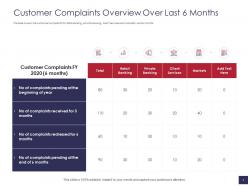
Template 1: Customer Complaints Overview over the Last Six Months
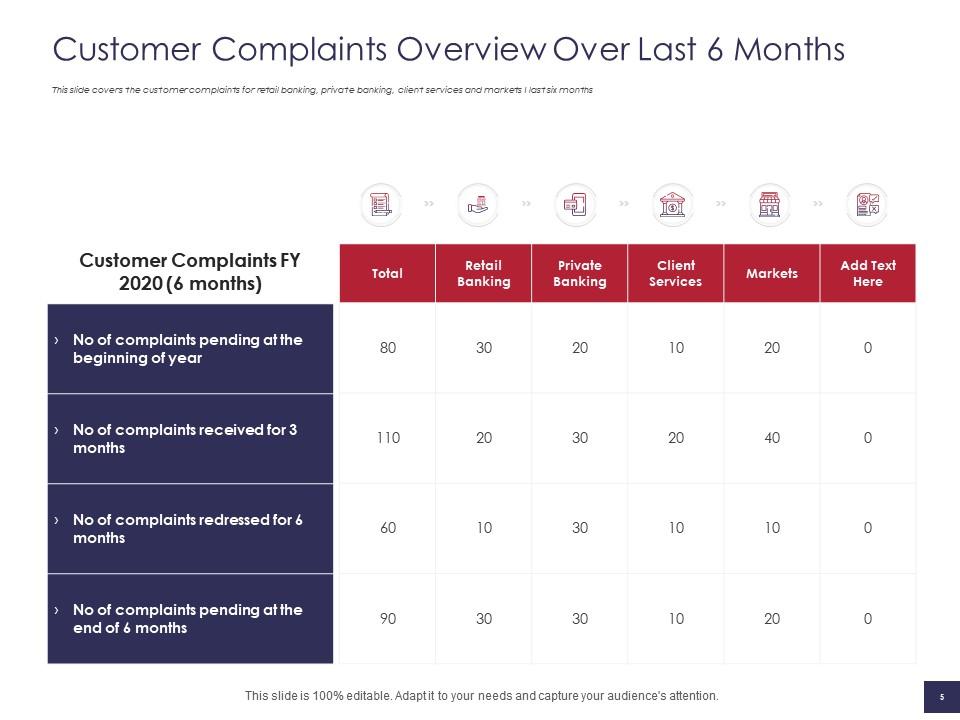
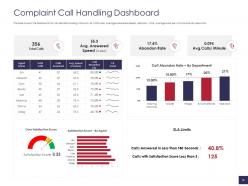
Demonstrate the customer complaints for six months according to their issues. Through the help of a table, you can highlight the total number of pending, received, and redressed complaints. You can also outline the department for which complaints are coming, such as retail banking, private banking, client services, and market. With the help of the table, you can quickly outline the total number of requests in the past 6 months.
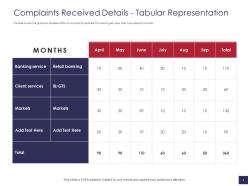
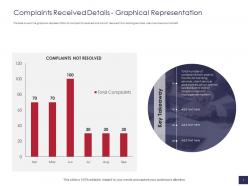
Template 2: Complaints Received Details- Graphical Representation

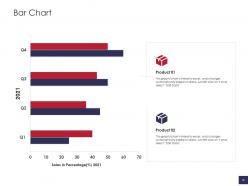
Represent the total number of complaints received in the 6 months through a graph. This template is specifically designed for those who want to demonstrate the complaints received by the company through a graph. There is also space to add text where you can add the information you feel is necessary to showcase.
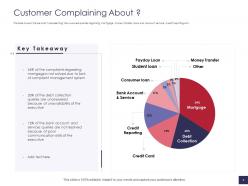
Template 3: Customer Complaining About
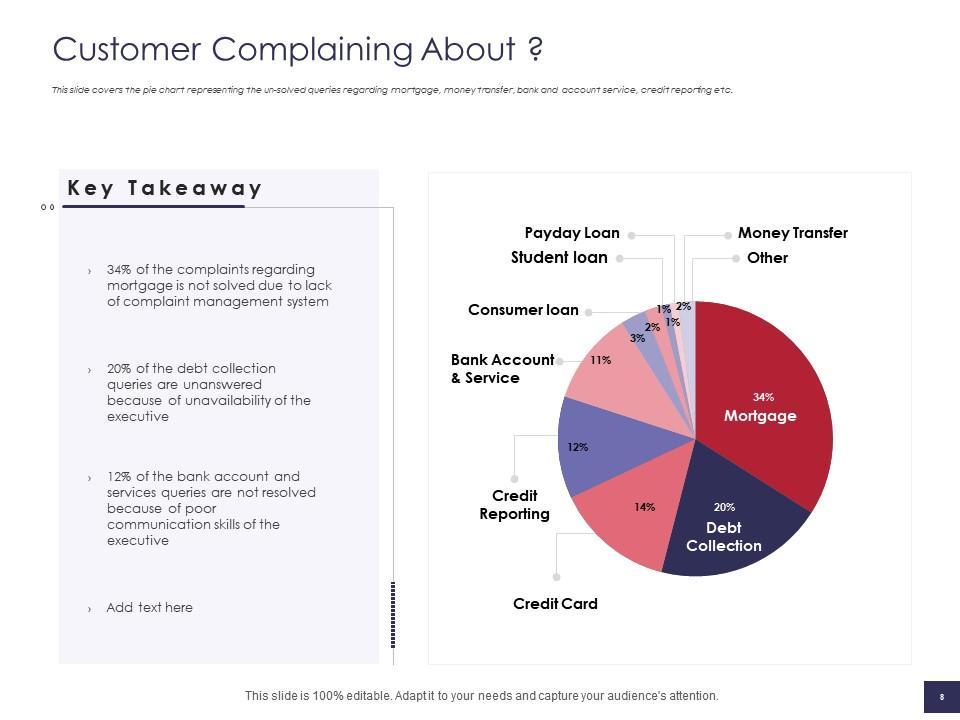
This particular slide helps outline the main issues people are complaining about. The pie chart in this template is customizable, and you can highlight the complaints people are having about your services. This demonstration will help improve an organization's mistakes. There is an additional space beside the pie chart that emphasizes why the problems are not being solved.
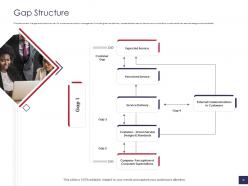
Template 4: Gap Structure
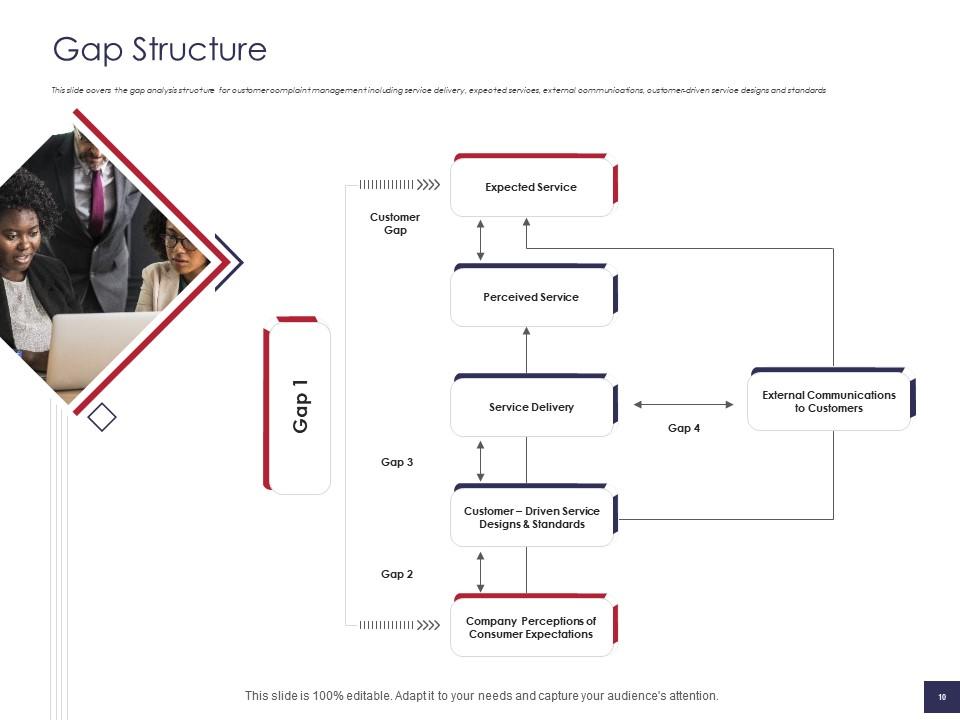
This template outlines the gaps between the services through a flow chart. The flow chart helps identify gaps like the company’s perception of consumer expectations, customer-driven services, external communication, perceived services, and others. There will be a difference between perceived services and expected services, which can be demonstrated through this template.
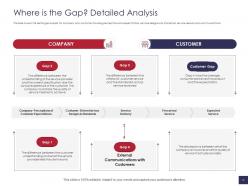
Template 5: Where is the Gap? Detailed Analysis

Outline the actual gaps between customer expectations, company service designs, service delivery, perceived service, and expected service. This template will provide you with the opportunity to define and demonstrate gaps from both the customer's and the company's sides.
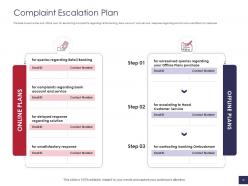
Template 6: Complaint Escalation Plan
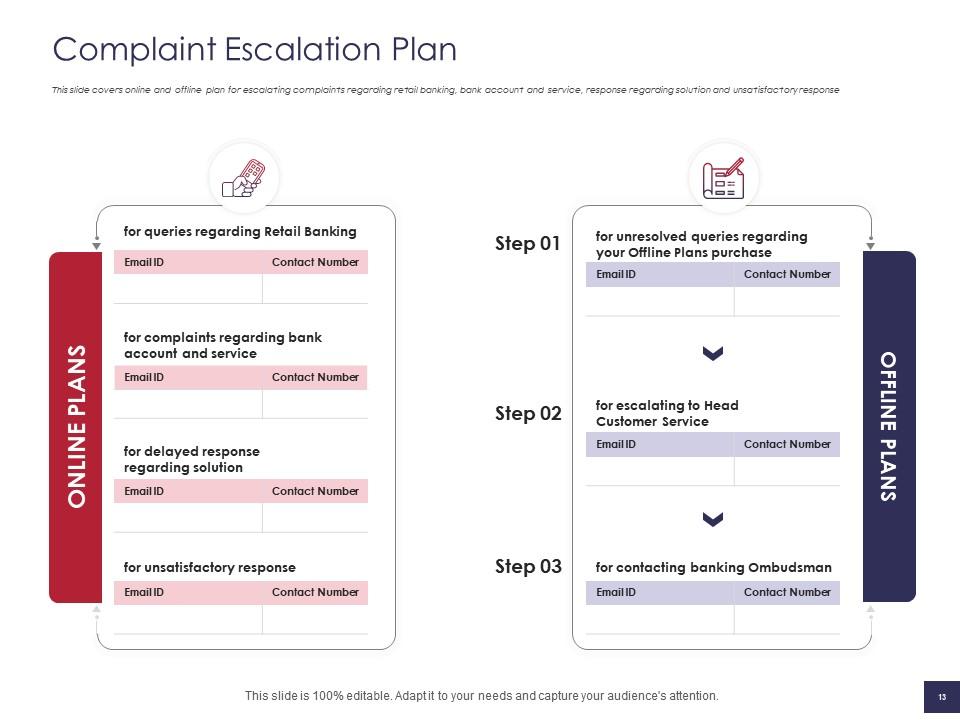
Demonstrate the complaint escalation plan through this template. It will help you showcase the complaint's status and the different steps involved in the process. You can highlight the online and offline plans through this template. Impressive and creative icons can demonstrate the steps involved in the escalation plan.
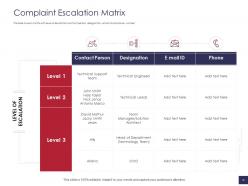
Template 7: Complaint Escalation Matrix
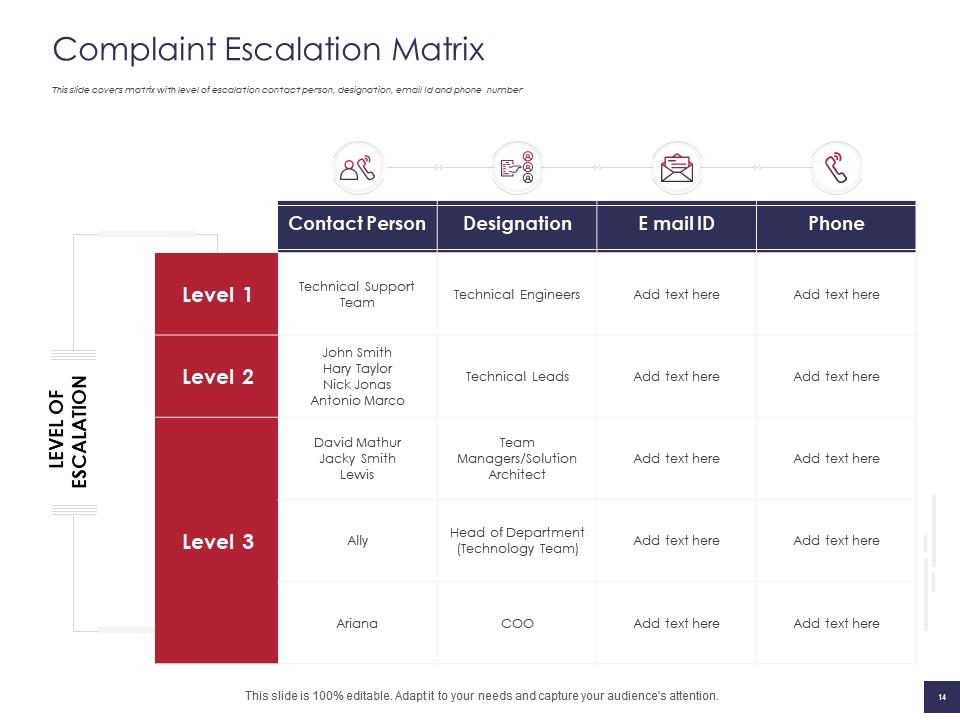
This specific template outlines the various levels of the escalation plan. It can demonstrate the contact person, designation, E-mail ID, and phone of the persons handling different levels. This slide will help highlight the escalation plan levels.
Template 8: Complaint Management Framework
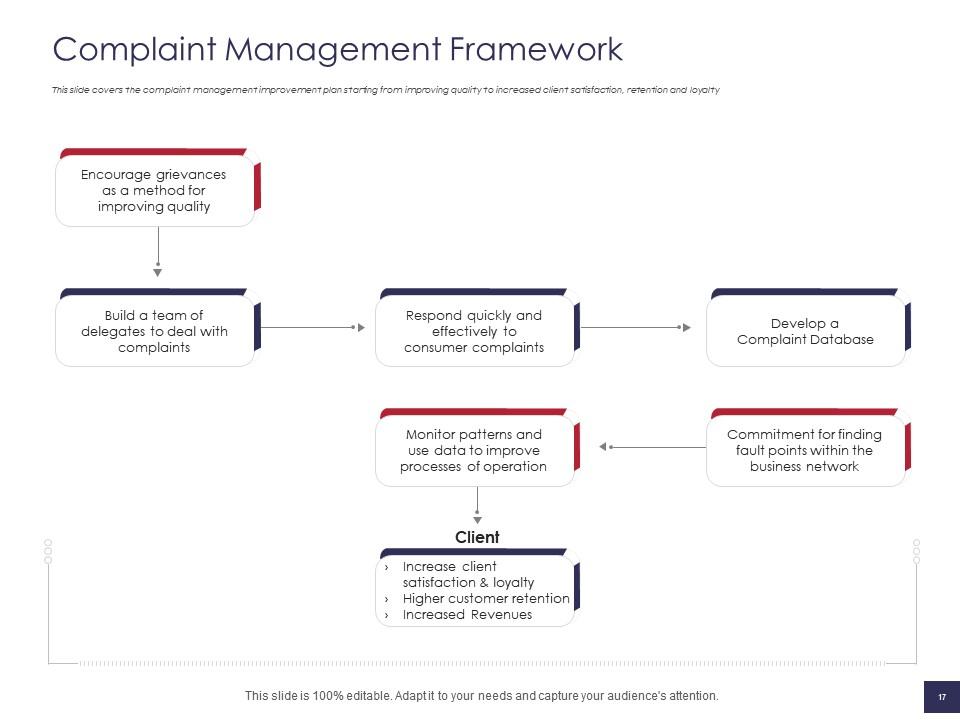
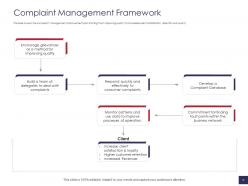
This template provides an overview of the complaint management process, from building a team to handle grievances to responding quickly to complaints to increase client satisfaction and loyalty. This template will help generate regular reports to track progress and identify areas for improvement.
Template 9: Complaint Handling Action Plan
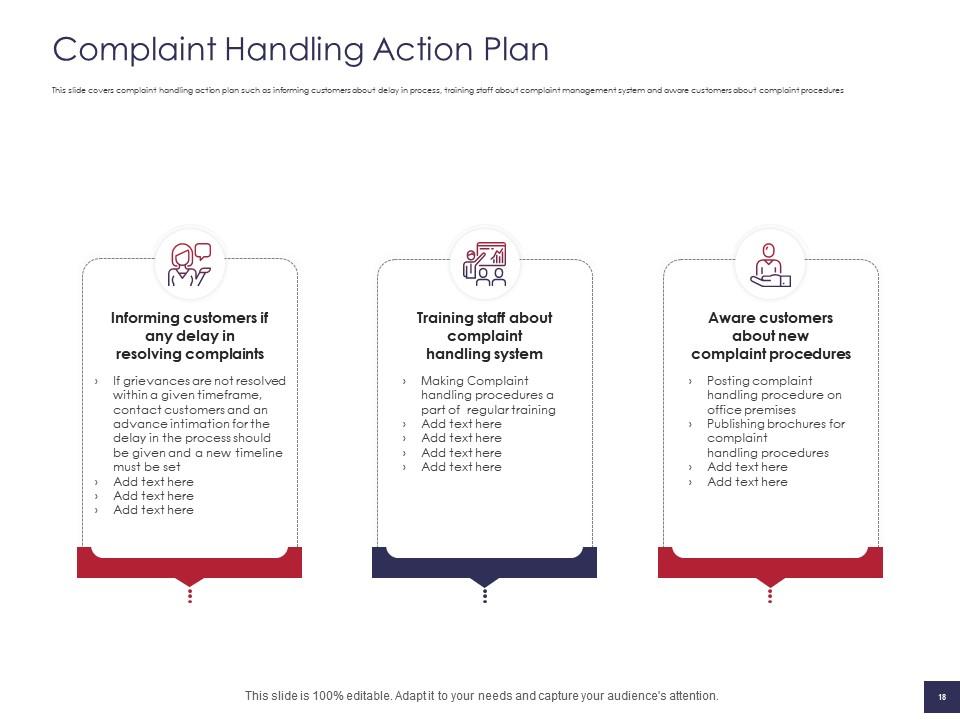
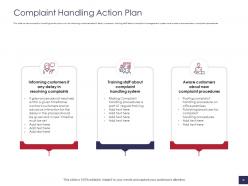
Outline the complaint handling action plan using this template. This slide provides you the opportunity to highlight how to inform customers about any details in resolving complaints, train staff about complaints, and make customers aware of complaints procedures. This slide is designed in a way that will definitely captivate your attention.
Template 10: Complaints Handling Mechanism
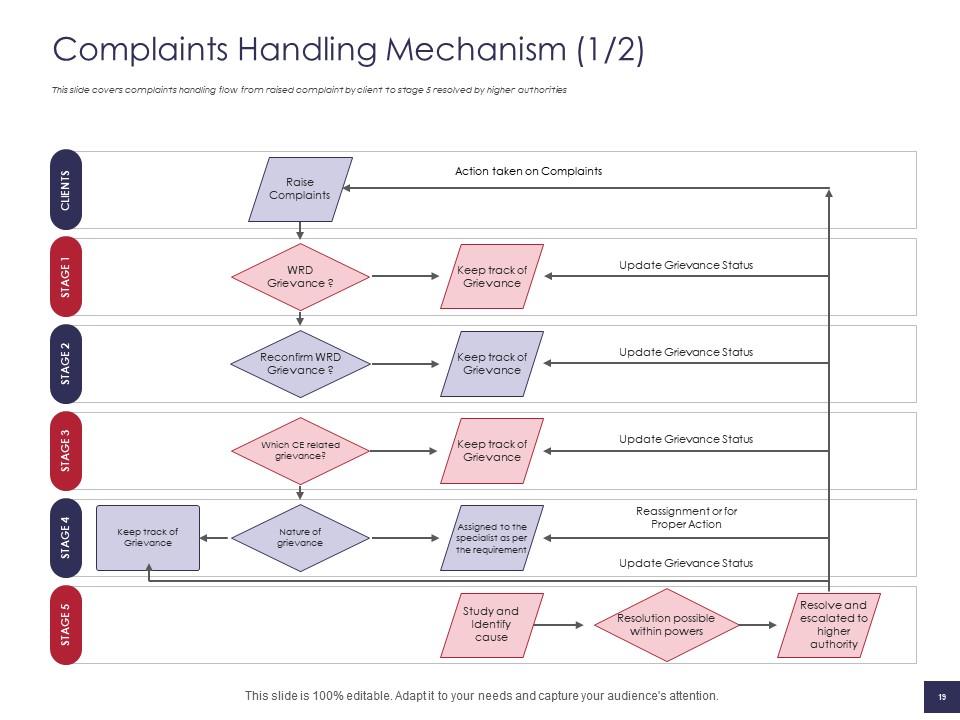
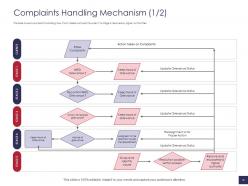
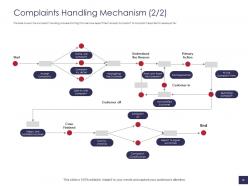
There are different stages involved in handling complaints, and this slide is designed to highlight these stages. You can highlight five stages through this template: the action taken on complaints, updated grievance status, and proper action—the whole process of raising complaints and sending them to a higher authority to resolve problems to solve.
In a nutshell, grievance management is essential to providing clients with a proper solution, and a structured management system can only help in doing so. This slide deck highlights the different stages involved in creating a solution to complaints and providing a solution to them. Grab our ready-to-use PPT templates to demonstrate the grievance management process.
P.S. Download our customizable PPT slides for Grievance Handling Policy with Mechanism Process Company Policies and Procedures Manual!!
Grievance management powerpoint presentation slides with all 47 slides:
Use our Grievance Management Powerpoint Presentation Slides to effectively help you save your valuable time. They are readymade to fit into any presentation structure.


FAQs for Grievance management
So you need four things to make this work. Clear policies first - like actually spelling out how people file complaints and what comes next. Give employees different ways to report stuff too, because honestly some people would rather die than complain face-to-face. Anonymous hotlines, online forms, whatever. Train your investigators properly - and I mean really train them, not just a half-day workshop. Most places totally blow this part by rushing investigations. Document everything and follow up consistently. People need to know you actually heard them and did something about it, you know?
Leadership has to actually admit there are problems first - can't fix what you won't acknowledge, right? Then train managers to listen instead of immediately getting defensive (which honestly is the hardest part). Set up different ways for people to report stuff so they're not trapped going through their nightmare boss. But here's the thing - you absolutely have to follow through and show people what changed because of their complaint. Otherwise it's just theater. Once folks see real action happening, they'll actually start trusting the system and speak up more.
Honestly, just digitizing the whole thing makes such a difference. Employees can submit stuff through apps or portals whenever - way better than those paper forms that used to disappear into black holes. Automated tracking keeps everything organized and sends alerts to whoever needs to handle it. The dashboards are pretty cool too, they show you patterns so you can catch problems early. Oh and the audit trails mean nothing gets "lost" anymore, which managers love. I'd start with the intake part first since that's usually where things get stuck. Real-time updates keep everyone in the loop without constant emails back and forth.
Honestly, start with the basics - how long complaints take to resolve and whether people are actually happy with the outcome. Employee satisfaction scores tell you a lot. Also track if the same issues keep popping up (red flag if they do). The bigger question though? Are people even comfortable reporting stuff in the first place. That's where pulse surveys come in handy - ask directly about trust in the process. Oh, and check if everything's getting escalated to the top instead of being handled at lower levels. That usually means something's broken. Pull your current numbers first, then compare against industry standards to see where you're at.
Oh man, the worst thing you can do is take forever to get back to them - people get SO much angrier when they're waiting. Don't get defensive either, even if they're being unreasonable. Actually listen instead of just planning what you'll say next. Never tell someone their problem is "minor" because that's basically lighting a match. Document everything too (boring but necessary). I learned this the hard way - always acknowledge what they're upset about first before you start problem-solving. Work with them on fixing it rather than just throwing solutions at them.
Your managers definitely need practice with active listening and staying neutral during conflicts. Role-playing is huge for this - basically rehearsing tough conversations before they blow up. Train them on your grievance procedures, documentation stuff, and knowing when to loop in HR or legal. The tricky part is getting them to stick to facts instead of getting emotional about situations. Oh, and confidentiality rules are non-negotiable. I'd set up refresher training too since people forget this stuff quickly if they're not dealing with grievances regularly.
Dude, unresolved grievances are seriously toxic for teams. People get frustrated when they feel ignored and just mentally check out. I've watched entire departments go from productive to basically useless because management wouldn't address one person's complaint. Everyone starts gossiping instead of working, wondering if leadership even gives a damn about them. Turnover shoots up too - nobody wants to stick around feeling unheard. Honestly, the drama spreads faster than you'd think. Quick fix though: deal with complaints fast and be upfront about what you can actually do, even if it's not everything they want.
So analytics can totally change how you deal with grievances - you'll spot patterns that would take forever to catch by hand. Track which departments or managers get the most complaints, see where resolution times drag. The really useful part? You can actually predict problem areas before they explode. I'd start with just pulling your data into a basic dashboard, honestly even simple trend analysis will show you things that'll blow your mind. Plus you can finally measure if your fixes are working or if you're just spinning your wheels. Trust me, the patterns will surprise you.
Anonymous surveys after cases close work great - people feel safer being honest. Try focus groups with folks who've actually been through it, or bring it up during exit interviews since they're already talking openly. Pulse surveys help you catch problems before they get worse. Oh, and suggestion boxes sound old school but they actually still work pretty well! One-on-ones with HR are decent too, though some people clam up face-to-face. The anonymous stuff usually gets you the real dirt on what's broken. Digital forms are clutch for the younger crowd who won't fill out paper anything.
Dude, drop everything when these come in - they can't sit in your normal pile. Get someone who actually knows discrimination law to handle it, not just anyone. Document literally everything and keep it confidential. Put protections in place for whoever complained while you're investigating (this part gets overlooked way too often). Give clear timelines upfront because these people are already going through hell and wondering what's happening. Trust me, if you mess this up it spirals quickly. The legal stuff alone will give you nightmares, but honestly the human side is what really matters here.
Okay so first thing - lock down who can see grievance stuff, seriously. Train your team on keeping things confidential and use systems that track who accessed what. Keep those files separate from regular HR stuff, both digital and paper. Always ask before sharing details with anyone, even internally. Anonymous reporting is clutch for the really sensitive stuff. Document what you need but don't go overboard with identifying info. Honestly, the whole thing falls apart if people think you're gossipy with their complaints - they'll just stop telling you when bad stuff happens.
Oh EAPs are honestly amazing for this stuff. Your team probably doesn't even know they exist, but they're free counselors who help with workplace drama before it blows up. I always tell people it's like having a therapist who actually gets work stress. They'll coach employees on how to handle tough conversations with their boss or HR without it turning into a disaster. Plus everything's completely confidential - which is huge because most people worry about that. The whole point is helping folks build better communication skills so conflicts don't spiral out of control.
Mobile chatbots are huge right now - everyone wants to complain through their phone anyway. Companies are getting smarter about catching problems early with sentiment tracking before they blow up. Real-time dashboards help teams stay on top of response times too. Honestly, the follow-up game has gotten way better lately. Most places actually check back to see if you're satisfied instead of just closing tickets. Oh, and proactive outreach is becoming standard practice. If I were you, I'd probably start with better tracking software first, then maybe test a bot for the basic stuff that comes up over and over.
Track a few things that'll actually tell you if it's working. First - are you hitting your deadlines? Satisfaction scores from people who filed complaints matter too. But honestly, the repeat grievances thing is what I'd watch most closely. If the same issues keep coming back, you're just slapping band-aids on everything. Volume trending down over time? That's gold - means you're fixing root problems. Oh and definitely run quarterly reports for leadership. Shows them you're not just processing paperwork, you know?
Honestly, you need people from both inside and outside the company. Internal folks like HR, legal, and senior management are obvious ones - plus whoever's actually involved in the mess. Sometimes you'll need external people too: regulatory bodies, union reps if you have them, maybe even third-party mediators for the really sticky situations. The complainant should stay involved throughout (crazy how often they get pushed aside, right?). Here's the thing though - figure out who has authority over what *before* drama hits. Last thing you want is everyone pointing fingers about whose job it is when people are already fired up about the original complaint.
-
Excellent template with unique design.
-
Unique design & color.
-
Enough space for editing and adding your own content.
-
Design layout is very impressive.
-
Really like the color and design of the presentation.
-
Colors used are bright and distinctive.