

Complete Guide To Community Health Outreach Strategic Plan Strategy CD





Try Before you Buy Download Free Sample Product
 Impress Your
Audience
 100%
Editable
 Save Hours
of Time


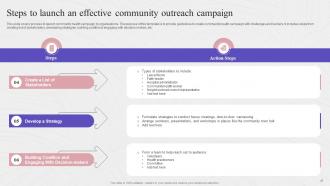
Community outreach strategic plan is a comprehensive approach to engage and connect with individuals and groups in a community. This Complete guide to community health outreach strategic plan presentation covers services offered under community outreach programs. Additionally, our Creating an Effective Community Outreach technique PPT slides covers tools to reach local people along with strategies to create an effective community outreach program. It also consists of considerations for effective health outreach program along with services and challenges faced by community health workers. Moreover, this PowerPoint presentation also contains ways to create online awareness about community health program and ways to promote healthcare campaigns Furthermore, this Ultimate Plan for Reaching Out to Community PPT provides details for launching of mental health campaign with benefits along with tips on launching health awareness campaigns and checklists. It also covers steps to launch community outreach campaign. Customize this 100 percent editable template with our highly skilled research or design team. Get access now.
People who downloaded this PowerPoint presentation also viewed the following :
Content of this Powerpoint Presentation
Slide 1: The slide introduces Complete Guide to Community Health Outreach Strategic Plan.
Slide 2: This is an Agenda slide. State your agendas here.
Slide 3: The slide displays table of contents.
Slide 4: The slide continues table of contents.
Slide 5: The slide depicts another Table of contents.
Slide 6: This slide covers brief summary about community outreach strategy.
Slide 7: This slide covers defined goals and objectives for community outreach program and strategic program.
Slide 8: This slide covers key stats representing composition of community workers for a outreach plan.
Slide 9: This slide covers key programs covered by community health organizations.
Slide 10: This slide covers tools to increase engagement of community for particular cause or goals.
Slide 11: This slide covers techniques to increase workers base for community outreach program.
Slide 12: This slide covers activities to reach audience of different communities by non profits.
Slide 13: The slide renders title of contents which is to be discussed further.
Slide 14: This slide covers overview of community healthcare outreach program.
Slide 15: This slide covers key aspects of building effective community health outreach program.
Slide 16: This slide covers top services that are included in programs launched by community health organisations.
Slide 17: This slide covers barriers in the way of providing health services to public by health workers.
Slide 18: This slide covers different options to create awareness among local community about community program.
Slide 19: The slide again highlights title of contents further.
Slide 20: This slide covers requisites to be considered while drafting plan for community health program.
Slide 21: This slide covers target audience for community health programs.
Slide 22: This slide covers requirements of infrastructure for community health programs and organizations.
Slide 23: This slide covers top skills important for healthcare workers to possess.
Slide 24: This slide covers member requirements for community health programs.
Slide 25: This slide covers tips to reduce staff shortages for community health organizations.
Slide 26: The slide also depicts title of contents.
Slide 27: This slide shows different communication channels used for promoting health programs. by community organizations.
Slide 28: This slide covers online platforms to create awareness about health campaigns among public.
Slide 29: This slide depicts offline platforms to create awareness about health campaigns among public.
Slide 30: This slide displays different other platforms to create awareness about health campaigns among public.
Slide 31: This slide continues different other platforms to create awareness about health campaigns among public.
Slide 32: The slide highlights title of contents which is to be discussed further.
Slide 33: This slide depicts launching of mental health campaign by community organizations.
Slide 34: This slide covers best practices to be used for successful launch of mental health awareness programs.
Slide 35: This slide shows checklist highlighting key points that are important for launching multiple health programs.
Slide 36: This slide illustrates process to launch community health campaign by organizations.
Slide 37: This slide showcases process to launch community health campaign by organizations.
Slide 38: This slide renders process to launch community health campaign by organizations.
Slide 39: This slide contains sample campaign for community program based on goals, objectives, strategies.
Slide 40: This slide displays schedule for the health campaign to be launched by community organizations.
Slide 41: This slide presents data for community outreach health counselling based on sites visits.
Slide 42: This slide covers key activities that are completed by community health organizations under various schemes launched.
Slide 43: This slide highlights key activities that are expected to be performed by community health organizations.
Slide 44: The slide displays another title of contents.
Slide 45: This slide covers summary of population targeted for community health program.
Slide 46: This slide shows brief summary performance evaluated for therapy and counselling sessions.
Slide 47: The slide contains title of contents further.
Slide 48: This slide covers brief of budget allocated by community health organization on administrating operations of health program.
Slide 49: This slide covers brief summary of budget spends of community health program on workers salary, medicines, etc.
Slide 50: The slide also depicts title of contents.
Slide 51: This slide covers dashboard to assess the performance of community health program based on data provided by hospital.
Slide 52: This slide covers dashboard to evaluate the success rate of health campaign launched.
Slide 53: This slide shows all the icons included in the presentation.
Slide 54: This slide is titled as Additional Slides for moving forward.
Slide 55: This is Our Mission slide with related imagery and text.
Slide 56: This is About Us slide to show company specifications etc.
Slide 57: This is Our Goal slide. State your firm's goals here.
Slide 58: This is Our Team slide with names and designation.
Slide 59: This slide shows Post It Notes. Post your important notes here.
Slide 60: This slide depicts Venn diagram with text boxes.
Slide 61: This slide shows SWOT describing- Strength, Weakness, Opportunity, and Threat.
Slide 62: This slide displays Column chart with two products comparison.
Slide 63: This slide describes Line chart with two products comparison.
Slide 64: This is a Thank You slide with address, contact numbers and email address.
Complete Guide To Community Health Outreach Strategic Plan Strategy CD with all 69 slides:
Use our Complete Guide To Community Health Outreach Strategic Plan Strategy CD to effectively help you save your valuable time. They are readymade to fit into any presentation structure.









FAQs for Complete Guide To Community Health Outreach Strategic
Honestly, start by just hanging out in the community first - don't launch anything yet. Partner with local groups because they actually know what works. Your messaging needs to fit the culture, and hire staff who look like the people you're trying to reach. Transportation and language barriers will kill your program faster than anything else, so plan around those. Trust is everything here (and takes forever to build). Oh, and track stuff the community cares about, not just metrics that make your boss happy. Pick locations people can actually get to.
Honestly, start with text messaging for appointment reminders - it's cheap and actually works. Mobile health apps and telehealth can reach way more people than old-school methods. Those data mapping tools are pretty incredible for figuring out which neighborhoods need help most. Social media's obvious but effective. 24/7 community health portals are clutch since people want access on their schedule, not yours. Partner with local orgs who already have digital stuff set up. Pick maybe two tools that match what your community's comfortable with tech-wise, then build from there. Don't go crazy trying to do everything at once.
Honestly, you can't do health outreach without good partnerships. Local groups already have the trust built up - churches, schools, even barbershops know their people way better than you will starting out. They've got meeting spaces, volunteers, and they actually know what messaging works (and what doesn't). I learned this the hard way trying to go solo at first. Map out who's already doing solid work in your area and figure out how to team up instead of stepping on toes. Way more effective than reinventing the wheel.
Honestly, you've gotta look at both the hard numbers and the personal stuff to really know if it's working. Track participation rates and health changes through surveys or screenings - that's your baseline data. But here's the thing: stories from actual community members matter way more than people realize. Set up some focus groups to hear how the program actually changed their day-to-day lives. Those testimonials are gold. Also check your reach - are you hitting your target population or just preaching to the choir? I'd say pick maybe 3-4 key things that match what you're trying to accomplish and start there.
Honestly, trust is your biggest hurdle - people get suspicious when outsiders show up claiming they want to help. Can't blame them really. Language barriers mess things up too, plus basic stuff like transportation and timing conflicts. Your best bet? Find local leaders who already have street cred and team up with them. Hire people from the community when you can. Show up when and where it's actually convenient for them, not you. Use their languages, obviously. But here's the thing - in those first meetings, just shut up and listen. Ask what they actually need instead of rolling in with your grand plan. Works way better.
Dude, you HAVE to get the cultural piece right or your whole program will tank. I've watched so many good intentions crash and burn because people skipped this step. When you actually understand how a community thinks - their language, beliefs, what they care about - suddenly they'll actually show up and participate. People can smell when something's designed by outsiders who don't get them. Start by finding the real community leaders (not just the official ones) and ask what matters to them. You'll get way more honest feedback about health stuff when people feel like you actually see them as humans, not just a target demographic.
So you'll need both process stuff and actual outcomes. Process is like reach numbers, how many people show up to programs, community feedback - basic tracking. The real gold though? Health behavior changes, better health stats, fewer ER visits. That's where you see if it's actually working. Also track partnerships with local orgs - honestly this one gets overlooked but it matters. I'd start with maybe 3-5 metrics that match your goals. Don't go crazy at first. You can always add more once you've got the hang of measuring this stuff.
Honestly, community leaders are like your secret weapon for getting people involved. They've already got the trust and respect you'd spend months trying to build. People actually listen when it's coming from someone they know, you know? Plus these folks get the local vibe - they know what matters to people and how to talk to them without sounding like an outsider. I'd start by figuring out who really has influence in that area. Maybe grab coffee with a few of them? They'll help you craft messages that actually land and know which channels people pay attention to.
Honestly, go where people already hang out instead of waiting for them to find you. Community centers, churches, schools - that's your goldmine. Mobile units are clutch for rural spots. Partner with local leaders who already have street cred in the community. Don't forget about language barriers when you're making flyers and stuff. Social media works for some folks, but others still rely on word-of-mouth. Map out where your target group actually spends time first. Then build everything around those spots. Oh, and different communities consume info totally differently, so mix up your approach.
Honestly, real stories beat boring stats every time. When someone shares how diabetes actually wrecked their family vs just hearing "rates are up 20%" - totally different impact, you know? Get these through interviews or focus groups, maybe even a social media thing where people post their own experiences. Just don't over-script it or it'll sound fake as hell. Oh and try opening your next presentation with someone's actual quote about their health stuff instead of the usual data dump. People connect with real voices way more than numbers.
Okay so the main things - get proper consent before collecting any health data or doing services. Respect their customs and beliefs too. Don't create dependency or steal credit from stuff the community's already doing (which honestly happens way too much). Ask what they actually want instead of assuming you know what they need. Cultural sensitivity is huge, and you really can't exploit vulnerable populations - that's just basic decency. Build real partnerships where they have actual say in planning. Oh and make sure your outreach benefits them, not just your org's goals. Genuine community input is everything.
Mix it up with different ways to get feedback - surveys after health stuff, focus groups with community leaders, casual chats during outreach. Social media polls are surprisingly effective because people actually love giving their opinions online! Ask specific questions about what services they need, what's getting in their way, how they want you to communicate. Here's the thing though - you've got to analyze that data and report back what you found. Otherwise people think you're just going through the motions. Make one real change based on their input within 3 months or you'll totally lose them.
Honestly, social media is perfect for this stuff. People are already scrolling anyway, so why not meet them there? You can blast out info about health programs, share educational posts, whatever. Way cheaper than traditional ads too - which is huge when budgets are tight. Figure out where your community hangs out first though. My mom's generation lives on Facebook, but if you're targeting younger people, TikTok and Instagram are where it's at. Just pick your platforms and post regularly. Oh, and make a basic content calendar so you don't forget to actually post!
Dude, you've gotta train your volunteers properly - it makes such a huge difference. Confident volunteers can actually answer questions instead of just awkwardly handing out pamphlets. They connect better with people too because they get the key messages and can roll with different situations. I've literally watched untrained volunteers mess things up by spreading wrong info (so cringeworthy). But the good ones? They become people the community actually trusts. Start with basic health stuff and how to talk to people - maybe throw in some practice scenarios or whatever. Trust me, your whole program will be way more effective when volunteers feel like they know what they're doing.
Pop-up clinics at farmers markets are honestly your best bet - people are already there anyway. Mobile health units work great too. You'll want to buddy up with local pastors or school principals since everyone listens to them in small towns. Telehealth has been huge, especially for mental health stuff when folks can't drive an hour to see someone. Oh, and community health workers who actually live there? Total game-changer because they get the culture. I'd probably start by figuring out where people naturally hang out, then schmooze the local influencers first.
-
These stunning templates can help you create a presentation like a pro.
-
SlideTeam is my one-stop destination for templates. Highly recommended!