


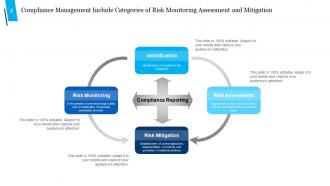
Compliance Identification Risk Monitoring Risk Mitigation Risk Assessment Regulations





Try Before you Buy Download Free Sample Product
 Impress Your
 Audience
 100%
100% Editable
 Save Hours
 of Time


Our Compliance Identification Risk Monitoring Risk Mitigation Risk Assessment Regulations are topically designed to provide an attractive backdrop to any subject. Use them to look like a presentation pro.
People who downloaded this PowerPoint presentation also viewed the following :
Compliance Identification Risk Monitoring Risk Mitigation Risk Assessment Regulations with all 14 slides:
Use our Compliance Identification Risk Monitoring Risk Mitigation Risk Assessment Regulations to effectively help you save your valuable time. They are readymade to fit into any presentation structure.
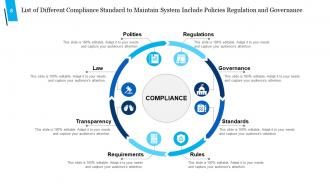

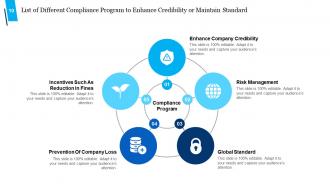
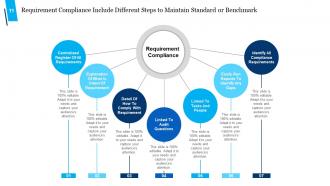
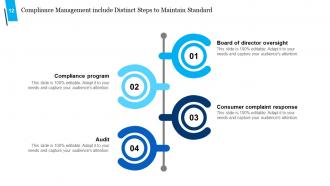

FAQs for Compliance Identification Risk Monitoring Risk Mitigation
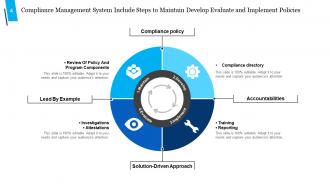
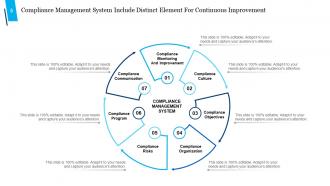
You need seven main things for compliance: written policies, regular training, monitoring/audits, anonymous reporting system, consistent discipline, someone to run it all, and risk assessments. Sounds overwhelming but honestly most companies already have bits and pieces lying around - they're just not connected. I'd start by figuring out what you've already got, then tackle the biggest holes first. The real trick is making everything work together instead of having random stuff scattered everywhere. It's way less intimidating once you see it as organizing what exists rather than starting from scratch.
Skip the boring generic stuff - nobody pays attention to cookie-cutter compliance training anyway. Focus on actual scenarios your team deals with every day. Make it interactive, not just clicking through slides like a zombie. I swear, some companies think annual 4-hour sessions work but they don't. Break it into smaller chunks throughout the year instead. Track if people actually get it, not just whether they showed up. Oh, and set up some way for employees to ask questions without feeling like they're ratting themselves out. The whole thing should feel helpful, not like punishment.
Dude, compliance tech is a game changer. It'll auto-monitor everything, catch regulatory updates, and spot problems before they blow up. Set up workflows for docs, use AI to scan emails for sketchy stuff - the dashboards alone will show you exactly where you stand across all areas. Managing this stuff manually now is just... why would you torture yourself like that? Oh and make sure whatever you pick actually plays nice with your current systems. Half the battle is getting your team to actually use it right, otherwise you're just buying fancy expensive software that sits there looking pretty.
So basically, regulations are completely different across industries. Financial companies get hammered with data protection rules and capital requirements. Healthcare has to deal with HIPAA and FDA stuff. Manufacturing? They're more worried about safety and environmental standards. Honestly, it's kind of a mess to navigate. You can't just copy what works in one industry and slap it onto another - that'll bite you later. Start by figuring out which regulatory bodies actually control your space and what they care about most. Don't waste time looking at compliance strategies from totally different sectors.
Ugh, where do I even start? GDPR and CCPA are probably your worst nightmares, plus all the financial reporting stuff. Then there's industry rules that literally change constantly - I swear they update them just to mess with us. Cybersecurity standards keep shifting too. Employment law changes are another headache. Here's the thing though - compliance hits every department but nobody owns it properly. That's where most companies screw up. You need someone actually in charge, not just hoping people figure it out themselves. Get a decent management system and assign real ownership. Otherwise you'll just keep playing catch-up forever.
Honestly, mixing hard numbers with softer feedback works best. Incident rates and audit findings are obvious ones to track. Training completion percentages too. But here's what most people miss - employee surveys about whether they'd actually report sketchy stuff without getting thrown under the bus. That data tells you way more than compliance theater metrics. I'd grab maybe 4-5 key things that matter for your specific industry and stick with those. Don't go crazy trying to measure everything or you'll drown in spreadsheets. Regular dashboards help so you're not flying blind on whether any of this compliance work actually moves the needle.
Set up Google alerts for your industry's regulatory stuff, but get the fancy versions that actually work. Someone on your team needs to be the person who reads all those boring agency newsletters - maybe bribe them with coffee or something. Industry associations are surprisingly helpful here, and honestly worth the membership fees. Your team won't follow rules they don't understand, so regular training sessions are a must. Oh, and definitely build relationships with compliance consultants who can translate all that legal gibberish into normal human language. Trust me, you'll need them when things get confusing.
Honestly, culture makes or breaks compliance programs depending on where you're rolling them out. Gift-giving is probably the messiest example - what's straight-up bribery in one place is just good business relationships elsewhere. Germany? You can be pretty direct about calling out violations. Try that same approach in Japan and you'll create way more problems than you solve. Communication styles are all over the map too. Your training materials need to flex with local expectations while you stick to your main standards. I'd definitely start by getting your local HR folks involved since they actually know how things work on the ground there.
Oh man, non-compliance is brutal. Fines and legal action are just the start - they can literally revoke your license or shut you down completely. Customer trust goes out the window too, which makes getting new partnerships a pain. Some regulators won't even let you operate until you fix everything (honestly the worst case scenario). The money adds up crazy fast between penalties, lawyer fees, and lost sales. I'd definitely build compliance into your regular workflow now instead of panicking when they show up at your door. Way easier to prevent than clean up later.
Honestly, just focus your money where the real risks are - not where you *think* they might be. Automate the boring monitoring stuff because doing it manually will drain your budget so fast. Map out what you're spending now versus actual risk exposure, then shuffle things around. Most companies I've seen blow way too much on consultants when they could just train people internally. Oh and do regular risk checks - helps you figure out what's actually critical versus stuff that's just nice to have. Sounds obvious but you'd be surprised how many places skip this step.
So compliance ethics is basically this constant tug-of-war between doing the right thing and making money. You've got transparency issues with stakeholders, protecting people's data, dodging conflicts of interest - the usual suspects. Honestly, the trickiest part is when you're technically following the law but it still feels sketchy, you know? Like, legal doesn't always equal ethical. My old boss used to say document everything because if you can't defend your decision in front of a room full of people, you probably shouldn't make it. Fair treatment across the board matters too, obviously.
Honestly, data analytics is a game-changer for compliance stuff. You can actually spot patterns in all that messy data instead of just winging it with basic checklists. Transaction monitoring is clutch - it'll flag weird activity automatically so you're not drowning in manual reviews. Plus you can compare your current risk levels to past performance and see if you're actually getting better (or worse, which happens more than people admit). I'd start with something simple like vendor compliance first. Once you figure out what clicks with your team, then branch out from there. Way more effective than the old-school approach.
JPMorgan Chase is probably your best example - they dumped billions into compliance after getting slammed by regulators. Hired like thousands of people too. Siemens did something similar with their corruption mess, though tbh it's kinda sad it took massive scandals to wake them up. Both focused way more on changing company culture than just updating their rulebooks. Short sentences work better than I thought they would for this stuff. Definitely check out their annual reports from those transformation years - that's where the real details are hiding that you could actually use.
Honestly, the whole trick is making compliance feel less like punishment and more collaborative. Skip the legal jargon - just tell people WHY the rules matter in normal language. Your team needs to feel safe asking dumb questions or flagging problems without getting yelled at. That's how you catch issues before they blow up. Two-way conversations beat policy broadcasts every time. I'd start by asking what compliance stuff actually trips them up daily - you might be surprised what they say. Makes the whole thing way more human, you know?
Honestly, AI monitoring is huge right now - catches compliance stuff before it blows up. Cloud-based platforms are pretty much standard now, and they'll handle multiple regulations instead of you juggling like 5 different tools (thank god). My advice? Start small with whatever's eating up most of your time manually. Maybe it's reporting or data collection, whatever. Automate that first, then build from there. Don't go crazy trying to fix everything at once - I've seen that backfire. Pick one annoying repetitive task and knock it out.
-
Awesome use of colors and designs in product templates.
-
Editable templates with innovative design and color combination.
-
Colors used are bright and distinctive.
-
Understandable and informative presentation.
-
Amazing product with appealing content and design.