

Comprehensive Guide For Understanding Different Types Of Life Insurance Policies Fin CD





Try Before you Buy Download Free Sample Product
 Impress Your
Audience
 100%
Editable
 Save Hours
of Time


Check out our professionally designed PowerPoint Presentation titled, Comprehensive Guide for Understanding Different Types of Life Insurance Policies. Our Insurance Deck carries an overview containing the benefits, driving factors, policy riders in life insurance, etc. Additionally, the Term Life Insurance presentation covers the different types of life insurance policies such as term life and permanent life insurance bought by people to get financial protection. Furthermore, the Permanent Life Insurance module highlights details of various permanent life insurance policies such as whole life and universal Indexed and variable life insurance. It also covers an overview, of factors affecting costs, considerations, key stats, types, purpose, etc. Lastly, the Insurance Policy Template outlines the comparative analysis of types of life insurance, regulatory framework, and life insurance claims. Download our 100 percentage editable and customizable template, which is also compatible with Google Slides.
People who downloaded this PowerPoint presentation also viewed the following :
Content of this Powerpoint Presentation
Slide 1: This slide introduces Comprehensive Guide for Understanding Different Types of Life Insurance Policies. State Your Company Name and begin.
Slide 2: This slide is an Agenda slide. State your agendas here.
Slide 3: This slide shows a Table of Contents for the presentation.
Slide 4: This slide is an introductory slide.
Slide 5: This slide carries an overview of life insurance.
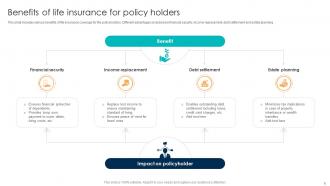
Slide 6: This slide includes various benefits of life insurance coverage for the policyholders.
Slide 7: This slide highlights different types of people requiring life insurance coverage to protect their loved ones.
Slide 8: This slide represents various factors influencing the costs and premiums for life insurance.
Slide 9: This slide mentions the different types of life insurance riders to get additional benefits from the existing policy.
Slide 10: This slide is an introductory slide.
Slide 11: This slide highlights different types of life insurance policies bought by the policyholders to get financial benefits in case of insured’s death.
Slide 12: This slide is an introductory slide.
Slide 13: This slide covers an overview of term life insurance providing death benefits to loved ones.
Slide 14: This slide denotes different types of people requiring life insurance coverage to protect their loved ones.
Slide 15: This slide indicates the average annual costs for buying term life insurance based on different factors.
Slide 16: This slide carries the key stats highlighting the current trends for term life insurance.
Slide 17: This slide mentions various factors to be considered before buying a term life insurance plan.
Slide 18: This slide illustrates various steps for purchasing the term life insurance policy.
Slide 19: This slide is an introductory slide.
Slide 20: This slide highlights various types of term life insurance plans.
Slide 21: This slide represents an overview of renewing a term life insurance plan.
Slide 22: This slide presents an overview of decreasing term life insurance.
Slide 23: This slide outlines an overview of adjustable premium term life insurance.
Slide 24: This slide denotes an overview of convertible term life insurance.
Slide 25: This slide is an introductory slide.
Slide 26: This slide entails an overview of permanent life insurance providing death benefits to loved ones.
Slide 27: This slide highlights different types of people requiring life insurance coverage to protect their loved ones.
Slide 28: This slide indicates the average annual costs for buying permanent life insurance.
Slide 29: This slide mentions the current trends highlighting the choice and preference of Americans regarding permanent life insurance.
Slide 30: This slide puts various benefits offered through a permanent life insurance policy to the insured and his beneficiaries.
Slide 31: This slide carries different factors that influence the decisions and premiums of permanent life insurance policies.
Slide 32: This slide is an introductory slide.
Slide 33: This slide highlights various types of permanent life insurance.
Slide 34: This slide is an introductory slide.
Slide 35: This slide denotes an overview of the whole life insurance policy containing its definition and key characteristics.
Slide 36: This slide depicts the various types of whole life insurance policies purchased by the insureds.
Slide 37: This slide covers the various options available for the insured to make premium payments.
Slide 38: This slide illustrates an example of cost structure for different types of life insurance policies in comparison to the whole life insurance.
Slide 39: This slide mentions the major factors influencing the premiums and costs of a whole life insurance policy for an insured.
Slide 40: This slide portrays the key benefits of purchasing a whole life insurance policy for the insured as well as the beneficiaries.
Slide 41: This slide projects various sellers of whole life insurance policies in the US.
Slide 42: This slide contains the major disadvantages of purchasing whole life insurance in comparison to other policies.
Slide 43: This slide carries different types of individuals requiring whole life insurance policy to receive benefits.
Slide 44: This slide is an introductory slide.
Slide 45: This slide carries an overview of universal life insurance policies containing its definition and types.
Slide 46: This slide covers the major advantages of buying universal life insurance in comparison to other policies.
Slide 47: This slide highlights various ways to make premium payments in case of a universal life insurance policy.
Slide 48: This slide outlines the various factors influencing the costs of universal life insurance.
Slide 49: This slide illustrates an example of the average costs for a universal life insurance policy per year.
Slide 50: This slide is an introductory slide.
Slide 51: This slide outlines an overview of indexed universal life insurance policy containing its definition and features.
Slide 52: This slide puts an overview of variable universal life insurance containing its definition and key features.
Slide 53: This slide is an introductory slide.
Slide 54: This slide contains a comparative analysis of different types of life insurance coverages.
Slide 55: This slide demonstrates a comparison between benefits offered by different types of life insurance policies.
Slide 56: This slide is an introductory slide.
Slide 57: This slide mentions life insurance claims overview highlighting its details and key stats.
Slide 58: This slide puts various types of claims filed by the insured under the life insurance policy.
Slide 59: This slide highlights the things covered under a life insurance policy such as health-related deaths, deaths due to COVID-19, etc.
Slide 60: This slide overviews accidental death claims to receive financial assistance at the time of death or a disability.
Slide 61: This slide represents various types of life insurance claims to get death benefits.
Slide 62: This slide presents the various types of documents required to be submitted by the nominee.
Slide 63: This slide carries the stages for processing life insurance claims to receive death benefits.
Slide 64: This slide is an introductory slide.
Slide 65: This slide highlights the regulatory framework governing insurance companies.
Slide 66: This slide carries a history of the regulatory system for governing the insurance industry in US.
Slide 67: This slide mentions the functions performed under the insurance regulation system to eliminate unfair practices.
Slide 68: This slide puts the different types of technologies used to regulate the insurance industry.
Slide 69: This slide shows all the icons included in the presentation.
Slide 70: This slide is titled Additional Slides for moving forward.
Slide 71: This slide carries the various regulatory authorities and agencies governing the insurance businesses in US.
Slide 72: This slide is a financial slide. Show your finance-related stuff here.
Slide 73: This slide is in continuation with the previous slide.
Slide 74: This slide is in continuation with the previous slide.
Slide 75: This slide is in continuation with the previous slide.
Slide 76: This slide provides a 30-60-90-day plan with text boxes.
Slide 77: This slide is an Idea Generation slide to state a new idea or highlight information, specifications, etc.
Slide 78: This slide depicts a Venn diagram with text boxes.
Slide 79: This slide displays Mind Map with related imagery.
Slide 80: This slide is a thank-you slide with address, contact numbers, and email address.
Comprehensive Guide For Understanding Different Types Of Life Insurance Policies Fin CD with all 88 slides:
Use our Comprehensive Guide For Understanding Different Types Of Life Insurance Policies Fin CD to effectively help you save your valuable time. They are readymade to fit into any presentation structure.















FAQs for Comprehensive Guide For Understanding Different Types Of Life Insurance
So basically term life is temporary coverage - like 10-30 years - and it's super cheap. Whole life covers you forever but costs way more since it builds cash value you can borrow against later. Honestly? Most people just need term. Perfect for protecting your family while you've got a mortgage or little kids running around. Whole life is insurance mixed with investing, but the returns kinda suck compared to other options. My take - go with term unless you're doing fancy estate planning stuff or you've already maxed out your 401k and other investments.
Here's what I'd do - figure out your annual salary and multiply by maybe 10-12 years. Tack on your mortgage balance, future college costs for the kids, and funeral expenses. Subtract whatever savings you've got plus any work life insurance. I used to get bogged down making these super detailed calculations, but a rough estimate is honestly fine for most people. The whole point is just making sure your family can keep living how they do now without scrambling financially. Don't overthink it too much - better to have something than spend forever perfecting the math.
So it's mostly about age and health - they'll check your medical history and do some tests. Smoking kills your rates, obviously. Your job matters too (good luck if you're doing something crazy dangerous lol). They also look at family history, sometimes credit score, and women usually get better rates since we live longer. The type of policy you pick makes a huge difference in cost. Honestly, the biggest thing is just not waiting - I put it off for like two years and definitely could've gotten better rates when I was younger. Don't make my mistake!
Good news - your beneficiaries won't pay taxes on life insurance payouts. The IRS treats death benefits as non-taxable income, which is honestly pretty decent of them for once. There are a couple gotchas though. Any interest that builds up before the payout gets distributed? That part's taxable. Plus if you transferred ownership of the policy less than three years before dying, estate taxes might kick in. Your beneficiaries should be fine, but I'd still tell them to double-check with a tax person. Better safe than surprised at tax time.
So basically riders are add-ons that let you customize your life insurance policy. You can tack on stuff like accidental death coverage, disability income, or protection for your spouse and kids. Some are dirt cheap, others... not so much. But they're still way cheaper than buying totally separate policies. What's nice is you're filling holes in your base coverage without having to shop around again (honestly such a pain). Just don't go overboard - I've seen people over-insure themselves because riders seem "affordable." Make sure you actually need what you're buying. Definitely ask about available riders when you're policy shopping.
So basically, when you're young with kids and a mortgage, term life insurance is your best bet - way cheaper and gets the job done. But once you're making good money in your 40s, permanent policies start making sense for tax stuff (though honestly, comparing whole life vs universal life is like choosing between two confusing math problems). Your needs totally change though. Got married? Time to reassess. Kids moved out and mortgage is paid off? You probably don't need as much coverage anymore. The trick is actually reviewing it when big stuff happens instead of just ignoring those annual statements.
So basically, insurers care about two main things - how old you are and your health situation. Young and healthy? You'll get cheap rates because statistically you're not gonna kick the bucket anytime soon (morbid but true). Health problems like diabetes or heart disease will jack up your premiums big time. Really serious stuff might get you rejected completely. Here's the thing though - apply while you're young because whatever rate you get is locked in forever. I wish someone had told me this when I was 25 instead of waiting until my thirties.
So underwriting is basically the insurance company doing detective work on you before they'll give you coverage. They dig into your health records, ask about your family's medical history, maybe make you do blood work or a physical. Honestly, it's kind of invasive but whatever. They want to know if you're a safe bet or if you're gonna cost them money. Oh and they'll ask about risky hobbies too - like if you're into rock climbing or something. After all that snooping around, they'll either give you normal rates, jack up your premium, or just say no thanks. Don't lie on the forms though, that'll screw you over later.
Honestly, there are three main things I'd look at. First figure out how much coverage you actually need - don't just guess on this part. Then get quotes from a bunch of different companies for that exact amount. Here's the thing though - cheapest doesn't always mean best. Check their AM Best ratings so you know they won't just disappear when you need them. Compare the actual policy stuff too, like whether premiums can go up later or if there are good rider options. Those online comparison sites are pretty helpful for getting started, but definitely read through everything before you commit. I learned that one the hard way with car insurance years ago.
So basically, whole life insurance has this cash value thing that's like a savings account built into your policy. Part of your premium goes there instead of just paying for coverage like term does. It grows slowly but steadily - nothing crazy, but it's guaranteed which is nice I guess. You can borrow against it or withdraw money while you're still alive, which is pretty cool. Just heads up though, if you do that it'll lower your death benefit. Oh and if you totally surrender the policy you get whatever cash value has built up. The growth is tax-deferred too, so that's a bonus.
Yeah, so high-risk jobs like commercial fishing or logging will jack up your premiums - we're talking 50-200% more expensive. Some companies won't even touch military combat roles, honestly. But here's the thing - you can still get covered. Most insurers have people who specialize in risky jobs and they'll look at your specific situation. Your safety training matters, company protocols, all that stuff. Definitely shop around though because some companies are way more chill about risk than others. Oh, and don't lie on your application - I know it's tempting but it'll just screw you over later.
Honestly, most people think life insurance costs way more than it does - like 3x the actual price. Term life is usually plenty despite what pushy salespeople tell you. Your work policy? Probably not enough if you've got kids since it's only 1-2x your salary. And yeah, being young actually matters - your rates get locked in based on your age and health when you apply, so waiting sucks. You don't need perfect health either, which surprises people. Just get some real quotes online instead of guessing what it'll cost.
Honestly, life insurance is clutch for estate planning. Death benefits hit your family tax-free right when they need cash most - no waiting around for probate nonsense. Great for covering estate taxes or debts without forcing anyone to dump assets quickly. You can get fancy with irrevocable trusts to keep proceeds out of your taxable estate too. Just don't forget to update your beneficiary forms when life changes happen. Those forms trump whatever's in your will, which catches people off guard sometimes. Makes sure everything flows to who you actually want it to.
Hey! So convertible term is pretty cool - you can switch to permanent insurance later without doing another medical exam. That's clutch if your health goes downhill, you know? The catch is you'll pay a bit more for regular term just for having that option. Most people never even use it though, which is kinda funny. When you do convert, you're looking at whole or universal life policies that cost way more than term. I'd say go for it if you think you might want permanent coverage someday but aren't totally sure right now.
Most policies let you tweak premium amounts up or down, change your death benefit, or add riders for stuff like disability coverage. Universal and whole life give you way more options than term - honestly, term is pretty rigid. You can also borrow against cash value policies, but that obviously cuts into what your family gets later. I'd say check your coverage every couple years, especially after big life changes like getting married or having kids. Oh, and definitely chat with your agent about what actually makes sense for where you're at now. They'll know which adjustments are worth it.
-
“Detailed and great to save your time.”
-
Great quality product.