


Types of services provided by insurance company




Try Before you Buy Download Free Sample Product
 Impress Your
 Audience
 100%
100% Editable
 Save Hours
 of Time


Flaunt your credentials on our Types Of Services Provided By Insurance Company. Their faith in you will get a great fillip.
People who downloaded this PowerPoint presentation also viewed the following :
Content of this Powerpoint Presentation
Research indicates that the insurance sector is expected to expand at a compound annual growth rate of approximately 9 %, culminating in a valuation of nearly eighty trillion dollars by 2026. Therefore, to stay with the growth, professionals in this industry require a robust tool to gauge performance.
Are you in need of a PowerPoint solution through which you can show life insurance services? Click here to know more.
Is there any solution available in the market? Yes, SlideTeam has developed a PowerPoint Template keeping in mind the requirements of the insurance industry. The presentation format is simple without any complex design, showing all the services under one umbrella.
Display the major services provided by the insurance company through our PowerPoint framework.
Highlighting the Features
The experts at SlideTeam have designed it fully customizable - where you can easily eliminate old content or input new data. Besides this feature, the user can change the logo and color scheme, add key points, etc. Use it for boardroom presentation aimed at investors or an informative session for potential clients. This tool is a proper fit for the insurance industry.
Template 1: Types of Services Provided by Insurance Company
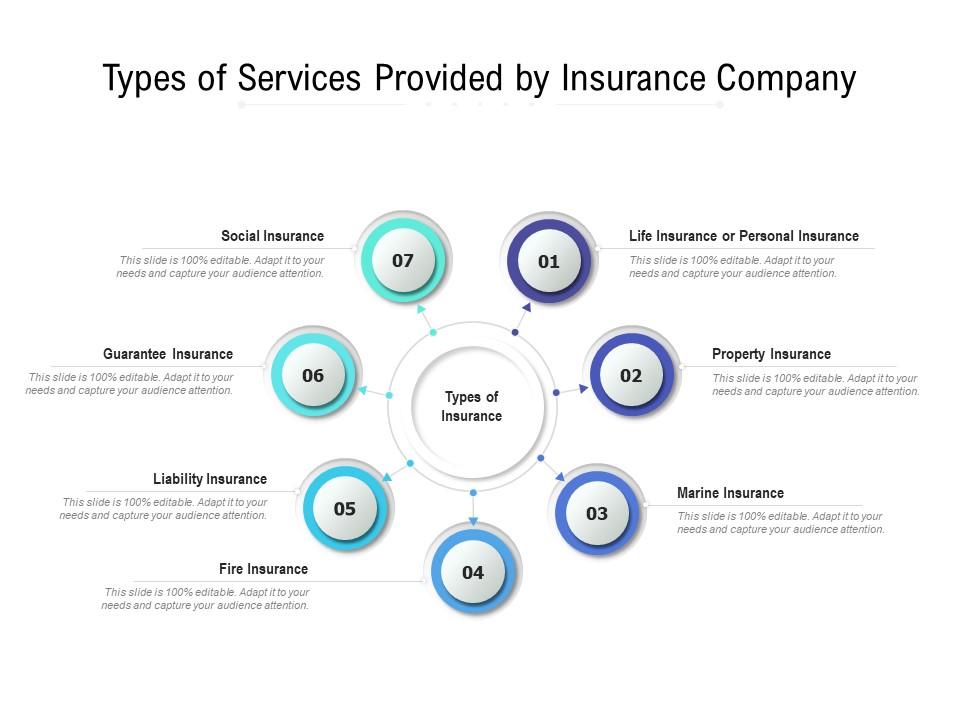
Our PowerPoint Template shows the different types of services provided by a company. It shows seven types of insurance services: life or personal insurance, property insurance, marine insurance, fire insurance, liability insurance, guarantee insurance, and social insurance. Each service is highlighted differently so your audience can easily differentiate between two or more. It is a non-complex product that can be used by all insurance company professionals.
Conclusion
SlideTeam's PPT Template solves a vital challenge in the insurance industry. It helps companies to present their services transparently and professionally to their stakeholders. The design ensures ease of use and adaptability.
Use SlideTeam’s PowerPoint Template to show a list of services the insurance company provides.
Types of services provided by insurance company with all 2 slides:
Generate enormous faith with our Types Of Services Provided By Insurance Company. Your credentials will build great belief.


FAQs for Types of services provided
So term life is like renting - cheap monthly payments but no cash value at all. Great if you just need coverage while your kids are young. Whole life costs way more upfront but it's permanent and builds cash you can actually borrow against later. Universal life gives you the most options - you can tweak your premiums and coverage as life happens. Honestly, most people overthink this stuff. If you're under 35 and just want protection for your family, start with term. You can always add permanent coverage later when you're making more money.
Okay so first figure out what you're actually trying to protect - like your income, any kids, debts, house stuff. Life insurance is usually 10-12x your salary if you've got dependents or a mortgage. Health insurance really depends on how much you use doctors - I mean, some people go constantly, others avoid it like the plague. Oh and disability insurance! Everyone forgets that one but honestly it might be more important than life insurance. You're way more likely to get hurt than die young. Just review everything once a year or whenever big stuff happens - marriage, kids, buying a place.
Yeah, so your credit score definitely affects your insurance rates - it's kinda weird but insurers have tons of data showing people with lower scores file more claims. Go figure, right? When your score drops, expect your premiums to go up at renewal. But here's the flip side - if you've been working on your credit, you could literally save hundreds each year. I'd pull your credit report every so often to see where you stand. And honestly? Shop around if your score's gotten better since you last got quotes. Most people never bother but it's worth the hassle.
Look, the usual suspects are pre-existing conditions, stuff you break on purpose, war/terrorism, and floods or earthquakes. Floods especially - I swear nobody expects that one. Wear and tear won't be covered either, obviously. Criminal activity while drunk? Nope. Using personal stuff for business gets people too, which is kinda annoying honestly. Oh, and anything damage-related when you're wasted. Seriously though, dig through those exclusions before you sign anything. Yeah it's boring as hell, but beats getting screwed over later when you actually need the coverage.
So basically you file the claim, they give you an adjuster, investigate everything, then either pay up or deny it. Timeline's all over the place though - some insurers move crazy fast, others drag their feet forever. You'll get your claim number in a day or two. Simple stuff usually wraps up within a couple weeks, but complicated claims? Those can take months, which honestly is super frustrating. Document everything - pics, receipts, every email and call. Oh and definitely bug them if they go radio silent too long. They sometimes "forget" about claims sitting on someone's desk.
So insurance companies are using tech to actually figure out how risky you are instead of just guessing. Like with car insurance, they'll track how you drive through an app - brake hard all the time? You'll pay more. Drive like a grandma? Cheaper rates. AI handles a lot of claims now too, plus they use drones to check roof damage and stuff. Honestly, it's pretty smart for catching fraud. The cool part is you might actually save money if you're not a terrible driver, but obviously they're collecting tons of data on you. Just saying.
Dude, you're way more exposed than you realize. General liability saves your ass when someone slips in your store or your product breaks something - lawsuits are scary fast. Business interruption is clutch too. Fire or flood shuts you down? It covers lost income while you're rebuilding. Most basic policies skimp on this stuff though, which is honestly dumb. Your agent can walk you through what risks you actually face. Getting quotes beats getting sued without coverage - learned that one the hard way from a friend's bakery disaster.
COVID totally changed health insurance - telehealth is everywhere now, which honestly saves so much time. Mental health coverage got a huge boost too. Preventive care is way more comprehensive than before. There's this whole trend with wellness programs that track your fitness data and might lower your premiums (kinda creepy but whatever). Value-based care is big now - insurers pay doctors based on how well patients actually do, not just how many procedures they bill. If you're looking at policies, definitely focus on the telehealth and mental health stuff first. Those are the changes you'll actually notice day-to-day.
So reinsurance is basically insurance companies buying insurance for themselves. Wild concept, right? Like if your insurer covers tons of Florida homes and a hurricane destroys half the state, they'd be screwed without backup coverage. That's where reinsurance kicks in - it spreads the risk around so one disaster doesn't bankrupt them. Smart system honestly. Companies can write more policies without betting everything on avoiding catastrophes. Oh and if you're ever checking out an insurer's finances, definitely look at their reinsurance setup. Shows you how serious they are about managing risk.
Honestly, there's tons you can do without cutting coverage. First, call your current company and ask what discounts you're missing - most people leave money on the table here. Bundle everything with one insurer if possible. Raising your deductibles saves a lot if you can swing the higher upfront cost. I hate doing it, but shopping around once a year actually makes a huge difference since rates fluctuate like crazy. Safe driver? Look into those tracking programs. Also ask about discounts for security systems, good credit, or even professional memberships. It's tedious but worth it.
Look, it's basically about being fair while still doing your job properly. Use stuff like driving records and health info - that's legit. Just don't discriminate against protected groups, obviously. Be upfront about how you make decisions too. Your data needs to be solid and unbiased, which honestly sounds easier than it actually is sometimes. Having clear guidelines you can defend later is huge. Oh, and train people regularly to catch bias creeping in. It's definitely a balancing act between assessing risk and not screwing people over unfairly.
Get quotes from like 3-4 companies first—pricing is all over the place. Then do the boring stuff: compare what's actually covered, deductibles, max out-of-pocket costs. Make sure your current doctors are in their network (I switched plans once and my dermatologist wasn't covered, total nightmare). Don't just look at monthly costs either. Cheaper premiums usually mean you'll pay more when you actually need care. Check real reviews on J.D. Power or your state's insurance site, not just the star ratings. Honestly, block out a whole weekend for this. Rushing it always backfires.
Dude, insurance customer service is everything. People call you when they're freaking out - car crashes, house floods, whatever. Be actually helpful and they'll stay forever. Suck at it? Gone. Here's the thing though - most insurance is basically the same boring stuff. Service is literally what sets you apart. Quick responses matter. Clear explanations without all that policy jargon BS. Actually fix problems instead of bouncing people around departments for hours. Train your people to care, not just read scripts. I swear, half these companies act like empathy costs extra. It doesn't.
Yeah, bundling usually saves you like 10-25% which is pretty solid. Plus dealing with one company instead of three is honestly a game changer - one bill, one phone number when stuff goes wrong. Auto and home is the classic combo but you can throw in renters or life insurance too. The discounts are nice but I think the real win is just having less paperwork to deal with. Oh and they tend to treat you better as a customer since you're worth more to them. Still worth getting separate quotes though - sometimes you'll find a crazy good deal elsewhere that beats the bundle discount.
So basically regulators are making insurance companies be way more upfront about their pricing and beef up their cybersecurity stuff. Claims are getting processed faster now, which is nice. Policy language is actually readable too - finally! Downside is compliance costs are higher, so yeah, your premiums might go up a bit. But honestly? I think it's worth it for better coverage options. Just double-check when your policy renews because some companies are tweaking their plans to meet the new rules. My cousin works in insurance and says it's been pretty chaotic behind the scenes.
No Reviews