


Conflict resolution at workplace powerpoint presentation slides




Try Before you Buy Download Free Sample Product
 Impress Your
 Audience
 100%
100% Editable
 Save Hours
 of Time


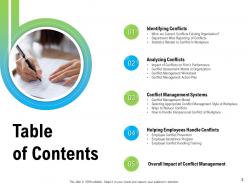
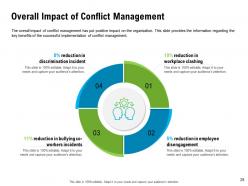
Avoid employee dissatisfaction and expensive turnover with our Conflict Resolution At Workplace Powerpoint Presentation Slides. Help your employees to become capable enough for handling any difference of opinion at the workplace by providing them assistance programs and training using our dispute management PPT templates. Identify the conflicts already existing in the workplace and analyze its impact with the help of the conflict assessment matrix, conflict management worksheet, and conflict management action plan using the dispute resolution PPT slideshow. With this dispute resolution PowerPoint Slides develop a personal conflict management model for your business including various regulation styles like competition, collaboration, avoidance, accommodation, and compromise based on assertiveness and cooperativeness. Elaborate with our dispute handling PPT design about interpersonal conflict at the workplace and the methods like active listening and facilitating compromise to resolve them. The dispute resolving PowerPoint Slides provide information regarding the key benefits of the successful implementation of conflict management like reduction in discrimination incidents, workplace clashing, bullying co-workers incident, and employee disengagement.
People who downloaded this PowerPoint presentation also viewed the following :
Content of this Powerpoint Presentation
A petty issue that blows out of proportion at a workplace could cost you $359 billion in work hours! This wastage could have been avoided if the employees had received the basic training for conflict resolution in the workplace to resolve grievances.
Organizations are prone to a plethora of conflicts. While some are resolved due to the bliss of daily communication, others require intervention from the authorities to analyze viewpoints and make decisions. The central idea of these conflict resolutions is to shun violence and other forms of unprofessionalism in the workplace. This tactic lies at the core of conflict resolution manuals that every organization should invest in.
A conflict resolution manual helps educate employees about the correct etiquette to handle a conflict. It has a code of conduct that the conflicted parties and their immediate superiors must adhere to come out of the situation gracefully and fairly. This section has a content-ready manual template designed to address those sensitive office discords.
Presenting this fully editable conflict resolution at the workplace PowerPoint Presentation designed to assist you in this critical task. Have this expert-designed manual template back your organization's integrity in matters causing friction at work. Train your employees in advance to handle such situations adeptly.
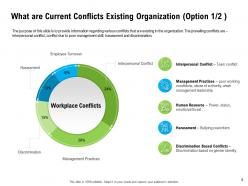
Template 1: Existing Conflicts in Organization

Every conflict resolution begins with an understanding of the existing strife within an organization, and this PPT Template is the way to do it. Categorize conflicts within your workplace under discrimination, management malpractices, harassment, employee turnover, interpersonal conflict as shown in this pie chart presentation template. These categories can vary and their jurisdictions are defined as a side index as shown in this PPT Design.
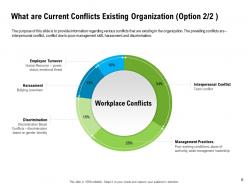
Template 2: Current Conflicts Within Organization
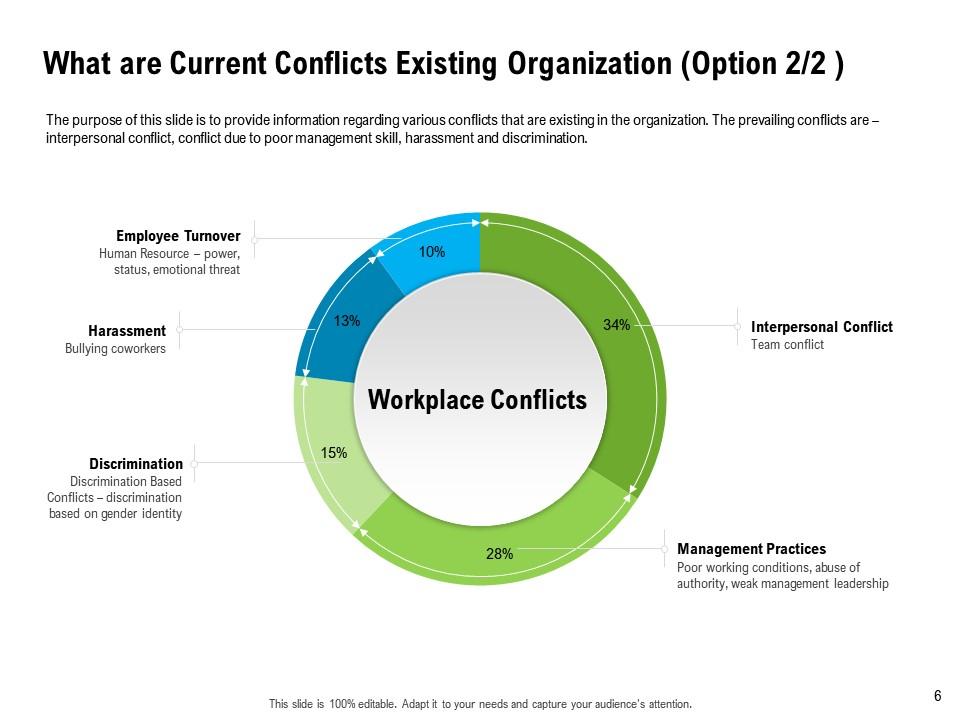
Analyze the existing workplace conflicts with this donut chart presentation template. Use it to represent the composition of the type of conflicts raised within the organization. These may include interpersonal conflicts, employee turnover, harassment, discrimination, and problems with the managerial process amongst others. Download Now!
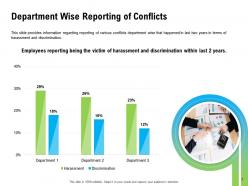
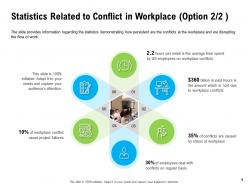
Template 3: Impact of Conflicts on Firm’s Performance
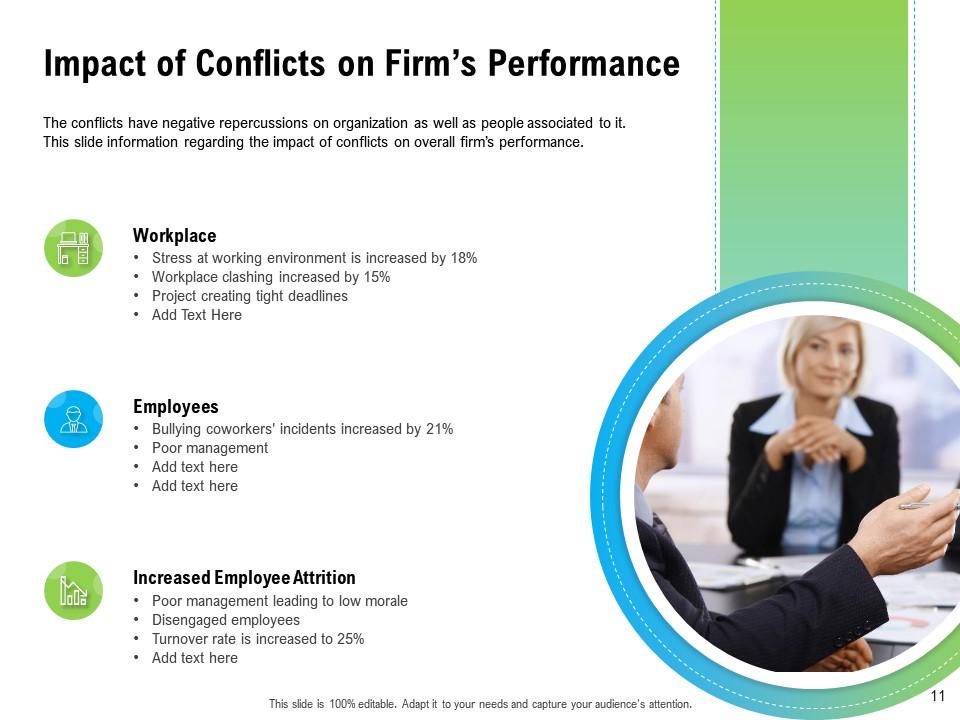
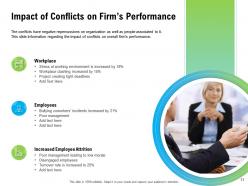
Share an impact analysis of how conflicts reflect on your firm’s performance with this fact-sheet single-slide. Categorize the impact under categories like workplace, employees, and employee attrition. Showcase numbers, percentages, and rates of damage that unsolved conflicts render and could impact your organizational working with this content-ready PPT Design
Template 4: Conflict Assessment Matrix in Organization
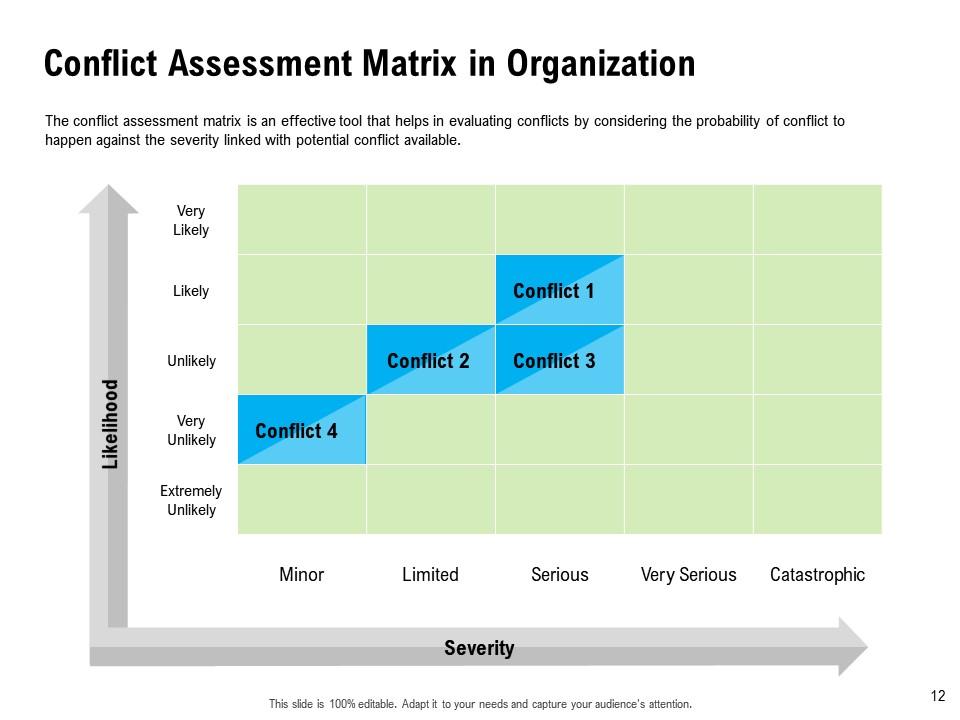
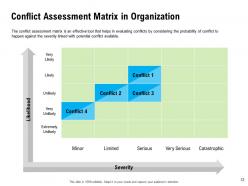
With this conflict resolution matrix template, you can organize your conflicts based on their likelihood and severity. This PPT Diagram will give a picture of the level of conflicts within your organization and thus help teams address and work on them accordingly.
Template 5: Conflict Management Worksheet
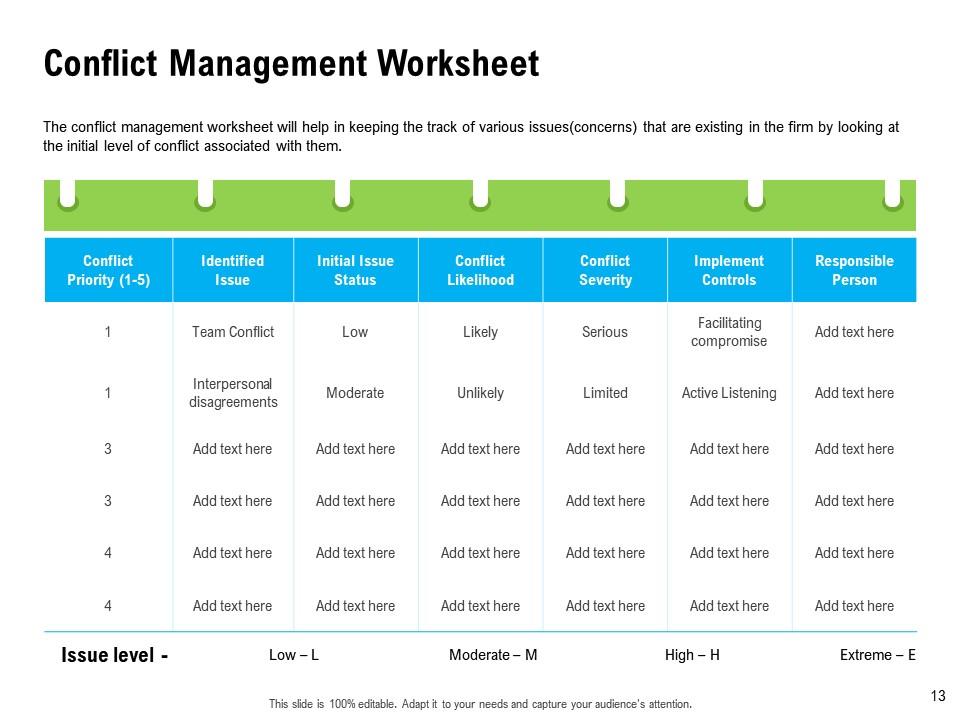
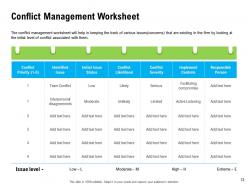
Maintain a record of conflicts alongside their status, conflict likelihood, and severity. With this PPT Table. You can add the remedial implement control and responsible person in charge while identifying each conflict with their priority on the matrix.
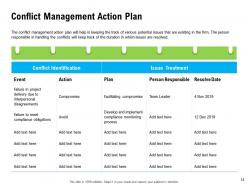
Template 6: Conflict Management Action Plan
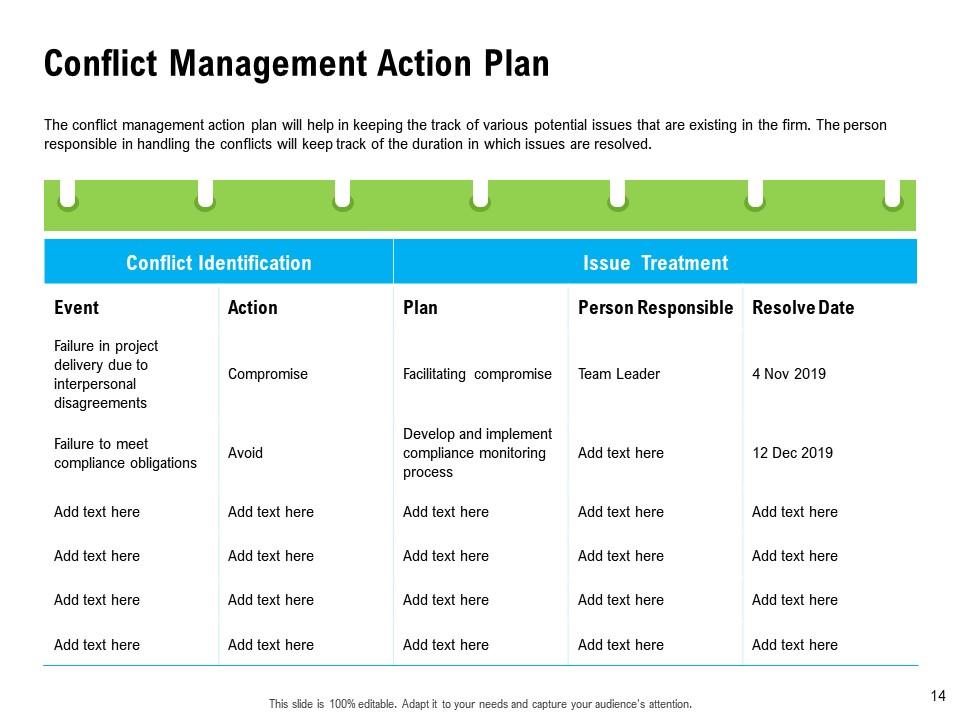
Fill this content-ready sheet to record conflict events and plan the necessary actions. Mention the person responsible and date of resolution of those conflicts. Update these sheets as discords are addressed and resolved to keep check on the ones still active.
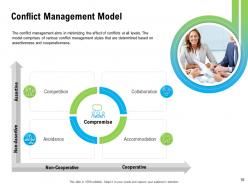
Template 7: Conflict Management Model

With this PPT Graph, you can distinguish the conflicts as assertive and unassertive, and cooperative, and non-cooperation to identify a resolution method. The methods of resolution can be collaboration, accommodation, avoidance, or making a competitive offer. Using this PPT Matrix, your team will know better on how to advance onto the next stage of conflict resolution.
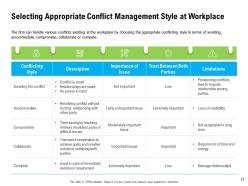
Template 8: Appropriate Conflict Management Style Selection
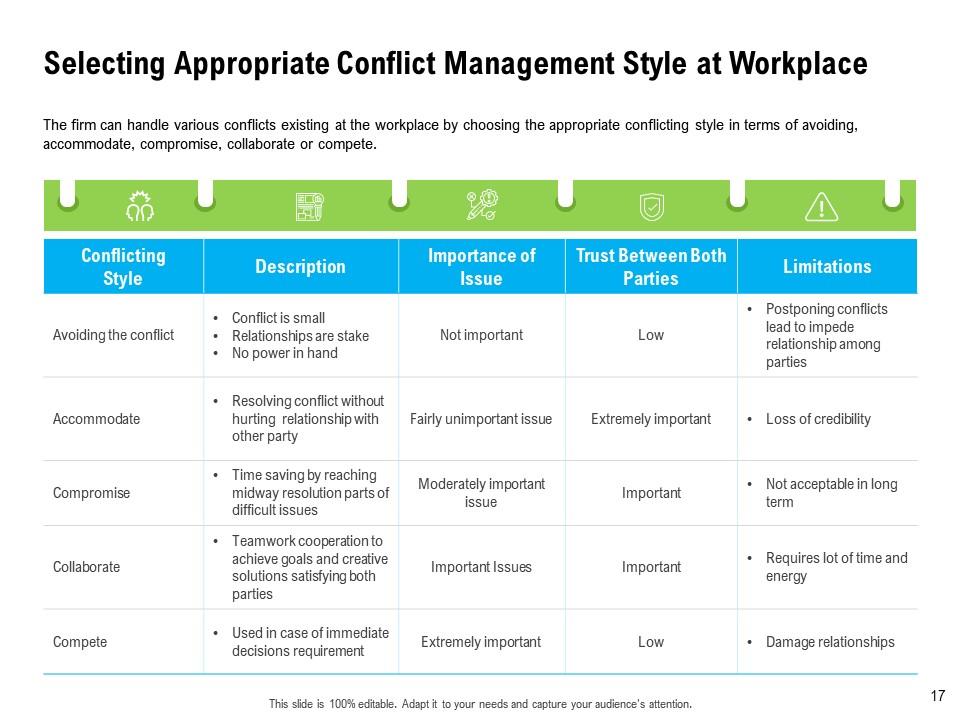
Next to the graphical understanding of the modes of addressing conflicts, this PPT Layout will help you expand on those techniques of avoidance, accommodation, compromise, collaboration, and competition. Corresponding to each mode, share short descriptions about the nature of the conflicts, and their priority status. You can also highlight the trust level between the parties and all limitations to be considered in this process.
Template 9: Employee Conflict Prevention

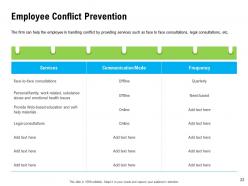
With so much hassle about conflict resolution, wouldn't it just be better if you invested in conflict prevention. Specify the services involved in conflict prevention and against each, mention the communication mode and frequency of these preventive actions. Get access to this fully-editable presentation design now.
Template 10: Employee Assistance Program
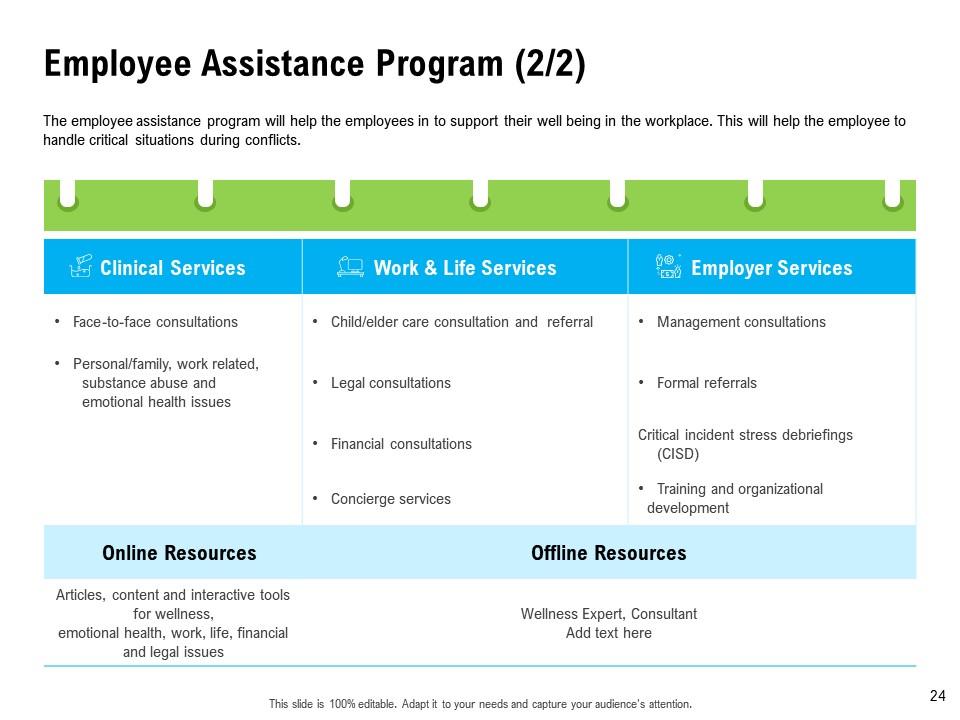
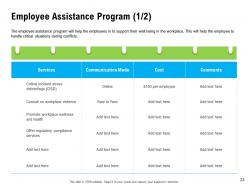
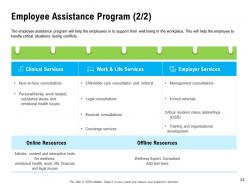
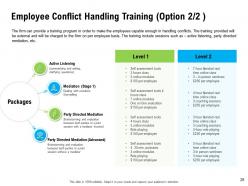
Define all the employee assistance programs offered in response to avoiding, preventing, and resolving conflicts with this PPT Preset. Specify the clinical, work & life, and employer services offered under this program. You can also highlight the online and offline resources that employees can use to have smooth and dignified years of service within the organization.
.Avoid Conflicts Wreaking Havoc
Create a comprehensive resource for tools, guidance, and action plans for respective management to handle conflicts and prevent these from becoming crises. With our Crisis Resolution and Workforce PowerPoint Template, you can even plan a step ahead and avoid a conflict altogether. Train your employees to become better communicators with our ready-to-use PowerPoint Package.
PS: Lay down the correct process of conflict resolution with this dedicated PPT Presentation.
Conflict resolution at workplace powerpoint presentation slides with all 39 slides:
Use our Conflict Resolution At Workplace Powerpoint Presentation Slides to effectively help you save your valuable time. They are readymade to fit into any presentation structure.

FAQs for Conflict resolution at workplace
Ugh, workplace drama is the worst. Most conflicts come down to fighting over resources - budgets, deadlines, who gets hired. Classic stuff. Role confusion is huge too when nobody knows who's actually responsible for what. Communication breakdowns make it all so much messier. People start assuming things or feel excluded from decisions. Honestly, different personalities and work styles just pile on top of everything else. My take? Be super clear about roles from day one. Over-communicate everything - I know it feels excessive but trust me on this one.
Honestly, active listening is like magic for fights. People just want to feel heard, you know? When you repeat back what they said or ask follow-up questions, they stop being so defensive. I've seen someone go from yelling to actually problem-solving in like two minutes - it's wild. Plus you figure out what's really bugging them, which is usually different than what you thought. Oh, and here's the thing - when you listen well, they start doing it back to you. Next time, try summarizing their main points before you jump in with your side.
Dude, your body language can totally make or break conflict resolution. You might say "I get it" while crossing your arms and rolling your eyes - yeah, that's not gonna work. Eye contact helps (but don't be creepy about it). Open posture shows you actually want to solve things instead of just being right. Your tone matters way more than you'd think too. I learned this the hard way in my last relationship, honestly. Next time you're arguing with someone, check what your body's doing. It might be saying the opposite of your words.
Try the SBI thing - Situation, Behavior, Impact. Basically, describe what happened first. Then talk about what they actually did (not what you think they meant to do, which honestly we're all terrible at guessing anyway). After that, explain how it affected you or the team. The whole point is sticking to facts instead of getting all emotional about it. Don't say "you always do this" or whatever - just focus on that one situation. It's way easier to have a real conversation when you're not making people defensive right off the bat.
Honestly, catch stuff early before it gets messy. People need to feel comfortable speaking up - maybe do regular check-ins or just keep your door open. Listen to them, like actually listen. I swear half the drama I've seen could've been avoided with one quick conversation, but everyone just... avoids it? Super annoying. Set clear expectations from day one about who does what and how you'll communicate. Oh, and next time you feel that weird tension starting - don't wait around. Just grab coffee with them or whatever and talk it out.
Honestly, team dynamics make or break conflict resolution. When there's trust and psychological safety, people bring up problems before they blow up into huge drama. But if your team has toxic stuff going on - blame games, little cliques, whatever - everyone gets defensive and won't be real during resolution talks. Power dynamics are tricky too. Junior people won't call out senior folks even when they're causing issues. I've seen this mess up so many attempts at fixing things. You really need to work on the team's foundation first, or you're just slapping temporary fixes on bigger problems.
Honestly, it's mostly about ego and your brain going into fight mode. When you get defensive, you literally stop hearing what they're saying - you're just waiting for your turn to prove you're right. Pride kicks in hard too. Then there's confirmation bias where you only pick up on stuff that backs up what you already think about the person. I deal with this constantly in team drama at work, and it's exhausting. Best thing? Catch yourself doing it and just... pause. Cool off first, then actually try to solve the problem together.
Oh man, this is so true! Where you grew up totally changes how you handle conflict. Like, some people just put everything on the table right away, while others will dance around issues to keep the peace. I've noticed Americans tend to be pretty direct - sometimes brutally so lol. But then you have cultures where saving face matters way more than "winning" an argument. Hierarchy plays into it too, plus whether you're thinking about yourself or the whole group. Honestly, I just ask people upfront how they like to communicate. Saves so much drama later.
Listen, I've learned that really hearing people out makes a huge difference. Don't just focus on what they're demanding - dig into why they want it. Like that corner office thing? Maybe they just need somewhere quiet to actually think. Ask stuff like "what would make this work for both of us?" instead of getting stuck dividing everything up. Oh, and use "I" statements so you're not putting them on the defensive right away. Honestly, people surprise you when they start brainstorming together instead of just arguing positions. Look for shared ground and get creative with solutions.
Look, you've gotta check your own biases first - it's honestly the hardest part. Don't pick sides, even in your head (trust me, super tempting when someone's being ridiculous). Ask both people open questions equally and just reflect back what they're saying without adding your spin. Your body language matters too - don't lean toward one person or nod more at certain responses. Oh and avoid jumping in with your own "perfect" solution, even though you'll probably see one. Their job is finding the answer, yours is just keeping things moving. Neutral language is key throughout the whole thing.
Yeah, emotional intelligence is a game changer for handling conflict. Like, when people are arguing, there's usually deeper stuff going on - maybe they feel ignored or scared about something. If you can pick up on that, you're not just fighting about the surface level drama. Staying calm is super hard but it really helps you actually think instead of just shooting back. Oh and honestly? Sometimes just acknowledging someone's feelings - even when they're totally wrong - can defuse things way faster than you'd expect. Active listening sounds boring but it works.
Honestly, stories are like magic for this stuff. When people are arguing, they get super defensive, right? But if you tell them about a similar situation - could be real or made up - suddenly they're listening instead of planning their comeback. It's weird how well it works. Stories make things click in a way that just talking at people doesn't. Like, instead of saying "you need to compromise," you paint a picture of what that actually looks like. Way less threatening too. Next time you're mediating something, try "So I knew this guy who..." and watch how the whole vibe shifts. People drop their guard when they think they're just hearing a story.
Oh totally - power stuff ruins conflict resolution all the time. Like, if someone's your boss or whatever, you're not gonna be real with them about issues. You'll just nod and agree to make it stop being awkward. I've seen this happen so much at work, it's honestly frustrating. The person with less power basically can't speak up without risking something. You gotta level the field first - maybe get someone neutral to help, or talk to the "weaker" person privately beforehand. Give everyone actual equal time to talk. Otherwise you're just wasting everyone's time pretending it's fair.
Honestly, role-playing is like having a practice round before the real thing. You get to try different approaches and see what works without screwing up an actual relationship. It's wild how much you learn about staying calm when someone's being difficult - kinda like those flight simulators pilots use, but way less dramatic obviously. I'd definitely record yourself if you can stand watching it back (I know, I know, nobody likes hearing their own voice). But seriously, you'll catch stuff about your tone that you never noticed. The best part? You can totally bomb and it doesn't matter.
Look, just don't be a complete asshole about it, you know? Be upfront about what you want instead of playing weird mind games. Everyone should get to actually speak up - don't bulldoze people just because you can. Honestly, some of the slickest negotiators I've seen are also the sketchiest. Think about how your deal affects people who aren't even there too. Oh, and here's my go-to test: would you be cool if someone pulled the same moves on you? If the answer's no, then don't do it.
-
The Designed Graphic are very professional and classic.
-
Use of icon with content is very relateable, informative and appealing.
-
Professional and unique presentations.
-
Colors used are bright and distinctive.
-
Use of different colors is good. It's simple and attractive.
-
Commendable slides with attractive designs. Extremely pleased with the fact that they are easy to modify. Great work!
-
Great experience, I would definitely use your services further.