


Construction equipment proposal template powerpoint presentation slides




Try Before you Buy Download Free Sample Product
 Impress Your
 Audience
 100%
100% Editable
 Save Hours
 of Time


Showcase your building supplies facility and attract more customers by utilizing our ready-made Construction Equipment Proposal Template PowerPoint Presentation Slides. You can make use of this construction equipment bid PPT theme to provide a snapshot of your work experience and ethics. You can display the issues you have resolved to highlight the problem-solving ability of your enterprise. The offerings you provide to cater to all the needs of your customers can be illustrated with this visually attractive proposal template. Comprising of 31 fully customizable slides, this building construction proposal PPT layout can be an invaluable tool for your business. You can provide a detailed fee structure of each phase so that your consumer can get an estimate of investment. Highlight the various awards and certifications your firm has received to bring attention to your expertly trained technicians. Elucidate your organization’s profile, background, mission, and vision to build the trust of your potential consumers. Emphasize the commitments you promise your clients such as client satisfaction, dependable delivery, onsite service, customer service hotline, etc. by incorporating our building equipment contract PowerPoint layout. Display the client testimonials and your valued customers to prove your worth. Introduce your talented team with their skills in the construction industry. You can state the terms and conditions which your client should abide by to avoid any legal confusion in the future. Download this construction equipment proposal PPT layout and present your expertise in the best way possible.
People who downloaded this PowerPoint presentation also viewed the following :
Content of this Powerpoint Presentation
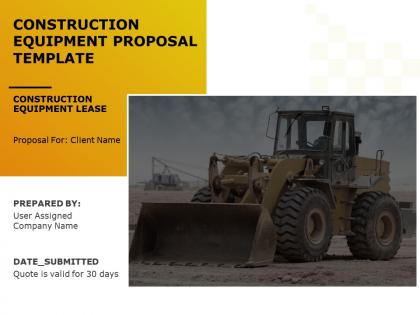
Slide 1: This slide introduces the Construction Equipment Proposal Template. Add the company name to begin.
Slide 2: This slide portrays the Cover Letter.
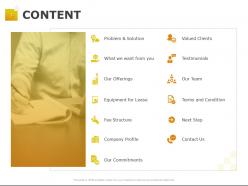
Slide 3: This slide presents the content such as- Company Profile, Our Commitments, Fee Structure, Equipment for Lease, Problem & Solution, Our Offerings, What we want from you, Contact Us, Next Step, Terms and Condition, Valued Clients, Our Team, Testimonials.
Slide 4: This slide shows information about Problem & Solution and What we want from you.
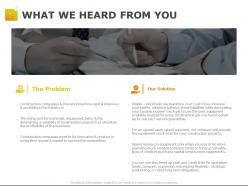
Slide 5: This slide shows What We Heard From You.
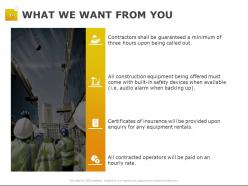
Slide 6: This slide shows What We Want From You.
Slide 7: This slide depicts- Our Offerings, Fee Structure, Equipment For Lease.
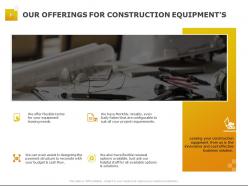
Slide 8: This slide depicts Our Offerings for Construction Equipments
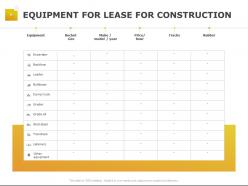
Slide 9: This slide showcases the Equipment for Lease for Construction
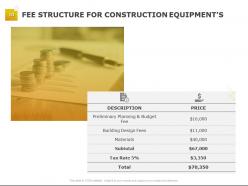
Slide 10: This slide showcases Fee Structure for Construction Equipments
Slide 11: This slide showcases the Company Profile, and Our Commitments.
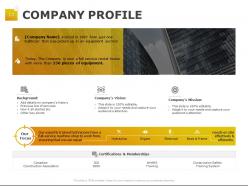
Slide 12: This slide illustrates the Company Profile- Company’s Vision, Company’s Mission, and Background.
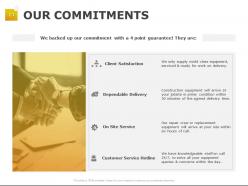
Slide 13: This slide illustrates Our Commitments.
Slide 14: This slide depicts information about valued clients and their Testimonials.
Slide 15: This slide depicts Valued Clients.
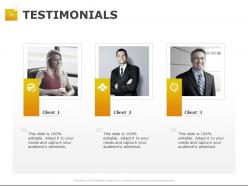
Slide 16: This slide represents Testimonials.
Slide 17: This slide comprises information about Our Team and Terms and Condition.
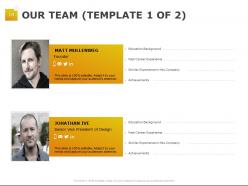
Slide 18: This slide reveals the names and designation of Our Team members.
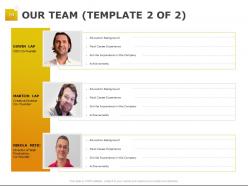
Slide 19: This slide again reveals the names and designation of Our Team members.
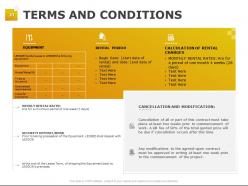
Slide 20: This slide reveals the Terns and Conditions pertaining to Equipment, Rental Period Calculation of Rental Charges, Cancellation and Modification.
Slide 21: This slide shows the Next Step and Contact Us.
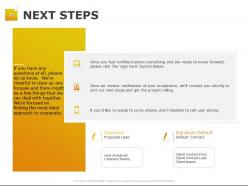
Slide 22: This slide shows the Next Step.
Slide 23: This is a contact us slide consisting of Office Address, Name, and contact details.
Slide 24: This slide is titled as Additional Slides for moving forward.
Slide 25: This slide unveils Our Mission.
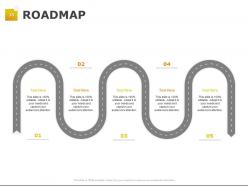
Slide 26: This slide reveals the Roadmap.
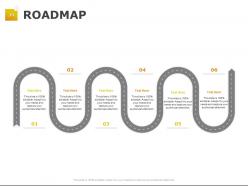
Slide 27: This slide also reveals the Roadmap.
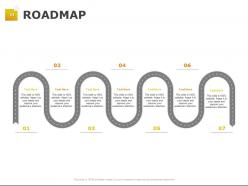
Slide 28: This slide also reveals the Roadmap.
Slide 29: This slide is a continuation of the Roadmap.
Slide 30: This slide again reveals the Roadmap.
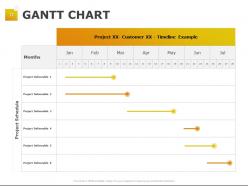
Slide 31: This slide contains a Gantt Chart showing the Project Schedule.
Construction equipment proposal template powerpoint presentation slides with all 31 slides:
Use our Construction Equipment Proposal Template Powerpoint Presentation Slides to effectively help you save your valuable time. They are readymade to fit into any presentation structure.
FAQs for Construction equipment proposal template
So for your template, definitely include all the project details and equipment specs upfront. Then add your rental costs, delivery timeline, and when you're picking stuff back up. Company credentials and insurance info should go in there too - clients love seeing that stuff. Oh, and don't skip the terms & conditions section because equipment disputes are honestly the worst. If operators are needed, spell out those requirements clearly. Same with who handles maintenance. The whole point is avoiding confusion about who's responsible for what. Makes everything way smoother when everyone knows the plan from day one.
So here's what works for me - split everything into clean categories like equipment, labor, transport, permits, whatever. Don't just hit them with one giant number, that freaks people out. I throw in a comparison table when there's different equipment options because honestly, clients eat that stuff up. Be real about variables too - fuel prices, overtime, stuff that might change. Line items are your friend here, way better than some vague "trust me" estimate. Oh and always pad it a bit for contingencies. Explain why though, otherwise they think you're just being greedy.
Your timeline is literally what makes or breaks an equipment proposal. Clients want to see exact delivery dates, when you'll pick stuff up, plus any maintenance breaks. Match their construction phases or you're done - I've watched solid proposals get rejected just for sloppy scheduling. Short sentences work here. Don't be vague about availability either. Include mobilization dates that sync with their milestones. Honestly, most contractors underestimate how much clients scrutinize this part. Show them you actually get their project flow and they'll trust you can handle the logistics without screwing up their schedule.
Oh totally, visuals are a game changer for equipment proposals. I always throw in photos of the actual machines, site diagrams, timelines - that stuff. Charts for pricing too because nobody wants to dig through paragraphs of numbers. Trust me, people's brains just shut off when they see dense text blocks. Equipment photos show you're legit and not just copy-pasting specs from somewhere. Site diagrams prove you actually get their project layout. Makes everything look way more professional honestly. Even just one visual per section will make your proposals so much cleaner. Worth the extra effort for sure.
Look, get crazy detailed with your equipment specs. I'm talking exact model numbers - like "Cat 320 with 159 HP and 44,090 lb operating weight" instead of just "excavator." Trust me on this one. Include everything: engine horsepower, operating weights, lifting capacity, digging depth, whatever matters for the job. I've watched proposals get trashed because they were too generic. Special attachments? List them. Safety certs? Add those too. The more technical stuff you throw in upfront, the fewer annoying follow-up questions you'll deal with later. Makes the whole thing move faster.
Know your audience, seriously. Clients want to hear about saving money and hitting deadlines - basically how your equipment makes their life easier. Stakeholders though? They're all about ROI and fancy charts they can show off in meetings. Technical details matter too - clients usually just need the basics while internal people want the nitty-gritty performance numbers. Oh, and always lead with whatever they actually care about first. Then back it up with the relevant stuff. It's honestly pretty straightforward once you get the hang of each group's priorities.
Dude, get your liability stuff sorted first - who pays when equipment breaks or someone gets hurt? Warranty terms are huge too. Your proposal needs all the boring compliance things like certifications and safety standards. Local permits can be a pain but you gotta include them. Honestly, delivery delays happen more than you'd think, so cover that scenario. Don't skip the indemnification clauses either. Oh, and limit your liability where you can - your lawyer will know the right language for your state. Have them look over your template before you send it to anyone.
Throw in some solid numbers - fuel consumption rates, CO2 comparisons, that kind of thing. Clients are obsessed with sustainability metrics right now, honestly it's become a huge selling point. Talk about your fuel-efficient equipment and any energy-saving tech you're using. Don't forget waste management plans either. I'd actually lead with the cost savings angle since that hits their bottom line, then mention the environmental stuff. Oh, and definitely use a separate sustainability section at the end with actual goals and deadlines. Makes it look way more professional than just sprinkling green buzzwords throughout.
Honestly, digital systems like Fleetio or EquipmentShare work great for this stuff. They'll track hours, maintenance, the whole nine yards in real-time. Telematics are my go-to though - you get GPS plus all the performance data without extra work. QR codes for daily inspections are pretty slick too if you want something simpler. Some clients actually prefer basic maintenance logs, believe it or not. Just match whatever tracking system to your project size and make sure you spell out clear reporting schedules. Oh, and don't overthink it - clients mostly just want to see you've thought this through.
Dude, you definitely need both - learned that one the hard way. Had a client straight up reject our proposal because we skipped the warranty stuff. Decision-makers want to know who they're working with and what happens when things break (and they will break). Include vendor contacts, some company background, warranty coverage and how long it lasts. Oh, and mention what's NOT covered too - nobody likes surprises. Extended warranty options are clutch, honestly that's what sealed the deal on my last project. It shows you're not just winging it and actually thought this through.
Honestly, most construction proposals are boring as hell, so you're already ahead if you actually try. Don't do generic stuff - instead, call out what makes your equipment different. Maybe it's faster delivery or better maintenance programs, whatever competitors can't touch. Throw in real project timelines and pricing that's actually clear. Case studies help too, especially from similar jobs. Your local support is probably a huge advantage - play that up. Oh, and flexible rental terms or equipment trials can seal the deal. The whole point is showing you get their specific headaches, not just pushing gear.
Honestly, digital tools are a game changer for proposals. I'd start with something cloud-based so your team can actually work together instead of that nightmare email chain thing. PlanGrid and Procore are solid - they pull equipment specs and pricing straight into your templates. No more calculator mistakes that make you look like an amateur (been there). The real-time collaboration thing is huge. Sage and BuilderTREND will track your success rates too, which is pretty cool data to have. Pick one tool first though - don't go crazy trying to implement everything at once.
Dude, specifics are everything - actual excavator models, exact delivery dates, real operating conditions. None of that "equipment arriving soon" garbage. People always forget the hidden costs too like maintenance and fuel, which honestly drives me nuts. Don't lowball your bid just to win it because you'll hate yourself when everything goes over budget. Oh and make sure your insurance is current - sounds boring but whatever. Total cost of ownership matters way more than most people think. Just be realistic with your numbers and triple-check everything before you hit submit.
Put a "Project Experience" section right after your tech specs. Pick 2-3 projects that actually match what they're looking for - same scale, similar equipment, you know the drill. For each one, hit the challenge, what gear you brought in, and real numbers like "finished 15% early" or "saved them 200K." Photos of your stuff actually working on site? Game changer. Don't just dump a project list though - tie each story back to why it proves you can nail their specific job. Make it read like you're walking them through your wins, not reciting a resume.
Dude, the whole equipment proposal game is changing so fast. IoT sensors and AI maintenance stuff are basically expected now - not optional extras. Your clients want real-time analytics and remote monitoring built in, which means you've gotta think about data integration and cybersecurity from the start. Training costs are way higher too since none of this existed a few years ago. Autonomous features are becoming huge for ROI calculations. Oh, and definitely add a tech section to your proposal templates if you haven't already. Trust me on that one.
-
Attractive design and informative presentation.
-
Unique design & color.
-
Use of different colors is good. It's simple and attractive.
-
Innovative and attractive designs.