


Request Proposal For Equipment Purchase Powerpoint Presentation Slides




Try Before you Buy Download Free Sample Product
 Impress Your
 Audience
 100%
100% Editable
 Save Hours
 of Time


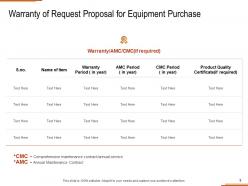
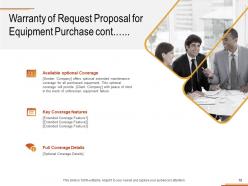
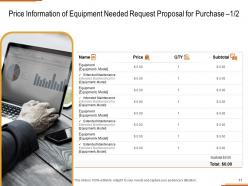
To perform the task efficiently, it is important to have a good quality of equipment. Whether it is a small firm or large organization, there is always a requirement for material or equipment. Upgradation of obsolete equipment is necessary and that can be done if a buyer purchases an item from the best seller or service provider. Choose what suits the best for your company by using our content ready Request Proposal For Equipment Purchase PowerPoint Presentation Slides. You can pitch your proposed services and stand out from the competition with the aid of this outwardly engaging equipment purchase proposal PPT layout. Create a great-looking request proposal presentation template and make it more noticeable in your client’s eye. You can provide a clear description of the client's need for equipment with the help of this eye-catching equipment purchase proposal PowerPoint theme. Take advantage of this well-informative request proposal PowerPoint theme to highlight the warranty period, annual maintenance contract, comprehensive maintenance contract, and product quality certificate of each equipment. You can provide a clear description of the items you offer so that the clients get an idea of how much they have to spend while purchasing. Employ this creatively designed equipment purchase proposal PPT layout and talk about the quality of items you sell to the clients. Be unique and showcase the acknowledgment and recognition of the delivered services you have received from your consistent buyers. Use our topic-specific equipment purchase proposal presentation template to showcase your present designs that proves the engagement of your construction company. Keep your terms & conditions clear in a presentable way so that the clients understand every norm easily. Explain in brief the benefits of your services and make a long-term relationship with your client by downloading our ready-to-use request proposal for equipment purchase PowerPoint presentation template.
People who downloaded this PowerPoint presentation also viewed the following :
Request Proposal For Equipment Purchase Powerpoint Presentation Slides with all 33 slides:
Use our Request Proposal For Equipment Purchase Powerpoint Presentation Slides to effectively help you save your valuable time. They are readymade to fit into any presentation structure.


FAQs for Request Proposal For Equipment Purchase
Start with the business case - what problem does this solve and how much will it save? Get super specific about ALL costs, not just the sticker price. Installation, training, maintenance... that stuff adds up fast and finance hates surprises. Research a few vendors so you look prepared, include your timeline and tech requirements. Figure out who needs to sign off - sometimes it's more people than you think. Honestly, the more numbers you can throw at them, the better. Decision makers eat that stuff up. Oh, and make sure it actually fits the budget obviously.
Honestly, just do a basic cost-benefit analysis first - equipment cost vs how much you'll save or make over time. The payback period is what matters most to executives, trust me on that. Factor in financing if you're not paying cash upfront, plus maintenance and training costs down the road. Here's what I'd also consider: what if you don't buy it? Are competitors getting ahead while you're stuck with outdated stuff? Run different scenarios with high and low usage to see if your numbers still work. If it won't pay for itself in your company's usual timeframe, you better have a damn good strategic reason ready.
Okay so basically you need three things: show them what's broken, prove it's costing money, and give them numbers they can't ignore. Start with all the ways your current equipment is screwing you over - downtime, constant repairs, missed deadlines. Then hit them with the ROI because honestly, that's all they really care about. Like "we spend $10k now, save $15k every year plus boost output by 20%." Also throw in if competitors are leaving you in the dust with better tech. End with exactly what you want and when - don't make them guess what you're asking for.
Skip the fluffy "efficiency gains" talk - executives want hard numbers. Break down your ROI into actual costs: what you're spending upfront, ongoing expenses, plus real benefits like cutting labor costs or boosting output. Always throw in a payback period because honestly, that's what they care about most. Create three scenarios - conservative, realistic, and optimistic so they can see the full picture. Oh, and make sure you're comparing current costs accurately, not some inflated version. The whole thing needs to be backed by data they can actually verify or they'll poke holes in it immediately.
Break it down into sections - equipment cost, shipping, installation, training. Taxes and import duties can really bite you if you're not careful. One-time stuff goes in one column, recurring annual costs in another. Finance loves that separation, trust me. Don't skip warranty details either - show what's included vs what costs extra down the line. Oh, and maintenance contracts! Those are usually ongoing expenses people forget about. The more detail you give them now, the less they'll bug you with random questions later when you're trying to get this thing approved.
Definitely need a risk section in there. Think about everything that could go sideways - equipment breaking down, vendors flaking out, tech getting outdated, delays dragging on forever. Put numbers on the probability and impact if you can. Oh, and include a "do nothing" scenario because honestly? That's usually the worst option. Try to quantify stuff with actual dollar amounts or hours of downtime - makes it way more real. Then come up with solid plans to handle your biggest 3-4 risks. Leadership loves seeing you've actually thought this stuff through instead of just hoping for the best.
Make a comparison matrix but look at total ownership costs, not just the sticker price. Factor in maintenance, training, how long each option will last - the usual stuff. Honestly, vendor support quality is huge too because dealing with terrible customer service when things go sideways is the worst. Score everything on the same scale, then weight what matters most to your company. Oh and make sure you're actually comparing the same features across all options - sounds obvious but people mess this up constantly. Document it all so everyone can follow your logic later.
Don't skip getting input from stakeholders - it'll bite you later. Finance, operations, end-users, and management all see different angles on budget and requirements. I made this mistake once with what I thought was a flawless proposal, only to have it rejected because the daily users hated the equipment I'd chosen. Such a waste of time! Getting their perspectives early helps you spot problems and build a stronger case. Document who's on board with what too. Trust me, it makes the approval process way smoother when you can show broad support.
Look, market research is basically what makes your equipment proposal legit instead of just "hey can we get new stuff?" Finance people love seeing vendor comparisons and actual data - they go crazy for that ROI stuff. You'll want quotes from at least three vendors to show you're not playing favorites. It proves you know current pricing and what features are actually out there. Plus you can point to what other companies in your field are using. Honestly, the whole thing just makes you look like you actually know what you're talking about instead of just wanting shinier equipment because the old stuff is... well, old.
Honestly, the key is tying your equipment request directly to what the company actually wants to achieve. Which goals does this purchase help with? More productivity, cost savings, better quality, whatever. Then throw some real numbers at them if you can. I've seen so many proposals that are just boring spec sheets - nobody cares about that stuff. Your leadership wants to know how this moves their important metrics. Frame the ROI using language they'd recognize from their quarterly meetings. Oh, and lead with business impact first. Save the technical features for later.
Honestly, formatting is half the battle with proposals. Bullet points and numbered lists are clutch for equipment stuff - way easier to scan than giant blocks of text. I'd bold your main headers like "Budget Breakdown" so they pop. Tables work really well if you're comparing different equipment options side by side. Keep paragraphs short and add line breaks between sections. Oh, and stay consistent with fonts throughout (I've seen proposals that look like a ransom note). The whole point is making it dead simple for reviewers to find what they need without hunting around.
Dude, visuals are everything for equipment proposals. Seriously, most executives won't read through paragraphs of numbers anyway - they want to see it at a glance. Bar charts comparing your equipment to competitors work great. So do ROI timelines showing payback periods. I've seen simple before/after diagrams totally sell a proposal when the text alone couldn't. Pick maybe 2-3 really strong visuals that back up your main points. Charts showing productivity gains or cost savings hit so much harder than just writing about them. Makes your financial case way more digestible, you know?
Numbers are everything - include ROI calculations or they'll toss your proposal immediately. Skip the tech specs that make everyone's eyes glaze over. I swear, people write these massive feature lists instead of just explaining what problem they're actually solving. Research alternatives too because someone will 100% ask about cheaper options. Oh, and definitely lead with the business problem first. Keep it focused on impact rather than flashy features - costs and benefits need to be crystal clear. Trust me on this one.
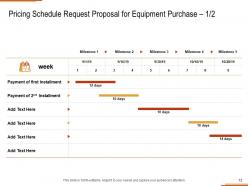
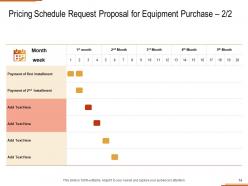
Break it down into clear phases with real deadlines. Vendor selection takes about 4-6 weeks, then you're looking at 2-4 weeks for delivery and setup. Testing and training your team usually needs another week or two. Honestly, always pad your timeline because something will go sideways - it just happens. Hit the major milestones: PO approval, delivery confirmation, go-live date. Loop in IT, facilities, and your end users early. Oh, and make a visual timeline that shows task dependencies. That way when Karen from accounting asks why her delay affects everyone else, you can just point to the chart.
Start with the money stuff - ROI, savings, whatever will make their eyes light up. Those executives have zero patience, so nail your point in under 2 minutes or you're toast. Charts and before/after comparisons work way better than just talking at them. Give them a few options to choose from since they love feeling in control of decisions. Oh, and definitely practice beforehand because they'll grill you on budget and timeline stuff. The key thing? Connect everything back to what actually keeps them up at night business-wise, not how shiny your new equipment is.
-
Graphics are very appealing to eyes.