

Corporate Performance Management Powerpoint Presentation Slides




Try Before you Buy Download Free Sample Product
 Impress Your
 Audience
 100%
100% Editable
 Save Hours
 of Time


Create a stunning presentation by employing Corporate Performance Management PowerPoint Presentation Slides. This operational intelligence PowerPoint template helps you display valuable business insights. This competitive intelligence PPT template deck showcases the key areas such as architectural framework, data design, and data integration design. Take the advantage of industrial AI PPT slideshow to demonstrate sophisticated subjects like information architecture, and dimensional modeling. Our business intelligence PowerPoint presentation is replete with the latest business intelligence statistics, tools, and trends. Illustrate other important information like industries that use BI and key drivers with the help of our artificial intelligence PPT deck. This commercial intelligence presentation helps to showcase how BI assists in developing business. This integrated business planning PowerPoint theme also sheds light on advanced analytics techniques and methods. Utilize our content-ready business intelligence PowerPoint template to convey your BI design and implementation in a compact manner. Download the corporate intelligence PowerPoint slideshow to represent your plan to expand business horizons.
People who downloaded this PowerPoint presentation also viewed the following :
Content of this Powerpoint Presentation
Slide 1: This slide introduces Corporate Performance Management. State your Company name and begin.
Slide 2: This slide displays Content.
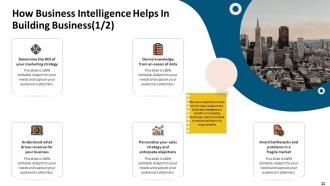
Slide 3: This slide explains How Business Intelligence Helps In Building Business
Slide 4: This slide covers statistics about the BI application usage by the companies for data management. User can enter values according to his requirements
Slide 5: This slide shows that which trend has importance on the scale of 1 to 10 where, 1 being the lowest and 10 being the highest.
Slide 6: This slide covers the number and percentage of the users that are include BI software’s in their suite of business applications.
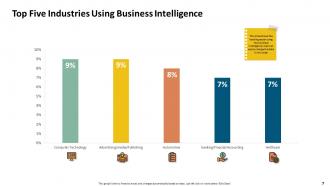
Slide 7: This slide shows the leading sector using the business intelligence. User can easily change the data in this slide
Slide 8: This slide shows Key Drivers.
Slide 9: This slide shows the market size for 10 years & top vendors in Business Intelligence market. It’s a data driven slide which can easily be changed by the customer
Slide 10: This slide covers the evolution of Business Intelligence Industry from one phase to another.
Slide 11: In this slide, We have listed down some of the major areas where Business Intelligence is helpful in increasing revenues. User can choose or add according to his requirements
Slide 12: This slide shows some of the major areas where Business Intelligence is helpful in increasing revenues. User can choose or add according to his requirements
Slide 13: This slide shows Architecture Introduction
Slide 14: This slide displays Architecture Introduction.
Slide 15: This slide depicts a framework with the Technologies and components of an information architecture system. User can alter according to his requirements
Slide 16: This slide covers that how data is governed i.e. how data is collected, and how it is stored, arranged, integrated, and put to use in data systems and in organizations. User can edit according to his requirements
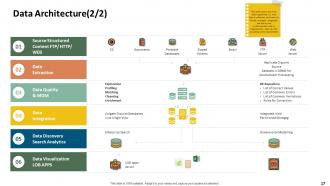
Slide 17: This slide covers that how data is governed i.e. how data is collected, and how it is stored, arranged, integrated, and put to use in data systems and in organizations. User can edit according to his requirements
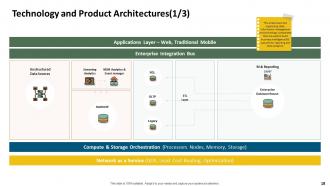
Slide 18: This slide covers the organizing data, information management and technology components that are used to build business intelligence (BI) systems for reporting and data analytics.
Slide 19: This slide shows that how data is taken from the sources to warehouse and then performing BI analytics on the data so that it can be used by customer.
Slide 20: This slide shows that the data is extracted from the source systems with ETL layer and transfer into data bases system and on that stored data several BI analytics tools are performed so that we can get presentable data.
Slide 21: This slide shows Foundational Data Modelling
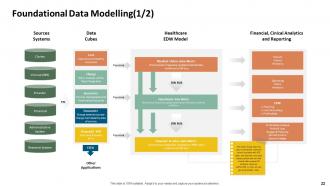
Slide 22: This slide explains Foundational Data Modelling
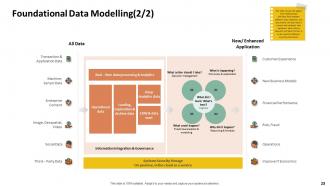
Slide 23: This slide shows the logical inter-relationships and data flow between different data elements and documents the way data is stored and retrieved also represent what data is required and what format is to be used for different business processes.
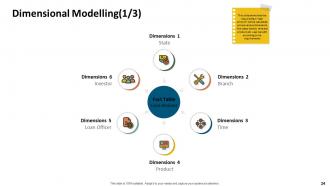
Slide 24: This slide shows that the required fact “loan amount’ can be calculated across various dimensions like state, branch, time and product etc. user can edit according to his requirements
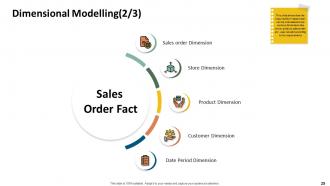
Slide 25: This slide shows that the required fact “sales order’ can be calculated across various dimensions like store, product, sales order etc. user can edit according to his requirements
Slide 26: This slide shows the dimensional modelling of the tables where PK is primary key of the specific table and FK is the foreign key in fact table. User can edit according to his requirements
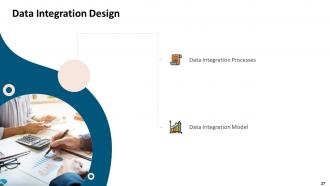
Slide 27: This slide shows Data Integration Design
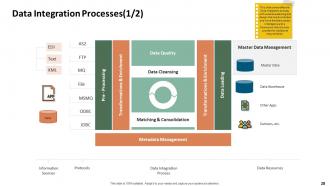
Slide 28: This slide covers effective Data Integration process, with extensive planning and design that results in better and more flexible business intelligence and a framework that is future-proofed for additional requirements.
Slide 29: This slide shows that how various activities are performed on data and the transformed into integrated data. User can edit according to his requirements
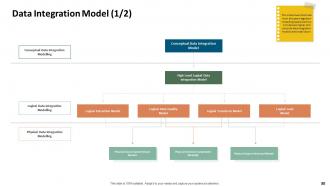
Slide 30: This slide shows Data Integration Model.
Slide 31: This slide shows that data quality & data integration model contain the ability to produce a clean file, reject file, and reject report that would be instantiated in a selected data integration technology.
Slide 32: This slide showcases BI Design & Development
Slide 33: This slide shows BI Applications.
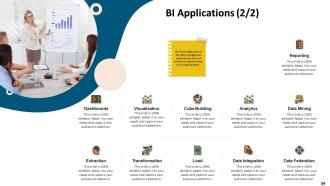
Slide 34: This slide displays BI Applications.
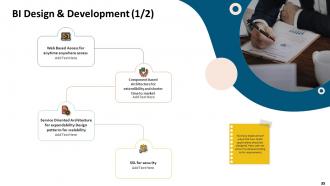
Slide 35: This slide showcases BI Design & Development.
Slide 36: This slide displays BI Design & Development.
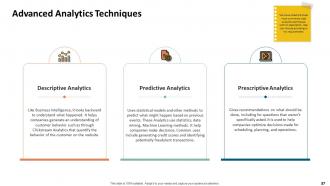
Slide 37: This slide shows Advanced Analytics Techniques.
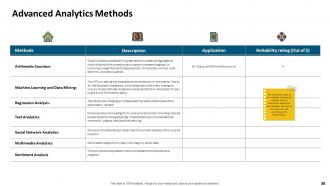
Slide 38: This slide presents Advanced Analytics Methods.
Slide 39: This slide showcases Advanced Analytics Final Output Results.
Slide 40: This slide covers the final outcome result of the advanced analytics. User can edit according to his requirements
Slide 41: This slide showcases Business Intelligence Kpis & Dashboard.
Slide 42: This slide depicts Business Intelligence KPI Metrics.
Slide 43: This slides showcases Business Intelligence KPI Metrics.
Slide 44: This slide shows Business Intelligence KPI Metrics.
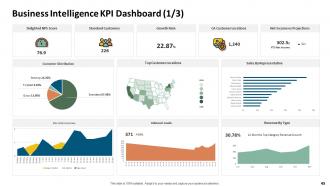
Slide 45: This slide shows Business Intelligence KPI Dashboard.
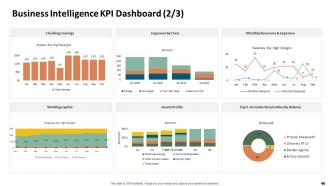
Slide 46: This slide presents Business Intelligence KPI Dashboard.
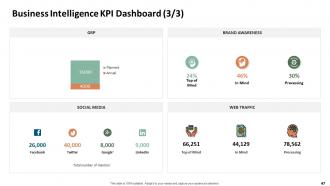
Slide 47: This slide shows Business Intelligence KPI Dashboard
Slide 48: This is Corporate Performance Management Icons Slide.
Slide 49: This slide is titled as Additional Slides for moving forward.
Slide 50: This slide shows Cluster Bar chart.
Slide 51: This slide displays Stacked Column.
Slide 52: This slide displays Mission, Vision and Goals.
Slide 53: This slide shows Magnifying Glass.
Slide 54: This slide displays Venn.
Slide 55: This slide shows Roadmap process.
Slide 56: This slide shows Circular process.
Slide 57: This slide displays Our Goal
Slide 58: This slide shows Idea Generation process.
Slide 59: This slide shows Post It Notes
Slide 60: This slide presents Puzzle process.
Slide 61: This is Thank You slide with Contact details.
Corporate Performance Management Powerpoint Presentation Slides with all 61 slides:
Use our Corporate Performance Management Powerpoint Presentation Slides to effectively help you save your valuable time. They are readymade to fit into any presentation structure.
























FAQs for Corporate Performance Management
You'll want strategic planning, budgeting/forecasting, performance monitoring, and solid reporting. Connect your big picture strategy to actual day-to-day metrics so people see how their work matters. Most systems die because nobody uses the feedback loop - they build it then ignore the insights. Dashboards need to make sense to your executives (good luck with that). Integration with existing financial systems is pretty much mandatory. Oh, and map out what decisions your leadership makes each month first, then work backwards from there. That'll save you tons of headaches later.
Okay so first thing - map your KPIs straight to whatever your main goals are. Like if customer retention is your focus, don't just track generic revenue stuff, ya know? Then cascade those down so everyone gets how their daily work actually connects to the big picture. I swear, half the companies I see are obsessed with vanity metrics that look pretty on dashboards but don't actually move anything important. You'll want to review and tweak your metrics when priorities change too. Oh and set up those quarterly check-ins to keep everything aligned - trust me on that one.
Honestly, data analytics is what makes CPM actually useful instead of just another buzzword. You're flying blind otherwise - just guessing with spreadsheets and hoping for the best. It helps you catch trends early, predict what's coming, and figure out where things are getting stuck. Real-time dashboards showing KPIs across teams? That's where it gets interesting. Though setting those up can be a pain initially. Pick maybe 3-5 metrics that actually matter to your goals first. Don't go crazy trying to track everything - you'll just overwhelm yourself and miss what's important.
Honestly, tech makes CPM so much easier - we're talking 60-70% less manual work. Set up dashboards that automatically pull from all your systems instead of chasing down spreadsheets from every department (that part alone will save your sanity). The predictive stuff is actually pretty cool - you'll catch issues before they blow up. Cloud platforms let everyone work on budgets from wherever. My advice? Figure out what's eating most of your time first. Usually it's data collection and reports. Then find tools that tackle those specific headaches. Oh, and the real-time reporting feature is a total game-changer once you get used to it.
Honestly, data silos are gonna be your worst nightmare - finance has their spreadsheets, sales uses completely different tools, operations tracks their own stuff. Getting it all to play nice in one CPM system? Good luck with that. Then there's the people problem because nobody wants to change how they work. Technical stuff gets messy too with crappy data quality and finding software that won't bankrupt you. Oh, and convincing executives to fund a project that takes forever to implement. Start with just one department first though - way easier to show it actually works before trying to get everyone else on board.
So dashboards just put all your important numbers in one place where you can actually see what's happening. Way better than scrolling through endless Excel sheets, trust me. You get this bird's-eye view of everything - what's crushing it and what's completely falling apart. The cool part is clicking into the details when something looks off. Instead of guessing or using last month's data, you're working with what's happening right now. Honestly, I'd start small though. Pick like 5-7 metrics that actually matter and go from there.
Yeah, so basically every industry tracks totally different stuff because they have different problems to solve. Like retail cares about same-store sales and how fast inventory moves, but SaaS companies are all about monthly recurring revenue and churn rates. Healthcare? They're measuring patient outcomes and readmission rates instead. Here's the thing - if you use the wrong metrics, you'll make terrible decisions about where to spend your money and time. Honestly, I've seen companies waste months chasing vanity metrics that don't actually matter. You need KPIs that actually predict success in your specific space. Best move is checking what your biggest competitors measure and finding industry benchmarks to compare against.
Honestly, SMART goals aren't just corporate BS - they actually help. Get specific about what you want, make it measurable, and set real deadlines. But here's the thing: don't just hand down targets from your office. Loop in your team when you're setting them. People hate being told what to do without any say in it. Regular check-ins beat those awful annual reviews every time. Oh, and be flexible - if the market goes sideways, adjust accordingly. You want goals that push people but won't crush their souls when things get weird.
Honestly, start with one metric everyone can actually see - that's way easier than trying to fix everything at once. Make your goals super clear in the CPM system so nobody can pull that "I didn't know it was my job" card. Regular check-ins where people report out loud help too, plus you get to celebrate the wins (which people love). Here's the thing though - you gotta be consistent about calling out the misses quickly. I've seen teams fall apart because leadership got wishy-washy about follow-through. Transparency plus real consequences is what actually moves the needle.
Dude, engagement is everything with CPM. Your team actually has to give a damn about those performance targets, otherwise they'll just ignore the dashboards completely. I've seen this happen so many times - people treat it like another boring corporate thing to check off. But when employees are actually invested? They collaborate on goals, give you better data, and adjust what they're doing based on the insights. Short sentences work better sometimes. If your CPM isn't working, honestly I'd look at engagement first before you start messing with the system itself.
Dude, real-time data is seriously a game changer for performance reviews. Instead of waiting months for some quarterly check-in, you're getting continuous insights right as stuff happens. Spotting trends early? Addressing problems before they blow up? Actually giving feedback when it matters? Yes please. Your managers can finally see how teams are really doing against goals and figure out who's crushing it. Plus they can make smarter decisions about where to put resources - which honestly should've been happening all along. Just pick 3-5 key metrics you can track daily. That alone will totally change how you handle performance conversations.
Honestly, monthly check-ins are way better than those brutal quarterly meetings nobody wants to sit through. Get some automated dashboards running so your team can actually see what's happening before it's too late. Then make sure those insights actually change what you're doing - otherwise what's the point, right? Pull in people from other departments because they'll spot stuff you totally missed. Document everything that works (and what bombs) so you're not starting from scratch each time. Oh, and don't try to track everything at once - pick one metric that matters and build from there. Much less overwhelming that way.
So CPM and Balanced Scorecard are actually a pretty solid combo. BSC gives you the strategic structure while CPM does the heavy lifting on execution. Just map your four perspectives (financial, customer, internal process, learning & growth) straight into your CPM dashboards and KPIs. CPM automatically handles data collection and tracking, which honestly saves you tons of time. Most platforms these days come with BSC templates already baked in, so you don't have to start from scratch. I'd set up your scorecard perspectives first, then configure the CPM tool around those metrics. Works like a charm.
Look, financial stuff is pretty straightforward - ROI, cash flow, profit margins, revenue growth. The basics that actually matter for your money. But here's where it gets interesting: your non-financial metrics need to connect to those numbers somehow. Customer satisfaction, how long people stick around as employees, how efficient your operations are running. Maybe some sustainability stuff if that's your thing. Honestly though, don't become one of those people tracking fifty different things. Pick maybe 3-4 from each bucket that actually move the needle. Figure out which non-financial metrics have historically predicted your financial wins, then build around that.
So benchmarking is basically your reality check - compare your numbers against competitors or industry standards to see if you're actually crushing it or just fooling yourself. Pick 3-5 metrics that matter most to your goals. Could be financials, customer stuff, operations, whatever. Find good data sources for comparison (this part's honestly the trickiest). Then just bake those benchmarks into your regular performance reviews and dashboards. You'll spot gaps way faster and know exactly where to focus your energy. It's like having a GPS for your KPIs instead of wandering around blind.
-
Attractive design and informative presentation.
-
Use of icon with content is very relateable, informative and appealing.
-
Unique research projects to present in meeting.
-
The Designed Graphic are very professional and classic.
-
Great quality slides in rapid time.
-
Use of different colors is good. It's simple and attractive.