

Online business management powerpoint presentation slides





Try Before you Buy Download Free Sample Product
 Impress Your
 Audience
 100%
100% Editable
 Save Hours
 of Time


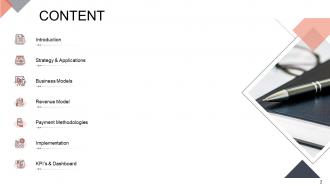
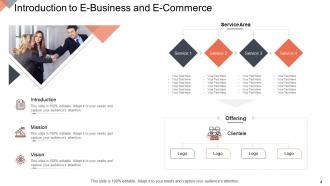
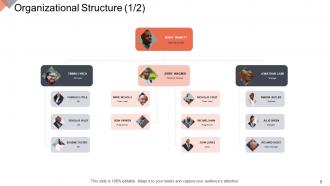
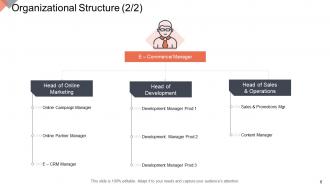
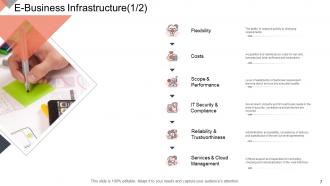
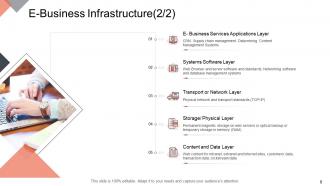
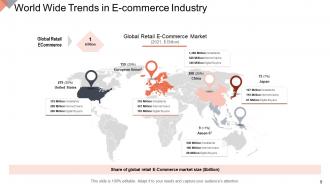
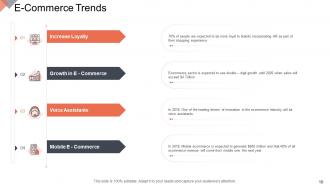
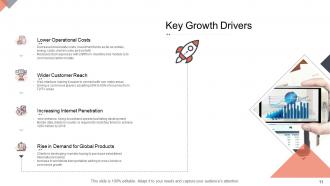
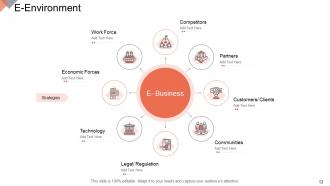
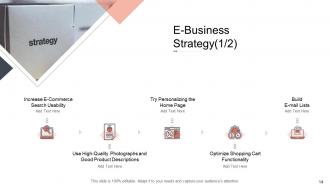
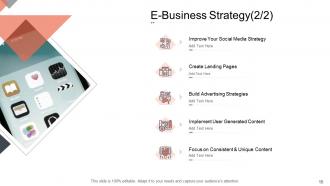
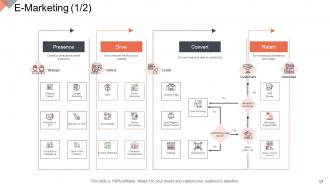
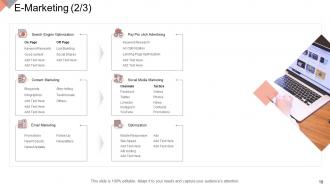
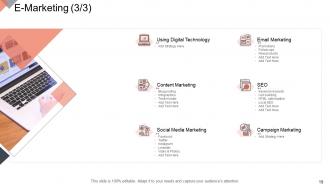
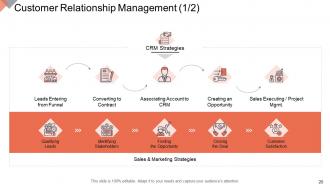
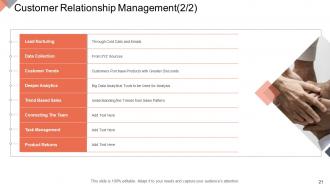
Introducing Online Business Management PowerPoint Presentation Slides. The presentation showcases the vision, mission, and values of the organization effectively. Organizational structure with names and designations of team members can also be depicted in this content-ready PPT slide design. Present the worldwide e-commerce industry by using visually appealing e-business services PPT layouts. Discuss key growth drivers such as lower operational costs, increasing internet penetration, wider customer reach, and rise in demand for global products. Showcase e-business infrastructure by describing the components like costs, flexibility, scope, performance, IT security, and compliance. Details of the E-environment can be effectively discussed with your teammates by using e-business infrastructure management PPT visual. Showcase the strategy and applications of E-commerce by using our topic-specific e-business trade PPT templates. Describe e-marketing, customer relationship management, and business models in detail by downloading our attention-grabbing e-business infrastructure PPT presentation.
People who downloaded this PowerPoint presentation also viewed the following :
Online business management powerpoint presentation slides with all 53 slides:
Use our Online Business Management Powerpoint Presentation Slides to effectively help you save your valuable time. They are readymade to fit into any presentation structure.








FAQs for Online business management
Key components of effective online business management include digital marketing automation, customer relationship management systems, e-commerce platforms, data analytics tools, and cloud-based collaboration software. These technologies streamline operations by automating routine tasks, enhancing customer experiences, and enabling real-time decision-making, with many organizations finding that strategic integration ultimately delivers improved efficiency and competitive advantage.
Leaders foster strong virtual organizational culture through consistent communication, regular team interactions, clear value reinforcement, virtual team-building activities, and transparent feedback systems. These approaches enhance employee engagement, build trust, and maintain company identity across distributed teams, with many organizations finding that structured virtual cultures ultimately deliver higher retention rates, improved collaboration, and competitive advantage in remote talent acquisition.
Essential remote team productivity tracking tools include time tracking software like Toggl, project management platforms such as Asana and Trello, communication analytics from Slack, and comprehensive dashboards like Monday.com or Clickup. These tools enhance transparency, streamline workflow monitoring, and enable data-driven decisions, with many organizations finding that strategic combinations deliver improved accountability and operational efficiency.
Businesses can manage customer relationships effectively online through CRM platforms, personalized email marketing, social media engagement, live chat support, and automated follow-up systems. These digital tools streamline communication by centralizing customer data, enabling targeted messaging, and providing real-time assistance, with many organizations finding that integrated approaches ultimately deliver improved customer satisfaction and increased retention rates.
**INPUT**: What strategies can enhance the performance of digital marketing efforts? **OUTPUT**: Effective digital marketing strategies include data-driven audience segmentation, personalized content creation, omnichannel integration, marketing automation, and continuous A/B testing of campaigns. These approaches streamline customer engagement by delivering targeted messaging, optimizing conversion funnels, and maximizing ROI across platforms, with many organizations finding that strategic combination of analytics and personalization ultimately delivers enhanced customer experiences and measurable business growth. **Word count: 60 words**
Businesses ensure cybersecurity through multi-layered security protocols, employee training, regular system updates, encrypted data transmission, and robust backup systems. Financial institutions and healthcare organizations increasingly implement zero-trust architectures, advanced threat detection, and compliance frameworks, while retail companies focus on secure payment processing and customer data protection, ultimately delivering enhanced trust and competitive advantage.
Data analytics enables online businesses to make informed decisions by analyzing customer behavior, market trends, sales patterns, website performance, and operational metrics. Through predictive modeling and real-time dashboards, companies can optimize pricing strategies, enhance customer experiences, and streamline inventory management, with many e-commerce businesses finding that data-driven approaches ultimately deliver competitive advantage and significantly improved profitability.
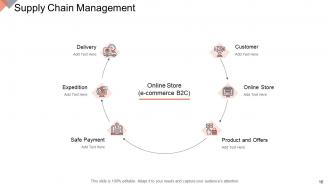
Businesses streamline supply chain management through online platforms by automating procurement processes, providing real-time inventory tracking, and enabling seamless vendor communication across multiple touchpoints. These digital solutions enhance operational efficiency by reducing manual workflows, minimizing stockouts, and accelerating order fulfillment, with many manufacturers and retailers finding significantly improved cost control and customer satisfaction.
Best practices for online financial management include automated expense tracking, cloud-based accounting software, real-time budget monitoring, digital receipt management, and integrated payment systems. These approaches streamline operations by centralizing financial data, reducing manual errors, and enabling instant reporting, with many organizations finding that automated workflows significantly enhance accuracy while delivering faster decision-making and improved cash flow visibility.
Companies leverage social media for brand building through strategic content creation, authentic customer interactions, targeted advertising campaigns, influencer partnerships, and community management initiatives. Through platforms like LinkedIn, Instagram, and Twitter, businesses enhance brand visibility, foster customer loyalty, and drive engagement rates, while enabling real-time feedback collection, ultimately delivering competitive advantages and stronger market positioning.
Online businesses face challenges including data privacy regulations like GDPR, tax compliance across multiple jurisdictions, industry-specific licensing requirements, consumer protection laws, and cybersecurity standards. These regulatory complexities vary significantly by location and sector, with many companies finding that proactive compliance strategies, automated reporting systems, and expert legal guidance ultimately deliver reduced risk exposure and enhanced customer trust in increasingly regulated digital markets.
Businesses build online trust through transparent communication, consistent branding, secure payment systems, customer testimonials, and responsive support services. Many organizations enhance credibility by displaying certifications, maintaining active social media presence, and showcasing client success stories, with e-commerce companies and service providers finding that authentic engagement ultimately delivers stronger customer relationships and competitive advantage.
Effective remote employee training methods include virtual orientation programs, interactive video modules, digital mentorship systems, cloud-based learning platforms, and structured check-in schedules. These approaches streamline knowledge transfer by providing consistent documentation, enabling real-time collaboration, and facilitating ongoing support, with many organizations finding that systematic digital onboarding ultimately delivers faster integration and enhanced productivity.
E-commerce platforms can maximize sales conversion rates by optimizing website speed, implementing personalized product recommendations, streamlining checkout processes, using high-quality product images, and deploying targeted email marketing campaigns. These strategies enhance customer experience by reducing friction, building trust, and delivering relevant content, with many retailers finding that combining multiple approaches yields conversion improvements of 20-30%.
Customer feedback significantly influences online business strategies by informing product development, service improvements, pricing adjustments, and marketing approaches. Through systematic feedback analysis, businesses can identify market gaps, enhance customer experiences, and reduce churn rates, while many online retailers finding that responsive feedback integration leads to increased customer loyalty, higher conversion rates, and sustainable competitive advantage.
-
Best Representation of topics, really appreciable.
-
Easily Understandable slides.
-
Attractive design and informative presentation.
-
Good research work and creative work done on every template.
-
I discovered this website through a google search, the services matched my needs perfectly and the pricing was very reasonable. I was thrilled with the product and the customer service. I will definitely use their slides again for my presentations and recommend them to other colleagues.