

Sales Performance Review Powerpoint Presentation Slides






Try Before you Buy Download Free Sample Product
 Impress Your
 Audience
 100%
100% Editable
 Save Hours
 of Time


Introducing Sales Performance Review PowerPoint Presentation Slides. Modern organizations execute marketing performance system to be in control of the business. Sales management PowerPoint complete deck contains professional slides such as business overview, financial highlights, product offerings, sales performance dashboards, quarterly sales review, project updates, process map, customers and vendors, sales KPIs, competitive analysis, business prospects, business process roadmap, etc. Sales management is very important to measure the company’s productivity. New strategies should be implemented where poor performance is identified. Sales plan PowerPoint template will be helpful in analyzing sales revenue and growth. In addition, marketing performance evaluation PPT slide also be used for topics like sales decision making process, sales performance management, sales review, retail performance, marketing performance. Download the retail performance presentation design to present the sales strategy, communicate the goals that need to be achieved and how they are going to be measured. Our Sales Performance Review Powerpoint Presentation Slides will gladden the gathering. They will appreciate the aesthetics.
People who downloaded this PowerPoint presentation also viewed the following :
Content of this Powerpoint Presentation
Slide 1: This slide presesnts Sales Performance Review. Add your company name and get started.
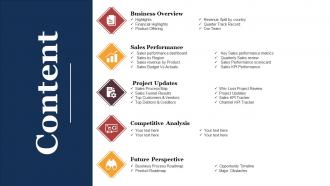
Slide 2: This slide showcases Contents with the following constituents- Business Overview, Sales Performance, Project Updates, Competitive Analysis, Future Perspective.
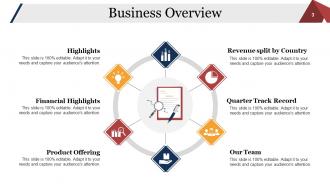
Slide 3: This slide showcases Business Overview consisting of- Revenue split by Country, Quarter Track Record, Our Team, Product Offering, Financial Highlights, Highlights.
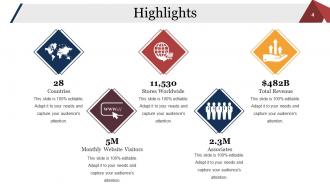
Slide 4: This slide showcases Highlights with icon imagery.
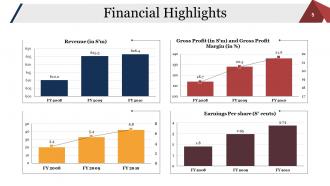
Slide 5: This slide displays Financial Highlights. Specify the financial performance of the company here.
Slide 6: This slide presents Products Offering. Mention the products that are being offered by the company.
Slide 7: This slide showcases Revenue Split - By Country.
Slide 8: This slide showcases Quarter Track Record in a graphical form.
Slide 9: This is Our Team slide with name and designation to fill.
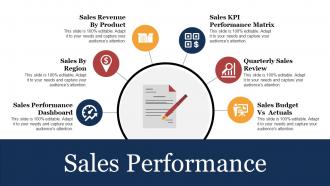
Slide 10: This slide showcases Sales Performance with- Sales Budget Vs Actuals, Sales Performance Dashboard, Quarterly Sales Review, Sales By Region, Sales Revenue By Product, Sales KPI Performance Matrix.
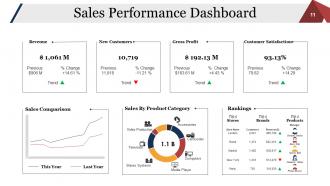
Slide 11: This slide showcases Sales Performance Dashboard.
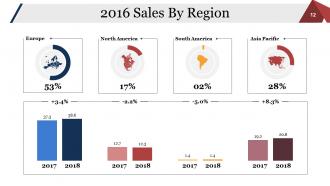
Slide 12: This slide showcases 2016 Sales By Region in charts and graphs.
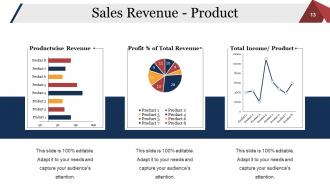
Slide 13: This slide showcases Sales Revenue - Product in charts and graphs.
Slide 14: This slide showcases Sales Budget Vs Actual in a graphical form.
Slide 15: This slide presents Quarterly Sales Summary Review.
Slide 16: This is another slide showing Quarterly Sales Summary Review.
Slide 17: This slide showcases Key Sales Performance Metrics. Show the follwing here- Campaigns To Drive Traffic, Visitors, Trials, Closed Deals.
Slide 18: This slide Sales Rep Performance Scorecard.
Slide 19: This slide showcases Sales KPI Performance - Summary in charts and graphs. Present your own Sales KPI Perfomance- Summary here.
Slide 20: This slide presents Project Updates with- Sales Process Map, Sales Funnel Results, Top Clients, Sales/ Channel KPI Tracker, Win- Loss Review.
Slide 21: This is Sales Process Map slide showing- Solution Lead Generation Program Launch Deal Closing
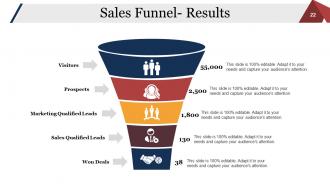
Slide 22: This slide showcases Sales Funnel- Results. Use it as per need.
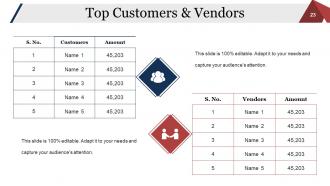
Slide 23: This slide showcases Top Customers & Vendors in a tabular form.
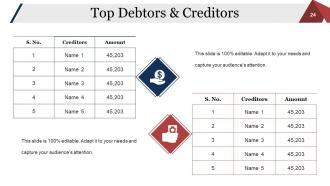
Slide 24: This slide showcases Top Debtors & Creditors in a tabular form.
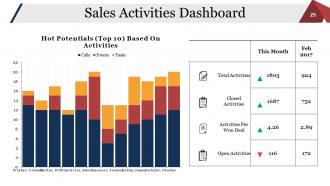
Slide 25: This slide showcases Sales Activities Dashboard in a garphical form.
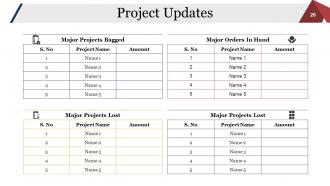
Slide 26: This slide showcases Project Updates in a tabular form.
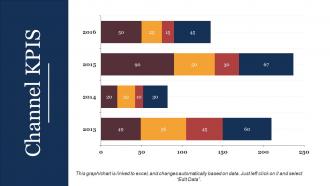
Slide 27: This slide presents Channel KPIS in a bar graph/ chart form.
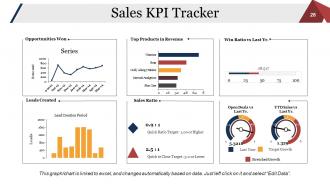
Slide 28: This slide showcases Sales KPI Tracker in charts and graphs.
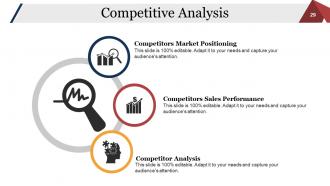
Slide 29: This slide presents Competitive Analysis showing- Competitors Market Positioning, Competitors Sales Performance, Competitor Analysis.
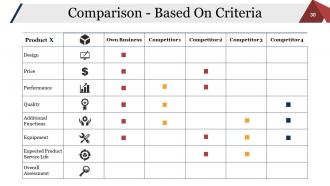
Slide 30: This is Comparison - Based On Criteria table slide. Use it for analysis, comparison etc.
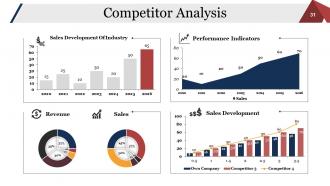
Slide 31: This is Competitor Analysis graph slide showing- Revenue, Sales, Performance Indicators, Sales Development, Sales Development Of Industry.
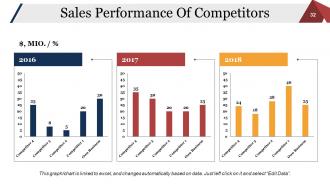
Slide 32: This slide showcases Sales Performance Of Competitors in a garphical form.
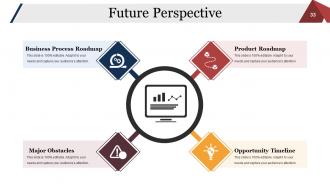
Slide 33: This is Future Perspective slide showing- Opportunity Timeline, Product Roadmap, Business Process Roadmap, Major Obstacles.
Slide 34: This slide showcases Business Process Roadmap to present business milestones, highlights etc.
Slide 35: This slide showcases Product Roadmap to present milestones, highlights etc.
Slide 36: This slide showcases Opportunity Timeline to state milestones, growth factors, highlights etc.
Slide 37: This is Major Roadblocks Or Obstacles slide. State them here.
Slide 38: This is a Coffee Break image slide. You can alter the contents as per need.
Slide 39: This is Sales Performance Review Icon Slide. Use/ add icons as per your requirement.
Slide 40: This is also Sales Performance Review Icon Slide. Use/ add icons as per your requirement.
Slide 41: This slide forwards to Charts & Graphs. You can alter the content as per need.
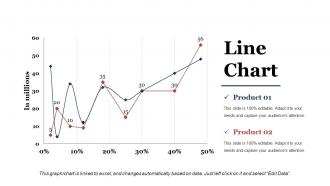
Slide 42: This slide presents a Line Chart for showcasing product/ company growth, comparison etc.
Slide 43: This slide presents a Bubble Chart for showcasing product/ company growth, comparison etc.
Slide 44: This is an Area Chart slide for product/ entity comparison.
Slide 45: This is a Column Chart slide for product/ entity comparison.
Slide 46: This is a Radar Chart slide for product/ entity comparison.
Slide 47: This slide is titled Additional Slides to move forward. You can alter the content as per need.
Slide 48: This is Our Mission slide. State company mission here.
Slide 49: This is an About Us slide. State team/ company specifications here.
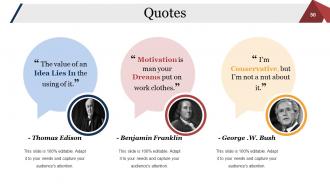
Slide 50: This is a Quotes slide to convey company messages, beliefs etc. You can change the slide contents as per need.
Slide 51: This is Our Goal slide. State your goals here.
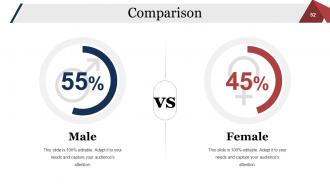
Slide 52: This is a Comparison slide. You can compare the male and female ratio in it.
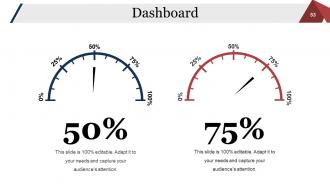
Slide 53: This is Dashboard slide to show information in percentages etc.
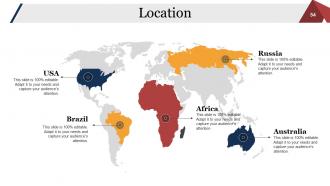
Slide 54: This is a Location slide to show global growth, presence etc. on a world map image.
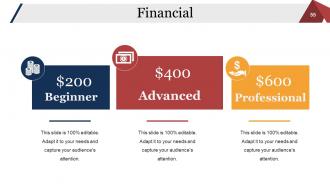
Slide 55: This is a Financial Score slide to showcase financial aspects.
Slide 56: This is a Puzzle pieces image slide to show information, specifications etc.
Slide 57: This is a Target image slide. State targets, etc. here.
Slide 58: This is a Circular image slide. State specifications, information here.
Slide 59: This is a LEGO slide with text boxes to show information.
Slide 60: This slide presents a Mind map imagery with text boxes.
Slide 61: This is Silhouettes slide to show people related information, specifications etc.
Slide 62: This is a Hierarchy slide to show information, organization structural specifications etc.
Slide 63: This is a Venn diagram image slide to show information, specifications etc.
Slide 64: This is a Magnifying glass image slide to show information, scoping aspects etc.
Slide 65: This is a Bulb Or Idea image slide to show information, innovative aspects etc.
Slide 66: This is a Thank You image slide with Address, Email and Contact number.
Sales Performance Review Powerpoint Presentation Slides with all 66 slides:
Instruct the group with our Sales Performance Review Powerpoint Presentation Slides. Give every individual a clear idea of their function.
-

Sales Performance Review
-
Content Slide
-
Business Overview
-
Highlights
-
Financial Highlights
-
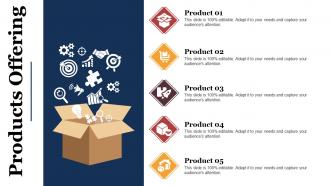
Products Offering
-
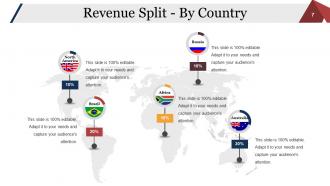
Revenue Split By Country
-
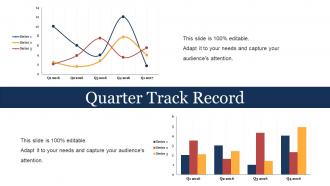
Quarter Track Record
-
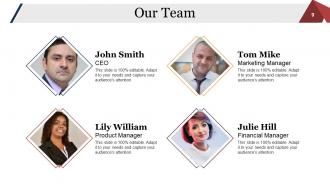
Our Team
-
Sales Performance
-
Sales Performance Dashboard
-
Sales Performance Review
-
Sales Revenue Product
-
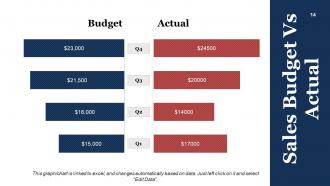
Sales Budget vs Actual
-
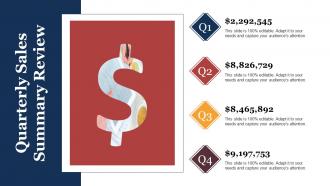
Quarterly Sales Summary Review
-
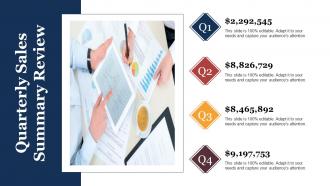
Quarterly Sales Summary Review
-
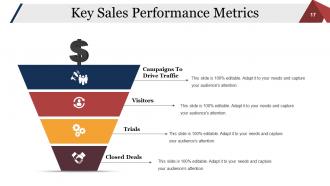
Key Sales Performance Metrics
-
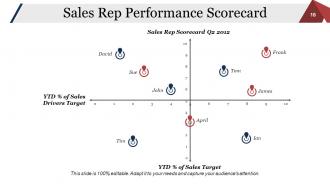
Sales Rep Performance Scorecard Q2 2012
-
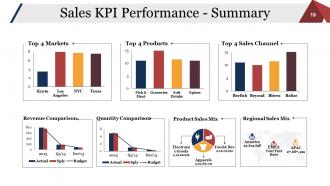
Sales KPI Performance Summary
-
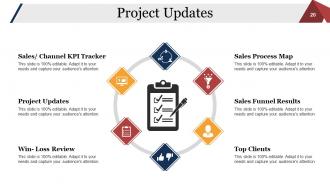
Project Updates
-
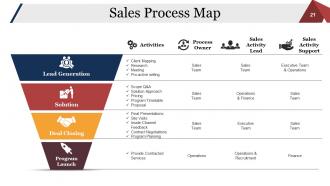
Sales Process Map
-
Sales Funnel Results
-
Top Customers Vendors
-
Top Debtors Creditors
-
Sales Activities Dashboard
-
Project Updates
-
Channel KPIs
-
Sales KPI Tracker
-
Competitive Analysis
-
Comparison Based On Criteria
-
Competitor Analysis
-
Sales Performance Of Competitors
-
Future Perspective
-
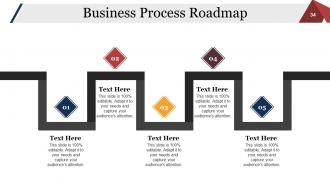
Business Process Roadmap
-
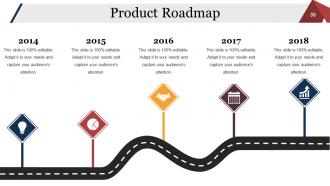
Product Roadmap
-
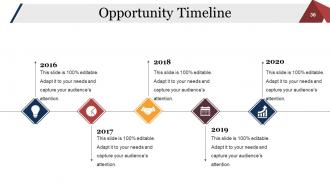
Opportunity Timeline
-
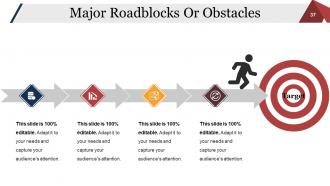
Major Roadblocks Or Obstacles
-

Coffee Break
-
Sales Performance Review Icon Slide
-
Sales Performance Review Icon Slide
-
Charts Graphs
-
Line Chart
-
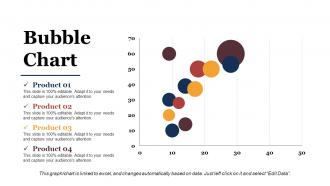
Bubble Chart
-
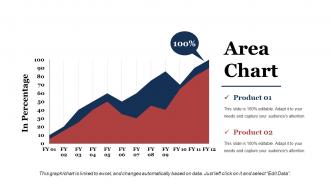
Area Chart
-
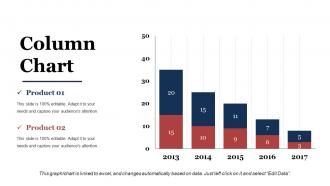
Column Chart
-
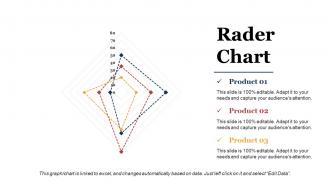
Rader Chart
-

Additional Slides
-
Our Mission
-
About Us
-
Quotes
-
Our Goal
-
Comparison
-
Dashboard
-
Location
-
Financial
-
Puzzle
-
Target
-
Circular
-
Lego
-
Mind Map
-
Silhouettes
-
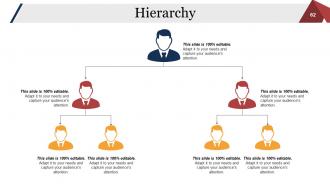
Hierarchy
-
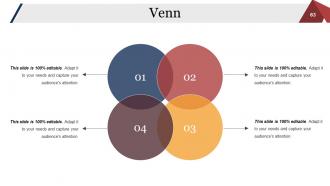
Venn
-
Magnifying Glass
-
Bulb Or Idea
-

Thank You
FAQs for Sales Performance Review
Honestly, just track the stuff that actually matters for your paycheck. Revenue is obvious - your total sales, how you're hitting quota, average deal sizes. Activity-wise, look at calls, meetings booked, how fast deals move through your pipeline. Conversion rates are clutch, especially lead-to-opportunity and close rates. Sales cycle length too since that affects everything downstream. Oh, and if you do account management, definitely track retention and upsells. But seriously, don't go crazy with like 15 metrics - stick to maybe 5-7 max or you'll just confuse yourself.
Start with your conversion rates, deal size, and how long sales cycles are taking - track these over time to catch trends. Then slice the data by rep, territory, product, whatever makes sense. That's honestly where you'll find the good stuff. Watch for drops compared to your usual numbers or benchmarks. Don't just look at closed deals though - pipeline velocity and activity metrics tell you what's coming. I always compare similar time periods so you're not mixing apples and oranges. When something looks weird, dig into the "why" behind it. Monthly reviews keep you on top of everything.
Dude, team feedback is honestly where the gold is. Your coworkers see all the stuff your manager doesn't - how you actually handle pressure, communicate with other departments, that sort of thing. Sometimes they'll spot patterns in your sales approach way before you notice them yourself. It's wild how much you can learn about your own blind spots just from asking. But here's the thing - push for real examples during your review, not just the usual "great job" fluff. That generic stuff won't help you improve. The specific feedback is what actually moves the needle.
Look, performance reviews work because they make everyone's work totally visible. No more hiding behind the team when someone's slacking. You'll want to set individual goals and track them openly - it's basically like giving everyone a report card. The magic happens when you have real conversations about where people are falling short. Honestly, most managers are terrible at the follow-through part, but you have to actually do something about good AND bad performance. Oh, and document everything as you go. Trust me on that one - you don't want any drama when review season hits.
Make your goals SMART - you know the drill, specific and measurable stuff. But here's the thing: don't just track activities like call volume. Sure, "50 calls a day" sounds good on paper, but what actually matters is revenue and conversion rates. I've watched so many sales teams get obsessed with busy work instead of results, it's honestly painful. Your reps need to understand how their individual goals connect to the bigger picture. Otherwise they're just going through the motions. Check in quarterly too - markets shift and people perform differently than you'd expect.
Dude, get yourself a good CRM with analytics - it's a game changer. Real data beats guessing every time. You'll see conversion rates, how fast deals close, pipeline health, all that good stuff on dashboards. I'm telling you, once you start spotting patterns you never would've caught manually, you get kind of obsessed with checking it. Like which activities actually bring in money (spoiler: cold calling isn't as effective as you think). Don't go crazy implementing ten tools at once though. Pick one solid platform first, then build from there.
The biggest mistake? Focusing on just the numbers without any context. You'll completely miss what actually happened if you're only looking at quota attainment and ignoring stuff like market conditions or territory changes. Don't turn it into a lecture about what went wrong either - that's painful for everyone. Ask them what obstacles they hit and what kind of support would help. Oh, and never compare them directly to other reps. Every situation's different, honestly. Make the whole thing collaborative and focus on moving forward instead of just rehashing the past like some kind of report card.
Honestly, quarterly reviews are the minimum you should be doing, but monthly check-ins are where you'll see real results. I've found that annual reviews are basically pointless for sales teams - way too much time passes between feedback. Your reps need those course corrections fast, especially when they're missing numbers. Quick 30-minute one-on-ones each month work great. Then do deeper quarterly sessions to really dig into performance patterns. Oh, and if someone's really struggling? Bi-weekly touchpoints can help get them back on track faster.
Honestly, customer feedback is like getting a backstage pass to see how your sales reps actually perform. Yeah, some of it'll sting, but that's where you find the good stuff. When multiple customers say your rep was pushy or didn't listen? Boom - there's your coaching opportunity right there. I always tell people to look for patterns across feedback, not just one-off complaints. The cool thing is you can match this up with your conversion rates and deal sizes. Gives you the whole story, you know? Just start collecting it after every major interaction.
Honestly, presentation templates are a lifesaver for sales data. Raw spreadsheets just make people's eyes glaze over - nobody wants to stare at endless rows of numbers. With good templates, you can actually tell a story with your data. Charts and clean layouts help people spot trends and outliers right away. Plus you won't waste hours messing around with fonts and colors (been there, done that). Your audience gets the key insights fast. Find a few decent templates and tweak them with your brand stuff. Trust me, it makes meetings way less painful for everyone.
Skip the personality stuff and focus on actual numbers - deals closed, pipeline data, that kind of thing. I always tell managers to look at measurable behaviors instead of vague "communication skills" feedback that doesn't help anyone. Check their follow-up consistency and conversion rates at each stage. Here's what works: ask what's blocking them and how you can help clear those obstacles. Make it collaborative, not just you talking at them. Always wrap up with 2-3 concrete things they can work on over the next month. Way more effective than those generic performance conversations that go nowhere.
Honestly, performance reviews are where you'll find the best development insights. They break down exactly what you're crushing versus what needs work - like your closing game or how you build relationships. Your manager usually catches patterns you totally miss and can point you toward training that actually matters. I love that they track your wins over time too, which is clutch when you're gunning for a promotion. The key is walking away with specific goals for the next few months, not just vague "do better" stuff. Makes the whole thing way more actionable.
Ugh, don't make them feel like they're being grilled by the police. Ask what they need from you instead of just pointing out their mistakes. I hate when managers do the whole interrogation thing - it helps literally no one. Check in with them regularly so there aren't any nasty surprises come review time. When they do well, shout it out publicly. Problems? Handle those one-on-one with actual plans to fix stuff. Oh, and share your own screwups too - makes everyone feel more human about growing. Start by having them assess themselves first.
Honestly, you've gotta read each person differently. New people need more hand-holding with skills and processes, but your veterans want to talk bigger picture - territory growth, maybe leadership stuff. Some folks can handle direct feedback right away, others need you to butter them up first (which is annoying but whatever). High performers are always asking "what's next" so have career conversations ready. The struggling ones? They need super specific action plans with actual deadlines they can hit. I usually prep different talking points for each person before meetings. Way better than winging it with the same boring script every time.
So after your review, grab those gaps you talked about and make them super specific goals with actual deadlines. Don't do that wishy-washy "get better at communication" nonsense - nobody knows what that even means. Try stuff like "50 cold calls each week" or "finish CRM training by March 15th." Whether it's prospecting, closing deals, or just knowing your products better, turn each weakness into something you can actually measure. Set up check-ins every couple weeks to see how you're doing. Oh, and make sure your manager helps you figure out what's most important first - you don't want to leave that meeting without a solid plan.
-
Awesome use of colors and designs in product templates.
-
Best way of representation of the topic.