


Cyber Security Roadmap Powerpoint Ppt Template Bundles




Try Before you Buy Download Free Sample Product
 Impress Your
 Audience
 100%
100% Editable
 Save Hours
 of Time


Our Cyber Security Roadmap Powerpoint Ppt Template Bundles are topically designed to provide an attractive backdrop to any subject. Use them to look like a presentation pro.
People who downloaded this PowerPoint presentation also viewed the following :
Cyber Security Roadmap Powerpoint Ppt Template Bundles with all 17 slides:
Use our Cyber Security Roadmap Powerpoint Ppt Template Bundles to effectively help you save your valuable time. They are readymade to fit into any presentation structure.





FAQs for Cyber Security Roadmap Powerpoint
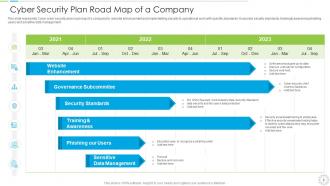
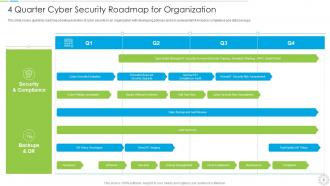
You'll want to start with four main things: figuring out where you currently stand, spotting your risks, setting clear goals, and building a timeline. Map out what security stuff you already have first - seriously, most people I know skip this step and go straight for the flashy new tools (big mistake). Find your worst vulnerabilities and compliance gaps. Then set milestones for 6, 12, and 24 months with actual deliverables and budget numbers. Don't forget training and incident response planning. Oh, and treat it like a living document - update it quarterly since threats change constantly.
So first thing - map out your risks by impact vs likelihood. Hit the high-impact, high-probability stuff first obviously. I always think about what would be absolutely mortifying if it made the news (maybe dramatic but it works lol). Target controls that can knock out multiple risk areas at once - way more bang for your buck. Don't try fixing everything simultaneously though, you'll just burn out with a bunch of half-done projects. Build a realistic timeline and check it every few months since new threats pop up constantly. Quick wins on the serious operational or data exposure stuff should be your starting point.
Look, your team is basically your biggest security risk AND your best protection all rolled into one. Sarah clicks one bad link and boom - doesn't matter how much you spent on firewalls. Train people to spot phishing, create decent passwords, follow protocols. Skip the yearly death-by-PowerPoint approach though. Run some fake phishing tests first to see who's struggling. Make training regular but actually interesting - nobody learns when they're half asleep. It's way more effective than just hoping everyone figures it out.
Honestly, first figure out what's actually broken in your current setup. Then look at stuff like AI threat detection or zero-trust - but only for those specific weak spots. I've seen too many companies go crazy buying every new security tool and end up with this nightmare system nobody can figure out. Pick one thing, test it with real metrics you can track. Your team needs training too, obviously - doesn't matter how cool the AI is if Bob from IT can't use it. Oh, and definitely start small. Prove it works, then expand from there.
Track your incident response times and how fast you detect threats - those are huge. Patch management speed matters too. I'd also watch security training completion rates because, let's be real, people click on everything. Phishing test results will confirm that suspicion. Network segmentation and privileged access compliance are worth monitoring, plus backup recovery rates (you don't want surprises there). Whatever compliance stuff you need - SOC 2, ISO whatever - track those scores. But here's the thing: pick maybe 5-7 metrics max that actually relate to your biggest headaches. Start there and build dashboards around what genuinely worries you.
So compliance is basically where you have to start - can't really avoid GDPR, HIPAA, SOX, whatever hits your industry. Those regulations set your minimum security requirements and deadlines, which honestly sucks but they're mandatory. I'd map out which ones affect you first, then build your timeline around those requirements. Here's the thing though - compliance is just the bare minimum, not actual good security. You'll still need way more protection on top of that. Start with auditing what applies to you now, then let those deadlines drive your roadmap priorities. At least it gives you a clear starting point.
Get some automated monitoring running 24/7 - tools that watch for weird stuff happening on your network. SIEM platforms are clutch because they pull logs from everywhere and actually alert you when something's off. You gotta establish what "normal" looks like first though, otherwise you're just drowning in false alarms. Threat intel feeds help too since attackers are constantly switching up their tactics. Watch both internal traffic and what's going out. Oh, and create response playbooks beforehand - trust me, you don't want your team panicking when alerts start firing. Makes all the difference.
Dude, you gotta run tabletop exercises at least every quarter - walk through different disaster scenarios with your team. Honestly, half the plans I've seen look solid until reality hits and then it's chaos. Short drills work too. Update your contact lists and procedures after each exercise or when actual incidents happen. Also steal lessons from other companies' public breaches (there's always something useful there). Keep evolving the plan based on new threats. Oh and make sure someone's actually responsible for keeping it current - can't tell you how many "emergency contacts" I've seen that go to people who left years ago!
Honestly, you've got to get everyone caring about cybersecurity, not just dumping it on IT. Those marathon training sessions? Total waste - nobody retains that stuff. Make it interactive and tied to what people actually do at work. When someone catches a phishing email, celebrate it! Don't just shame people for screwing up. Your leadership team needs to walk the walk too - if the boss is clicking random links, game over. Keep policies simple (people ignore complicated rules anyway) and share the wins. Basically make security feel like you're all protecting each other, not following some corporate checklist.
Yeah, so basically every vendor you work with becomes another way hackers can get to you. They breach your supplier, suddenly they're in your stuff too. It's wild how often this happens now - attackers love going after the weakest link in the chain. Most companies don't even know what security their vendors actually have, which is honestly kind of scary. Each integration opens up new doors for bad actors. You really gotta treat vendor security like it's your own security. Make them prove they're legit, watch what they're accessing, and have a plan ready when (not if) something goes sideways.
Alright, so for your security stack - definitely start with endpoint stuff like CrowdStrike or just Windows Defender if budget's tight. Network monitoring is huge too (Wireshark, Splunk). Nessus or OpenVAS for vulnerability scanning. SIEM tools handle all your log analysis but honestly that's where things get messy fast. You'll need identity management and backup solutions obviously. Oh and incident response platforms. I'd say don't go crazy at first though - get your antivirus and firewalls solid, then add the fancy stuff later. Way less overwhelming that way.
Here's the thing - security needs to be baked in from day one, not slapped on later. Do some digging into how people actually work (not how you think they work). Then design your security around that. SSO is a lifesaver - cuts down on password headaches while keeping things locked down. Training matters too, because honestly? People will just find workarounds if your system sucks. Make the secure way the easy way. Roll things out slowly and ask for feedback. Your team will be brutally honest about what's annoying them, which is actually super helpful.
Honestly, encryption is like your backup plan when hackers actually get in. They steal your laptop or break into the network? Good luck reading anything - it's all scrambled without the keys. You want it on stored data, stuff moving between systems, basically anywhere sensitive info sits. I always tell people to hit the critical databases first, then customer data, then expand from there. It's kind of like having a safe inside your already-locked house. Sure, maybe overkill, but when someone does get past your other defenses, you'll be glad it's there.
So threat intel gives you context instead of just blindly reacting to every alert that pops up. You can actually prioritize which vulnerabilities to patch first and understand what attackers are going after in your specific industry. It's honestly like having a weather forecast for cyber threats - way smarter than just carrying an umbrella everywhere, you know? The trick is weaving it into your current processes rather than treating it as some separate thing. I'd start with one solid threat feed that's relevant to your sector. Then use it to guide your next vulnerability management cycle. Makes a huge difference once you get it rolling.
Dude, ransomware groups using AI tools is honestly scary as hell - they're getting way too good at this stuff. You really need to watch out for AI-powered attacks and supply chain hits right now. Zero-trust is basically becoming standard, not optional anymore. Since everyone's remote, cloud security keeps changing fast, plus IoT devices are still a mess security-wise. Oh and identity management is massive these days. Start with checking your zero-trust setup and make sure your incident response plan isn't garbage. That's probably your best bet for staying ahead of this.
-
Thank you for offering such fantastic custom design services. The team is really helpful and innovative. In a very short time, I received my personalized template.
-
Their templates are super easy to edit and use even for the one like me who is not familiar with PowerPoint. Great customer support.