

Data Privacy Management For Cyber Security Training Ppt




Try Before you Buy Download Free Sample Product
 Impress Your
Audience
 100%
Editable
 Save Hours
of Time


This set of PPT slides covers data privacy management for better cyber security.
People who downloaded this PowerPoint presentation also viewed the following :
Content of this Powerpoint Presentation
Slide 2
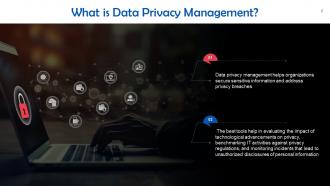
This slide introduces the concept of data privacy management. Data privacy management helps organizations secure sensitive information and address privacy breaches
Slide 3
This slide discusses the working of a data privacy management tool. These tools help in locating sensitive information, automating discovery and classification, enabling compliance with data privacy laws, and handling remediation.
Slide 4
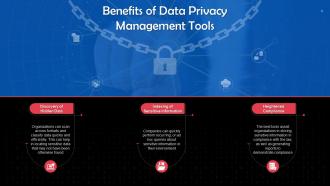
This slide discusses the benefits of data privacy management tools. These are: Discovery of hidden data, indexing of sensitive information, and enhanced compliance.
Data Privacy Management For Cyber Security Training Ppt with all 23 slides:
Use our Data Privacy Management For Cyber Security Training Ppt to effectively help you save your valuable time. They are readymade to fit into any presentation structure.













FAQs for Data Privacy Management For Cyber
Okay so you basically need four things sorted. First, map out what personal data you're collecting and where it all sits. Write privacy policies that don't sound like legal gibberish - people should actually get what you're saying. Third thing is solid security controls to lock that stuff down. Then have a plan ready for when shit hits the fan, because it probably will at some point. Staff training is huge too since someone's always gonna click something they shouldn't. GDPR compliance is no joke these days either. Honestly, just start with auditing what data you actually have, then build everything else around that.
Start with mapping out what data you're actually collecting and where it all lives - this part's kind of tedious but necessary. Compare that against whatever regs apply to you (GDPR, CCPA, etc). Privacy impact assessments sound intimidating but they're really not that bad once you get into it. Also check your consent stuff, how long you're keeping data, and your breach procedures. If you've got the money, external auditors are worth it tbh. Just document everything as you go so you can see what's broken and fix it systematically.
Okay so the main ones are GDPR for EU stuff, then CCPA/CPRA in California. GDPR's still the scariest with those massive fines. Virginia has CDPA now too, and honestly more US states keep adding their own rules. Healthcare? You've got HIPAA obviously. PIPEDA if you're dealing with Canada. Brazil's LGPD is getting pretty strict lately - oh and China has some weird complex stuff but that's probably not your problem. It's kind of a mess tbh. I'd just start with GDPR since it's usually the toughest, then worry about local stuff after.
So basically you just collect what you actually need - that's it. Don't grab extra stuff "just in case" because honestly, you'll probably never use it anyway. Before building forms, ask yourself why you need each thing. Phone numbers when you're never calling? Skip it. I always tell people to audit what they're currently asking for and just... cut the fluff. You'll end up with shorter forms and fewer required fields. Plus you can actually explain why you need each piece of data instead of that awkward "uh, we might need it someday" response.
Look, most data breaches happen because someone clicked something sketchy or didn't know the rules - not some master hacker situation. Training your employees regularly is honestly the best thing you can do. They'll start recognizing phishing emails and actually understand what info they can share (instead of just winging it). Don't make it a one-and-done training either - that never sticks. I'd do quarterly sessions, maybe throw in some real examples to keep it interesting. Trust me, you'll see way fewer incidents once people know what they're doing.
Start with data mapping right in the planning phase - figure out what personal info you're actually collecting and why. Build your system architecture around data minimization from day one. Privacy controls should go in during development, not after. Run impact assessments before you launch anything. Seriously, retrofitting privacy later is such a nightmare - learned that the hard way. Get your teams doing privacy reviews during sprint planning and code reviews. Oh, and treat privacy like any other core feature, not some boring compliance thing you deal with at the end. Way less headache that way.
Honestly, start with data discovery tools - they'll scan everything and show you where personal data is hiding (spoiler: it's everywhere). Privacy platforms like OneTrust handle the consent stuff and compliance workflows pretty well. Automated classification is clutch too since it tags sensitive data automatically. DLP tools are great for blocking sketchy data transfers, but they can be overkill if you're just getting started. I'd really focus on discovery first though - no point building fancy protections if you don't know what you're protecting. Once you map everything out, the rest gets way easier.
So encryption basically scrambles your data into complete nonsense that only people with the right key can read. Nobody else can make sense of it even if they steal it. You'll want to encrypt stuff both when it's just sitting around in storage and when it's moving between systems. Honestly, it's probably the lowest-hanging fruit for privacy protection - way easier than most people think. I'd start with your most sensitive data first, then expand from there. My company dragged their feet on this for months but it was actually pretty straightforward once we got going.
Honestly, most companies just collect way more data than they actually need - it's kinda ridiculous. The smart approach is data minimization: only grab what you'll use, and stick to what you promised people. Privacy-by-design helps a lot here, plus things like anonymization and letting users control their consent granularly. Here's the thing though - tons of orgs completely botch the data lifecycle part. They'll delete user accounts but keep the underlying data for years! Start by mapping what you actually have and why. Once that's clear, set up proper access controls and do regular privacy audits.
Dude, data breaches are brutal for companies. Trust me on this one. Customers lose faith instantly when their personal info gets leaked - and honestly, can you blame them? People bail for competitors super quick after that happens. Recovery takes years, if it even happens at all. The company gets hit with lawsuits, regulatory fines, plus all that negative press coverage. I've seen businesses never fully bounce back from the reputation damage alone. Prevention costs way less than trying to rebuild trust later. Way less headache too.
Honestly, treat data sharing like lending your car - you wouldn't give keys to just anyone, right? First thing: map out exactly what personal info you're handing over. Then dig deep into vendors' security and privacy practices. I've watched companies get absolutely wrecked because they trusted vendors without checking. Draft solid agreements covering retention limits, security standards, and breach protocols. Oh, and don't forget regular audits - trust but verify and all that. Have a kill switch ready if vendors mess up.
So there are basically four things you need to watch. How fast you catch and stop breaches is huge - that's your incident response time. Also track your compliance audit scores because regulatory violations suck. GDPR requests are another big one - people will flood you with data subject requests and you gotta measure how quickly you handle them. Oh, and don't forget employee training scores since honestly, most privacy screwups happen because someone clicked the wrong thing or whatever. I'd start with the incident response stuff first though - it'll show you pretty quickly where you're actually at and what's broken.
Ugh, privacy laws change constantly - it's honestly exhausting! I'd subscribe to updates from DLA Piper or IAPP to start. Following your local data protection authority directly helps too. Industry groups are goldmines since people actually share what they're seeing in real time. Pick someone on your team to be your "privacy watchdog" - trust me, you need dedicated eyes on this stuff. The landscape shifts monthly, sometimes faster. Oh, and definitely build relationships with privacy attorneys who can translate legal jargon into things you can actually act on when big changes drop.
Hey! So data privacy is honestly a nightmare for small businesses - you've got no budget, zero expertise, and like a million other things screaming for attention. GDPR and all that legal stuff? Forget about it without a lawyer on speed dial. But here's the thing - you don't have to fix everything overnight. Just start with the basics: figure out what data you're actually collecting (might surprise you), get some decent security going, and write up a privacy policy that doesn't suck. Baby steps, then build up from there. Way less overwhelming that way.
So basically a PIA makes you map out your whole data flow and think through what could go wrong. You'll catch stuff like unauthorized access, breaches, or collecting way more data than you need. Think of it like checking your house for weak spots before vacation - you notice things you'd normally miss. Honestly, regulators love seeing you're being proactive too. The assessment catches problems before they blow up. I'd start with your riskiest processes first, then work down from there. Way easier than dealing with mess later.
-
Commendable slides with attractive designs. Extremely pleased with the fact that they are easy to modify. Great work!
-
No second thoughts when I’m looking for excellent templates. SlideTeam is definitely my go-to website for well-designed slides.