

Digital Business Strategy Powerpoint Presentation Slides




Try Before you Buy Download Free Sample Product
 Impress Your
 Audience
 100%
100% Editable
 Save Hours
 of Time


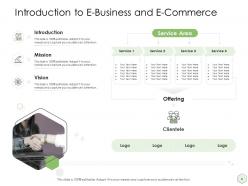
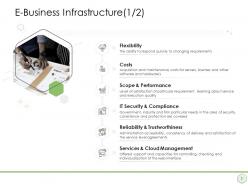
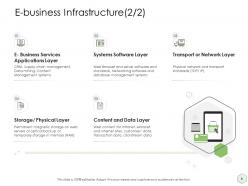
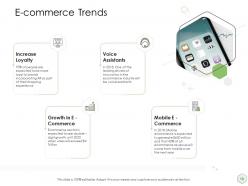
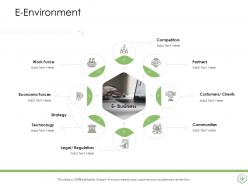
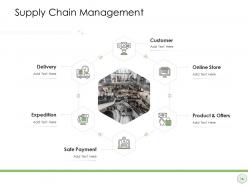
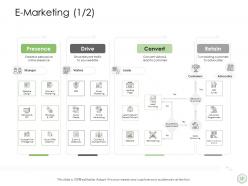
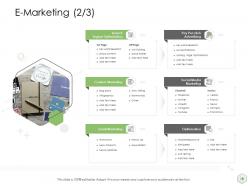
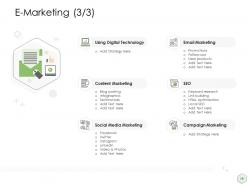
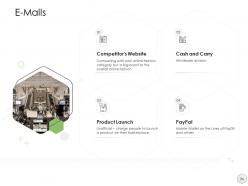
Introducing our Digital Business Strategy PowerPoint Presentation Slides to keep you up-to-date with the changing technological scenario. Stay ahead of the competition by employing these online marketing PPT templates to enter the world of countless business opportunities. Take the opportunity to engage in efficient marketing for your company with the help of these social media advertising plan PPT slides. Select our e-commerce PPT layout to list all the crucial elements required for effective infrastructure management like flexibility, costs, scope, IT security, reliability, and cloud management. You can easily highlight the world-wide market trends by including our global map template in this e-business PPT slideshow. Use this e-environment PPT design for demonstrating how to expand the market presence to reach out everywhere with the products and services. Exhibit the company's entire supply chain management process in a well-organized format with the assistance of these e-marketing PowerPoint themes. Download this PowerPoint deck and share the details about the wide range of business models like e-shops, e-malls, and e-procurement with clarity.
People who downloaded this PowerPoint presentation also viewed the following :
Digital Business Strategy Powerpoint Presentation Slides with all 58 slides:
Use our Digital Business Strategy Powerpoint Presentation Slides to effectively help you save your valuable time. They are readymade to fit into any presentation structure.




FAQs for Digital Business Strategy
Honestly, get your basics down first before you chase shiny new trends. Customer-centricity is huge - really dig into their digital journey and what's frustrating them. That should guide everything. You need solid analytics too, not just pretty dashboard numbers that don't mean anything. Make your processes flexible so you can pivot fast when things change (and they will). Oh, and this is big - check that your tech can actually handle what you're planning. I've watched so many companies crash because their systems couldn't keep up. Start there, then worry about the flashy stuff later.
Honestly, data analytics will show you what's actually working vs what you think is working - and it's usually pretty different. Track customer behavior, conversion rates, engagement across all your channels. I've seen teams completely flip their social media strategy after discovering their audience was active at totally weird times. Set up dashboards for real-time performance so you're not flying blind. Pick your top 3-5 metrics and check them weekly instead of waiting months for reviews. The insights always surprise you, but in a good way.
Honestly, CX is everything now. Your bounce rates and conversions will tank fast if people hate using your site or app. I've seen companies get absolutely roasted on Twitter for clunky interfaces - it's brutal how quickly bad experiences spread. Most smart businesses actually use customer feedback to decide what features to build next and where to spend their tech budget. Map out your customer journey first (sounds boring but it works), then tackle the biggest pain points. Support tickets piling up? That's your canary in the coal mine right there.
Okay so social media is literally your digital storefront now. People find you there, judge your brand, and decide if they want to buy from you. Don't just think of it as posting pretty pictures though - it's also where customers complain, ask questions, and honestly where you can spy on what they actually want. I know it feels like a lot to manage! But here's the thing: take all that juicy data from your social platforms and let it guide your whole business strategy. What products to make, how to treat customers, all of it. First step? Figure out where your people actually spend their time online.
Dude, you've actually got advantages here. Big companies are stuck with endless meetings and approval chains - you can pivot in like a day. Find the niches they're ignoring or doing a crappy job with. Their social media is usually trash because everything needs committee approval, but you can respond instantly and be actually authentic. Google My Business is free, same with most social platforms. Compete on experience, not budget. Oh and email marketing still works way better than people think. Start small but stay consistent - that's where most people mess up.
Honestly, you can't ignore AI and machine learning anymore - they're everywhere. Cloud stuff is pretty much mandatory at this point. APIs are clutch for connecting everything together smoothly. Low-code platforms are actually way better than I expected for quick builds. Edge computing's getting hot for real-time data. Blockchain has solid use cases in supply chains, just ignore all the crypto nonsense lol. My advice? If you're not on cloud yet, start there. Then slowly add AI tools as you go. Don't try to do everything - pick one thing and actually master it first before moving on.
Look, you gotta track the obvious stuff first - revenue from campaigns, conversion rates, customer acquisition costs. That's your bread and butter. But don't sleep on the fuzzy metrics either. Brand awareness and engagement are real even if they're annoying to measure. My biggest mistake early on? Not setting up analytics properly from the start. Total nightmare trying to backtrack data later. Pick maybe 4-5 KPIs that actually move the needle for your specific business and obsess over those. Everything else is just noise.
Honestly, the worst thing you can do is try digitizing everything at once - you'll just burn through your budget on mediocre solutions. Pick one thing first. Also, don't assume customers actually want the digital version of what you're doing. Sometimes they genuinely prefer talking to a human, weird as that sounds. Your team probably doesn't have the tech skills yet either, so factor that in. Oh, and technology won't magically fix broken processes - fix the process first. Skip the vanity metrics too. Focus on stuff that actually moves the needle for your business.
Dude, agility is everything in digital strategy. Markets change overnight and customer expectations shift constantly - I've watched so many companies crash because they couldn't adapt fast enough. Build flexibility into your tech stack and team structure from day one. Set up systems that let you pivot when the data shows you're heading in the wrong direction. Honestly, some of the best strategies I've seen started as complete accidents. Ditch those massive annual planning sessions for shorter cycles and regular check-ins. You'll catch problems way earlier and actually capitalize on opportunities instead of missing them completely.
Honestly, there's a lot to unpack here. Data privacy is probably your biggest headache - be upfront about what you're collecting and actually get consent (not those sketchy dark patterns everyone uses). AI bias is tricky because it sneaks up on you in weird ways and can end up discriminating against people. Job displacement from automation is another big one. How do you handle that without screwing over your workforce? Oh, and don't forget about accessibility issues - some people get left behind when everything goes digital. I'd start with auditing what you're already doing, then build ethics checkpoints into your process.
Yeah, every industry does it totally differently based on what they're dealing with. Retail goes all-in on omnichannel stuff and personalization. Healthcare's obsessed with keeping patient data locked down while pushing telehealth. Manufacturing though? That's where the cool IoT and automation magic happens - probably my favorite to watch honestly. Finance has to jump through a million regulatory hoops but they're still trying to go digital-first. The thing is, you can't just copy what Amazon did and expect it to work in your space. You've gotta figure out what's actually broken in your industry first, then work backwards from there.
Look, cybersecurity isn't just some IT thing anymore - it's what keeps your whole digital strategy from falling apart. Moving stuff online, handling customer data, using new tools? Security has to be built in from the start, not slapped on later. One data breach can literally destroy years of work and kill customer trust. I learned this the hard way watching a competitor get hammered last year. You can't innovate confidently without solid security backing you up. Start with auditing your current digital setup - see where you're actually vulnerable right now.
Honestly, just tie everything back to what actually matters for your business - revenue, costs, keeping customers happy. Don't let teams run wild with cool tech that doesn't solve real problems (I've watched companies blow so much money this way). Make every digital project answer one question: does this help us hit our main goals? Get your tech people and business folks talking regularly so nobody goes off track. Quarterly reviews are clutch for catching stuff early. Think of digital tools as helpers, not the main event. Your business strategy should drive the tech choices, not the other way around.
So you'll want tech people who get data analytics and digital marketing stuff. But honestly? The soft skills are where most companies screw up. Communication across departments is massive - nobody wants to deal with someone who speaks only in corporate buzzwords. Quick thinking when plans change, strategic customer focus, that kind of thing. Project management is clutch since you're basically changing how everything works. Oh and change management too, though that one's trickier to find. I'd start by figuring out what skills your current team actually has, then tackle the biggest gaps first.
Honestly, the biggest thing is making it safe for people to mess up. Give teams small budgets they can actually use without jumping through a million hoops. Celebrate the smart failures too, not just wins. Get different departments talking to each other - wild idea, I know. People need time to experiment, even if it's just 10% of their week. Your leadership has to walk the walk though. They need to try new stuff and admit when it bombs. Oh, and start with one pilot project that won't kill you if it fails.
-
The content is very helpful from business point of view.
-
Great quality product.