


Disaster Management Information For Project Powerpoint Presentation Slides




Try Before you Buy Download Free Sample Product
 Impress Your
 Audience
 100%
100% Editable
 Save Hours
 of Time


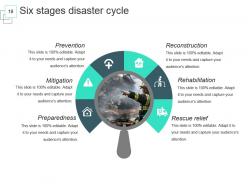
Building a professional disaster management information PowerPoint presentation now takes only minutes. The only thing that you must do here is to click and download our pre-designed Disaster Management Information for Project PowerPoint Presentation Slides. Using this PPT sample you can show a plan through which onlookers can reduce vulnerability to hazards and cope with disasters. This calamity management PowerPoint PPT can be used to help identify the threats and what needs to be realigned to minimize the effects of environmental emergencies, natural disaster, pandemic emergencies, complex emergencies. Besides this, you can also download this PPT sample deck file having 78 pre-made slides to showcase risk reduction method, risk mapping, progression of vulnerability, disaster factors, types of disasters, six stages disaster cycle, prevention, rehabilitation and reconstruction etc. Furthermore, PowerPoint presentation slides deck example included in this visually appealing deck helps to brief the onlookers about principle of disaster management, disaster cycle, disaster preparedness, disaster statistics, recovery and many more. In short, we have just the right PPT example to explain calamity management. Simply click to quickly download our Disaster Management Information For Project PPT presentation. Analyse and execute with our disaster management ppt Slides. They help you focus on growth.
People who downloaded this PowerPoint presentation also viewed the following :
Content of this Powerpoint Presentation
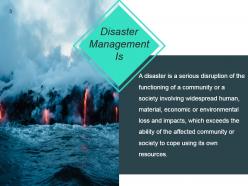
In today’s world, where climate change and dealing with it is increasingly a global policy concern, how can disaster management turn tragedies into stories of strength and resilience? A disaster is the disruption of the community or a society due to hazardous events and disaster management is a process of preparing and responding to disasters.
How can cultural heritage be protected and preserved through Disaster Management? Click here and check the Process Of Disaster Management And Recovery Plan.
Well-coordinated disaster management requires planning. This ensures fast and effective response and limits through identifying organizational resources, designated roles and responsibilities. Creating procedures and policies and holding activities improve disaster readiness. SlideTeam has crafted Disaster Management Templates as not just tools, but invaluable assets to create awareness and inspire positive action on such an important issue.
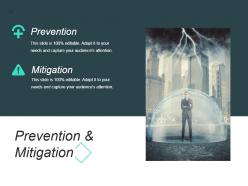
Discover here Presentation Slides on Prevention And Mitigation In Disaster Management.
Discover here our top 10 disaster management templates and start your journey by offering the best to the world. These PPT slides are 100% editable, customizable, and content-ready.
Let’s explore!
Template 1: Disaster Management

This Powerpoint Template refers to Disaster Management as the measures taken to prevent, prepare, respond, and recover from a disaster. It is a way to deal with human, material, economic or environmental impacts of the disaster. There can be both Natural and Man-made disasters caused by nature or by human origins. These disasters have a vulnerable impact on people and the world. Disaster Management is defined as a process of planning, organizing, coordinating, and implementing measures to prevent threats and risks and to facilitate rescue, relief, rehabilitation, and reconstruction.
Template 2: Principles of Disaster Management
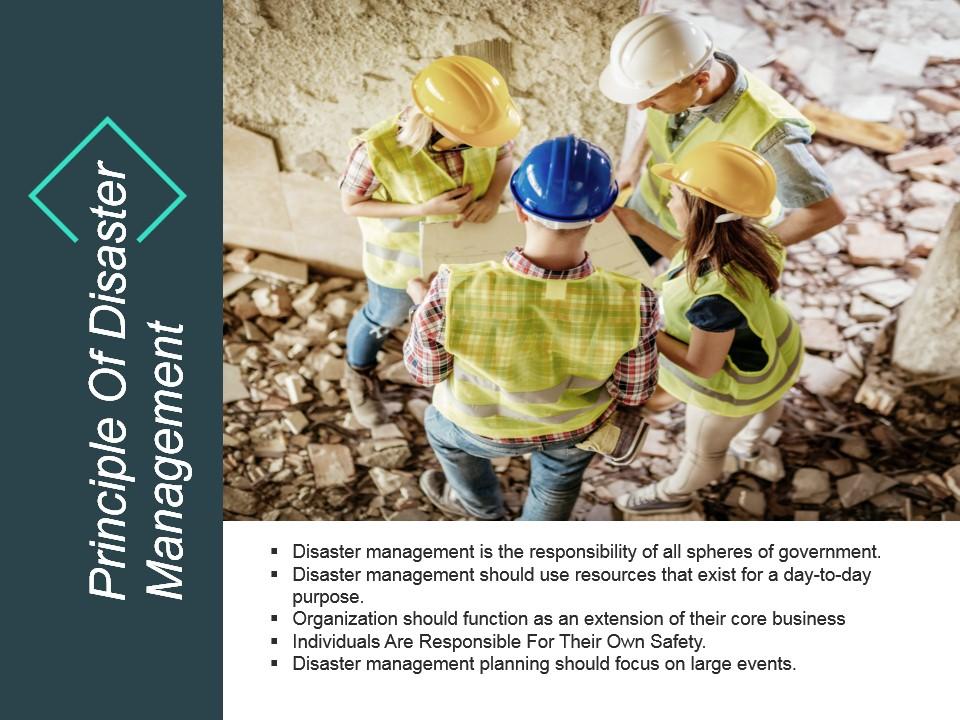
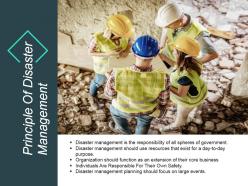
Using his PPT, know the principles of Disaster Management and learn how they need to be implemented. The principles are:
-
Managing disasters
-
Mitigation
-
Response
-
Collaboration
-
Coordination
-
Planning
-
Preparation
-
Recovery
-
Risk reduction
-
Comprehensive
-
Conducting risk assessments and vulnerability analyses
-
Prevention
-
Progressive
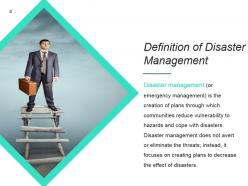
Disaster management has an important role to play as it analyses and reduces the losses occurred from the disasters. It includes planning to reduce the effects of disaster, preparing and taking preventive steps, responding during the disaster, and assessing the strategy to modify and improve the response in case of recurrence of the disaster.
Template 3: Types of Disaster
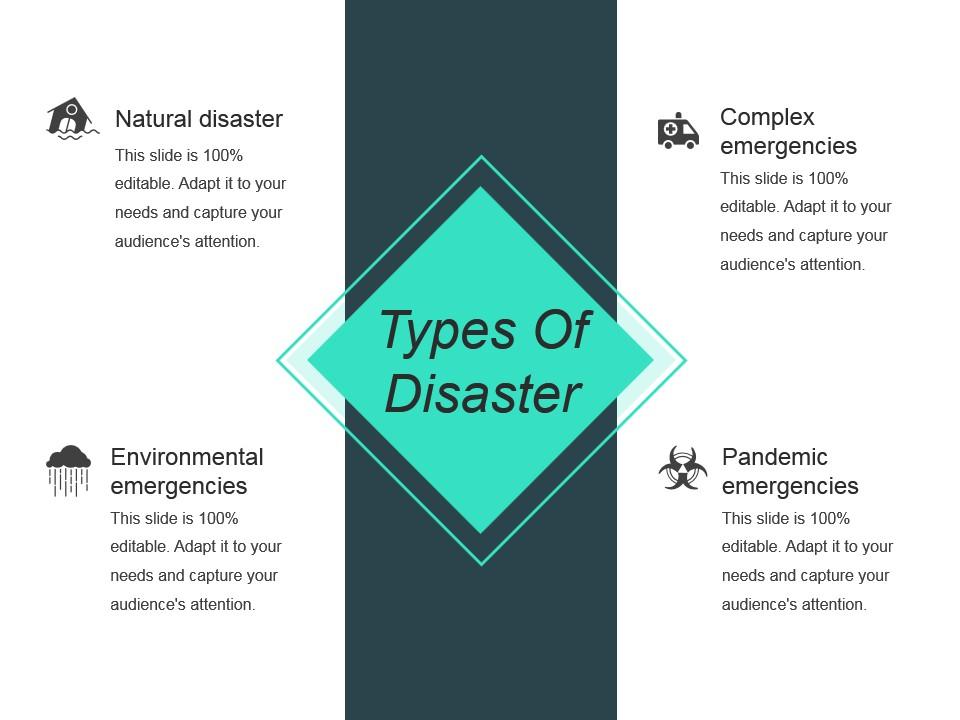
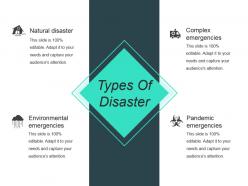
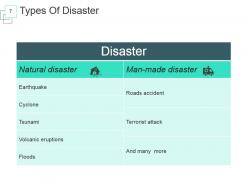
Learn from this PPT, the types of disasters such as natural, man-made and hybrid that can cause a major loss of life and property. Natural disasters can be hydrological, geophysical, climatological, meteorological, and biological. Man-made disasters can occur by human intent, negligence, or error, and involve the failure of a man-made system such as Industrial accidents, Acts of terrorism, Shootings, Mass violence, Crime, Civil disorder, War, Cyber-attacks, etc. Hybrid disasters occur due to natural forces, but human intervention is present, such as cutting trees.
Template 4: Types of Disaster

As given in the template, the two main types of disasters—natural and man-made—have a severe impact on the world because of their frequency, complexity, and severity. They can be categorized on the basis of criteria such as speed and can be of two types, Slow-onset disaster, and Rapid onset disaster. Slow-onset disasters occur slowly over time and Rapid onset disasters happen quickly.
Template 5: Risk of Disaster
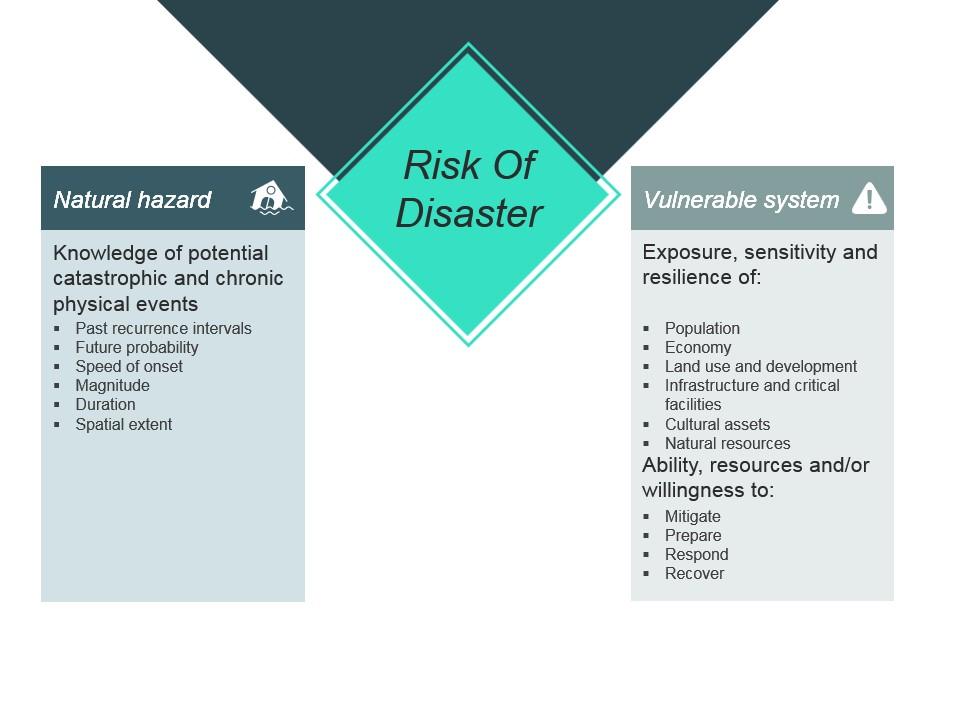
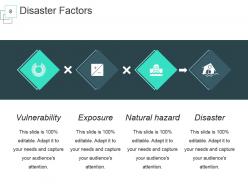
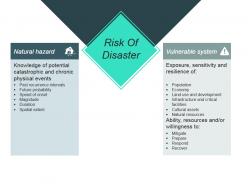
With this Powerpoint presentation, the Disaster risk has been expressed as the loss of life from injury or destruction and damage in a given period of time. Disaster risk is the consequence of hazards and the people and places that are vulnerable and exposed. Disasters are considered external shocks that gives rise to risks from hazardous activities. It is the combination of the severity and frequency of a hazard, the number of people and assets affected, and the vulnerability of damage. There are two types of Disaster risks: Intensive risk and Extensive risk. The Intensive risk is associated with low-probability and high-impact events, whereas extensive risk is associated with high-probability and low-impact events.
Template 6: Disaster Risk Formula
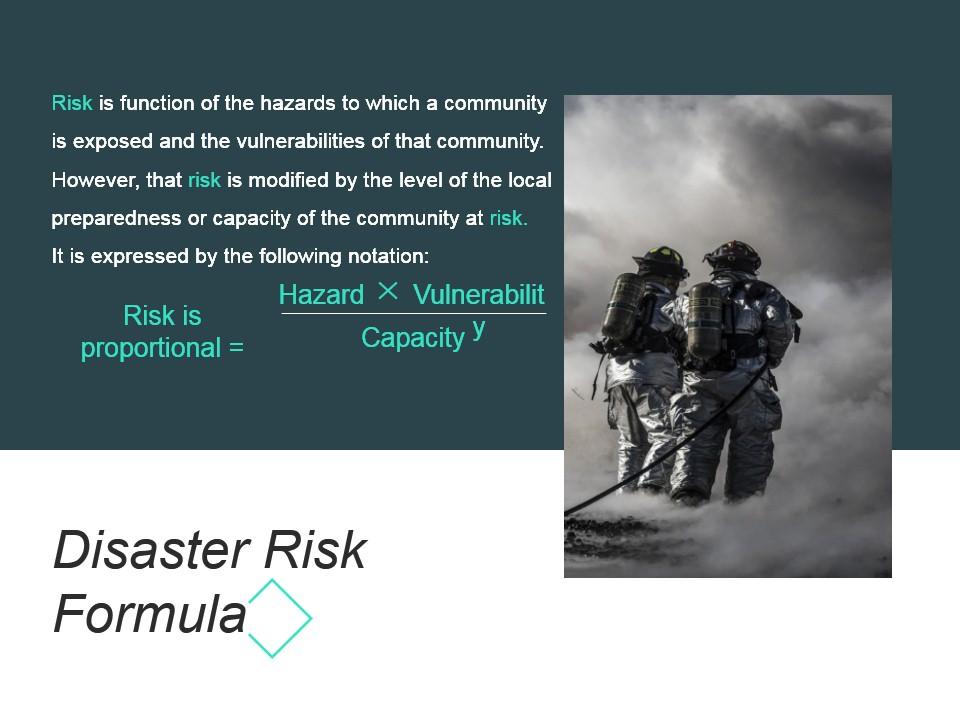
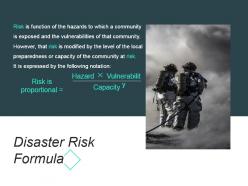
How to calculate Disaster Risk? From this PPT, learn the formula to calculate Disaster Risk and take preventive measures to reduce the loss. The formula is as follows:
Risk = Hazard (H) x Vulnerability (V) / Capacity
This equation can help us to understand the loss of life, property and livelihood from a disaster and the disruption and damage of economic activity and the environment. It tries to reduce the impact by improving the ability to mitigate and manage the risk. Disasters do not discriminate as they affect all but the most affected are the poor and marginalized.
Template 7: Disaster Risk Formula
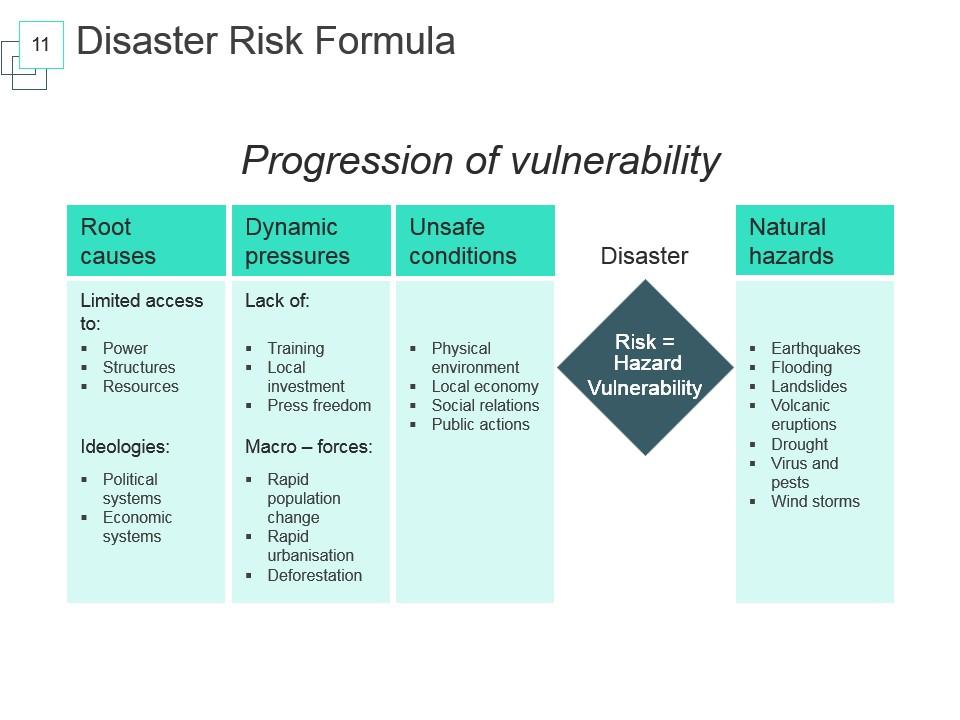
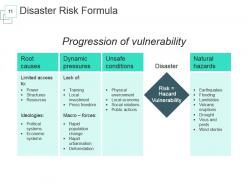
Using the Disaster Risk Formula given in the template, calculate the risk prevailing and the amount of loss that is going to take place. This disruption on a massive scale, either natural or man-made, occurs in short or long periods and leads to human, material, economic, or environmental hardships, beyond the bearable capacity of the affected society. Proper planning, development, and preparation can help to prevent these hazards and by applying the risk reduction policies and strategies, the impact of the risk can be overcome. This formula not only detects the risk incurred but provides appropriate remedies to face the risks.
Template 8: Risk Reduction Method
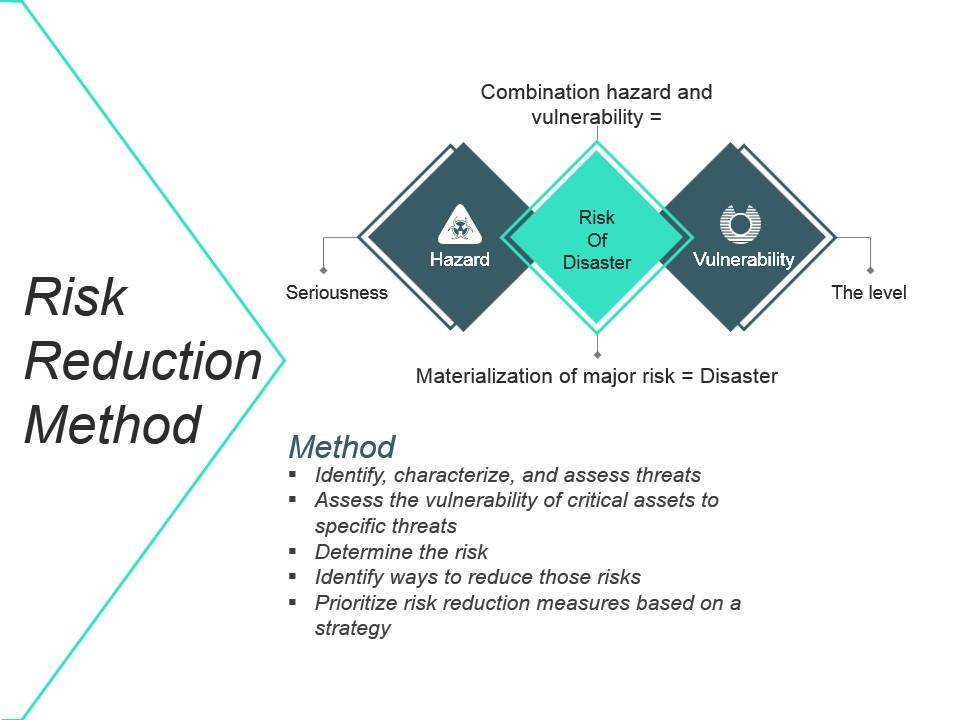
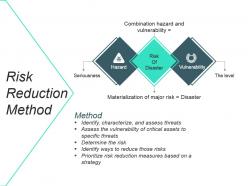
From this PPT template learn the importance of Disaster risk reduction, the practice of reducing disaster risks by analyzing the factors that lead to it. It is an approach for planning and taking steps to reduce the chances of disasters and their effects. DRR aims to make the world stronger and less vulnerable and be prepared to handle disasters. DRR can reduce the severity of an unforeseen event and its impact. For example, climate change can increase climate hazards, so DRR and climate change adaptation are looked at together in development efforts. People from federal governments, local communities or agencies can propose DRR strategies and mitigate the risks from the disasters.
Template 9: Disaster Level

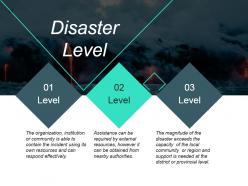
With this template, classify the Disaster levels based on the severity of natural disasters and man-made disasters. They can also be classified on the basis of the event’s chief cause, such as geological, biological, or meteorological-hydrological events. A geological event includes volcanic eruptions, earthquakes, and landslides. Biological events include epidemics and epizootics, i.e., diseases in animals and humans. When classifying a disaster, the consequences of a disaster also need to be considered. Demographic effects include reduced fertility or increased mortality rates while physical effects include damage to machinery, buildings, land, and more.
Template 10: Major Disasters
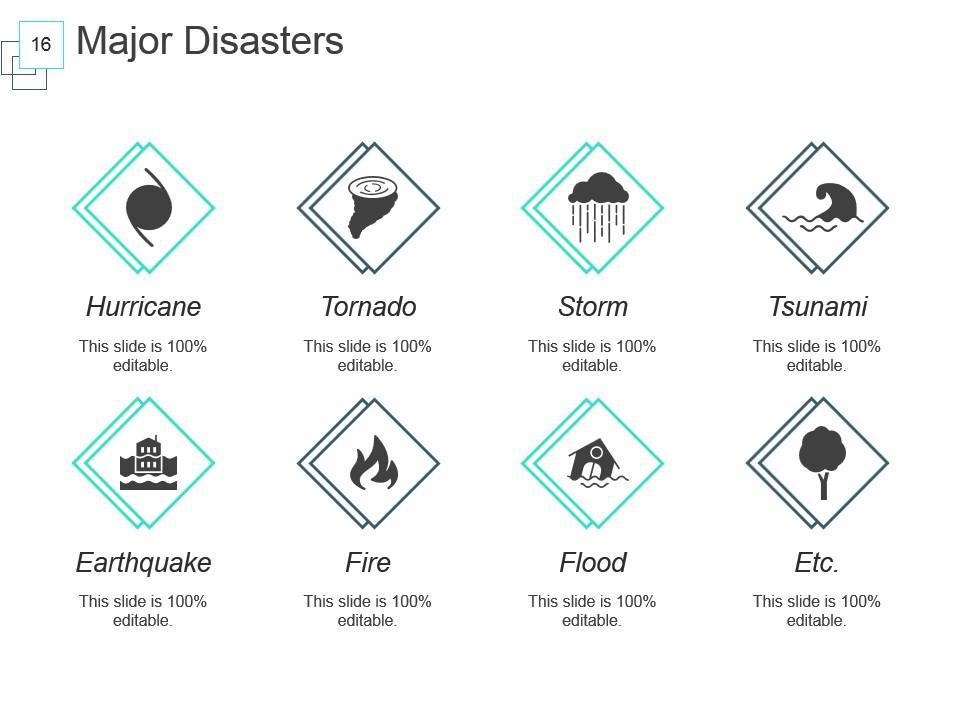
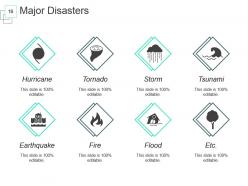
Use this slide to list and chronicle major disasters that have taken place to date, such as hurricanes, Storms, tsunamis, Fire, tornados, Earthquake, floods, etc. These are some of the deadliest disasters that have killed lakhs of people and have destroyed the livelihood of many. Many countries, states, and cities have been affected by these disasters resulting in human and financial loss. While many of these disasters are said to be an act of God, as per research, the prime reason behind these is also unchecked and selfish human activity.These disasters cannot be controlled, but with proper planning, their effects can be reduced.
NEED FOR DISASTER MANAGEMENT
The focus of all disaster management is to minimize the long-term impact of business operations and reduce the impact of disruptions. Creating such plans requires a business to be aware of threats that may affect them, and to understand what resources are available to manage them. Putting this into a clear and efficient plan can help to navigate the unpredictable future. Conducting regular training using the plan, and making changes to ensure that the plan is up to date with the regulatory requirements is crucial.
Disaster Management Information For Project Powerpoint Presentation Slides with all 78 slides:
Our Disaster Management Information For Project Powerpoint Presentation Slides let your thoughts come free. They will detach from any dogma.






FAQs for Disaster Management Information For Project
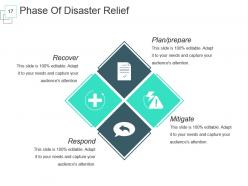
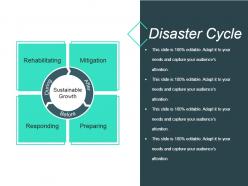
So there's four main phases - mitigation, preparedness, response, and recovery. Mitigation is basically reducing risks before stuff goes wrong. Then you've got preparedness (planning and training), response when disaster actually hits, and recovery afterward. But here's what's cool - they're not really separate steps. Recovery shows you what didn't work, which feeds back into your mitigation planning. It's more like a cycle that keeps improving itself. Honestly, most people think of them as separate boxes but they're way more connected than that. Your recovery lessons should totally shape how you prep next time.
Real-time data sharing is a game changer for disaster response - GPS tracking shows exactly where emergency vehicles are, while automated alerts get the word out fast. Drones can survey damage areas way quicker than ground teams, and AI actually scans social media for emergency reports (kind of creepy but super useful). Citizens can report incidents directly through mobile apps too. Smart sensors detect floods or fires before anyone even notices them. The trick is getting all these systems to actually communicate instead of working in separate bubbles. I'd start by figuring out where your communication breaks down, then invest in platforms that connect everyone instantly.
Honestly, getting the community involved is huge for disaster prep. Local people know who needs extra help, where the sketchy roads are, all that stuff your emergency planners might miss. They're also way more likely to actually listen when evacuation orders come down if they helped make the plans, which makes sense when you think about it. Start with neighborhood meetings and practice drills - maybe work through existing groups like churches or whatever. Communities that train together just handle emergencies better. You want those relationships built before everything goes sideways, not during.
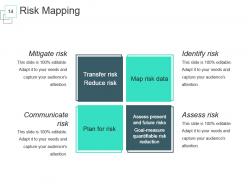
So basically you're looking at historical data - floods, earthquakes, whatever disasters hit your area before - and combining that with weather patterns and geography stuff. Machine learning makes it super accurate now, honestly kind of scary how good it's gotten. You can literally map out which neighborhoods are screwed if something hits and figure out where to send resources first. I'd start simple though - grab your local incident data and layer it with population info, infrastructure maps, that kind of thing. Even that basic analysis will completely change how you think about disaster planning. It's like having a crystal ball, but actually useful.
Disasters mess people up mentally way more than you'd think. PTSD, anxiety, depression - the whole works. Sleep gets wrecked, flashbacks happen, can't focus properly. Honestly the mental stuff sticks around way longer than physical injuries heal. You gotta have mental health pros ready from day one, not scrambling to add them later. Psychological first aid right away, then proper counseling programs. Peer support groups work really well too - sometimes other survivors get it better than therapists do. My cousin went through this after the flooding last year and said the group sessions helped more than anything else.
Honestly, climate change is making disasters way more unpredictable and intense. We're getting hit with stronger hurricanes, longer droughts, and worse flooding since warmer air can hold more water. Wildfires are insane now too - they burn hotter and spread like crazy because everything's so dry. The old disaster planning models? Pretty much useless at this point. Weather patterns keep shifting, so what happened in your area before might not mean much anymore. You really need to plan for stuff that's never happened there before. It's kind of scary how fast things are changing, but flexibility is key now.
Honestly, early warning systems are a game-changer - you need time to react before stuff hits. Building codes matter way more than people think, plus flood barriers and earthquake-proof construction. Emergency response plans are obvious but community training is where it gets interesting. Regular folks panic when they don't know what to do. Insurance and emergency funds save your butt financially. Oh, and I always think the best approach mixes government planning with local communities actually preparing themselves. Figure out what disasters you're likely to face first, then work backwards from there.
Start by figuring out what could really mess up your business - power going out, getting hacked, supply chain breaking down, natural disasters. Map out backup plans for your most important stuff. Like having other suppliers ready, setting people up to work from home, maybe alternative locations. Oh and definitely get your data backed up somewhere safe, not just sitting on your main servers. Here's the thing though - you've got to actually test this stuff regularly. Run fake scenarios, do drills. Otherwise you'll be totally lost when something real happens. Just pick one area first and expand from there.
Honestly, most places are terrible at this - they do one lazy "everyone walk to the parking lot" drill per year and think they're covered. You need surprise drills that actually mimic real emergencies. Block some exits, test if your alarms work, don't give people a heads up. Train new hires right away, like within their first week. I'd say quarterly minimum for drills. The debrief after is huge - that's where you figure out what broke down and fix your procedures. Mix up the scenarios too. When people practice the same boring routine, they'll freeze up if something unexpected happens.
Honestly, social media's huge for disaster stuff. You get instant updates both ways - push info out fast and see what people actually need. Twitter's perfect for quick "road's flooded on Main St" type posts, but Facebook's better when you need more space to explain things. The key thing though? Set everything up beforehand. Trust me, you don't want to be hunting for login info while a storm's rolling in. Also designate someone to actually watch the comments - people will be asking questions and posting useful info about shelters, road closures, whatever. It's basically crowdsourcing emergency intel.
Honestly, disaster relief is a mess for most NGOs. Three big problems always come up - coordination gets chaotic when everyone's trying to help at once, funding takes forever to come through (but you need money NOW), and actually getting supplies where they need to go? Total nightmare. Best way around this stuff is planning ahead. Set up those communication channels before disaster hits, keep some emergency cash ready to deploy fast, and - this part's huge - partner with local groups who actually know the area. My cousin works for an NGO and says the local partnerships make or break everything. Don't wait until crisis mode to figure this out.
Look, you don't want to rebuild the exact same stuff that just got destroyed - that's like asking for round two. Build smarter this time: flood-resistant foundations, fire-safe materials, earthquake upgrades, whatever fits your situation. Learning from disasters should be obvious but honestly? Most places just slap everything back together the cheap way. The whole point is thinking long-term about your community's future. Start planning for resilience right from the beginning, not after you're halfway done building. It's way more expensive to retrofit later anyway.
So Japan's got this crazy good neighborhood system called "jishu-bosai" where everyone trains together for earthquakes - like, their response times are insane. Pacific Island communities are masters at evacuation planning since they deal with tsunamis all the time. Indigenous groups have always read animal behavior and weather patterns for early warnings, which honestly works better than you'd think. The cool thing is successful disaster prep mixes old-school local knowledge with new tech. Community training beats fancy infrastructure every time. Don't overthink it - just see what traditional practices your area already uses and build from there.
Legal stuff you gotta think about: liability, compliance with regs, and having actual authority to make emergency calls. Ethics-wise though? Way messier. You're constantly juggling who gets resources first, protecting vulnerable people, making impossible choices about prioritizing help - and yeah, some of those decisions will stick with you forever. Plus you're respecting people's autonomy while sometimes overriding what they want for everyone's safety. Honestly the whole thing's a nightmare. My take? Document everything like crazy and set up clear protocols beforehand. Don't wing the ethics part when everything's falling apart.
Honestly, schools are perfect for disaster stuff - they've already got everyone's trust and decent facilities. Kids learn emergency drills then go home telling their parents about it, which works way better than boring adult meetings. You can set up shelters there, do first aid training, whatever. My friend's college even partnered with local fire dept to test new evacuation plans. Oh and universities have research labs that can actually help figure out better response strategies. I'd just call your school district's emergency person first - they'll know exactly what they need help with.
-
Innovative and Colorful designs.
-
Unique research projects to present in meeting.