


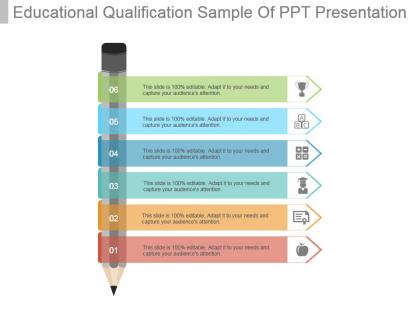
Educational qualification sample of ppt presentation




Try Before you Buy Download Free Sample Product
 Impress Your
 Audience
 100%
100% Editable
 Save Hours
 of Time


Discover avenues to invest with our Educational Qualification Sample Of Ppt Presentation. Examine areas that grab your interest.
People who downloaded this PowerPoint presentation also viewed the following :
Educational qualification sample of ppt presentation with all 7 slides:
Convince folks to follow a balanced approach with our Educational Qualification Sample Of Ppt Presentation. Ensure they give you a fair hearing.
FAQs for Educational qualification sample
Look, it totally depends on what field you're in. Healthcare, law, engineering? Yeah, you're gonna need those specific degrees - no getting around it. But tech and creative stuff? Skills usually trump diplomas. I've seen people without degrees absolutely crush it in sales too. That said, having one still helps with credibility, especially if you want to lead teams later. Oh and don't sleep on certifications either - they're huge in some industries. Best bet is probably building both your resume AND actual skills you can show off.
Yeah, educational systems totally change how employers see you. European schools love their vocational training - employers there eat that stuff up. The US is more about broad liberal arts, which is... different. Asian systems are super rigorous though, and honestly that works pretty well globally since everyone knows how intense they are. But here's the thing - you really need to figure out what employers in your specific area actually want. If you're looking internationally, definitely check if your degree translates or if you'll need extra certifications to fill gaps.
Yeah, more education usually equals more money, especially in hot fields. But it's weird - sometimes a coding bootcamp beats a computer science degree salary-wise. Tech is funny like that. Your portfolio matters way more than your diploma in some areas. MBA programs and specialized certs definitely boost earnings though. Honestly, I'd skip the job posting requirements (they're mostly wishful thinking) and stalk LinkedIn profiles of people actually crushing it in roles you want. See what they studied. Experience plus the right credentials is where the magic happens.
Honestly, it depends where you're at career-wise. For entry-level stuff, yeah, your degree matters more since you don't have much else to show. But once you've got some real work under your belt? Experience wins every time. Like, if you studied finance and want an accounting job, that connection helps. Most hiring managers just want to see what you've actually done though. Early career, definitely play up how your classes relate to what they need - it's kind of all you've got at that point. The best combo is when everything lines up and makes sense together.
Honestly, alternative education is making waves but hasn't totally taken over yet. Tech companies love bootcamp grads - some hiring managers literally care more about your GitHub than grades. Wild, right? But fields like healthcare or law? You still need the formal degree, no way around it. The best approach is mixing both. Traditional education shows you can stick with something long-term, while online certifications prove you're keeping up with current skills. I'd just add relevant courses to whatever formal education you already have.
Ugh, yeah this is still totally a thing. Women basically need better credentials than men to get the same respect - it's documented but still sucks. Like, your MBA hits different if you're Sarah vs Sam, you know? Tech and finance are especially bad about questioning women's expertise even when qualifications are identical. But honestly, knowing this helps you call it out. Short sentences work. When you're in hiring meetings or whatever, just keep steering back to actual qualifications and don't let people get away with that unconscious bias crap.
Look, degrees definitely help get you in the door - lots of companies still use them as basic filters for management spots. Traditional corporate places especially care about that stuff. But honestly? I've worked with amazing leaders who didn't have fancy education and had to prove themselves way harder than they should've. Results and actual experience count for more once you're there. If you're missing credentials though, maybe look into some targeted certifications or executive programs. Way more focused than going back for a whole degree, and companies actually respect those too.
Yeah, companies are finally waking up to this! More employers are ditching the whole "bachelor's degree required" thing and actually looking at what you can do instead. Skills-based hiring is huge right now - honestly took them long enough to figure this out. Remote work kinda proved that smart people exist everywhere, not just in college programs. You still gotta show what you're capable of though. Portfolio work helps. So do certifications if you can swing it. When you're applying places, lead with your actual skills instead of where you went to school. It's a way better approach anyway.
Oh totally - this stuff varies so much it's crazy. German companies are obsessed with formal certifications, but Silicon Valley? They just want to see what you can actually do. Asian employers get really hung up on which university you went to (sometimes annoyingly so), while Scandinavian countries care way more about real experience. Some places think you need to constantly be getting new credentials. Others are all about apprenticeships and learning while working. My advice? Research the local norms before you post anything. Don't just slap the same job requirements everywhere - you'll miss good people.
Honestly both are good but for totally different reasons. Advanced degrees get you into leadership stuff, consulting, research - the fancy corporate ladder roles. Certifications? More about proving you know the latest tech or keeping your skills sharp in whatever you're already doing. I'd say it depends on your field though - tech companies care way more about certs than some stuffy finance firm would. Quick test: go look at job postings for positions you want in like 5 years. See what they're actually requiring. That'll tell you everything.
Your family's financial situation totally shapes what education you can get. Rich kids get private schools, SAT tutors, unpaid internships - the works. Meanwhile, if you're broke, you're working instead of studying, can't afford college, or don't even have decent internet. It's honestly pretty messed up how much money determines your opportunities from the start. The thing is, when you're hiring someone later, you've gotta look past just degrees and credentials. There's tons of smart people who didn't get those advantages but have real potential.
Your degree gets you the interview, but soft skills are what actually make people good at their jobs. I've watched super smart people totally bomb because they couldn't work with anyone. Communication and problem-solving beat high GPAs every time once you're hired. When you're interviewing, ask behavioral questions - not just technical stuff. See how they explain complicated things or talk about past team projects. Honestly, some of the best hires I've seen weren't the ones with perfect transcripts. They're the ones who could actually collaborate and adapt when things got messy.
Dude, it's crazy how much things have changed. Companies are ditching degree requirements left and right - especially in tech, marketing, creative stuff. They just want to see what you can actually do now. Like, show them your portfolio or some solid work samples instead of your diploma. Bootcamps and online courses? Totally legit these days. My cousin got hired at a startup just from his GitHub projects, no college degree. Build up your online presence and focus on skills you can prove. Way more important than where you went to school at this point.
Honestly, get some real-world experience under your belt - internships, side projects, maybe some volunteer stuff in your field. Book knowledge is great but employers want to see you can actually handle the work. Keep picking up new skills too, especially anything tech-related since that's where everything's headed anyway. If you can build a portfolio or collect examples of your work, do it. Oh and don't sleep on networking - grab recommendations from professors or anyone you've worked with. Really though, it's about proving you're not just another grad who memorized textbooks. Show them you can grow and adapt.
Honestly, ongoing education is what stops your skills from going stale. Fast-moving fields like tech or healthcare change so quickly - like, a 2010 computer science degree won't teach you about AI or cloud stuff that's everywhere now. You've gotta stay current through courses, certifications, or just following industry trends. It bridges the gap between old knowledge and what employers actually want today. I always tell people to be proactive about it instead of waiting until you feel behind. It's kind of like updating your phone but for your career, if that makes sense.
-
Thanks for all your great templates they have saved me lots of time and accelerate my presentations. Great product, keep them up!
-
Unique design & color.