

Effective IT Project Inception Project Kickoff Checklist




Try Before you Buy Download Free Sample Product
 Impress Your
 Audience
 100%
100% Editable
 Save Hours
 of Time


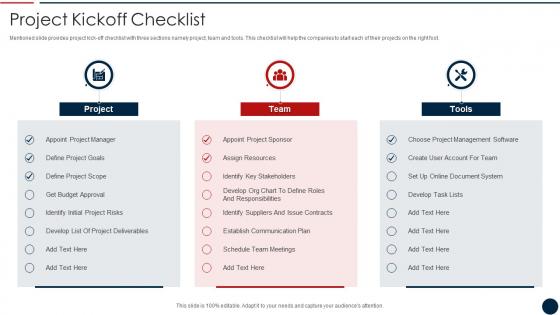
Mentioned slide provides project kickoff checklist with three sections namely project, team and tools. This checklist will help the companies to start each of their projects on the right foot.
People who downloaded this PowerPoint presentation also viewed the following :
Effective IT Project Inception Project Kickoff Checklist with all 6 slides:
Use our Effective IT Project Inception Project Kickoff Checklist to effectively help you save your valuable time. They are readymade to fit into any presentation structure.





FAQs for Effective IT Project Inception
Key stakeholders include project sponsors, business owners, technical leads, end-users, IT security teams, and vendor representatives if applicable. These stakeholders streamline project alignment by clarifying requirements, establishing communication protocols, and defining success metrics, with many organizations finding that comprehensive stakeholder involvement from kickoff reduces scope creep and delivery delays significantly.
Ensuring clear project goal definition requires establishing comprehensive project charters, conducting structured kickoff meetings with all stakeholders, creating detailed scope documentation, and implementing regular communication checkpoints throughout the project lifecycle. These approaches streamline alignment by facilitating collaborative goal-setting sessions, documenting measurable objectives with clear success criteria, and establishing feedback loops, with many project teams finding that early investment in goal clarity ultimately delivers faster execution and reduced scope creep.
Effective scope and objectives communication involves creating visual project roadmaps, conducting interactive stakeholder workshops, distributing comprehensive project charters, establishing clear success metrics, and facilitating Q&A sessions. These approaches streamline understanding by eliminating ambiguity, aligning diverse teams, and ensuring consistent expectations, with many organizations finding that visual documentation combined with collaborative discussions ultimately delivers stronger project buy-in and reduces scope creep throughout execution.
IT project risk identification involves conducting comprehensive stakeholder interviews, performing technical architecture reviews, analyzing resource availability, assessing regulatory requirements, and evaluating integration complexities. Through systematic risk workshops and scenario planning, project teams can develop targeted mitigation strategies, establish contingency budgets, and create monitoring frameworks, ultimately reducing project delays and cost overruns while enhancing delivery success rates.
**INPUT**: What tools and technologies can facilitate better collaboration during the kickoff phase? **OUTPUT**: Collaboration tools for IT project kickoffs include video conferencing platforms, shared documentation systems, project management software, real-time whiteboarding applications, and integrated communication channels. These technologies streamline stakeholder alignment by enabling simultaneous access to project artifacts, facilitating instant feedback loops, and maintaining centralized communication records, with many organizations finding that strategic tool combinations ultimately enhance team coordination and accelerate project momentum. [Word count: 60 words]
Establish realistic timelines by analyzing project scope complexity, resource availability, and stakeholder dependencies, while incorporating buffer time for unforeseen challenges and testing phases. Break deliverables into measurable milestones with clear success criteria, engaging team leads to validate estimates based on their technical expertise, ultimately ensuring accountability and maintaining stakeholder confidence throughout project execution.
The project charter serves as the foundational document that formally authorizes the project, defines scope, objectives, stakeholders, and high-level requirements during kickoff. It establishes project authority, clarifies deliverables, and sets success criteria, enabling teams to align expectations, secure resources, and maintain focus throughout execution, ultimately delivering strategic clarity and organizational commitment.
Ensuring alignment on project deliverables requires comprehensive stakeholder workshops, detailed requirement documentation, visual project roadmaps, and regular validation checkpoints throughout the project lifecycle. Through structured kickoff sessions and collaborative planning tools, project teams establish clear expectations, define measurable outcomes, and create shared understanding across departments, ultimately delivering consistent results and minimizing scope creep risks.
Success metrics for IT project kickoff meetings include stakeholder engagement levels, clarity of role definitions, timeline consensus, risk identification completeness, and communication protocol establishment. These measurements enable project managers to assess meeting effectiveness through post-meeting surveys, stakeholder feedback scores, and documented action item completion rates, with many organizations finding that well-measured kickoffs significantly reduce project delivery timelines and enhance team alignment.
Incorporating feedback during kickoff enhances project planning by conducting structured brainstorming sessions, implementing anonymous input mechanisms, and facilitating cross-functional discussions among stakeholders. These collaborative approaches streamline resource allocation, identify potential risks early, and align expectations across departments, with many organizations finding that inclusive kickoff processes ultimately deliver more accurate timelines and stronger team commitment.
Common pitfalls include unclear project scope, inadequate stakeholder communication, unrealistic timelines, insufficient resource allocation, and skipping risk assessment procedures. These challenges can derail projects early, but organizations streamline success by establishing comprehensive documentation, conducting thorough planning sessions, and implementing structured communication protocols, ultimately delivering better outcomes and maintaining stakeholder confidence throughout project execution.
Foster positive team culture by establishing clear communication protocols, celebrating diverse expertise, setting collaborative ground rules, and creating psychological safety for open dialogue. Through structured introductions, shared goal-setting exercises, and transparent expectation discussions, teams build trust and engagement immediately, with many organizations finding that early cultural investments significantly enhance project outcomes and team cohesion.
Effective stakeholder engagement strategies include establishing clear communication channels, defining specific roles and responsibilities, creating interactive workshops, implementing regular feedback loops, and setting transparent milestone reporting. These approaches streamline collaboration by fostering ownership, maintaining alignment, and building trust, with many organizations finding that early stakeholder investment ultimately delivers stronger project outcomes and reduced resistance throughout implementation.
Discussing budget constraints and resources at kickoff is absolutely critical, as it establishes realistic project parameters, prevents scope creep, and ensures stakeholder alignment from day one. This transparency enables teams to prioritize features strategically, allocate resources efficiently, and make informed trade-off decisions throughout development, ultimately delivering projects on time and within budget while maintaining quality standards.
Essential follow-up actions include weekly status meetings, milestone review sessions, risk assessment checkpoints, stakeholder communication updates, and progress dashboard reviews. These structured touchpoints enable project teams to address roadblocks quickly, maintain stakeholder alignment, and ensure deliverable quality, with many organizations finding that consistent follow-up rhythms ultimately deliver faster project completion and higher success rates.
-
Excellent template with unique design.
-
Excellent Designs.