


Project Evaluation Checklist Project Management Professional Tools




Try Before you Buy Download Free Sample Product
 Impress Your
 Audience
 100%
100% Editable
 Save Hours
 of Time


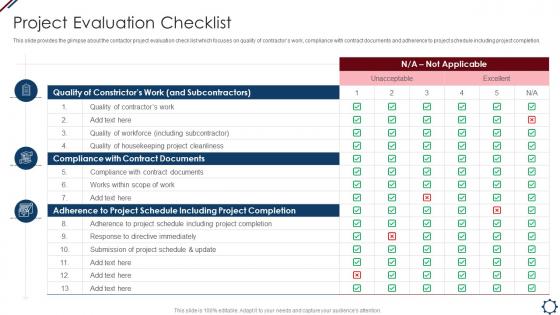
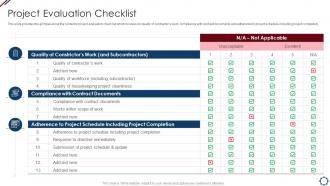
This slide provides the glimpse about the contactor project evaluation check list which focuses on quality of contractors work, compliance with contract documents and adherence to project schedule including project completion.
People who downloaded this PowerPoint presentation also viewed the following :
Project Evaluation Checklist Project Management Professional Tools with all 6 slides:
Use our Project Evaluation Checklist Project Management Professional Tools to effectively help you save your valuable time. They are readymade to fit into any presentation structure.





FAQs for Project Evaluation Checklist Project
For your project checklist, definitely track budget variance, schedule stuff, and scope completion - those are non-negotiables. Quality metrics matter too, like defect rates or how happy customers actually are. Oh, and don't forget stakeholder engagement and team productivity. Risk mitigation effectiveness is huge. Resource utilization gets overlooked constantly but it's so telling about how things are really going. Mix leading indicators (milestone completion) with lagging ones (ROI, user adoption). Honestly, stick to 5-7 KPIs max or you'll get overwhelmed by numbers. Just make sure they actually connect to what you're trying to accomplish.
Don't wait until the end to get feedback - build it in from the start. Regular check-ins work way better than one big survey later. Quick pulse checks, interviews, whatever fits your vibe. Here's the thing though - ask specific questions instead of vague "how are we doing?" stuff. People actually give you real answers that way. Make sure you're not just listening to whoever yells loudest too. Oh, and this is crucial - actually DO something with what people tell you and let them know how it changed things. Otherwise what's the point? Start by figuring out who you need to hear from first.
So basically, risk assessment shows you if your project planning was actually decent or if you just got super lucky. Compare what risks you saw coming vs what blindsided you - that's where the real lessons are. Honestly, I've seen too many "successful" projects that were disasters waiting to happen because they ignored red flags. Looking at how your team handled curveballs also tells you a lot about problem-solving skills. Oh, and make a simple before/after chart next time - helps you catch patterns you might miss otherwise.
Grab your original schedule and compare it against what actually happened - that's where you'll catch the delays. Focus on the big stuff first: milestones, key deliverables, anything on the critical path. Honestly, I've learned the hard way that just noting *when* things slipped isn't enough. Figure out *why* too - was it scope creep? Resource problems? Some random dependency that blindsided everyone? Were your initial estimates even realistic? This stuff is gold for your next project timeline, trust me.
Honestly, I'd break it down into four main things: does your deliverable actually work and hit the requirements? Did you stick to whatever process you planned? Are your stakeholders happy? And did you stay on time/budget? I used to obsess over just the technical stuff, but stakeholder feedback is huge. Don't forget about risk management either - how well did you handle surprises? Quick tip: make a simple 1-5 scorecard for each area. Review it during retrospectives so you'll spot patterns. Way easier than some fancy tracking system.
Check your spending against your planned budget weekly or monthly - whatever works for your schedule. I'd set up alerts when you hit 5-10% over in any category. Honestly, a simple dashboard showing burn rate and remaining budget saves so much headache later. Don't just track what you've already spent though - include those purchase orders sitting in approval too since they'll hit soon. The whole point is catching problems early instead of getting blindsided at the end. Oh, and bring up these numbers in every team meeting. Keeps everyone honest about where the money's actually going.
Honestly, I'd go with a combo approach - surveys are super quick for getting baseline info, but interviews are where you actually learn stuff. SurveyMonkey works fine for the survey part. Focus groups can be hit or miss though - sometimes people open up more in groups, other times they just echo each other. The key thing is don't wait until your project's done to ask for feedback. Set up regular check-ins so you can actually fix problems instead of just documenting them after the fact. Start simple and see what comes up.
Wait 2-3 weeks after your project ends, then get everyone together for a lessons learned meeting. Memory's still good but emotions have cooled down a bit. I break mine into three parts: processes, tools, and how the team worked together. Honestly, this stops it from becoming a complaint fest. Write down specific examples with real reasons behind what happened - not just "communication sucked" but WHY it sucked. Here's the key part though: someone needs to actually own making changes happen next time, or you're just wasting everyone's time.
Oh man, the biggest mistake? Teams obsess over what went wrong but barely talk about what actually worked. Super common. Also everyone's always rushing through these things because they want to jump into the next project - which I totally get, but you end up missing good stuff. Don't just ask the project leads either. Different people see totally different issues depending on their role. And here's the thing that drives me crazy - people do all this reflection then document it somewhere no one will ever look again. Set aside real time for it and make some kind of template that's actually useful later.
So I'd start by checking how people actually communicated - like, were meetings productive or just time-wasters? See if conflicts got resolved or if everyone just stayed quiet and resentful. Anonymous surveys work great for getting honest feedback about what sucked. Also look at whether roles were clear or if people stepped on each other's toes constantly. Decision-making is huge too - did one person dominate or could the team actually collaborate? Oh, and definitely check if deadlines were realistic or completely nuts given your team size. The key is finding specific fixes, not just vague "we need better communication" BS.
Honestly, you need both the hard numbers and the softer stuff. Financial ROI and user adoption rates are obvious - your bosses will definitely want those. But also track whether people actually like using it and if your team isn't completely exhausted maintaining it. I've watched so many projects look amazing on paper then completely fall apart after launch because nobody thought about the day-to-day reality. Get feedback from actual users regularly. Oh, and set clear "this isn't working" benchmarks upfront - you'll thank yourself later when you need to make tough calls about continuing.
Track the obvious stuff first - email responses, meeting turnout, how fast people get back to you. Numbers don't tell the whole story though. Are people actually getting it? Watch for confused questions, missed deadlines, or tasks done wrong. Those are red flags. Quick check-ins work better than formal surveys honestly - just ask "hey, is this making sense?" Mid-project is perfect timing to switch up your approach if things aren't clicking. Way easier than scrambling at the end.
Honestly, you've gotta nail the organizational alignment thing first. I've watched so many projects die because people skipped this step - they built something cool but it didn't actually help the business. Map out how your project connects to what the execs care about, whether that's making money, cutting costs, or hitting their big strategic goals. Draw that straight line from your outcomes to their priorities. Otherwise you're just burning budget on stuff that looks impressive but doesn't matter. Trust me, leadership will notice if you can't explain why this moves the company forward.
Honestly, it depends on what you're actually working with. Agile means you're checking in constantly - retrospectives, sprint reviews, getting feedback from stakeholders every few weeks. Way different from waterfall where you hit those big milestone gates and evaluate everything at once. The metrics change too. With agile, I focus on team velocity and whether we're building stuff that actually works. Waterfall's more about staying on budget and hitting the original timeline (which tbh is sometimes unrealistic anyway). Figure out which approach your team's really using first, then set up your checkpoints to match.
First thing - get everyone together for a quick retrospective while everything's still fresh. I know it sounds cheesy but trust me, you'll forget half the good stuff otherwise. Document what actually worked and what was a disaster, then share those findings with your stakeholders. Update your templates too based on what you learned. Oh, and definitely celebrate the wins with your team! Archive everything properly so you can find it later (future you will thank you). Honestly, just set those calendar reminders now or you'll be like "I'll do it tomorrow" and never will.
-
Great designs, Easily Editable.
-
I want to express my gratitude to SlideTeam’s presentation design services team for helping me create the best presentation of my life!